
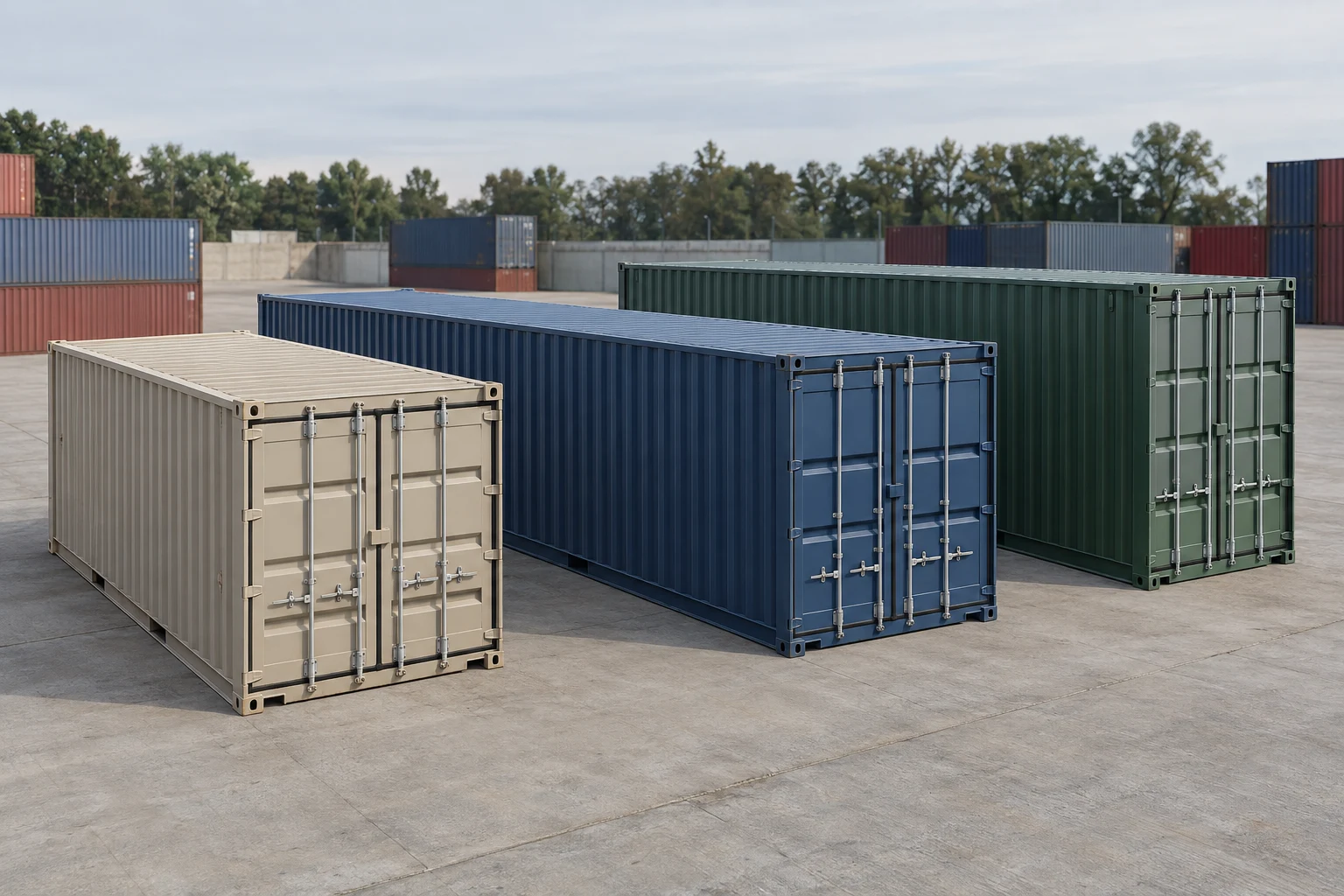
Shipping container dimensions: 20ft, 40ft and High Cube
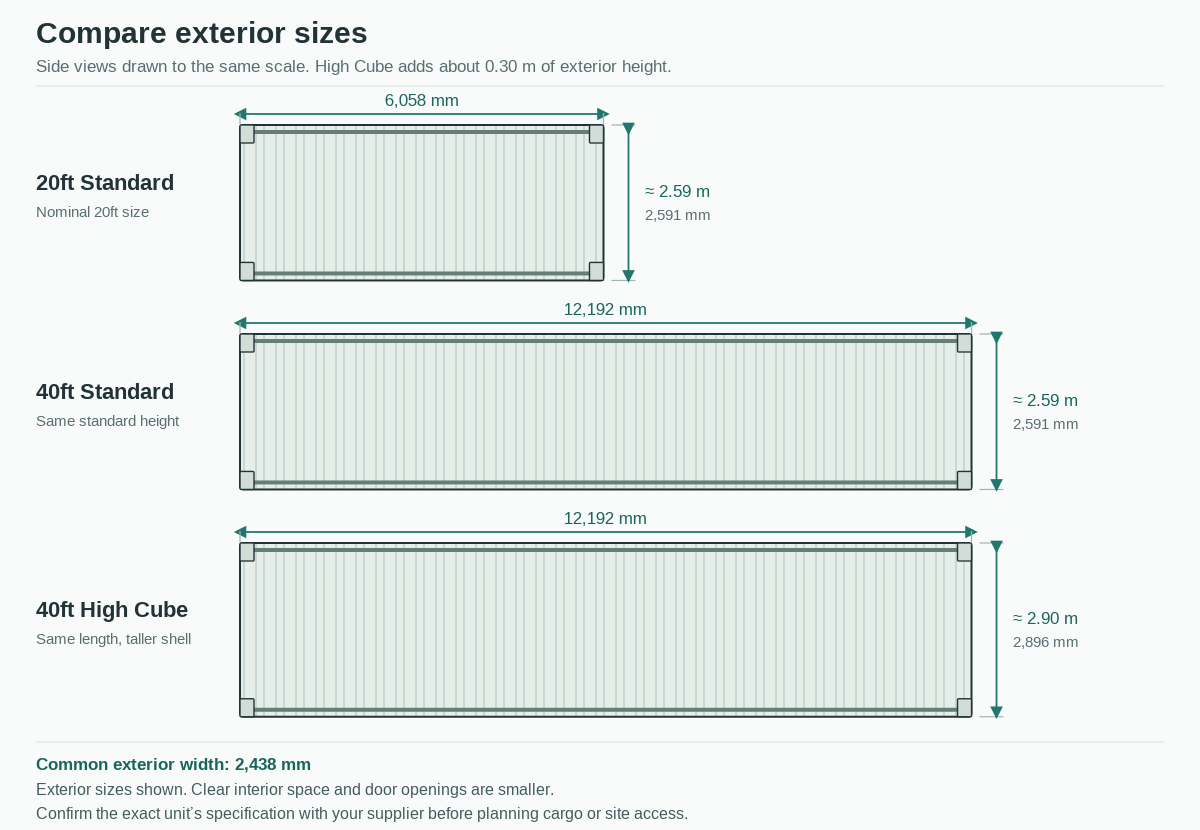
These are standard-width exterior reference sizes. Imperial dimensions are calculated from metric values and rounded to the nearest 1/8 inch.
The 20ft name is nominal: the reference exterior length is slightly shorter than 20 feet. A high cube adds 0.305 m (one foot) of exterior height compared with the standard-height class.
| Size | Approx. exterior L × W × H | Metric L × W × H |
|---|---|---|
| 20ft standard | 6.058 m (19 ft 10½ in) × 2.438 m (8 ft) × 2.591 m (8 ft 6 in) | 6,058 × 2,438 × 2,591 mm |
| 40ft standard | 12.192 m (40 ft) × 2.438 m (8 ft) × 2.591 m (8 ft 6 in) | 12,192 × 2,438 × 2,591 mm |
| 40ft high cube | 12.192 m (40 ft) × 2.438 m (8 ft) × 2.896 m (9 ft 6 in) | 12,192 × 2,438 × 2,896 mm |
Swipe or scroll to read the diagram.
Example interior space and door openings
These bare-interior and door measurements describe three carrier fleet examples checked October 10, 2026. Imperial dimensions are calculated from the metric values and rounded to the nearest 1/8 inch.
Imperial dimensions are converted from the metric figures above and rounded. Interior dimensions vary by manufacturer and unit; confirm the actual measurements before ordering.
The example door openings are lower and narrower than the interior space, so an item that fits inside may not pass through the doors. Ask for measurements after any lining, shelving or other modifications are installed.
| Size | Interior L × W × H | Door W × H |
|---|---|---|
| 20ft standard | 5,900 × 2,352 × 2,395 mm (19 ft 4¼ in × 7 ft 8⅝ in × 7 ft 10¼ in) | 2,340 × 2,292 mm (7 ft 8⅛ in × 7 ft 6¼ in) |
| 40ft standard | 12,032 × 2,352 × 2,395 mm (39 ft 5¾ in × 7 ft 8⅝ in × 7 ft 10¼ in) | 2,340 × 2,292 mm (7 ft 8⅛ in × 7 ft 6¼ in) |
| 40ft high cube | 12,032 × 2,350 × 2,700 mm (39 ft 5¾ in × 7 ft 8½ in × 8 ft 10¼ in) | 2,340 × 2,597 mm (7 ft 8⅛ in × 8 ft 6¼ in) |
Exterior footprint and interior floor area
Area is length multiplied by width. These calculations use the exterior reference sizes and bare-interior examples above; square feet are rounded to the nearest whole number and square metres to two decimals.
The footprint is the area occupied by the container itself. Door swing, regular access and unloading space need additional room. Interior floor area describes the example's bare floor; shelving, lining and aisles reduce the space available for stored items.
| Size | Approx. exterior footprint | Approx. interior floor area |
|---|---|---|
| 20ft standard | 14.77 m² (159 sq ft) | 13.88 m² (149 sq ft) |
| 40ft standard | 29.72 m² (320 sq ft) | 28.30 m² (305 sq ft) |
| 40ft High Cube | 29.72 m² (320 sq ft) | 28.28 m² (304 sq ft) |
How many cubic metres are inside a shipping container?
Cubic capacity compares enclosed space. It is different from floor area, which describes the footprint of the room.
| Fleet example | Published interior capacity | Approx. cubic feet (secondary reference) |
|---|---|---|
| 20ft standard | 33.2 m³ | 1,172 cu ft |
| 40ft standard | 67.7 m³ | 2,391 cu ft |
| 40ft High Cube | 76.3 m³ | 2,695 cu ft |
Cubic feet are calculated from the published metric capacity and rounded. Shelves, lining, aisles, packaging and room to retrieve goods reduce accessible storage. Compare the layout you will use rather than treating the full volume as usable inventory space.
Standard vs High Cube: what changes?
For the standard-width 40ft formats above, High Cube adds height while keeping the same exterior length and width.
| Measurement | 40ft standard example | 40ft High Cube example |
|---|---|---|
| Exterior height class | 2,591 mm (8 ft 6 in) | 2,896 mm (9 ft 6 in) |
| Bare interior height | 2,395 mm (7 ft 10¼ in) | 2,700 mm (8 ft 10¼ in) |
| Door opening height | 2,292 mm (7 ft 6¼ in) | 2,597 mm (8 ft 6¼ in) |
| Interior capacity | 67.7 m³ | 76.3 m³ |
The exterior height difference is 305 mm (one foot). These fleet examples also differ by about 305 mm (one foot) in interior and door height. The High Cube example has about 13% more cubic capacity, calculated from 76.3 versus 67.7 m³, without adding floor length.
Choose extra height for tall items, shelving or a planned fit-out. Check the doorway and the finished ceiling clearance separately, and include the taller body in the delivery-route check.
How much does a shipping container weigh?
Empty weight, cargo capacity and the maximum combined weight are three different measurements. The following ratings belong to specific fleet examples.
- Tare: the weight of the empty container.
- Maximum payload: the permitted cargo weight within the container rating.
- Maximum gross weight: the container and cargo combined. For these examples, maximum gross minus tare equals maximum payload.
| Fleet example | Empty weight / tare | Maximum payload | Maximum gross |
|---|---|---|---|
| 20ft standard | 2,350 kg (5,181 lb) | 28,130 kg (62,016 lb) | 30,480 kg (67,197 lb) |
| 40ft standard | 3,750 kg (8,267 lb) | 28,750 kg (63,383 lb) | 32,500 kg (71,650 lb) |
| 40ft High Cube | 3,900 kg (8,598 lb) | 28,600 kg (63,052 lb) | 32,500 kg (71,650 lb) |
Ratings vary by manufacturer and unit. Confirm the offered container’s tare, safety-approval plate and documented ratings before planning a load. A longer container does not automatically carry twice the weight.
Maximum payload is not a concentrated floor-load rating. Equipment wheels or feet, lifting arrangements and the planned transport route need their own checks.
Other sizes: 10ft, 20ft High Cube, 45ft and 53ft
The examples below help compare formats. They describe different published models, with nominal or rounded exterior measurements; do not borrow an interior size or load rating from another model.
| Format | Example exterior L × W × H | What to check |
|---|---|---|
| 10ft storage | Nominal 3.048 m (10 ft) × 2.438 m (8 ft) × 2.591 m (8 ft 6 in) | Construction, usable depth and door opening for the actual storage model. |
| 20ft High Cube | Approx. 6.058 m (19 ft 10½ in) × 2.438 m (8 ft) × 2.896 m (9 ft 6 in) | The shorter footprint with extra height; measure its own doorway. |
| 45ft High Cube | 13.716 m (45 ft) × 2.438 m (8 ft) × 2.896 m (9 ft 6 in) | The longer placement area; a pallet-wide model can have a different width. |
| 53ft domestic | 16.154 m (53 ft) × 2.591 m (8 ft 6 in) × 2.908 m (9 ft 6½ in) | This domestic example is wider than the standard-width dry formats above. |
A domestic container is a detachable box, rather than a semi-trailer with its own running gear. Confirm the exact equipment type, usable room and delivery arrangement when comparing a 53ft offer.
Refrigerated containers have their own insulated interiors and equipment layout. Open-side, open-top and modified units also need their own opening and finished-room measurements.
Materials, insulation and modified dimensions
The dry-container examples in the other-size table have corrugated steel walls and roofs, with plywood floors. Steel gauge, floor thickness and load ratings vary by model. Do not apply one model's figures to every container.
For an insulated storage room, office or other conversion, ask for finished clear measurements after lining, flooring, partitions and equipment are installed. A nominal 20ft or 40ft shell does not describe the usable finished room.
Choose by the item, working space and delivery route
For heavy items, ask for the unit's tare, maximum gross mass, payload and floor-loading details. Total payload does not tell you the allowed load under one wheel or foot. Ask a suitable operator or specialist to check the planned handling and load layout.
- 20ft: check whether its shorter exterior length and interior layout suit your placement area and storage list.
- 40ft: compare the longer interior with the approach and unloading requirements for the actual delivery vehicle.
- 40ft high cube: check the extra height against your items, site and delivery route.
- 10ft or modified units: ask for a unit-specific specification sheet and photos. Do not derive door openings or payload from the name alone.
Use a fit check before choosing a size
Measure any planned lining or shelving as part of the layout. The published cubic volume is a space comparison, not the amount of accessible storage after you fit out the unit.
| Measure | Why it matters |
|---|---|
| Largest item, including attachments and packaging | Its height and width must clear the actual door opening. |
| Path through the doors | Equipment, ramps, approach angle and turning space can change what fits. |
| Interior arrangement | Allow room for shelving, aisles and retrieving items rather than using all cubic capacity. |
| Exterior footprint plus working space | Leave room for door swing, regular access and the operator unloading plan. |
| Item weight and contact points | Check payload and concentrated floor loads separately with the appropriate specialist. |
Buying questions
How wide is a shipping container?
The standard-width dry formats in this guide are 2.438 m (8 ft) wide outside. Their interiors and door openings are narrower. Domestic, pallet-wide and modified equipment can have different widths.
How tall is a shipping container?
The standard-height dry formats shown here are 2.591 m (8 ft 6 in) tall outside. High Cube formats are 2.896 m (9 ft 6 in) tall outside. Interior and door heights are lower, and finished linings reduce usable clearance.
Is a 20ft container exactly 20 feet long?
20ft is a nominal format name. The standard exterior reference length is 6,058 mm, approximately 6.058 m (19 ft 10½ in). Measure the offered unit when placement clearance is tight.
Are all 40ft containers the same size inside?
No. Published carrier dimensions are fleet examples. Manufacturer, unit type and modifications can change usable space and door dimensions.
Does a high cube have a wider footprint?
The standard-width 40ft reference sizes shown here have the same exterior length and width. High cube identifies the taller height class; check the actual unit type.
Which measurements should I send with a request?
Send the largest item dimensions, required access around stored items, placement limits and delivery obstacles. Ask the seller for the offered unit's dimensions and door opening.
Is a 40ft container rated to carry twice the weight of a 20ft?
Do not infer payload from length or volume. Ask for the actual unit tare, maximum gross mass, payload and floor-loading limits, then confirm transport limits for the planned movement.
Can the full cubic capacity be used for storage?
Published capacity describes the empty interior. Shelves, lining, aisles, packaging and room to retrieve goods reduce accessible storage. Plan the layout around the items you need to reach.
Are all container walls and floors the same thickness?
No. Construction details depend on the model and any alterations. Ask for the offered unit's specification. Do not assume every container has the same steel gauge or floor thickness.