
Route and entrance
Provide the Eircode, full address, working entrance, site contact and photos of the final approach. Highlight gate width, bends, gradients, overhead cables and trees. Ask the haulier to review the complete vehicle and load.
Describe what you need for your container purchase in Ireland. Compare written quotes that include the same work.
A Tralee-area store and a rural or coastal Kerry placement can require different approaches and unloading equipment. Photograph the final turns and entrance, describe steep sections and give a clear waiting point. Ask the operator to validate the proposed route to the property.
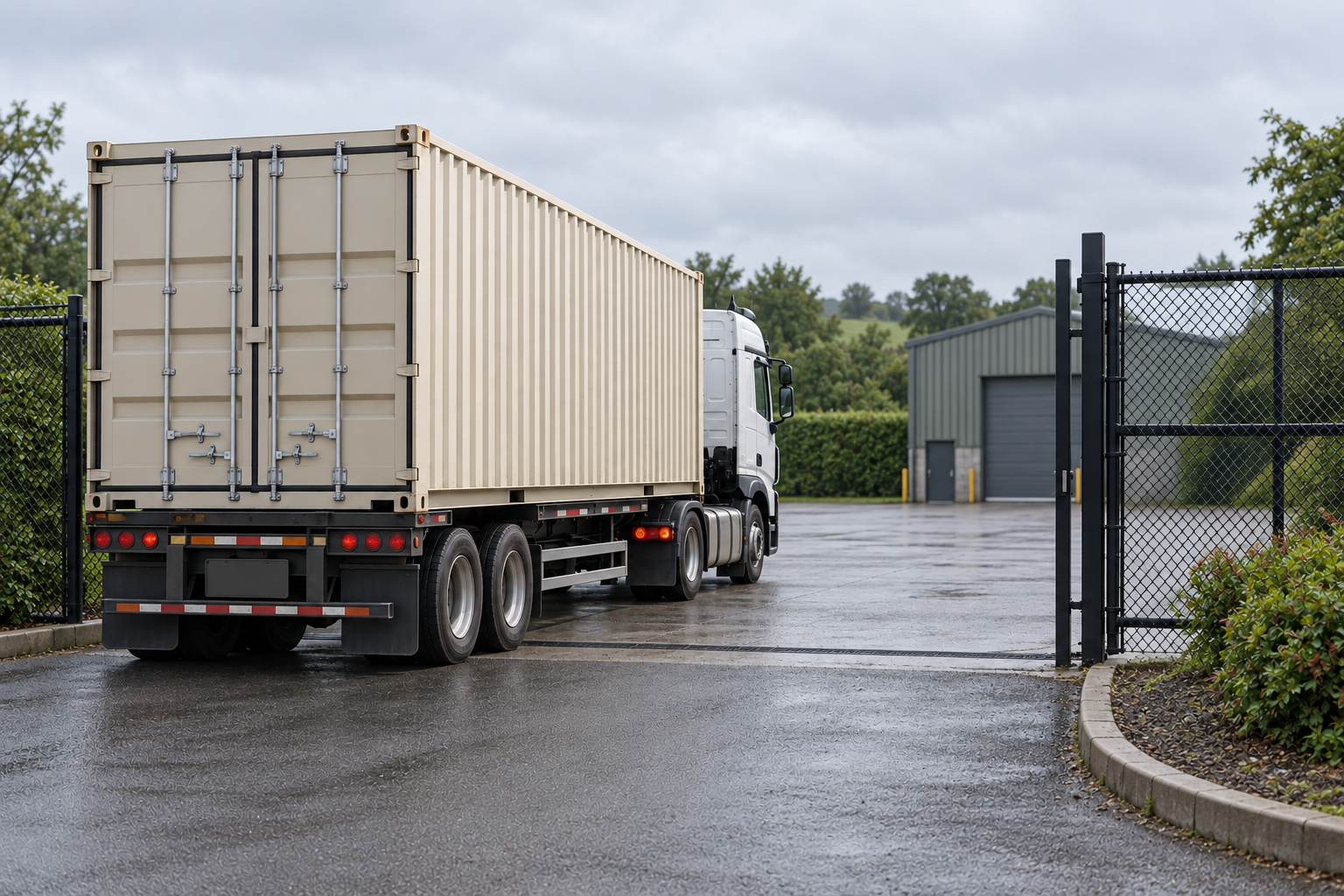
A Tralee-area store and a rural or coastal Kerry placement can require different approaches and unloading equipment. Photograph the final turns and entrance, describe steep sections and give a clear waiting point. Ask the operator to validate the proposed route to the property.
Provide the Eircode, full address, working entrance, site contact and photos of the final approach. Highlight gate width, bends, gradients, overhead cables and trees. Ask the haulier to review the complete vehicle and load.
Ask whether the offer uses a Hiab or other crane vehicle, a tilt-bed arrangement, or separate equipment. Agree the unloading surface, operating space, door direction, supports and responsibility for ground preparation.
Confirm site access after rain, the delivery slot and any gate booking. Record who decides whether conditions are suitable and how waiting, a failed delivery or a revised unloading plan will be charged.
Check an exposed site's ventilation, drainage and maintenance needs before choosing the container condition. If the placement is on grass or recently made ground, agree how supports and truck access will be prepared before delivery is booked.
Describe the container, duration, intended use and any service connections to the local authority responsible for the property. The planning position is site-specific. Temporary placement or a movable unit does not by itself establish an exemption.
Occupied offices, accommodation and public-facing conversions need advice on their planning and building-control requirements before purchase. See Local Government Ireland's planning guidance.
Agree suitable supports and drainage for the actual unit and ground. For moisture-sensitive contents, compare ventilation and any proposed insulation with the use, rather than assuming a weather-resistant shell prevents condensation.
Check the actual position on OPW flood maps where relevant, and use Met Éireann forecasts and warnings when planning the delivery day.
Ask for quotes covering the same work at your property. This guide does not assume a county price, depot location or delivery allowance.
| Item | What to confirm |
|---|---|
| Offered unit | Actual-unit photos or documented allocation terms, condition, dimensions, floor, doors and repair history where available. |
| Price | Amount in €, whether VAT is included, invoice terms and the applicable tax treatment. |
| Dispatch and transport | Actual release point, road route, vehicle, destination and any separately stated route or ferry costs. |
| Unloading | Equipment, placement limits, required working space and what happens if the site is unsuitable. |
| Preparation and fit-out | Supports, site works, electrics, insulation, ventilation and utility connections, with responsibilities allocated. |
| Supplier and payment | Seller identity, payment recipient, written cancellation terms, delivery date and independently verified contact details. |
Compare the offers on the quote tool or review the supplier-verification checklist.