




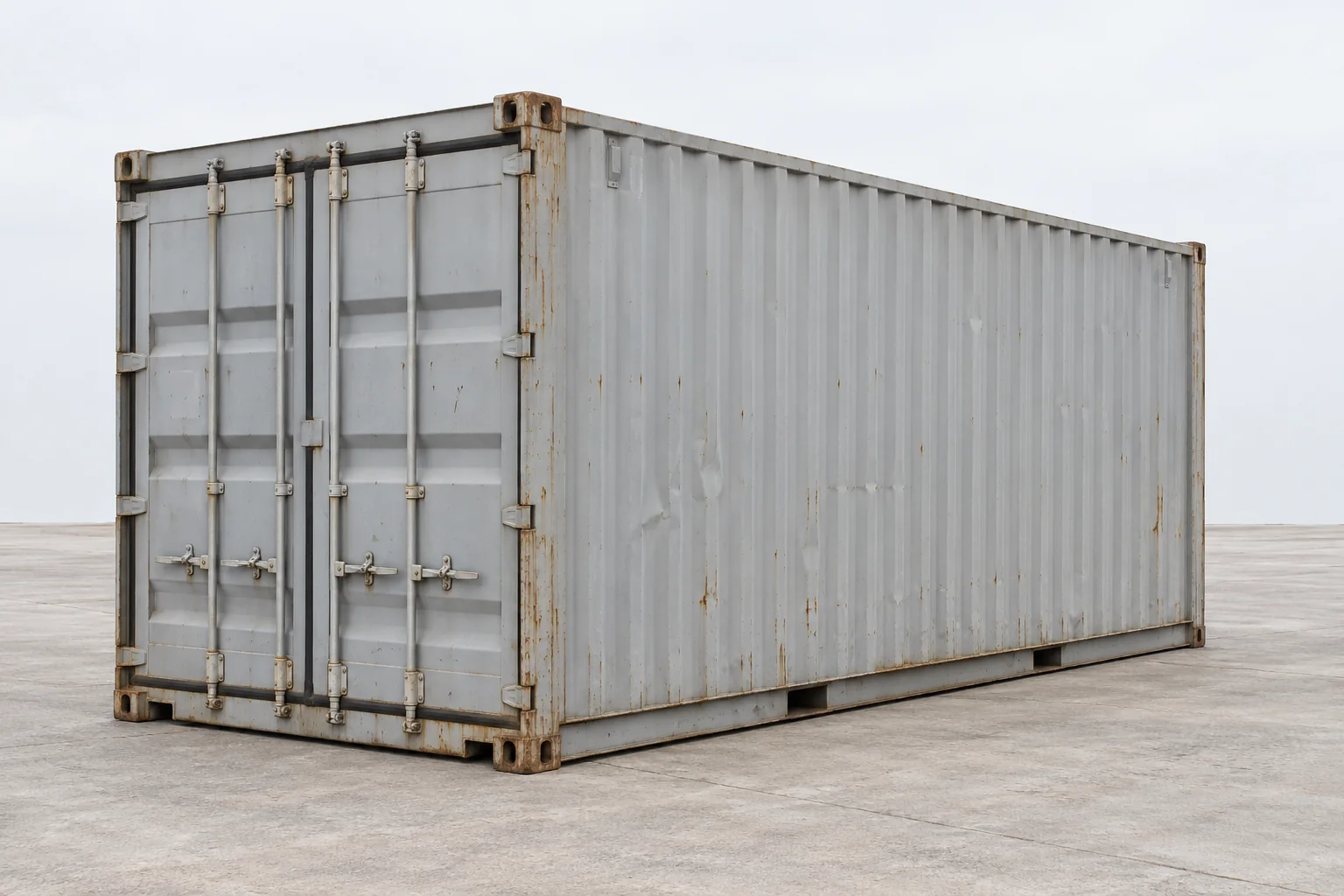
 Used · illustration
Used
A lived-in finishVisible wear and a less uniform finish.
Look beyond the paint
Read the used 20ft guide ↗Review dents, rust marks and any repaired areas on the actual unit.
Plan your container purchase in the UK.Compare quotes in £ for the same container and delivery services.
Start with your postcode. Compare your options.
Loading the delivery map…
UK sellers advertise the same steel box as a shipping container or a storage container, so compare listings under both names. A quote should name the unloading method: HIAB means a lorry-mounted crane, while a tilt-bed lowers its deck so the box slides off onto the ground.
Each UK nation runs its own planning system, so the delivery address decides whom you ask. In England that is the local planning authority, or the national park authority inside a park; Wales has its own planning framework, with park authorities for national park addresses. Scotland deals with the building warrant separately from planning, and in Northern Ireland the council planning office and building control may both be involved.
Buying as a consumer from a trader, with the whole deal done online, by phone or by email, you can cancel without giving a reason until 14 days after the container comes into your possession. Two limits matter for a heavy box: if the seller told you before the sale that returns are at your expense, the direct cost of sending it back is yours, and a unit made to your own specification is excluded from the right. Put the points listed here in any UK quote request.
| Container | Advertised price | Details |
|---|---|---|
| 20ft used | £875 | ex. VAT · checked 16 Oct 2026 |
| 20ft new / one-trip | £1,775 | ex. VAT · checked 16 Oct 2026 |
| 40ft used | £1,250 | ex. VAT · checked 16 Oct 2026 |
| 40ft new / one-trip | £3,625 | ex. VAT · checked 20 Oct 2026 |
| 40ft new / one-trip | £3,695 | tax not stated · checked 20 Oct 2026 |
| Delivery (transport) | £200 | 20ft, Surrey hire area · per delivery, each way · ex. VAT · checked 16 Oct 2026 |
Sources: HSE - Overhead power lines (checked 20 Oct 2026); Consumer Contracts (Information, Cancellation and Additional Charges) Regulations 2013, reg. 29(1) (checked 20 Oct 2026); Consumer Contracts Regulations 2013, reg. 30(3) (checked 20 Oct 2026); Consumer Contracts Regulations 2013, reg. 35(5)-(6) (checked 20 Oct 2026); Consumer Contracts Regulations 2013, reg. 28(1)(b) (checked 20 Oct 2026).
Explore your area, then plan around your delivery address.
Check access before choosing a container.
Compare the space. Picture your project.
Choose a format to see the details.
Browse all shipping containers for sale →
Your selected format · External proportions shown at the same scale.
Room for tools, equipment and everyday storage, with less space needed on your site.
About half the length of a 40ft. Check access and unloading space as well as the footprint.
Typical dry-container dimensions. Confirm the actual unit before planning a fit.
A longer interior for business stock, equipment and larger storage projects.
The same width and height as a standard 20ft, with roughly twice the length.
Typical dry-container dimensions. Confirm the actual unit before planning a fit.
Extra headroom for taller items, vertical storage or a project that needs more internal height.
Same footprint as a standard 40ft. An extra 1ft (0.30m) of exterior height.
Typical dry-container dimensions. Confirm the actual unit before planning a fit.
Illustrative dimensions, not delivery clearances. Confirm the exact unit and unloading space with your supplier.
Try a layout, compare formats and see how you could use the space.
Explore the interior with shelving, a workbench or an office layout.
Illustrative layout; fittings change usable space.
Confirm exact dimensions and project requirements with your supplier.
Compare the finish. Look at the details.
Choose the condition that fits your project.
Used · illustrationVisible wear and a less uniform finish.
Review dents, rust marks and any repaired areas on the actual unit.
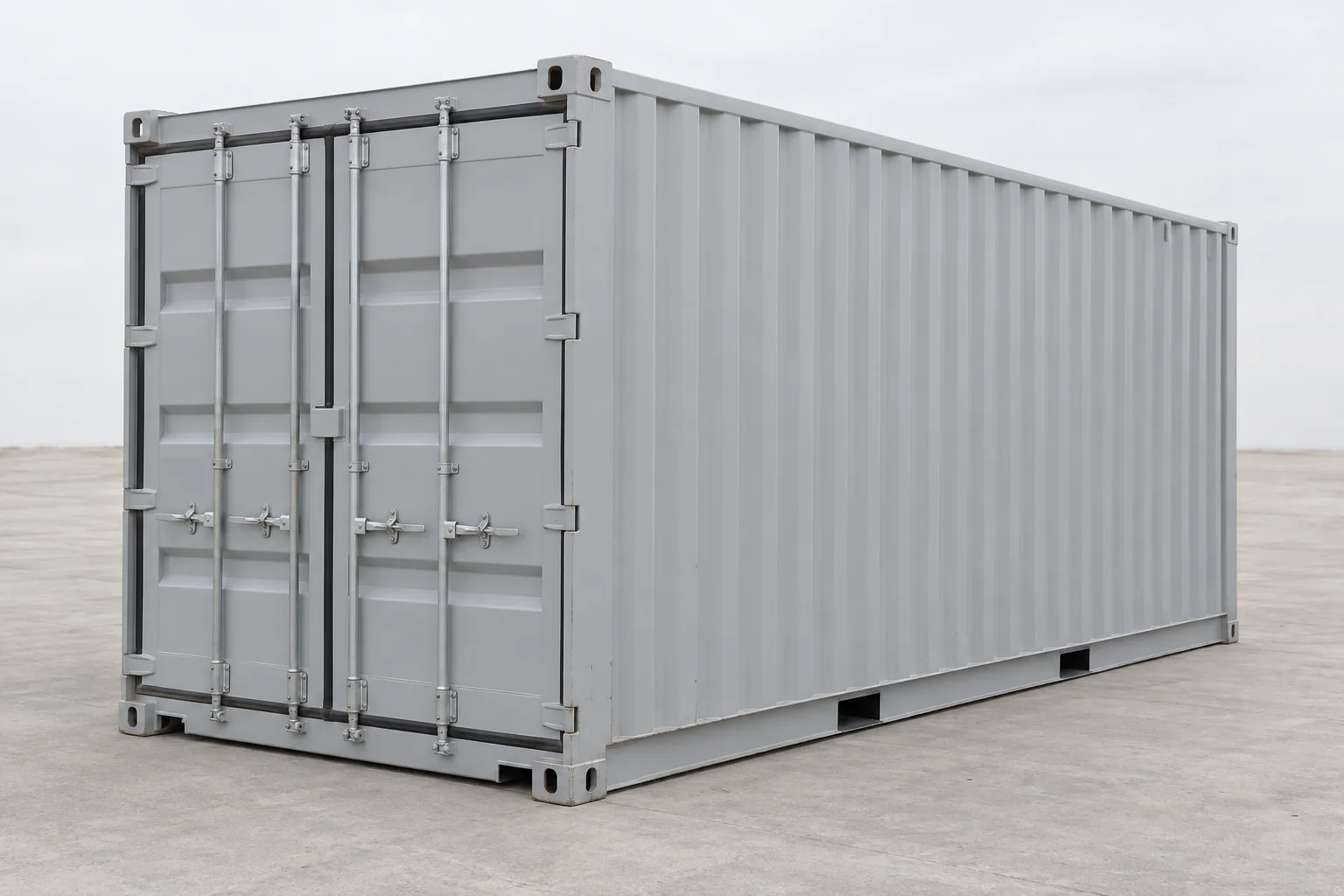 One-trip · illustration
A more uniform finish with limited visible wear.
Confirm acceptable scratches, dents and handling marks. One-trip does not mean blemish-free.
Used · illustrationWear around the door frame and locking hardware.
Request a video of both doors opening, closing and latching.
One-trip · illustrationA cleaner-looking door frame and hardware.
Check seals, hinges and any included lock fittings on the actual unit.
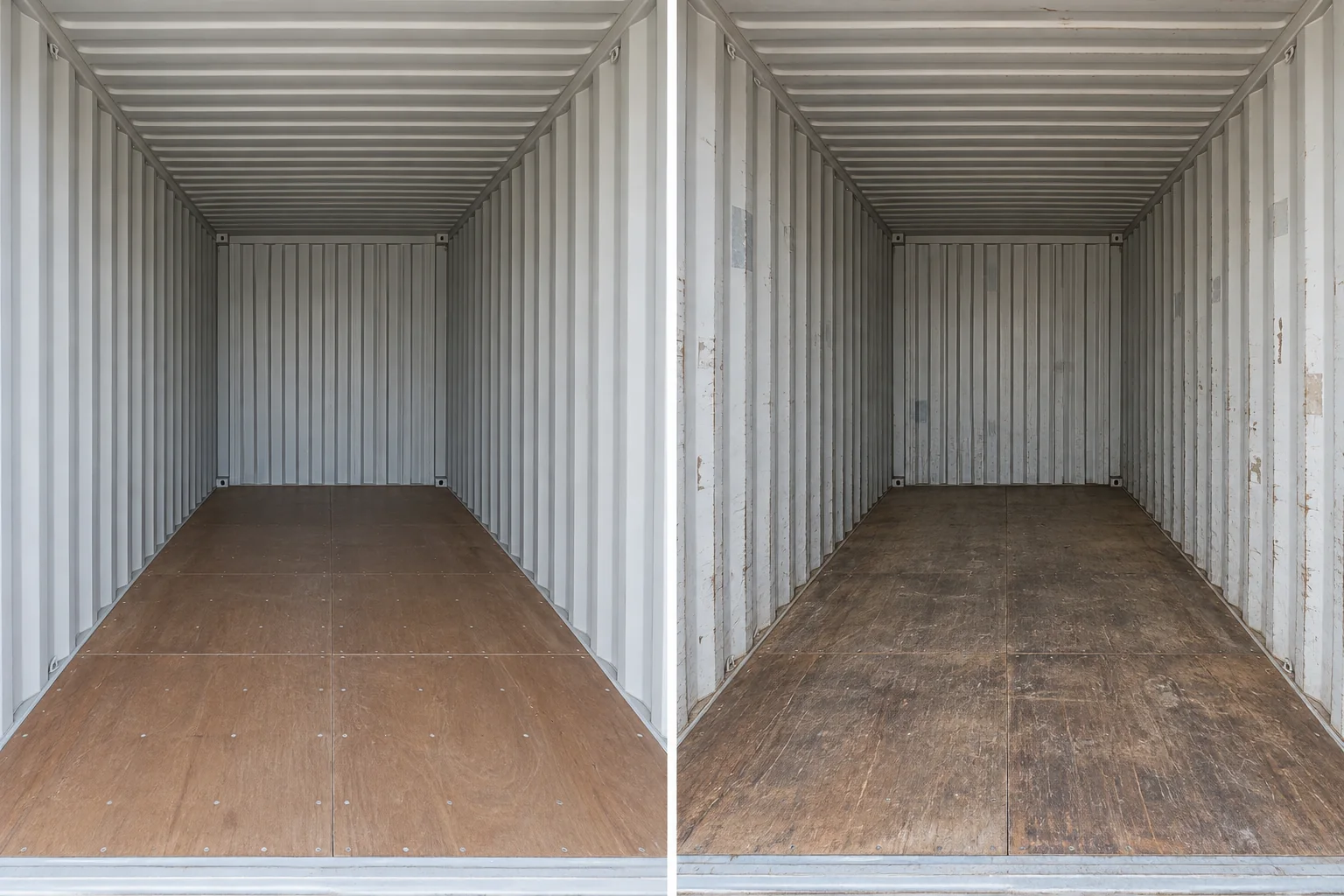 Used · illustration
A worn floor surface and marks on the walls.
Request close-ups of repairs and any damaged or damp areas.
One-trip · illustrationA more even floor finish and lighter wall wear.
Ask about any floor marks, gouges, residues or odours.
Illustrative 20ft examples. Ask for current photos and the condition of the actual unit offered.
Make space for storage, work or something more. Choose a project to shape your request.
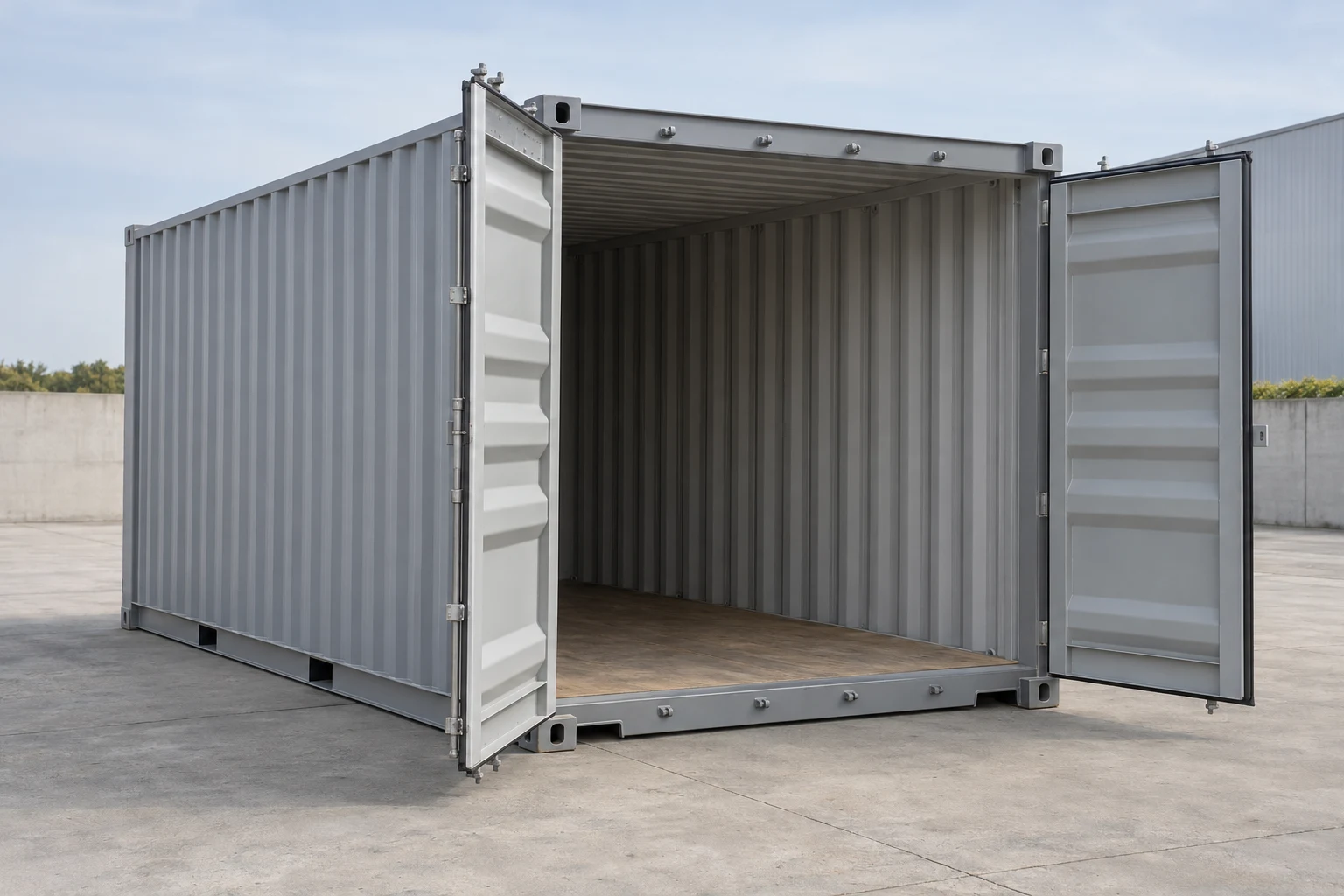 Illustration
Make room for tools, stock or equipment. Start with the size, access and condition you need.
What goes inside, how you reach it and where it will sit.
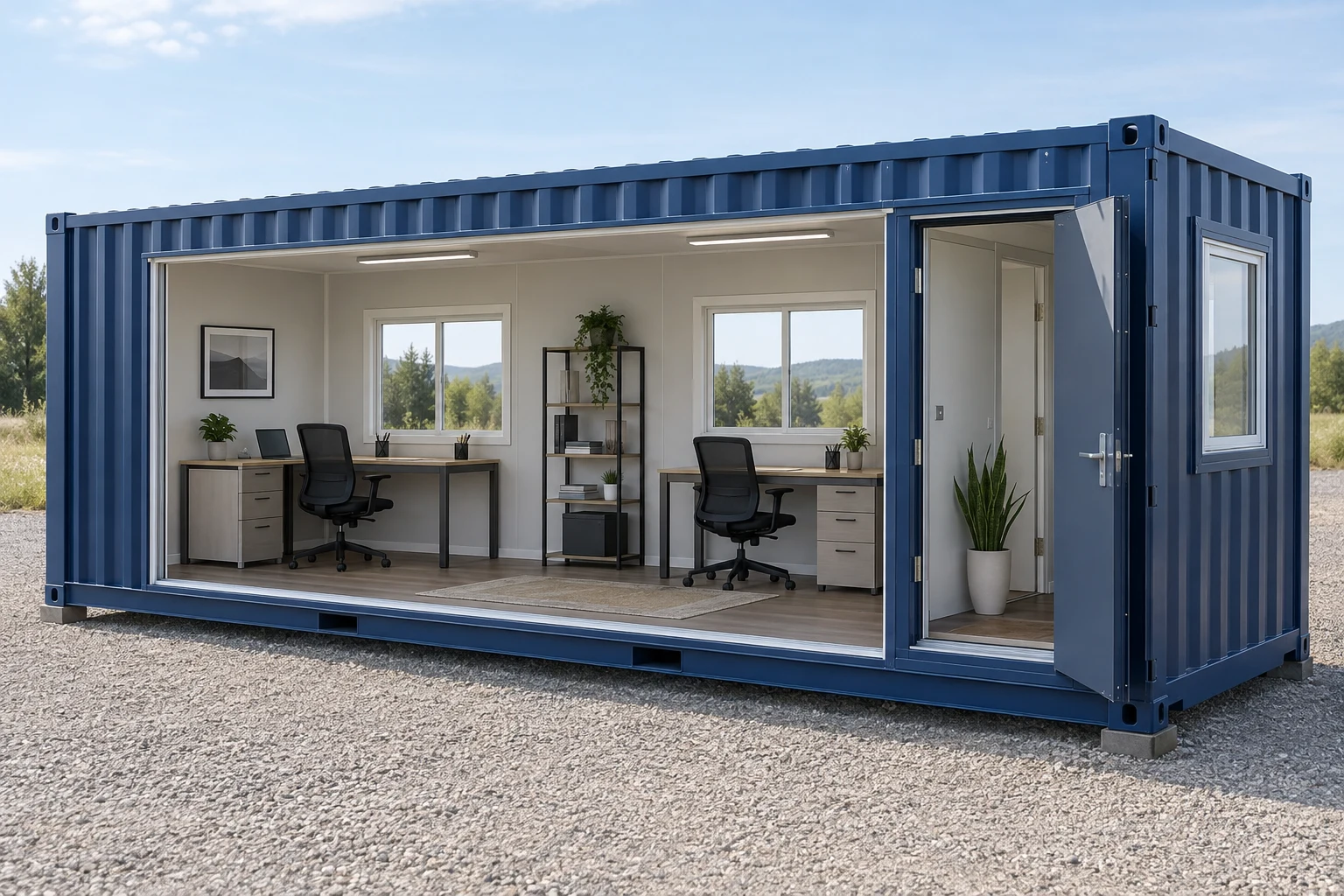 Illustration
Shape a workspace around your team. Consider the layout, insulation, openings and site connections.
Daily use, interior fit-out and the work needed on site.
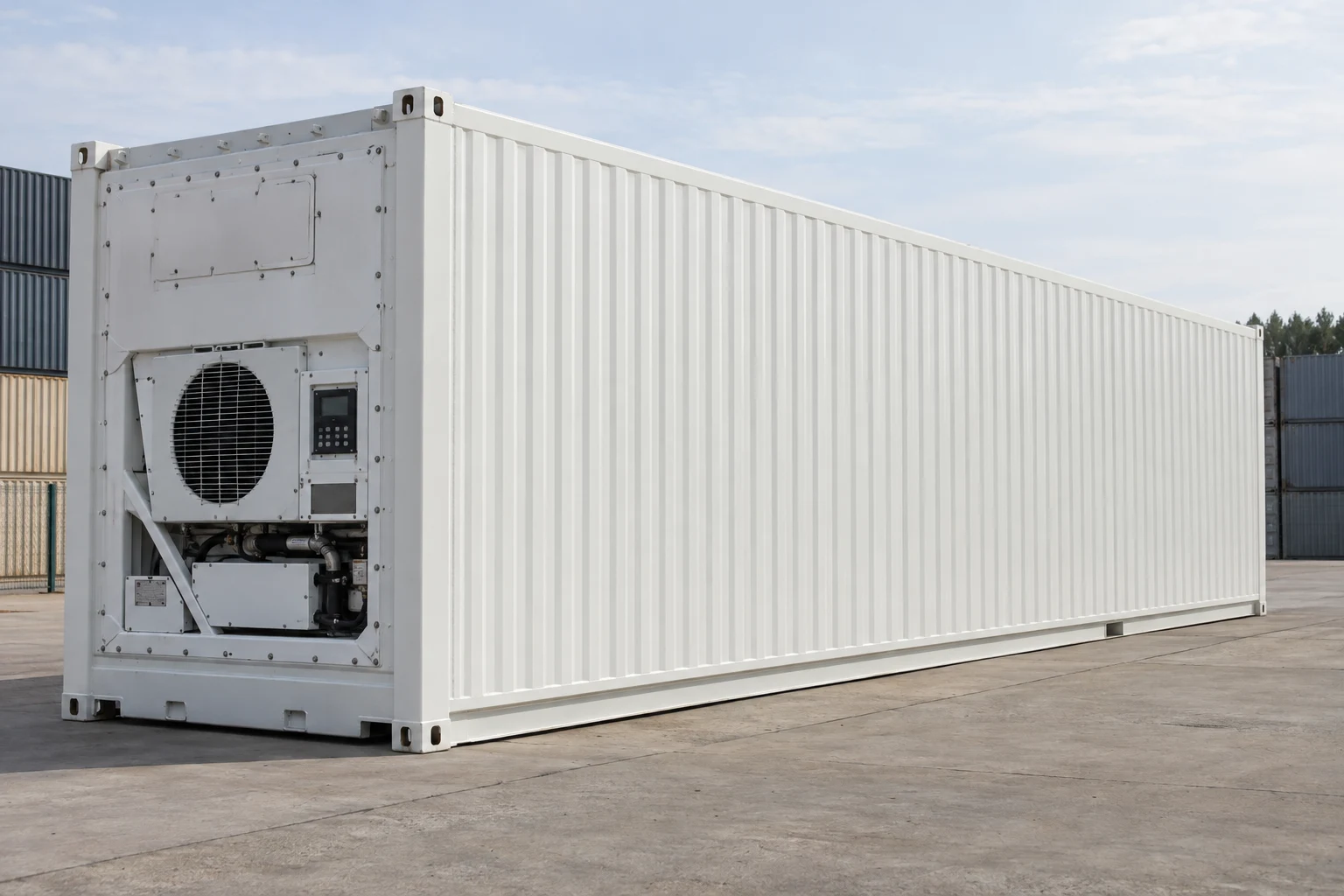 Illustration
Set out what you need to keep cool. Compare the required temperature, capacity and power supply.
Stored goods, operating conditions and site power.
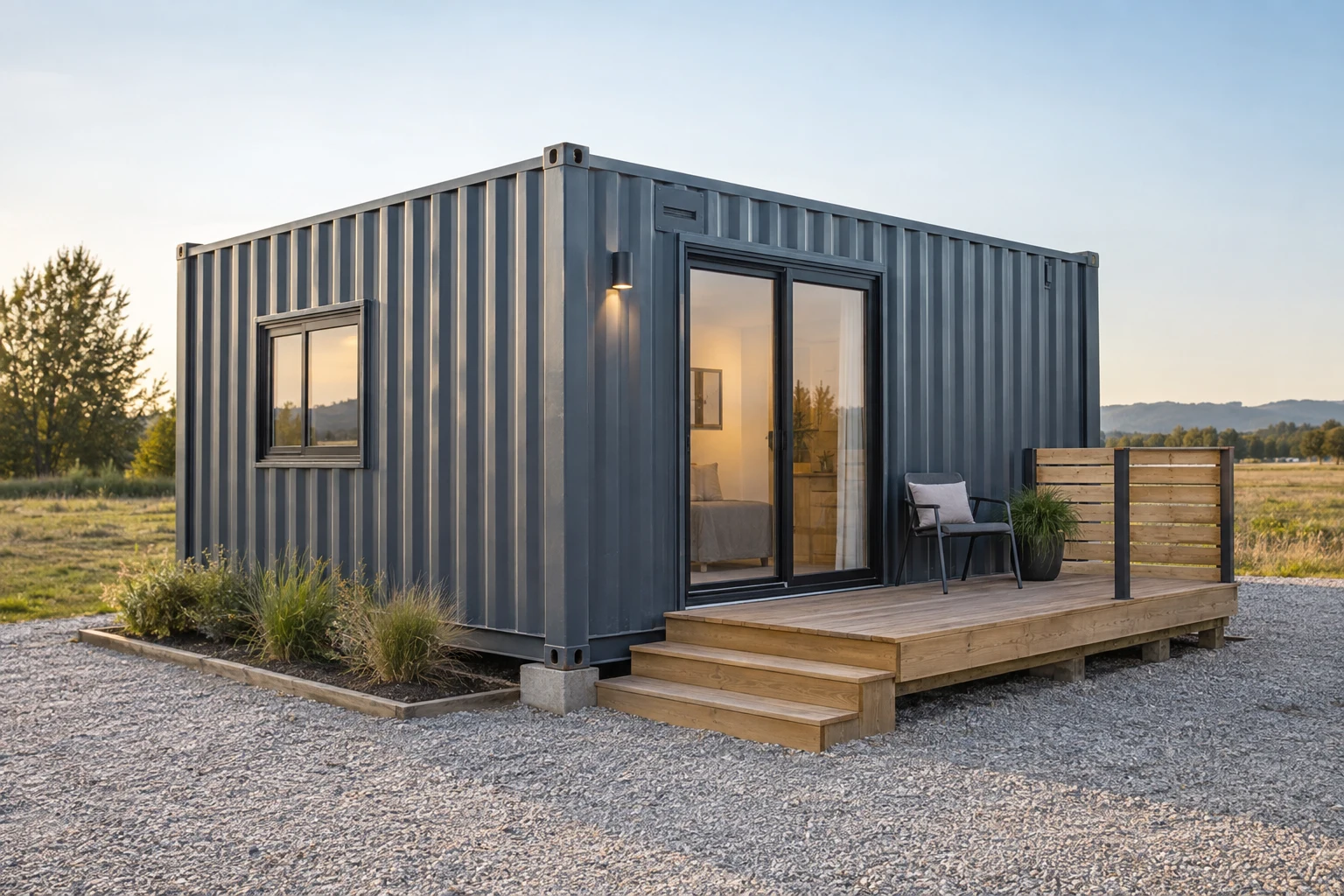 Illustration
Compare a shell, a kit and a finished home. Decide which rooms you need and what work remains on site.
Local requirements, finish level and site connections.
Illustrations show ideas. Confirm the actual unit, specifications and work included with your supplier.
Explore the four parts of a delivery plan. Share what you know with your supplier before arranging delivery.
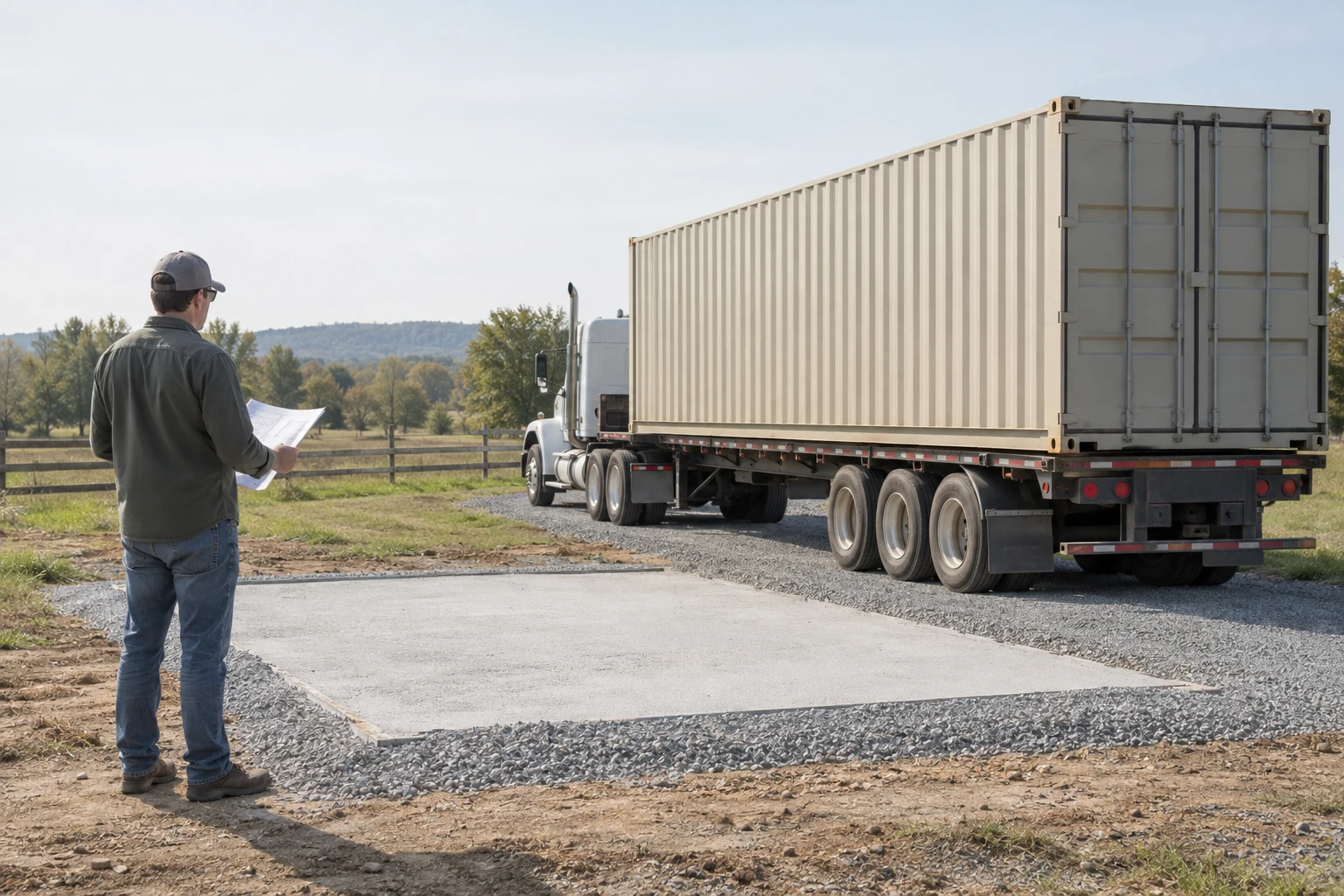
Describe the route from the public road to the drop-off point.
Ask your supplier to confirm the vehicle’s access requirements.
Help your supplier understand where you want the container to sit.
Confirm ground preparation and support with your supplier.
The delivery method depends on the supplier, equipment and site.
Agree who provides any equipment needed on site.
Give the driver the details they need to reach the right person and place.
Confirm arrival arrangements directly with your supplier.
Illustration only. Your supplier should confirm the delivery method and site requirements.
Ask each supplier for an itemised total to your postcode. Compare the same size, condition and delivery requirements.
Size, height, condition and requested modifications.
Delivery to your address, equipment and placement.
Ask whether VAT is included and which other charges are extra.
Use the same delivery postcode, size, condition and unloading requirements for each request. Ask for the delivered total, current photos, an availability confirmation and the seller’s terms before choosing.
Compare the actual units against your storage or conversion needs. Ask about usage history, repairs, doors, seals, floor and roof. A condition label alone does not tell you everything about a unit.
Yes—include the height or modifications you need in your request. Ask suppliers to confirm the exact specifications, suitability for your project and availability before you order.
The unit, delivery location, transport distance, unloading method and access restrictions can all affect the quote. Ask the seller to separate those costs and identify any additional fees.
The supplier you choose confirms the unit, price, payment terms and delivery arrangements. ContainerPick helps you prepare your requirements so you can compare supplier quotes on the same basis.
Your location, format and delivery details — ready to compare.