
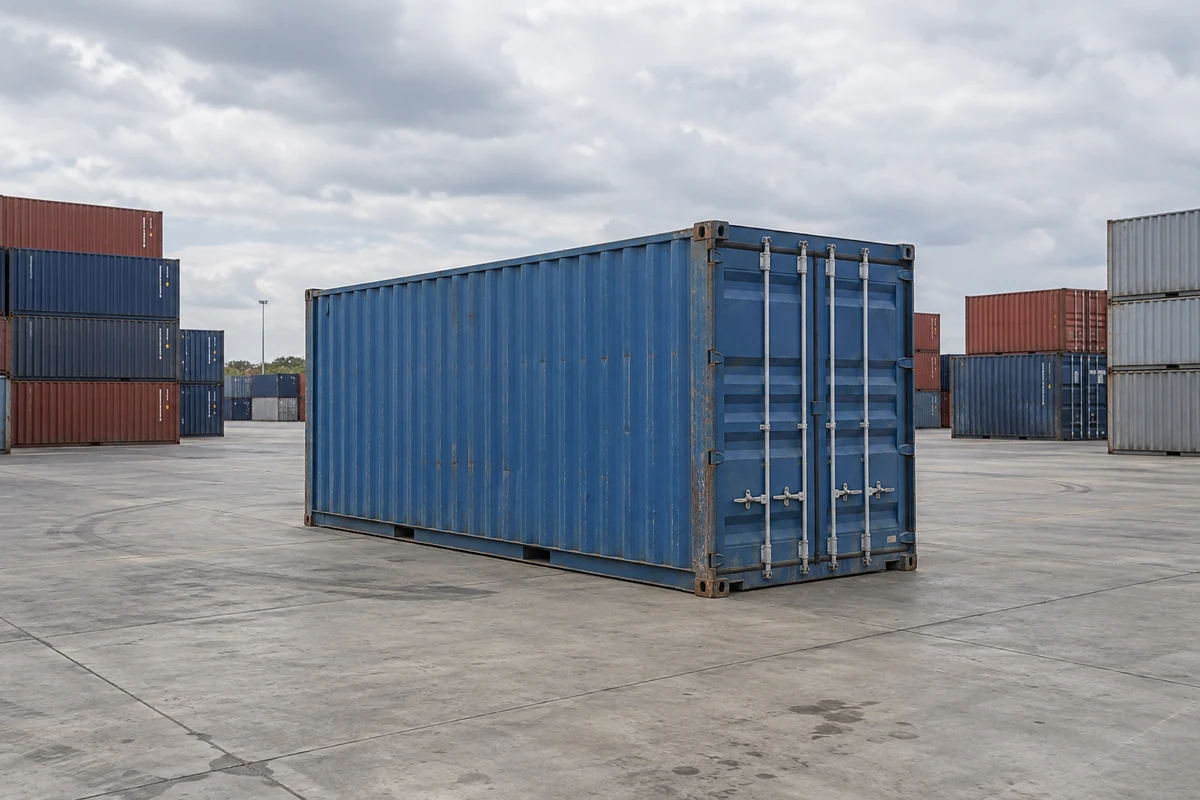
20ft standard container — used
- Used
From €1,250
Advertised price, checked 16 Oct 2026 · ex. VAT · before delivery
Delivery quoted to your Eircode
Describe what you need for your container purchase in Ireland. Compare written quotes that include the same work.
20FT / SELLER-DEFINED ECONOMY GRADE
Economy grade is a seller-defined description, so ask what defects, repairs and weather protection the exact 20ft offer includes. It does not automatically mean wind-and-watertight or as-is. Compare the unit, necessary work, Irish delivery, unloading and applicable VAT before treating a lower equipment price as a saving.
Low-end estimate, incl. VAT, before delivery. Confirm with a written quote for the actual unit.
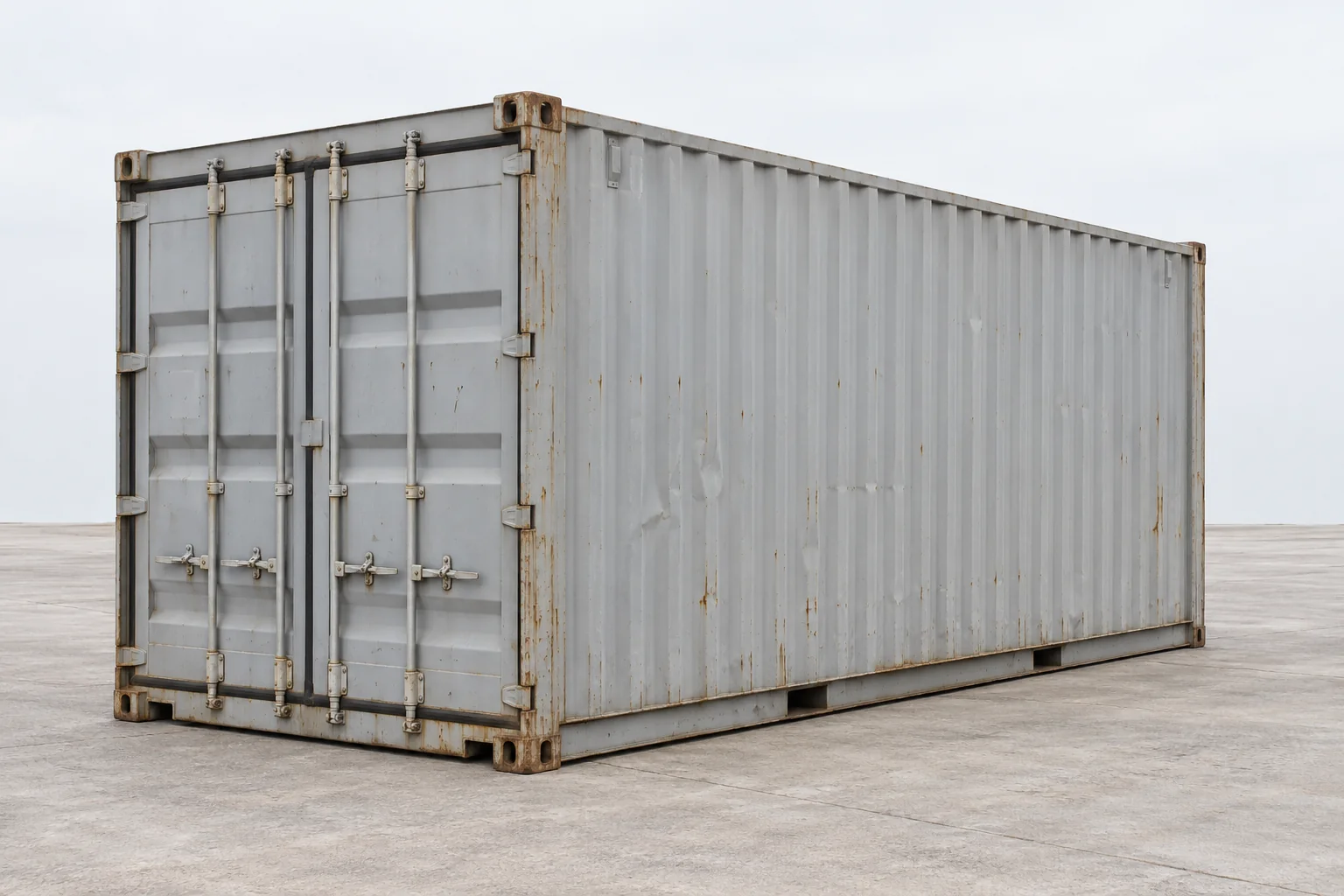
From €1,250
Advertised price, checked 16 Oct 2026 · ex. VAT · before delivery
Delivery quoted to your Eircode
Prices are examples advertised by sellers on the date shown, not ContainerPick offers. Stock, condition and the delivered total are confirmed in each quote.
The condition promised when a container is delivered and a remedy for a later defect answer different questions. Ask for both in writing, including the covered areas, duration, exclusions, reporting process and remedy.
If wording covers roof leaks only, check the separate position for walls, door seals, floor and structure. Roof-only wording does not establish that the entire container is watertight. Do not assume a warranty exists, or assign a duration or remedy that the written offer does not provide.
Visible dents or old paint may matter less than working doors, intact seals and a sound floor. For frequent tool access, keep a clear route to the back and place the daily-use items near the entrance.
For seasonal equipment, spare materials or business stock, choose the layout around both item size and retrieval frequency. A WWT container keeps weather out under the seller’s agreed condition; it does not actively control temperature or humidity.
Before planning a conversion, agree which repairs are needed and what they cost. Floor damage, structural work and difficult doors can wipe out the saving. Check the unit history and planned alterations before deciding that people can occupy it.
Compare a one-trip starting shell →Request a current, itemised euro quote for the exact container and Irish delivery address. An equipment price alone is not the delivered project total.
| Quote item | Confirm in writing |
|---|---|
| Equipment | Size, condition, identified unit, included fittings and availability at the time of enquiry. |
| Transport | Collection location, delivery Eircode or site address, route, timing, ferry costs where relevant, and any access restrictions. |
| Unloading and placement | HIAB or separate crane arrangements, lifting reach, ground assessment, waiting time and responsibility for the final position. |
| VAT and additional work | Confirm whether each amount includes VAT. Consumer-facing totals should include applicable VAT and unavoidable charges. Identify electrical work, supports and other excluded work separately. |
| Validity and payment | Written quote expiry, deposit, balance date, cancellation terms and the party taking payment. |
Ask for recent photos of the actual unit, a condition report, checks on the doors and floor, and details of any repairs or cleaning included.
Irish stock, supplier coverage and final prices must be confirmed by the seller.
Use two quotes for the same 20ft format and delivery address. Include the work needed to make each unit suit your project.
This compares up-front costs. Condition, repair quality and suitability still matter; future maintenance and resale are outside this calculation.
Start with the actual defects rather than a generic repair allowance. Separate the work needed for your storage use from improvements you would like.
Leaks, holes, damaged floor sections and doors that will not close or latch need an agreed remedy. Significant structural corrosion or distortion needs an inspection and a priced repair decision before you commit to the unit.
A local paint chip or surface corrosion may call for cleaning, preparation and coating. A dented roof that holds water deserves closer inspection. Price the affected area and the preparation method, rather than assuming a full repaint solves every problem.
Faded paint, old lettering or an accepted shallow dent can be compatible with useful storage. A uniform new colour is a separate choice. It can be worth paying for on a visible property without being a condition requirement for every tool store.
Compare the used unit, delivery, needed repairs, finish and options with a one-trip quote for the same use and destination. Include labour, materials and any trip to a workshop. Count repairs included by the seller once and keep their written details.
A sound used unit needing no cosmetic work may retain a clear price advantage. If necessary repairs and the finish you want narrow that gap, one-trip deserves another look. Use quoted work and completion dates; neither a lower price nor fresh paint establishes a number of years of service.
The grade should answer what the unit can be used for. It does not tell you how attractive it looks or establish a universal level of wear.
| Condition | What to compare before buying |
|---|---|
| Wind & watertight (WWT) | A storage condition offered as keeping wind and water out. Check actual roof, seals, floor, repairs and the seller’s written criteria; WWT alone does not establish overseas shipping approval. |
| Cargo-worthy (CW) | A transport-related condition focused on structural suitability. Ask for inspection details, current approval/examination or survey records, carrier acceptance and any extra survey charge. Cosmetic wear can remain. |
| As-Is | May describe damaged condition or sale terms. Get a defect list and priced repair scope; do not assume working doors, a sound floor or weather-tightness. |
For stationary storage, a documented WWT unit may meet your needs without buying a transport survey you will not use. For freight movement, decide with your carrier and the actual container’s paperwork. Fresh paint does not establish either structural condition or shipping suitability.
Evaluate the actual unit. A colour, grade label or representative image cannot tell you whether the doors, roof and floor meet your agreed condition.
| Area | Wear to discuss | Issues to resolve before acceptance |
|---|---|---|
| Walls, roof and frame | Faded paint, shallow dents, lettering or surface rust. A sound repaired patch can be compatible with storage. | Holes, leaks, deep corrosion, cracks or distorted structure. Look more closely at roof depressions that hold water and rust streaks around a patch. |
| Cargo doors | Scuffed paint or worn-looking hardware, provided operation and closure meet the agreed condition. | Binding doors, damaged hinges or locking bars, incomplete seals, or a door that will not latch. Replacement parts and alignment are a repair scope, not a repaint. |
| Floor and interior | Dry marks or superficial scuffs whose condition and use are understood. | Broken or soft floor areas, protrusions, damp patches, residues or persistent odours. Identify the cleaning or flooring work before covering the area with shelving or lining. |
Pictures show visible wear; they do not establish the extent of hidden corrosion or a damaged floor. Use an inspection for doubtful structure or flooring and obtain a repair description tied to the affected area. Repainting can improve appearance and protect prepared steel, but it does not replace patching a hole, replacing a seal or repairing damaged timber.
Use the checklist below to keep dispatch and arrival records together. Note what used wear you accepted, what defects are still unresolved and what damage happened in transit.
A representative standard 20ft dry container has about 13.8 m² (149 sq ft) of bare interior floor and 33.2 m³ (1,172 cu ft) of empty volume. An aisle, shelving, entry space and any lining reduce the space available for goods. Daily access usually needs a different arrangement from dense storage unloaded only occasionally.
Used condition does not change the nominal size, but repairs and previous modifications can change the clear space you receive. Measure the actual interior for your final layout; the 20ft comparison page provides the complete dimension reference.
For a working tool store, a clear route can be more valuable than filling every part of the floor. This example uses an interior of 5,900 × 2,352 mm.
Scroll sideways to see the full layout.
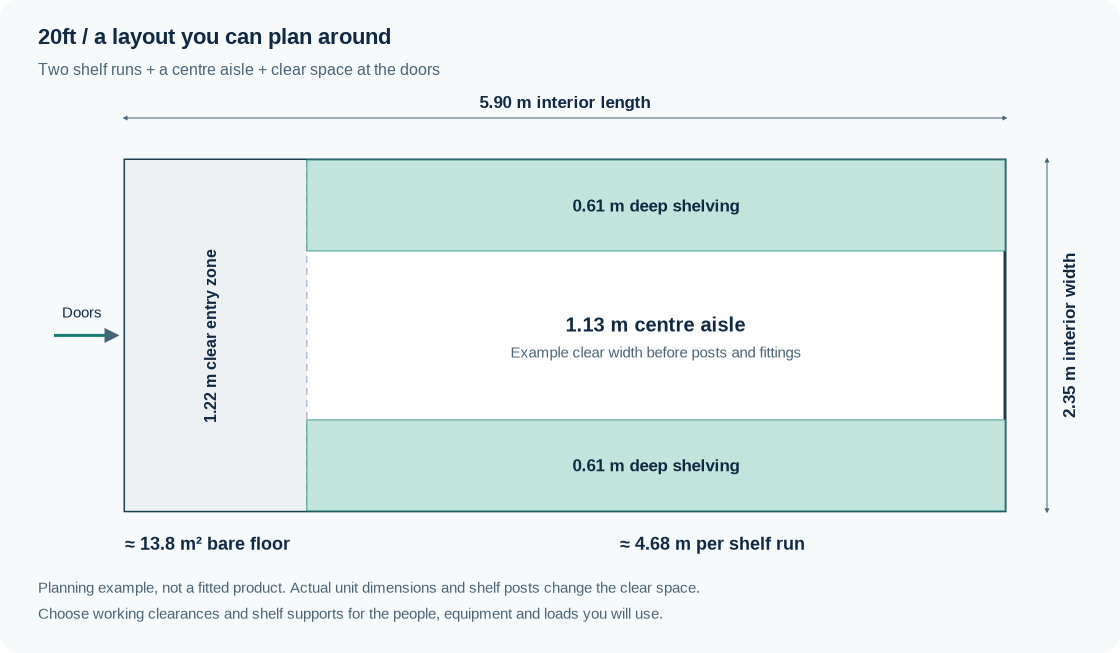
For seasonal storage, grouped stacks can use more floor space, but the rear group may be inaccessible until the front is removed. Group by retrieval date and label the outward-facing sides rather than losing time opening every box.
These are chosen planning layouts, not clearance standards or fitted shelving included in the sale. Account for the actual shelf frames and load ratings, repaired floor areas, door movement and the space you need to carry items.
An accessory should solve the next practical problem, not conceal a defect. Start with sound flooring, weather protection and working doors.
A lockbox shields a padlock from direct access. Match the lock to the fitted box and include the keys in the order. Check the door hardware first: a new lockbox cannot correct a door that does not latch.
Choose depths and bay sizes from your cases and cartons, and specify rated loads and installation. Keep daily-use stock near the entrance and heavier items lower down. Resolve any damaged floor or proposed fixing area before installing the racks.
For regular visits, door effort matters. A working-door video is more useful than a freshly painted door photo. Compare any easy-opening hardware or an added personnel door after defects in the existing hinges, bars, seals or alignment are resolved.
For files, textiles or boxed stock, a WWT label is only part of the storage plan. Larger vents or a designed fan system address air exchange; insulation and powered control may be needed where temperature or humidity must stay within a specified range.
A weather-tight shell can still develop condensation when moisture inside meets colder steel. Bring in dry goods and packaging, keep wet garden or jobsite equipment separate from moisture-sensitive contents, and leave the planned air route open.
The small vents on a standard dry container mainly equalise pressure. Passive ventilation follows outside conditions and does not set a humidity or temperature level. Specify moisture-control work separately from repairs that stop rain entering through the roof or seals.
Ask whether the sale identifies a particular unit or uses the next suitable container from a stack. If colour or appearance matters, confirm selection options and any extra charge before placing the order.
Provide your delivery Eircode and site photos. Confirm the unloading method, responsibility for lifting equipment, access and overhead clearance, firm placement area and door orientation with the transporter. Keep the agreed condition report available when receiving the unit.
Write down whether the transport price includes unloading and final placement. Tilt-bed delivery and flatbed delivery have different working-space and equipment needs. Leave usable ground outside the cargo doors for their swing and for carrying stock in and out after the truck has left.
Keep the unit identification and condition records together. They can help resolve disagreements about used wear.
If a door binds only after placement, have the support and level checked alongside the door alignment. Uneven ground can put the box out of square. A failed seal or damaged hinge calls for a different remedy, so describe the symptom and location rather than accepting all door trouble as ordinary used wear.
Compare the finish, buying budget and checks that matter to your project.
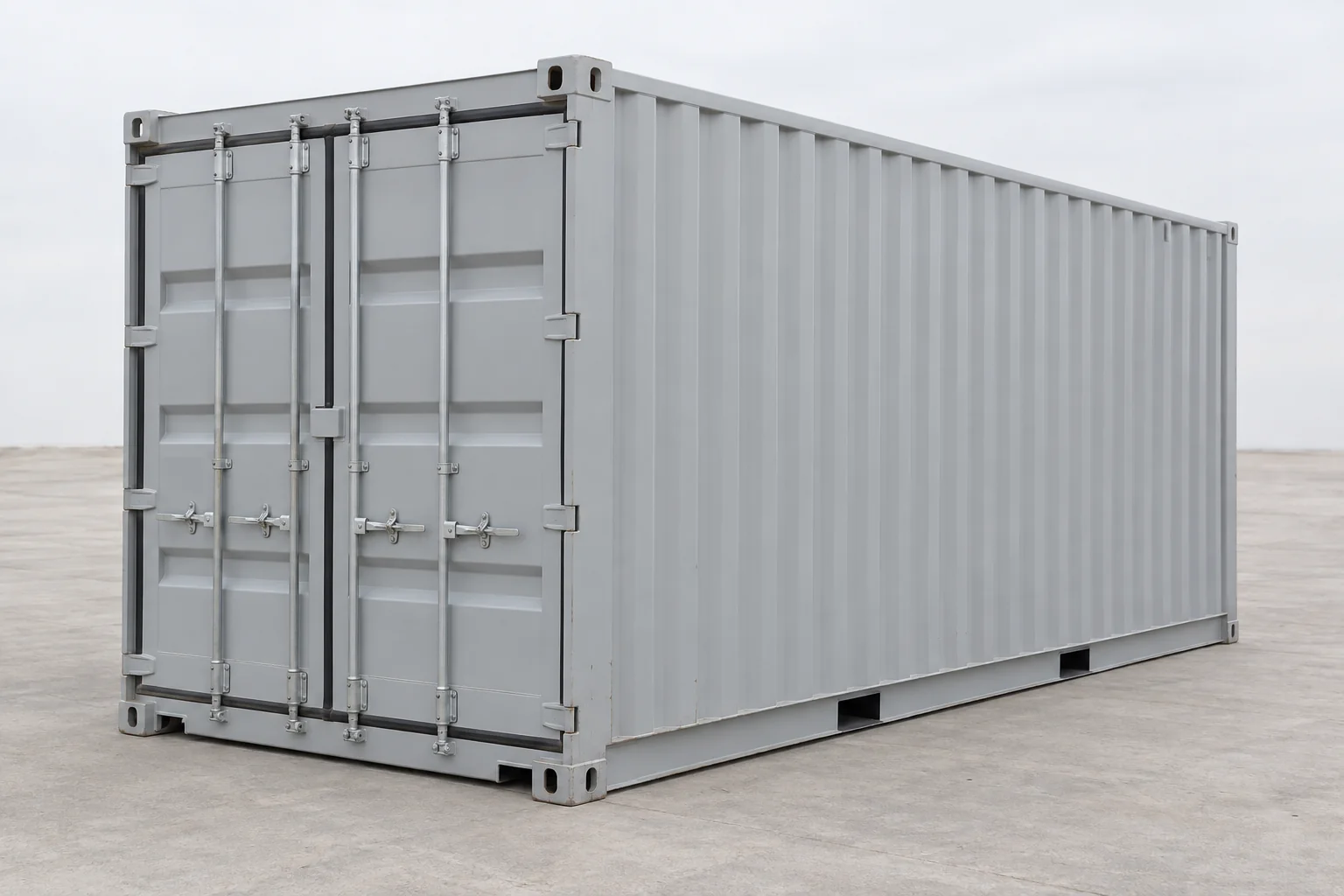
A cleaner finish, with less visible wear. Check the included features and any handling marks.
Explore 20ft new / one-trip →Compare storage and cargo-worthy options. Check the actual floor, doors, repairs and weather sealing.
You are viewing this optionUsed means the container has been used before. Check its grade and condition records to see whether it suits your plans.
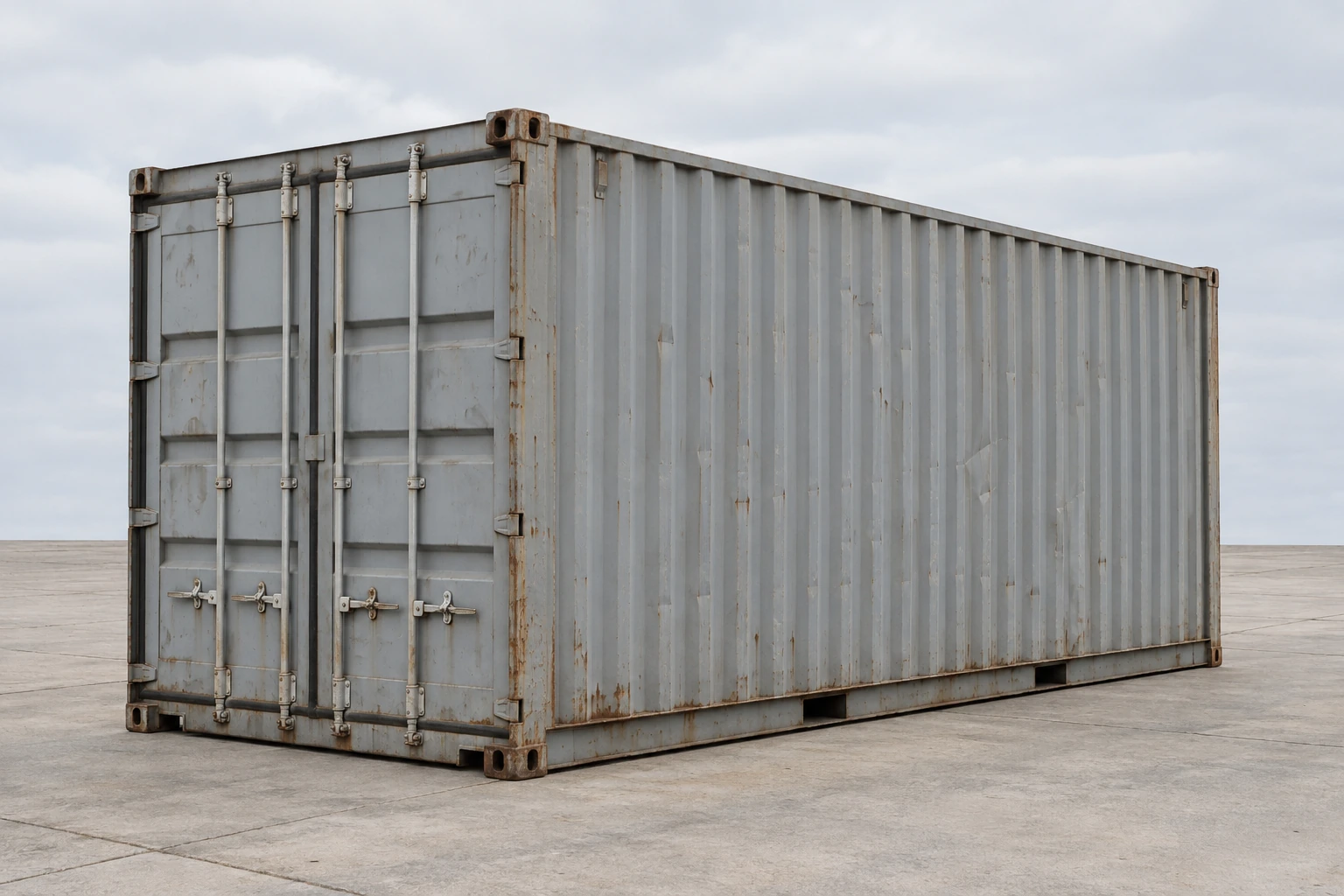
For storage: compare weather sealing, floor condition and working doors. A WWT label does not establish approval for ocean shipping.
Explore wind & watertight →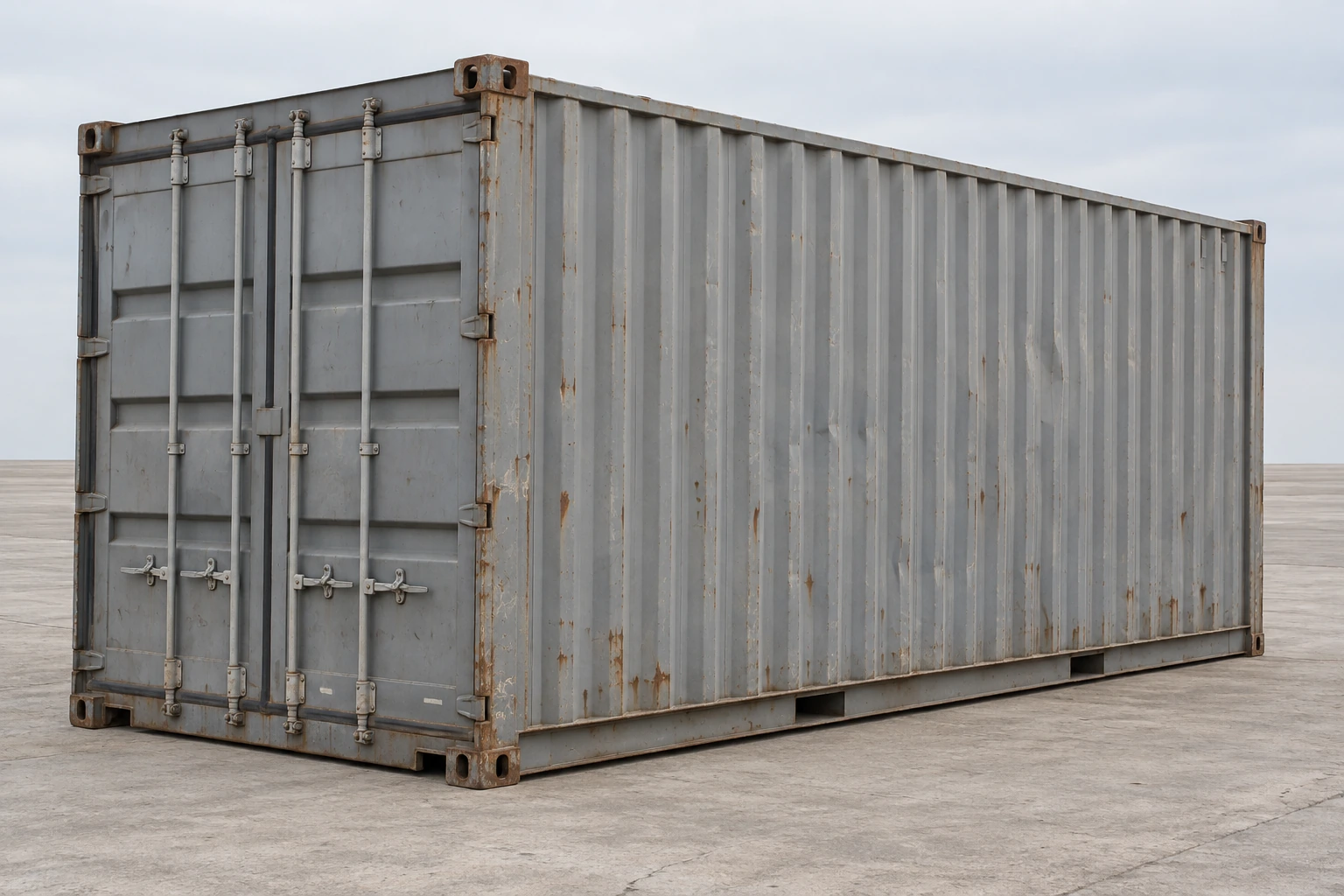
For a transport project: compare the actual inspection, CSC examination records and acceptance by your intended carrier.
Explore cargo-worthy →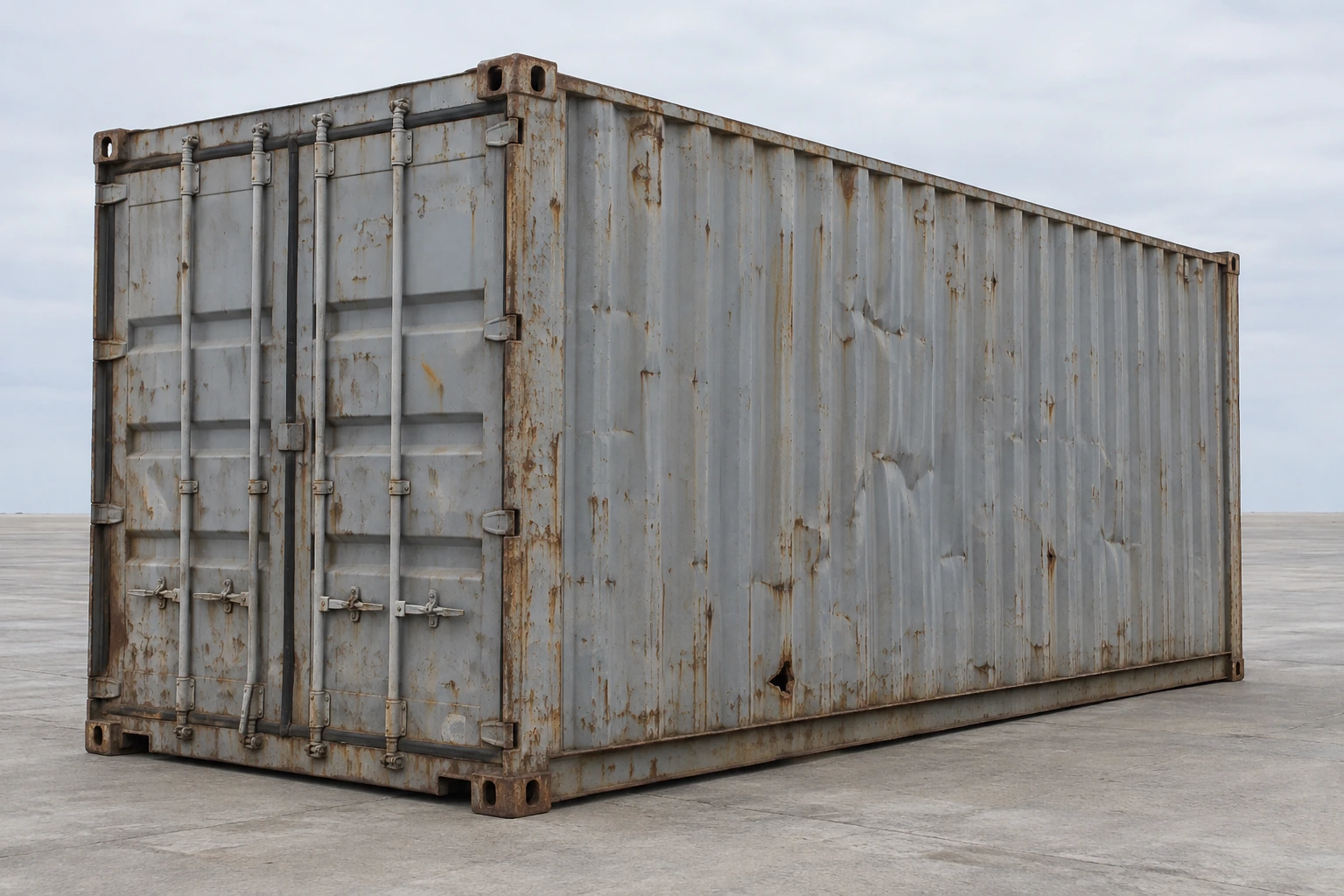
For a repair project: identify the defects and price the work before comparing the complete cost with a usable container.
Explore as-is →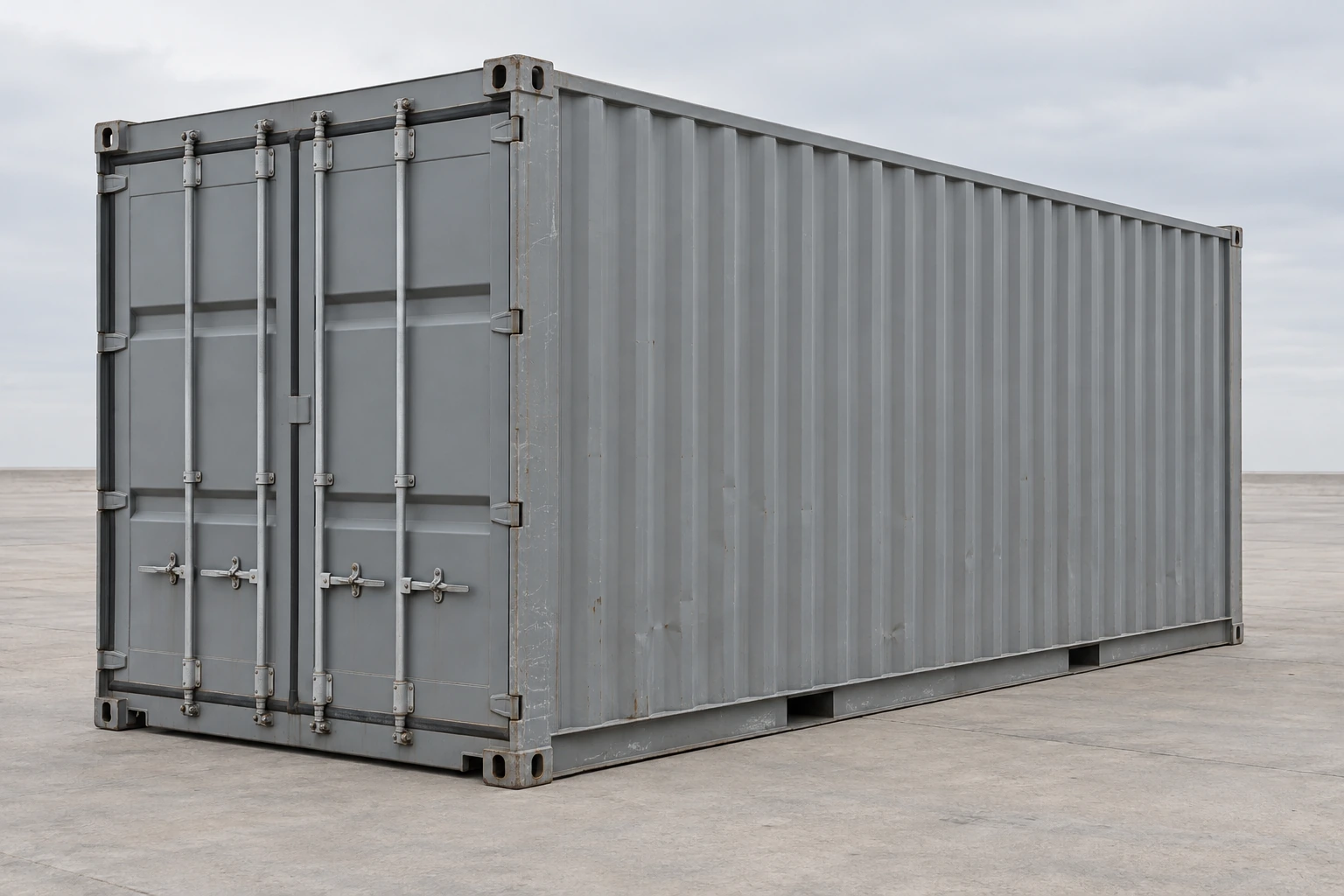
Compare an offer described as lightly used with one-trip. Confirm the actual history and finish; the label is defined by the seller.
Explore multi-trip / limited use →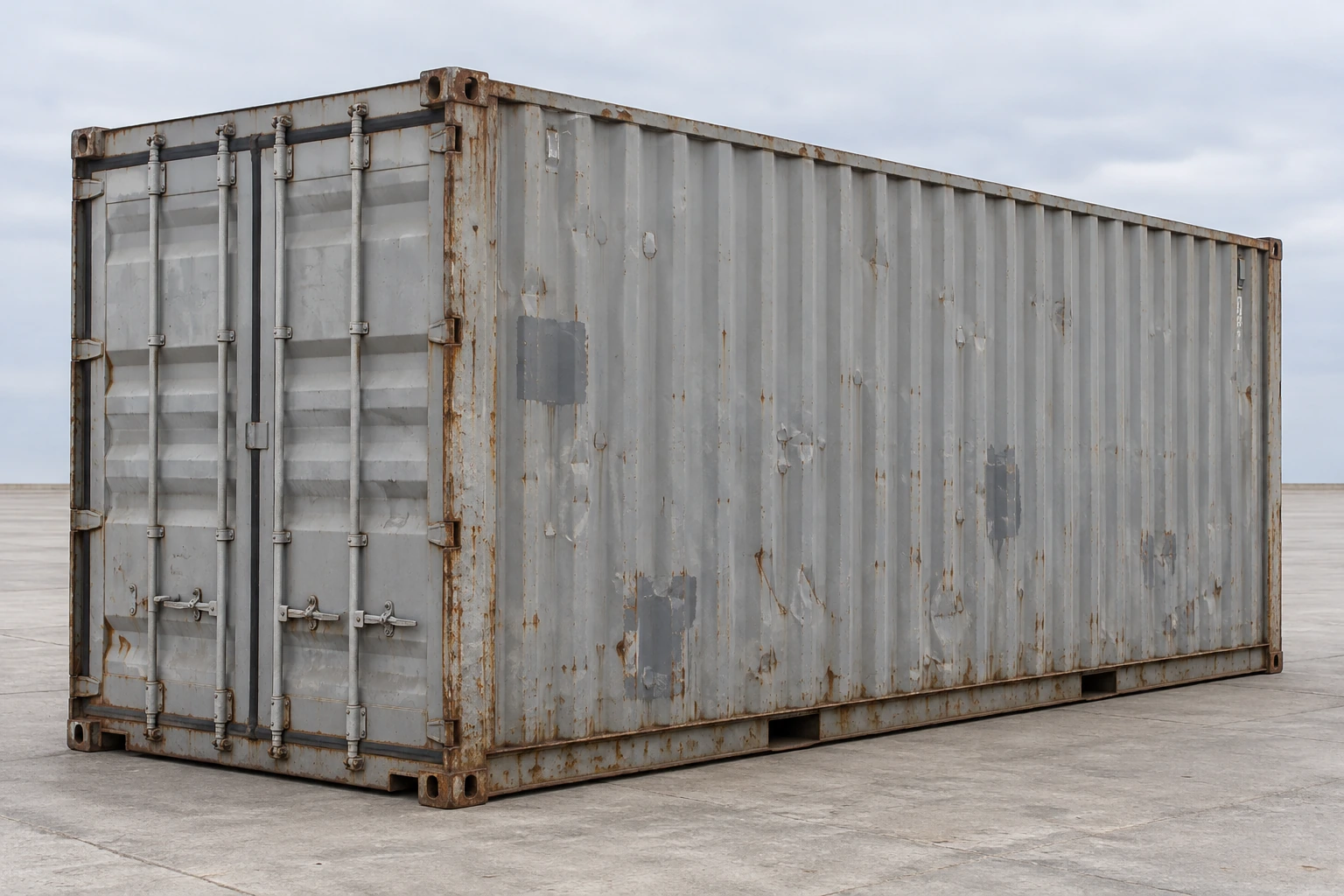
Compare budget storage offers by the defects accepted and the protection included. Economy does not automatically mean WWT or as-is.
Explore economy grade →Compare the floor surface, wall wear and visible repairs, then request close-up photos of the actual unit.
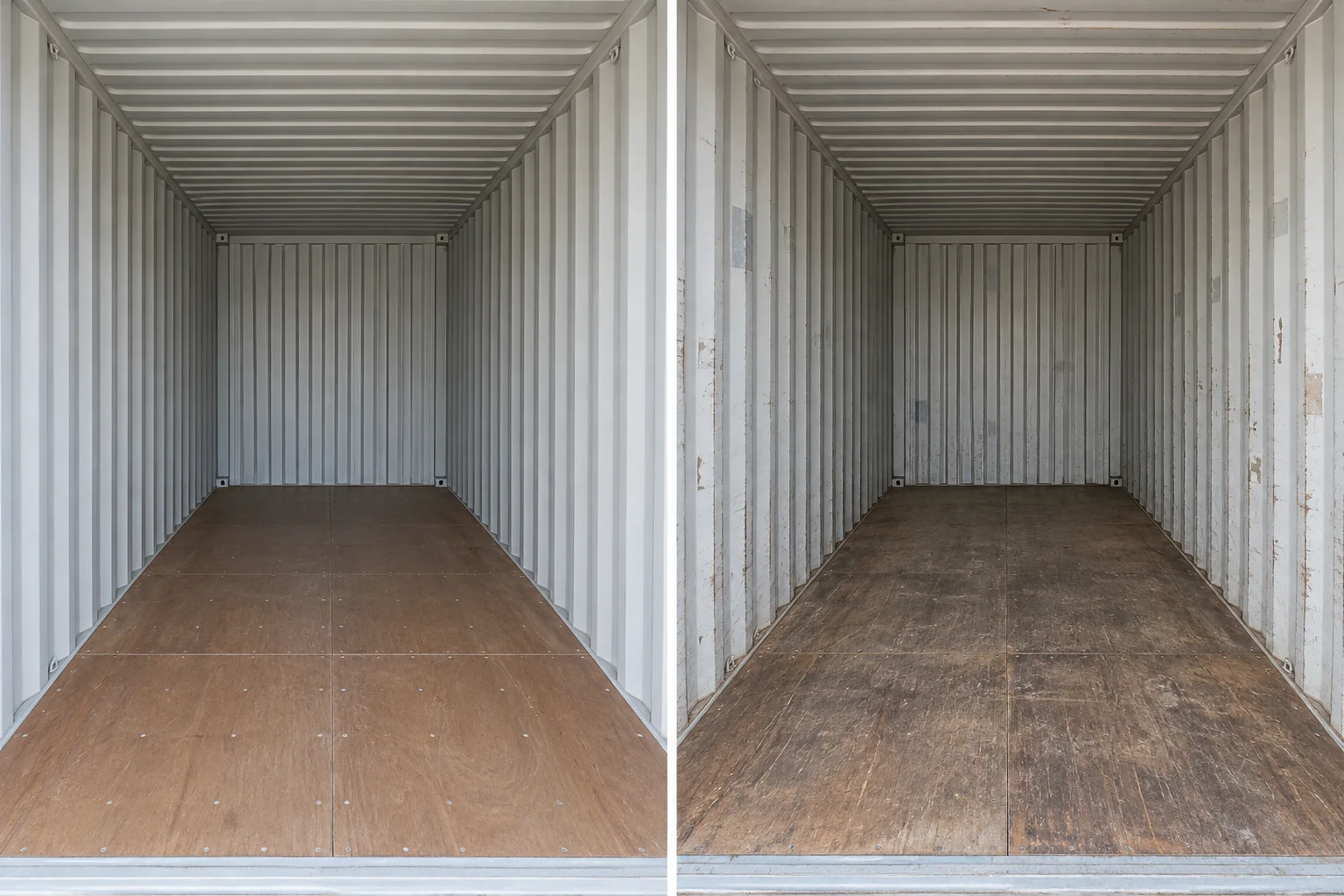
Illustrative appearances. Paint and rust alone do not establish weather-tightness or suitability for shipping.
Used does not establish a manufacture year, years in service or cargo history. Request the manufacture date on the unit’s plate and any available records. Judge present condition separately; there is no age or remaining-lifespan promise implied by this page.
The grade label does not define warranty coverage. Read the written offer for the covered areas, duration, exclusions and remedy. Roof-only coverage does not describe the entire container or establish a whole-box watertight condition.
Include the condition, unloading and any work your container needs.
Ask for recent photos and a condition report for the actual unit. Product names such as 10ft, 20ft and 40ft are useful, but use actual metric measurements for access, foundations and usable space.
Use a delivery Eircode where available, plus the town, county, access photographs and proposed position. New or unassigned sites can be described by a full address and location instructions. Ask the operator to assess lane width, bends, overhead lines, ground support and HIAB or crane placement.
Compare itemised euro offers with applicable VAT, delivery, unloading and required site work visible. Supplier coverage, stock and appointment dates need confirmation for the actual location.
Economy grade is a seller-defined description. Establish the stated defects and exclusions before treating the low unit amount as a saving. The label does not define an inspection standard.
Ask the seller to define this grade in writing and identify leaks, dents, corrosion, floor issues and door faults on the offered unit. Ask what is excluded from the seller’s condition promise and warranty.
Compare complete euro project totals: unit, necessary work, delivery to the Irish address, HIAB or crane placement and VAT. A cheaper box can cost more to make suitable for the project.