
Double-end access / tunnel containers
Double Door Shipping Containers for Sale in the UK
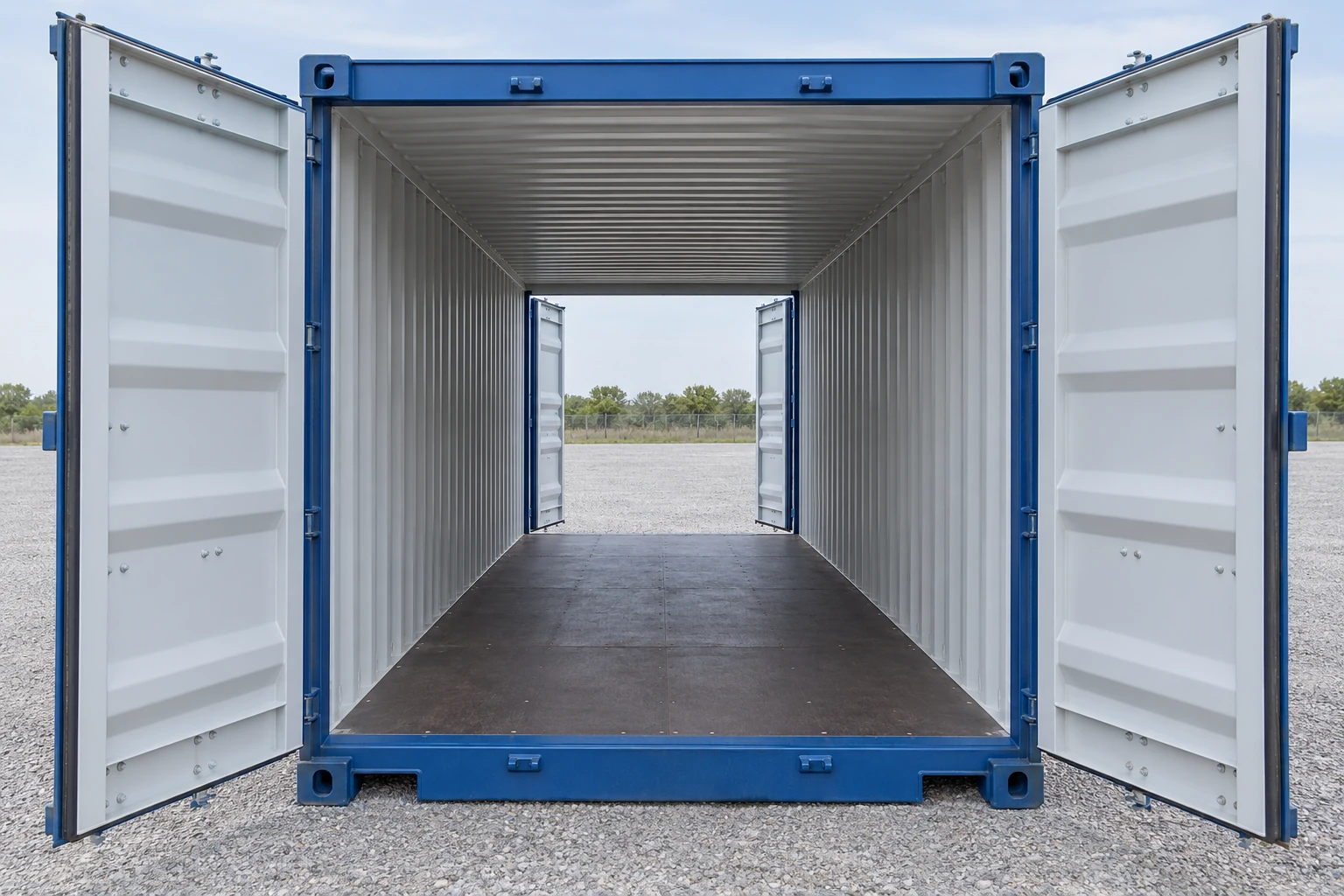
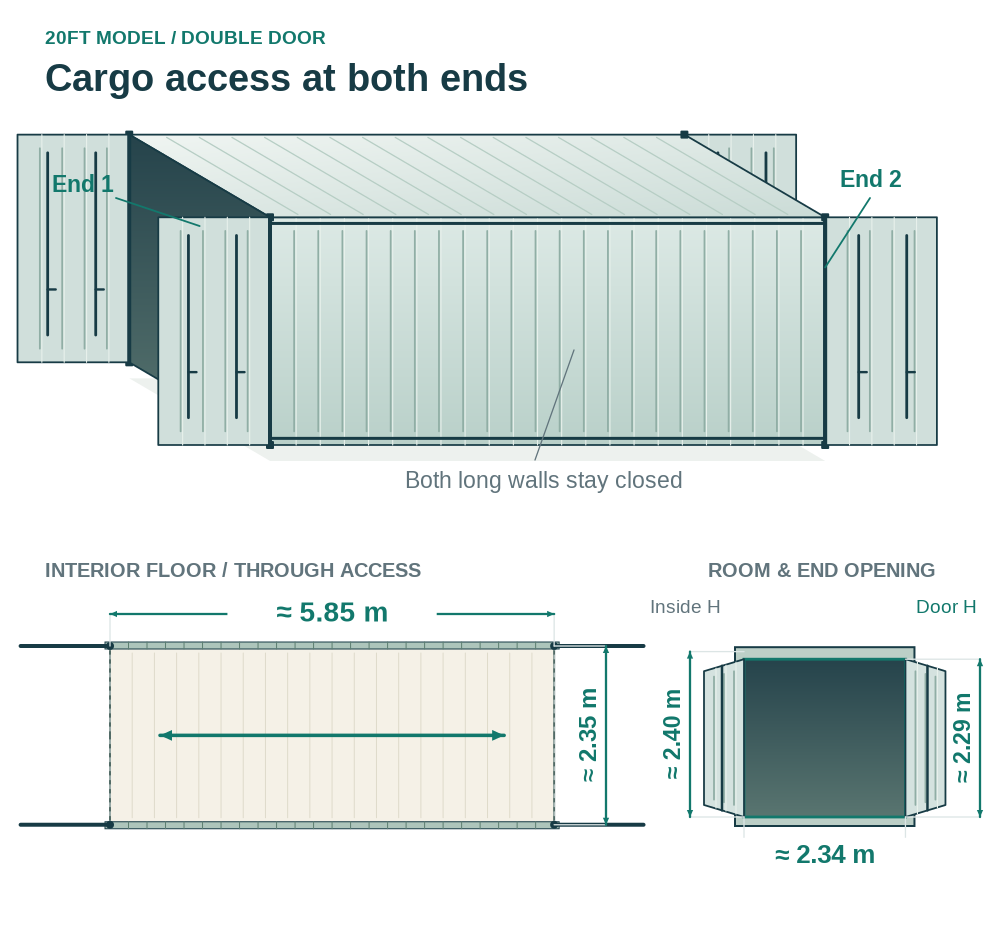
Choose a double-door shipping container when you need cargo-door access at both opposite ends. Also called a double-end or tunnel container, it has a pair of cargo doors at each short end and fixed long-side walls. Compare the length, height and condition around the way you will store and retrieve goods, then prepare a quote request for the exact configuration and your delivery postcode.
Models to compare
Double Door Shipping Containers to request in the UK
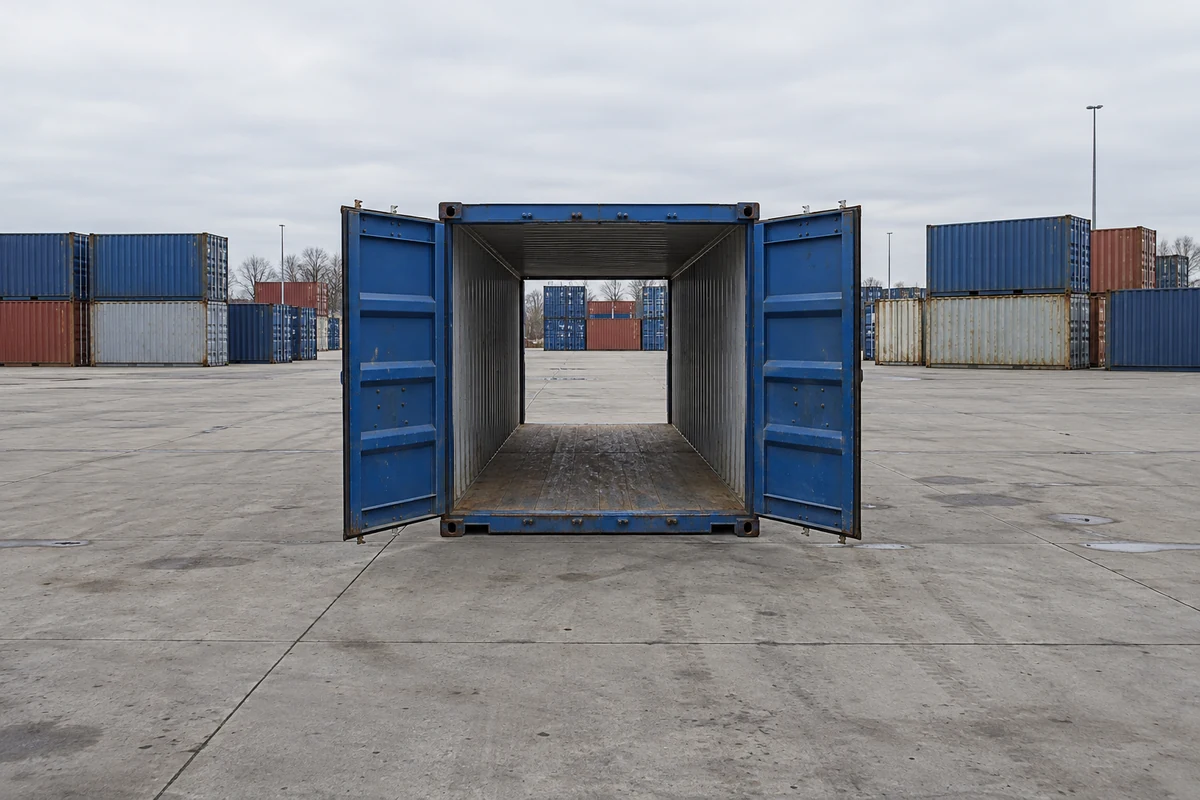
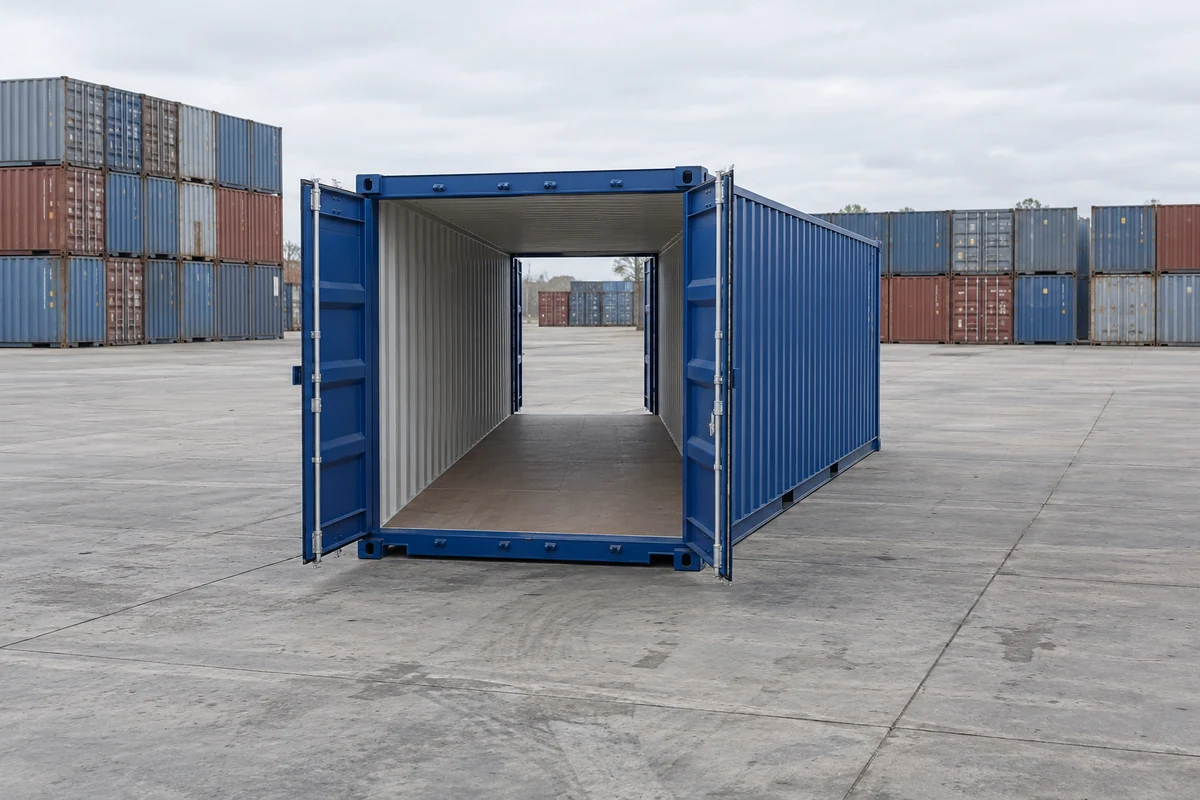
20ft double door container — new / one-trip
- New / one-trip
Price on request
Delivery quoted to your postcode
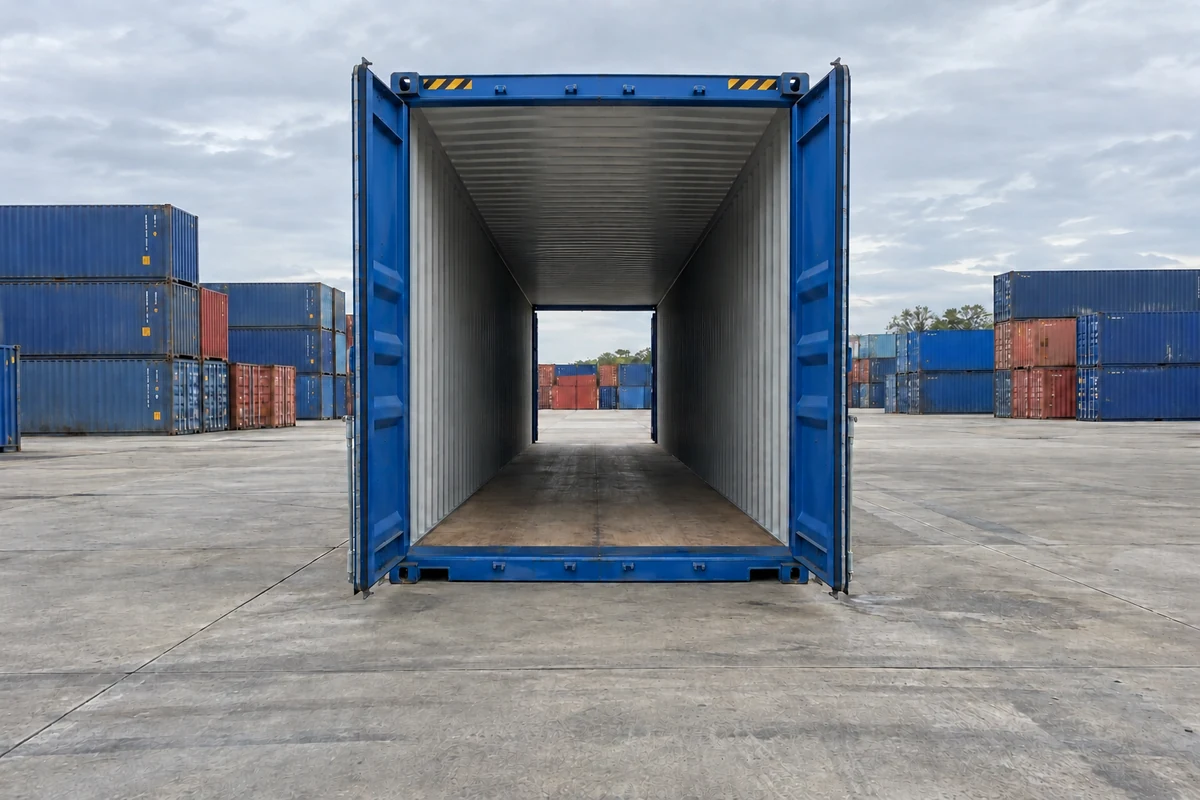
40ft high-cube double door container — new / one-trip
- New / one-trip
Price on request
Delivery quoted to your postcode
Stock, condition and the delivered total are confirmed in each quote.
- Door arrangement
- Cargo-door sets at both short ends
- Formats to compare
- 20ft standard, 40ft standard and 40ft HC
- Interior arrangement
- Continuous space; partition separately specified
- Placement check
- Working access at both ends
01 / YOUR BUYING DECISION
Choose the length and height around two working ends
Start with the opening arrangement. Two door leaves at one end are ordinary cargo doors; they do not provide access from the opposite end. Ask for a door set at each short end in the written offer.
20ft standard double-end
Compare the shorter documented format when a compact continuous storage area suits the inventory. You still need an approach and door-opening space at each end.
Compare the ordinary 20ft alternative ↗40ft standard double-end
Compare the longer interior when continuous length matters and stock will be accessed from either end. Account for the longer unit’s delivery and final position.
Compare the ordinary 40ft alternative ↗40ft High Cube double-end
Compare the taller configuration when packed-item height or a planned layout needs extra vertical room. Length, doorway height and delivery clearance remain separate checks.
These are configurations to specify and compare, rather than confirmed stock. State both the length and standard or High Cube height; the phrase “double door” alone leaves too much undecided.
02 / YOUR BUYING DECISION
Use the second end for the items you actually retrieve
Two end approaches can make separate groups of stored goods easier to reach without organising every retrieval from one end. The layout inside and the work areas outside decide whether that second opening is useful.
Tools and project materials
Place routinely collected tools near the working end that serves the project. Keep stored material clear of both door sets and preserve the route needed for loading and retrieval.
Stock accessed by different users
Plan which stock is collected from each end and where it will be handled outside. Shelves, aisles and locks still need a workable arrangement; a second opening does not create extra floor width.
Two separate storage areas
Specify a partition as additional work if each end must serve its own compartment. Confirm the finished clear dimensions, access, security and required review; an equal split or included divider is not assumed.
If access is needed along the long side rather than at either short end, compare a side-opening configuration separately. A roll-up-door modification is another access option with its own opening, construction and quote.
03 / YOUR BUYING DECISION
Compare dimensions from the same double-end model
Each row pairs the interior and opening from one documented model. These are approximate model examples, rather than the dimensions of a unit assigned to your purchase.
| Double-end model example | Published exterior L × W × H | Approximate interior L × W × H | Approximate end opening W × H |
|---|---|---|---|
| 20ft standard | ≈6.06 × 2.44 × 2.59 m (19 ft 10½ in × 8 ft × 8 ft 6 in) | ≈5.84 × 2.35 × 2.39 m (19 ft 2 in × 7 ft 8½ in × 7 ft 10 in) | ≈2.34 × 2.29 m (7 ft 8 in × 7 ft 6 in) |
| 40ft standard | ≈12.19 × 2.44 × 2.59 m (40 ft × 8 ft × 8 ft 6 in) | ≈12.04 × 2.35 × 2.39 m (39 ft 6 in × 7 ft 8½ in × 7 ft 10 in) | ≈2.34 × 2.28 m (7 ft 8 in × 7 ft 5¾ in) |
| 40ft High Cube | ≈12.19 × 2.44 × 2.90 m (40 ft × 8 ft × 9 ft 6 in) | ≈12.04 × 2.35 × 2.69 m (39 ft 6 in × 7 ft 8½ in × 8 ft 10 in) | ≈2.34 × 2.58 m (7 ft 8 in × 8 ft 5¾ in) |
The documented 40ft standard and High Cube examples share their interior length and width. The taller example adds approximately ≈305 mm (12 in) of interior and doorway height. It adds vertical room rather than floor length or width.
The model documentation provides one nominal opening specification for each configuration; it does not report separately measured clearances at the two ends. Request the useful opening at each end of the actual unit, including any repairs, hardware or modifications.
Measure the packed item and its handling arrangement as well as the room inside. The doorway is lower than the interior ceiling; two openings do not establish that a particular load or vehicle can pass through.
04 / YOUR BUYING DECISION
Match the opening to the way you will use the container
| Arrangement | Where access comes from | What changes in the purchase decision |
|---|---|---|
| Ordinary end-door container | One short end, normally with two cargo-door leaves. | Plan retrieval from that end and compare a standard 20ft or 40ft unit if the second approach is unnecessary. |
| Double-end / tunnel | Both opposite short ends, each with a cargo-door set. | Specify two operational end sets and preserve useful access at both ends after placement. |
| Side-opening configuration | An opening along a long side, with its exact layout depending on the model. | Ask for the side opening, any intermediate posts and useful dimensions; it is a different configuration. |
| Roll-up-door modification | A separately specified opening in the shell. | Confirm the finished opening, security, weather sealing and modification scope rather than assuming ordinary cargo-door dimensions. |
05 / YOUR BUYING DECISION
Inspect both end sets and the actual unit
The opening layout and the condition are separate specifications. Compare a used, refurbished or new / one-trip offer only when it identifies the requested double-end unit.
| Check | Evidence to request |
|---|---|
| Both cargo-door sets | Current views of both ends, door seals, hinges, locking bars and frames; confirmation that both sets operate in the delivered configuration. |
| Roof, walls and floor | Current interior and exterior photos, the written condition description, repair history and any necessary work included in the offer. |
| Original construction or later changes | The quoted door arrangement and documentation of modifications, partitions or altered openings. |
| Intended freight use | Actual-unit identification, readable CSC plate, current examination basis, modification documents where relevant and the proposed carrier’s requirements. |
A generic condition selector does not establish an available matching used unit. New / one-trip wording, a storage grade or a catalogue description also does not establish the ordered unit’s current freight eligibility. Keep the storage requirement and any intended shipment clear in the request.
06 / YOUR BUYING DECISION
Leave room for both openings after delivery
Show both end approaches on the placement sketch. If one end finishes against a wall, fence or other fixed obstacle, that opening may not serve the storage layout you bought it for.
Door movement and work areas
Show where each pair of doors will open and where goods will be handled. Include gates, neighbouring structures, storage racks and the loading equipment you intend to use.
Approach and unloading
Send the postcode, access photos, turns, slopes, surface conditions and overhead obstructions. Have the operator confirm the lorry, unloading method and space needed for the actual site.
Final orientation and support
Mark which end faces each work area and establish suitable firm, level, drained support. For a High Cube, check the loaded-vehicle and unloading heights separately from the body height.
There is no single lorry clearance or working-space figure that fits every delivery method. Agree on final orientation and who supplies unloading and positioning before scheduling.
07 / YOUR BUYING DECISION
Compare the exact double-end container and its delivered total
Use the same length, height, condition and address in each request. A standard-container base price does not price the second end opening or the work needed at your site.
| Budget item | What the written offer should settle |
|---|---|
| Container | Length, standard / High Cube height, cargo doors at both ends, assigned-unit condition and included fittings. |
| Transport | Pickup origin, delivery address, route and access scope, and any restrictions that affect the selected format. |
| Unloading and positioning | Method, equipment, operator and final placement included; count any service included with transport once. |
| Additional work and charges | A partition, shelves or other modifications, site preparation, VAT and separate handling charges. Unquoted amounts remain unknown. |
State quantity, intended use and whether the interior should remain continuous or have a separately specified partition. Add the orientation and work areas at both ends so a supplier can price the required arrangement.
The form prepares an editable request that you can review, copy or download. Send the reviewed request through the quote form with your consent, or copy or download it to share separately. A supplier must confirm stock, price and delivery arrangements.
BEFORE YOU ORDER
Buying questions
Does “double door” always mean cargo doors at both ends?
No. It can describe the two leaves of an ordinary cargo-door set at one end. For this purchase, specify an opening with a cargo-door set at each opposite short end and confirm both sets on the quoted unit.
Does a tunnel container come with two separate compartments?
A continuous interior is the documented base arrangement here. A divider, independently secured compartments and their finished dimensions need a separate specification; they are not implied by having doors at both ends.
Will a High Cube double-end container give me more width?
The two documented 40ft examples have the same interior length and width. The High Cube example adds approximately ≈305 mm (12 in) of interior and doorway height. Confirm the actual unit and both openings before committing to the layout.
Can I use both openings if only one end has a work area?
The second door set needs room to move and an outside approach suited to your use. Show the final site arrangement before buying; an opening blocked by a fixed obstacle may not provide useful access.
Can I use a storage-grade double-end container for overseas freight?
Storage condition alone does not settle freight suitability. Confirm the actual unit’s identity, CSC approval and examination status, any modification documentation, and the carrier’s requirements for the planned shipment.
THE UNIT. THE SITE. THE FULL COST.
Prepare my quote request →Put your requirements in one clear request.
Compare the container’s features and condition. Ask the quote to state what delivery and unloading include.