
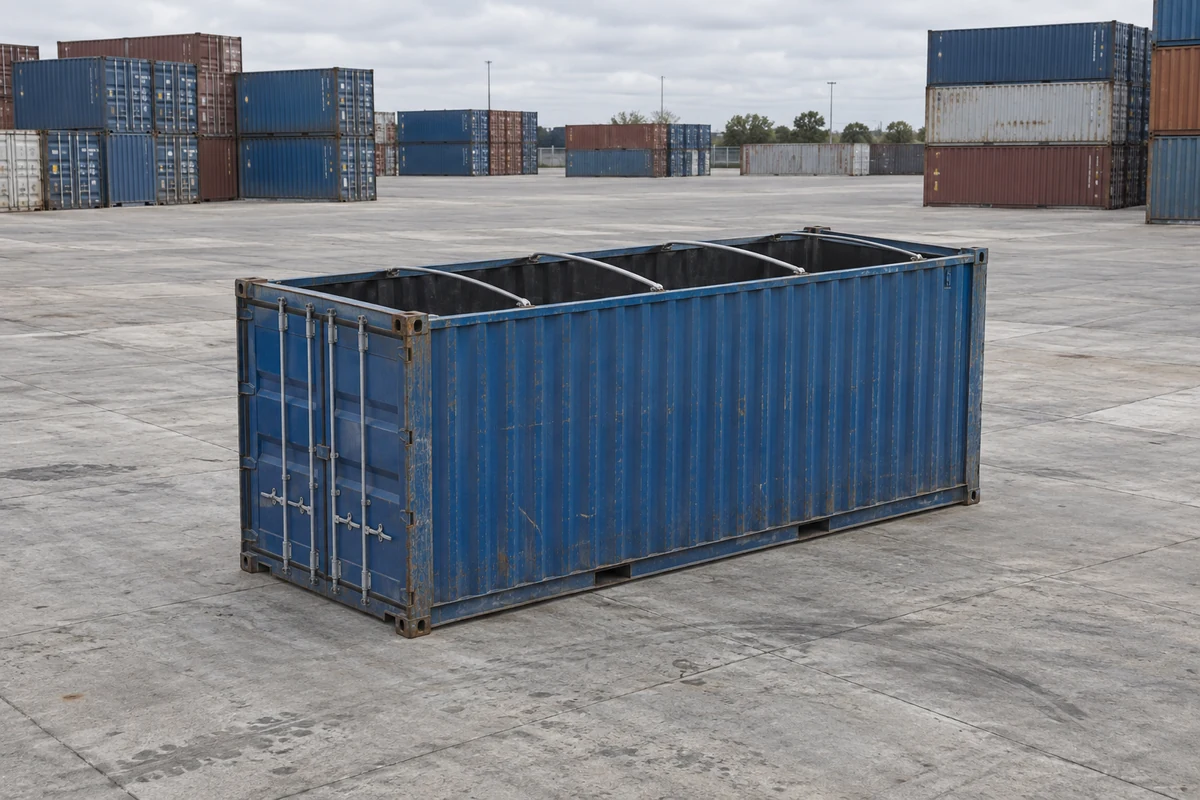
20ft open top container — used
Category: Open Top Shipping Containers
A used 20ft open-top container lets suitable goods enter from above instead of through the end doors. First plan how the load will be lifted in and the roof closed. Include the condition of upper rails, removable parts, floor and roof cover in the offer.
Ref. 20ft-open-top-used-blue · industrial blue
- Nominal length
- 20ft
- Height / build
- Standard · 8ft 6in
- Requested condition
- Used
- Access
- Open roof + end doors
Choose a requested finish
- industrial blueQuote this finish
- industrial greyQuote this finish
- olive greenQuote this finish
- sand beigeQuote this finish
- ivoryQuote this finish
Exterior colour is a request; confirm the final finish with the supplier.
Plan the suspended load from arrival to support
Sketch lifting position → open top → final load supports → removal path for lifting equipment. Give the handling specialist the complete item outline, lifting arrangement and intended position. An item that cannot pass an end doorway may still conflict with the actual top opening or upper structure. Agree how it is guided and supported inside; do not infer a safe loading method merely because the roof is open.
- Confirm the top opening and removable parts on the specific offered unit.
Inspect the parts needed to close the top
Ask which roof bows, cover, fastenings and other removable pieces are present and serviceable. Inspect the upper rails, corner areas, end-door assembly and full floor, noting repairs or distortion. A used open-top offer should explain missing or replaced items rather than leaving the buyer to reconstruct the closing system later. Compare previous use and cleaning needs with the cargo or storage material intended for the next job.
- Identify covering and securing work separately from shell repairs.
Decide what happens after the lift
Show the load in its final position with the proposed cover or with any projection clearly identified. Ask the supplier and carrier to assess the actual transport and securing requirements. Open top is not a statement that an overheight movement is accepted, nor that a covered unit provides the same arrangement as a fixed-roof dry store. If the goods require controlled conditions, specify those needs independently from the loading format.
Questions about this model
Does top loading mean any tall item is suitable?
No. The opening, upper structure, support points and handling method must suit the actual item. Its final outline also affects covering and transport. Have the complete loading and movement plan reviewed for the offered unit.
What if the cover is not included?
Ask the seller to list the roof-closing parts separately. Check which supports and fasteners remain and what needs replacing. Confirm that the complete arrangement suits the way you will handle and protect the goods.
Could a standard container be simpler for this load?
Possibly, if the item can pass the confirmed end opening and be positioned inside using an agreed method. Compare the complete sequence; top access is valuable when it solves a real loading constraint.
Prepare the delivered quote
For delivery in United Kingdom, provide your postcode, access constraints, planned use and preferred door orientation. Request a quote in £ separating the offered container, transport, unloading, placement and applicable taxes.
Read the size and configuration guide →Compare the alternatives
20ft standard container — used
Compare a fixed-roof store if the actual load can be handled through end doors.
View this model →20ft flat rack container — used
Compare an open platform when the cargo needs access beyond the constraints of full side walls.
View this model →