
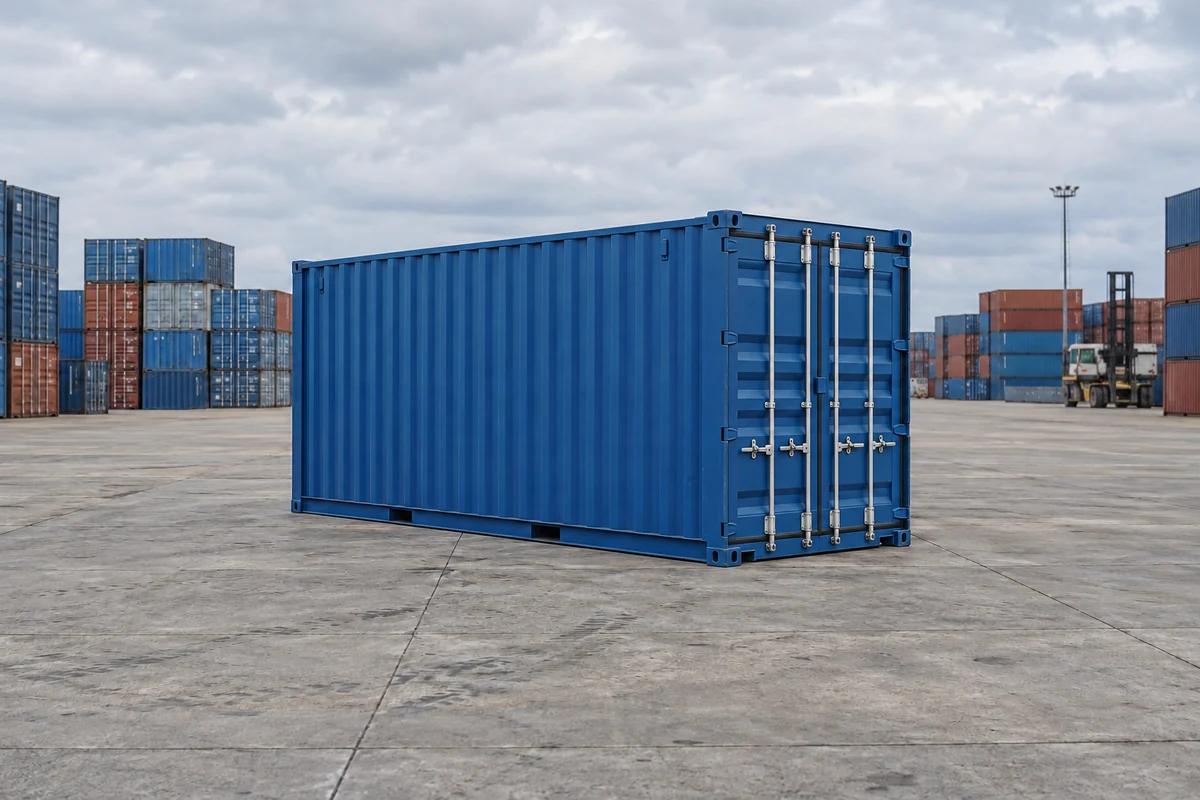
20ft standard container — new / one-trip
Category: New & One-Trip 20ft Shipping Containers
From £1,775
Advertised price, checked 16 Oct 2026 · ex. VAT · before delivery
A new or one-trip 20ft standard is a straightforward enclosed store when tools, packaged goods or equipment can pass through end cargo doors. Its useful layout depends on what must be reached regularly, not simply how much can be packed inside. Define that retrieval pattern before comparing offers.
Ref. 20ft-standard-new-blue · industrial blue
- Nominal length
- 20ft
- Height / build
- Standard · 8ft 6in
- Requested condition
- New / one-trip
- Access
- End cargo doors
Choose a requested finish
- industrial blueQuote this finish
- industrial greyQuote this finish
- olive greenQuote this finish
- sand beigeQuote this finish
- ivoryQuote this finish
- whiteQuote this finish
- charcoalQuote this finish
- forest greenQuote this finish
- oxide redQuote this finish
- cobalt blueQuote this finish
Exterior colour is a request; confirm the final finish with the supplier.
Plan the route from the doors to the back
Sketch the room as doors → handling space → storage rows → rear stock. Put frequently handled items near the entrance and keep a continuous route to anything stored farther back. Shelving along both sides can be useful, but a drawing should include the width of the largest item and the space needed to turn it. A full floor plan can become an awkward store if the rear can only be reached by unloading the front.
- Measure the actual cargo-door opening before selecting shelving or equipment.
Separate new build from one-trip condition
A one-trip container has already carried cargo on an initial journey. Its paint and floor may have marks. Ask which condition the quote covers, which photographs show it, and whether the finish, lockbox and ventilation you want are included. The order should identify the supplied unit or explain how it will be inspected and accepted.
- Record shell condition separately from optional fittings and repainting.
Make a usable store after unloading
Mark the desired door direction on the site plan and leave working space for both door leaves. Ask the carrier to review the approach, unloading position and support arrangement using the actual site information. If moisture-sensitive goods are involved, discuss their protection and the intended ventilation rather than assuming an enclosed steel shell provides controlled indoor conditions. Any lining or shelving reduces the space available to the stored items.
Questions about this model
Can I choose a 20ft container by its exterior length alone?
No. Check the clear interior, door opening and the handling route against the actual items. A bulky object can fit the room on paper but still be difficult to bring through the doors or move past shelving.
Should the quote include internal shelves?
Include them only after agreeing the storage layout and how they will be fixed. Ask who supplies and installs them, what they occupy and whether the arrangement interferes with access or future changes.
When is the standard height the better starting point?
Start with it when the tallest stored item and planned fittings fit the confirmed interior and entrance. Extra height is useful only if the load or layout can use it; compare the offered dimensions before choosing a taller format.
Prepare the delivered quote
For delivery in the United Kingdom, provide your postcode, access constraints, planned use and preferred door orientation. Request a quote in pounds sterling that separates the container, transport, unloading, placement and VAT.
Read the size and configuration guide →Compare the alternatives
20ft standard container — used
Compare inspected used stock when surface finish is secondary to a sound, workable store.
View this model →40ft standard container — new / one-trip
Compare a longer room when a mapped inventory genuinely needs more floor length and the site can receive it.
View this model →