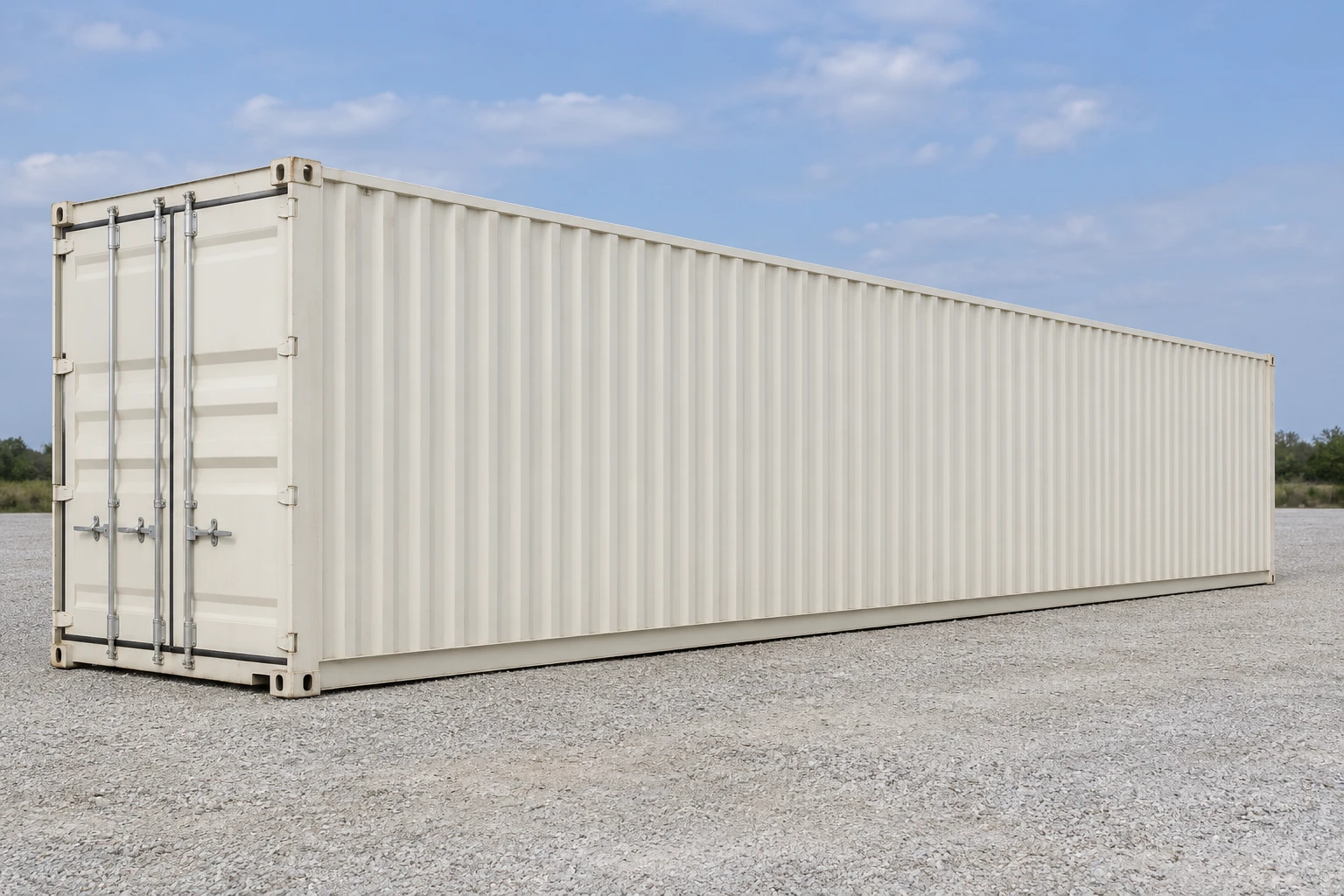
Is a 16.2m (53ft) shipping container the same as a 16.2m (53ft) trailer?
A North American domestic container is a detachable box. A semi-trailer includes running gear and a road coupling arrangement. A container may travel on a separate chassis, so ask whether the sale covers the box alone, a chassis or a complete trailer.
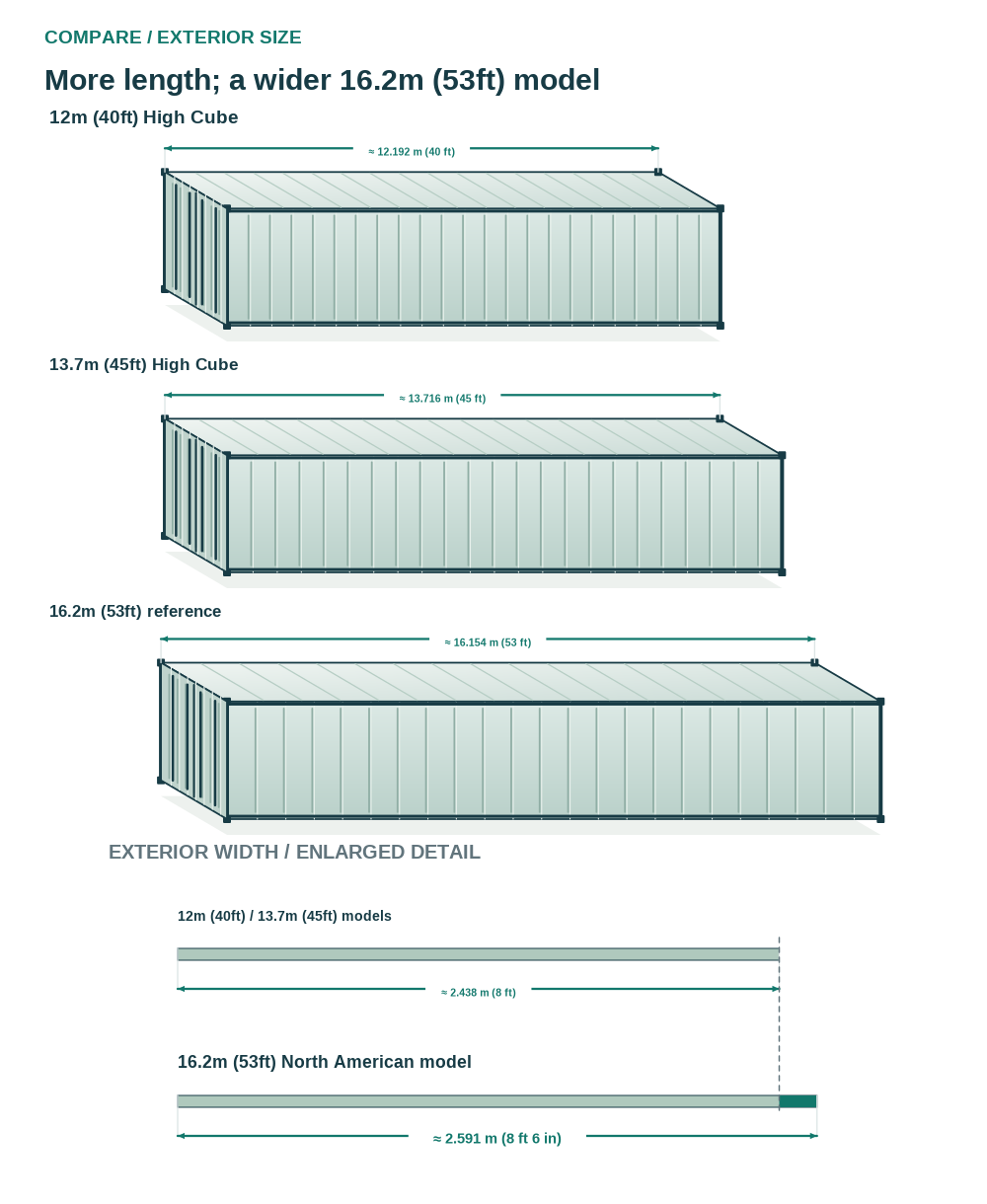
How much wider is this 16.2m (53ft) example than a 2.438 m (8ft)-wide container?
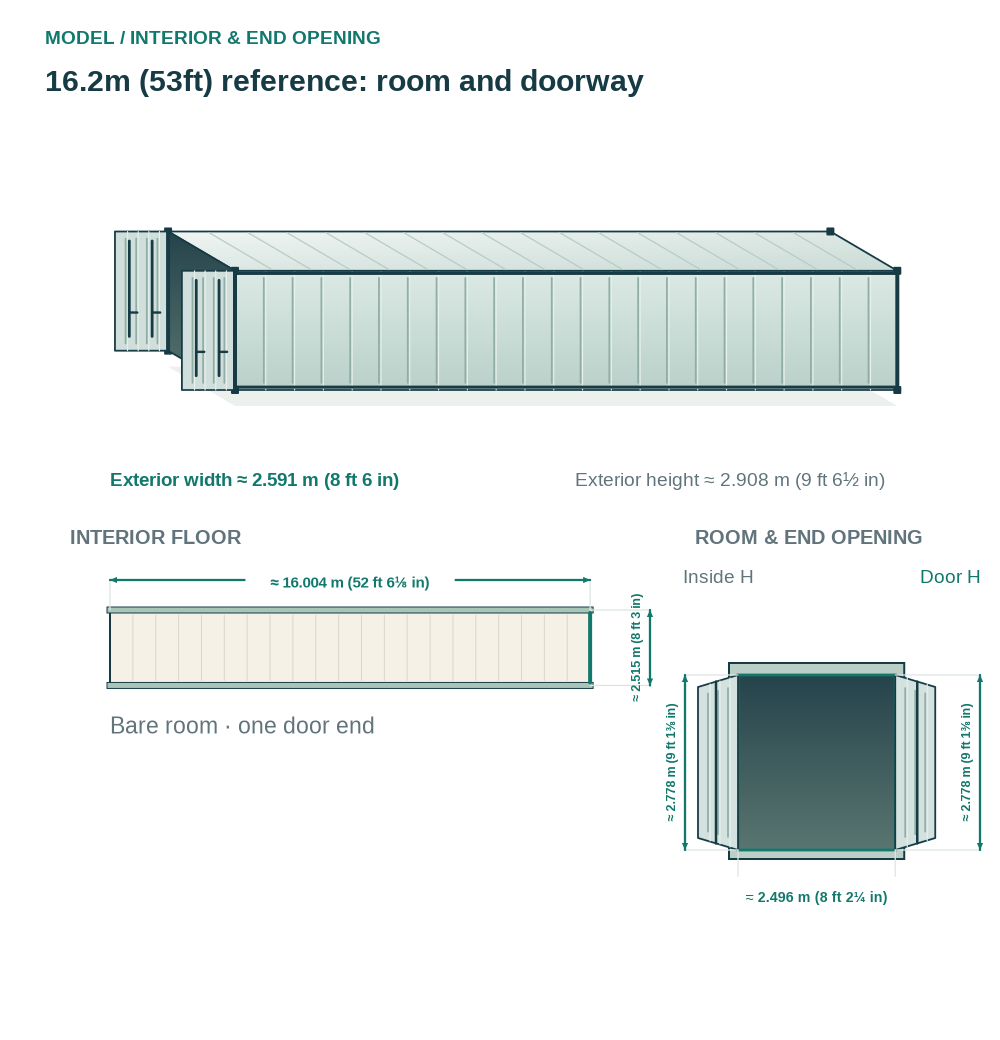
The example's nominal exterior width is 2.591 m (8 ft 6 in), 152.4 mm (6 in) wider than the 2.438 m (8ft)-wide 12m (40ft) and 13.7m (45ft) examples. Other North American and pallet-wide models differ. Use the actual body's width for site and transport planning and its clear interior and door measurements for the layout.
Does 16.2m (53ft) High Cube identify one set of dimensions?
No. Length and a High Cube description do not identify the manufacturer or construction. This page's steel example is nominally 2.908 m (9 ft 6 1/2 in) high. Request a complete specification for the model offered rather than combining dimensions from several listings.
Can I ship a 16.2m (53ft) specialist container overseas?
Confirm that the intended carrier and route accept the exact model, then establish the unit's required plate, examination and inspection documentation. A North American model listing, a cargo-worthy description or corner castings alone do not confirm an overseas movement.
What should I check on a used 16.2m (53ft) specialist container?
Review its identification, service history, roof and panel condition, floor, repairs, door operation and seals. Define the inspection and any storage-condition promise in writing. If you intend freight use, check the documentation and acceptance needed for that service.
Can I use the same delivery plan as a 12m (40ft) container?
Have the operator review the plan again for the longer and potentially wider body. The approach, turns, overhead obstacles, offloading equipment, supports and door direction all need to suit the actual 16.2m (53ft) unit.
Can a 16.2m (53ft) dry container become an office or equipment enclosure?
A fit-out needs a separate design for the actual shell, intended occupancy or equipment, entry, utilities and ventilation. Finishes and partitions reduce interior space. Review alterations and local placement or use requirements before committing to the box.