SPECIALIST FORMAT · SUPPLIER AND ROUTE REVIEW

53ft Containers: A Specialist New Zealand Request

Treat a 53ft container as a specialist sourcing request in New Zealand. Start by comparing 20ft and 40ft alternatives, then obtain an allocated unit, its actual dimensions and an operator’s route and handling review before committing to this longer format.

Plan your delivered quote

Prepare and review your request, then send it through the quote form with your consent, or copy or download it.

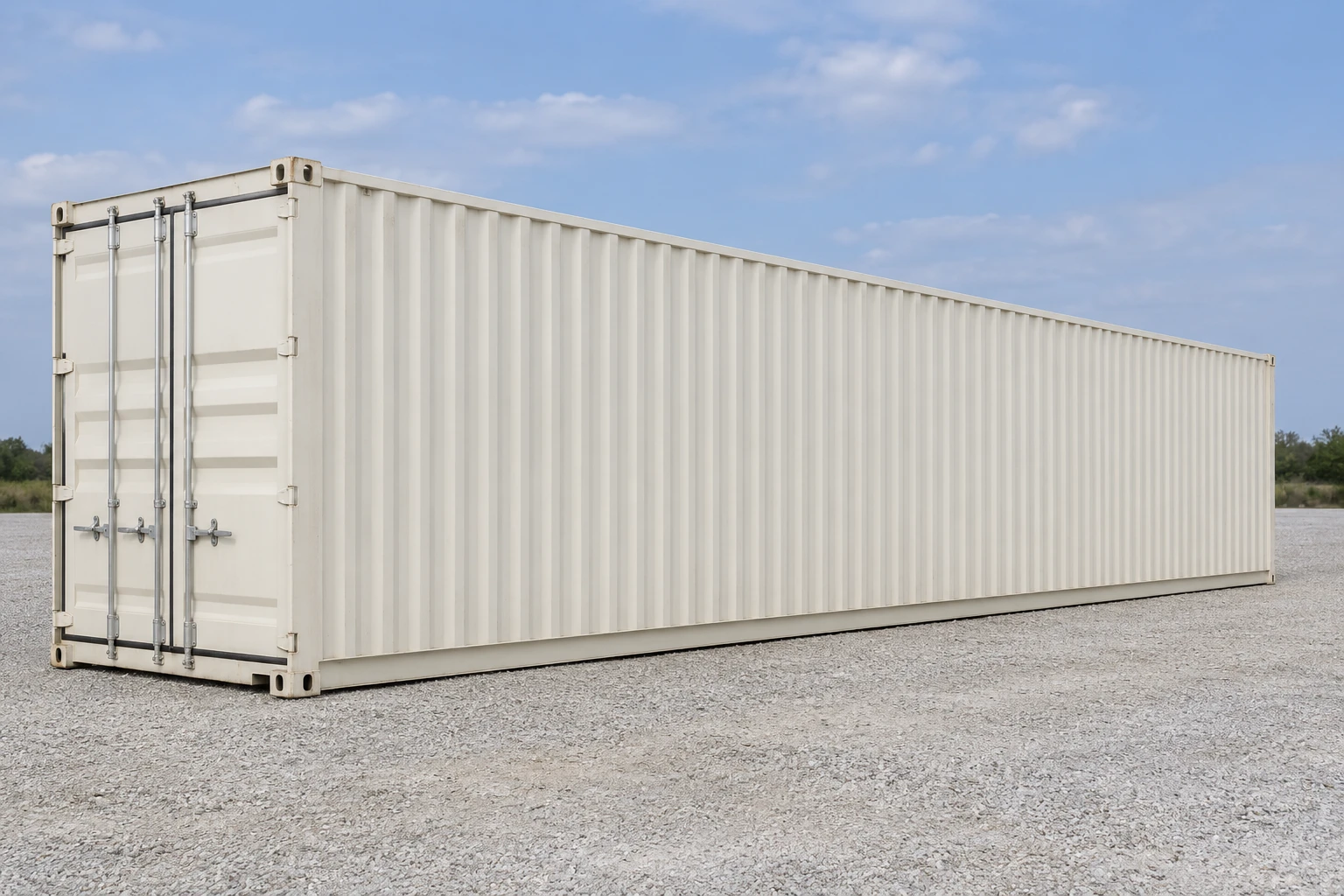
Illustration of a long light-coloured domestic dry container with corrugated sides and closed cargo doors at one end.
Illustrative 53ft domestic container.
Procurement
Specialist sourcing; availability to confirm
Route
Vehicle, loading and acceptance review required
Dimensions
Use the actual offered model’s measurements
01 / YOUR BUYING DECISION

Compare the normal NZ alternatives first

A 40ft high cube or two 20ft containers may fit the storage task with more familiar local handling arrangements. Compare usable room, doors, access and the delivered totals for the same site.

If the project requires 53ft, ask the supplier to identify the exact unit, origin and New Zealand supply route. A catalogue listing or nominal length does not establish local stock or transport acceptance.

02 / YOUR BUYING DECISION

Require one complete model drawing

Request exterior length, width and height, usable interior and clear doors in metres. Include tare mass, gross rating, lifting points and supporting locations.

Keep the dimensions from one model together. Imported long-body designs differ in construction, width and handling; do not mix another model’s dimensions or equipment rating into the project.

03 / YOUR BUYING DECISION

Plan retrieval along a long interior

A long box is most useful when stored items remain accessible. Draw the storage and loading routine before choosing the shell.

Stock and project materials

Plan an aisle, shelves and retrieval space. Place frequently needed stock where it can be reached without moving every item in front of it. Check the actual floor specification before selecting racks or handling equipment.

An enclosed workspace

Define the rooms, exits, insulation, ventilation and utilities as a separate fit-out. Wall linings and partitions reduce the usable interior. Ask the designer and local authority to review the proposed occupancy and placement.

Explore container offices ↗

Equipment with service access

Map the equipment removal path, ventilation and maintenance clearances. Cutting openings or adding heavy equipment needs review for the actual shell and its intended future use.

Plan an equipment enclosure ↗

If end access would make daily retrieval difficult, compare side-opening equipment or a designed roller-door modification. Confirm the available size and opening arrangement for that configuration; a smaller access model's specification does not carry over to a 53ft box.

04 / YOUR BUYING DECISION

Compare construction and the unit's history

Two 53ft listings can describe different wall systems, floors and repair histories. Review the offered unit rather than treating the length as a specification.

Steel, aluminium or composite panels

The reference model uses corrugated steel sides and roof. Aluminium and composite-panel listings need their own material details, joint condition and repair review. Ask for the manufacturer and model, the floor construction and the work already performed.

New or described as one-trip

Ask what the seller means by new or one-trip for this domestic unit, when it was built and what service or handling it has seen. Request current photos and the included features, paperwork and warranty terms.

Used, refurbished or as-is

Obtain the prior service history, known damage and written repair scope. Fresh paint does not describe the underlying condition. An as-is unit needs a defect list and repair plan before its price can be compared.

  • Request current roof, interior, floor, underside, door-frame and seal photos, plus identification and plate details.
  • Check for water entry, panel or roof damage, floor contamination and repairs that affect the intended use.
  • Have door alignment, hinges, locking bars and seals checked with the unit on suitable level support.
  • Define a storage-condition description in writing. Ask what inspection and transport documents are included if freight use is intended.
05 / YOUR BUYING DECISION

Get the NZ route and equipment accepted in writing

Have the proposed transporter assess actual dimensions, mass, loading state, handling points and each road, rail or coastal leg. Specify any inter-island movement.

Identify who organises required route approvals, lifting gear and transit cover. Do not assume an ordinary 40ft swinglift, depot or carrier accepts the longer unit.

06 / YOUR BUYING DECISION

Review the truck route and the final placement

The 53ft body needs a site plan that includes the approach, unloading operation and door access. Have the delivery operator review those spaces before committing.

  • Send the full address and delivery postcode, access photos, gate dimensions, turns, grades and the proposed placement location.
  • Identify overhead wires, branches, soft ground and vehicle restrictions. Ask for clearances for the operator's actual equipment and method.
  • Agree on the cargo-door direction, space for both door leaves, routine loading and an exit path for the delivery vehicle.
  • Ask the supplier or qualified designer for the support or foundation arrangement appropriate to this long model and its intended use. Plan drainage and a firm, level placement area.
  • Specify empty or loaded delivery, who provides unloading equipment and what final placement work is included.
  • Check local placement and use requirements, and agree on what happens if the site is unsuitable on delivery day.

The operator should select a suitable handling plan for the unit's dimensions and documented weight. Confirm attachment points and any lifting arrangements for that model; a nominal size or a corner fitting is not a lifting instruction.

07 / YOUR BUYING DECISION

Request the box, the movement and the full cost

Compare quotes for the same construction, condition and destination. Ask for each cost item so the purchase price can be assessed alongside transport and placement.

Cost itemWhat the quote should specify
ContainerModel, materials, condition, quantity, features and the actual unit offered
TransportOrigin, destination address and postcode, equipment, movement scope and timing
Unloading and placementMethod, equipment, labour, placement location and access conditions
Inspection and documentsIncluded inspection, plate information and any separate survey or examination charge
Site work or alterationsSupports, preparation, repairs and the proposed fit-out
Taxes and extra chargesTax treatment, waiting, storage, unsuccessful delivery and other applicable fees

Include 53ft domestic dry container in the request, along with storage or freight use, preferred materials and condition, door arrangement and a layout or item list. Supply site photos and the planned door direction.

Ask the seller to confirm the offered unit's dimensions, history, availability at the stated origin and required documents. If a 40ft or 45ft High Cube would also serve the layout, request a comparable delivered quote before deciding.

BEFORE YOU ORDER

Buying questions

Is a 53ft shipping container the same as a 53ft trailer?

A domestic container is a detachable box. A semi-trailer includes running gear and a road coupling arrangement. A container may travel on a separate chassis, so ask whether the sale covers the box alone, a chassis or a complete trailer.

How should I compare a 53ft body with a standard ISO-width container?

Request the exact model’s exterior width, clear interior and door opening. A 53ft length label does not establish those measurements. Compare the allocated unit’s drawing with your site layout and have the NZ transport operator assess the complete loaded vehicle and route.

Does 53ft High Cube identify one set of dimensions?

No. Length and a High Cube description do not identify the manufacturer, construction or one set of dimensions. This page does not provide a universal 53ft dimensioned model. Request the allocated unit’s complete specification and NZ transport review rather than combining measurements from separate listings.

Can I ship a 53ft domestic container overseas?

Confirm that the intended carrier and route accept the exact model, then establish the unit's required plate, examination and inspection documentation. A domestic listing, a cargo-worthy description or corner castings alone do not confirm an overseas movement.

What should I check on a used domestic container?

Review its identification, service history, roof and panel condition, floor, repairs, door operation and seals. Define the inspection and any storage-condition promise in writing. If you intend freight use, check the documentation and acceptance needed for that service.

Can I use the same delivery plan as a 40ft container?

Have the operator review the plan again for the longer and potentially wider body. The approach, turns, overhead obstacles, unloading equipment, supports and door direction all need to suit the actual 53ft unit.

Can a 53ft dry container become an office or equipment enclosure?

A fit-out needs a separate design for the actual shell, intended occupancy or equipment, entry, utilities and ventilation. Finishes and partitions reduce interior space. Review alterations and local placement or use requirements before committing to the box.

THE UNIT. THE SITE. THE FULL COST.

Put your requirements in one clear request.

Compare the container’s features and condition. Ask the quote to state what delivery and unloading include.

Prepare my quote request →