
53ft domestic container
Choose this format when the longer, wider shell serves a clear storage layout or an approved domestic freight movement. The steel example here is 8 ft 6 in wide. Other 53ft designs have different dimensions and construction.
Compare offers from multiple suppliers. Find the right price for your project.
A 53ft domestic container gives a storage project a long, wide enclosed space. It is also a format used in domestic truck-and-rail service. Decide whether you need a box that stays on your property or equipment for a freight route, then match the model, condition and delivery arrangement to that purpose.
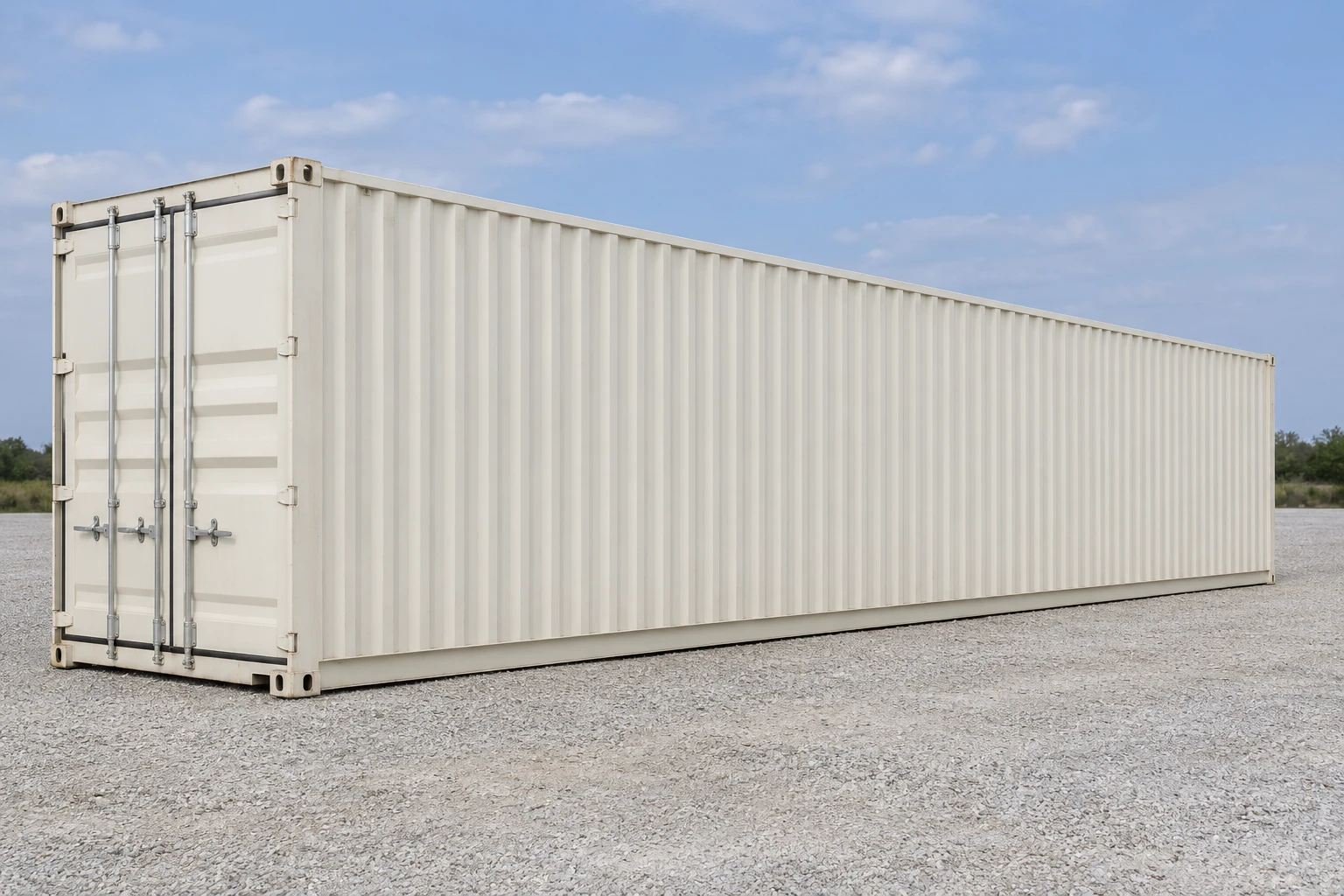
Length is only one part of this purchase. The wider body and the equipment type affect both storage planning and transport.
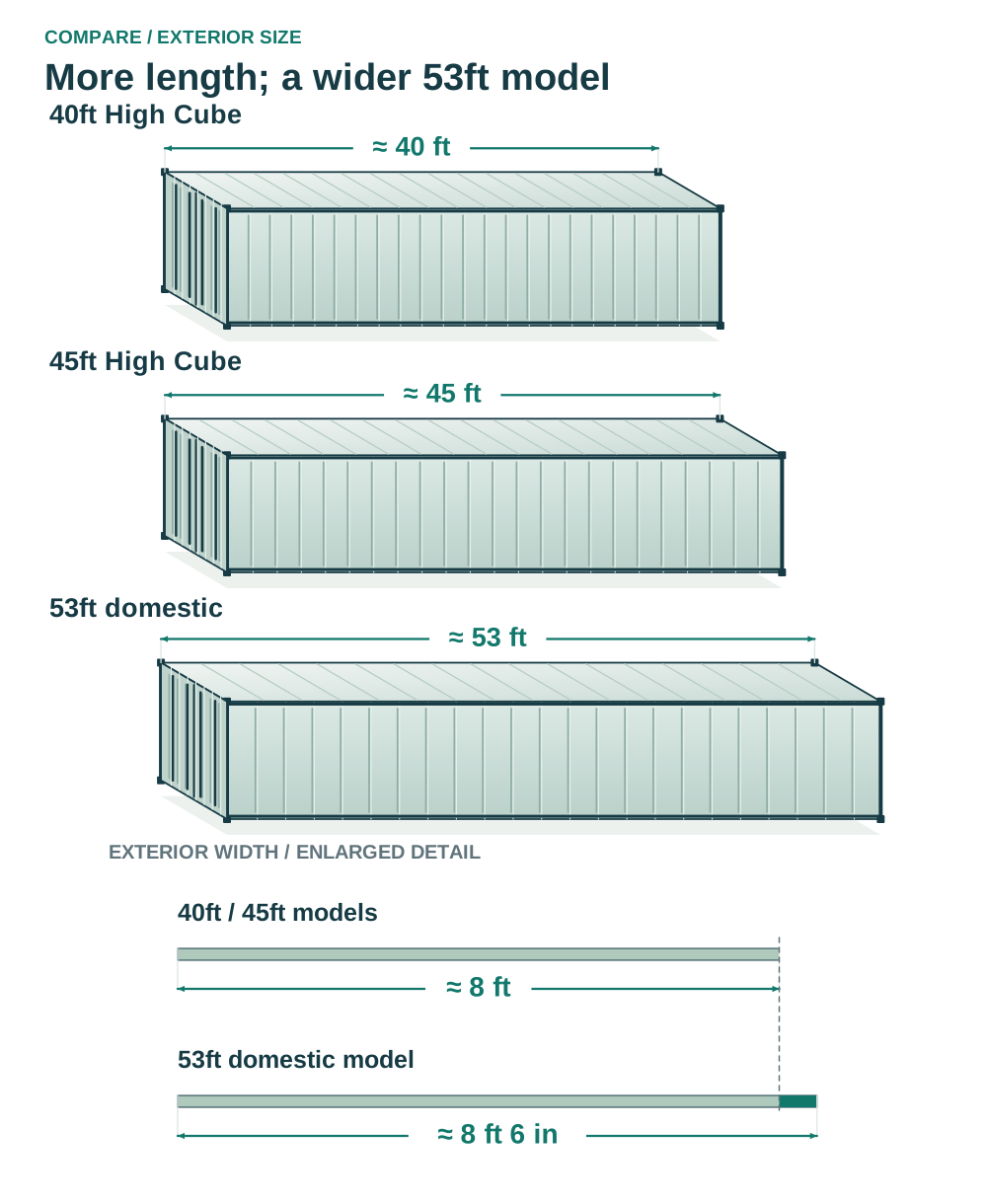
Choose this format when the longer, wider shell serves a clear storage layout or an approved domestic freight movement. The steel example here is 8 ft 6 in wide. Other 53ft designs have different dimensions and construction.
The 40ft and 45ft High Cube examples are 8ft-wide formats. Compare the extra length and width with the storage you will actually use, and ask for delivery arrangements for each option.
Compare 40ft High Cube ↗A domestic container is a detachable box. A semi-trailer has its own running gear, brakes, landing gear and a coupling arrangement. Specify which equipment you want, and ask whether any chassis is included with a container offer.
A listing described as 53ft, High Cube or sea container still needs a model specification. Those words do not settle its width, door arrangement or acceptance on a particular transport service.
These are published nominal dimensions for one steel domestic model with cargo doors at one end. Manufacturing variation and other designs exist; have the seller confirm the measurements of the offered unit.
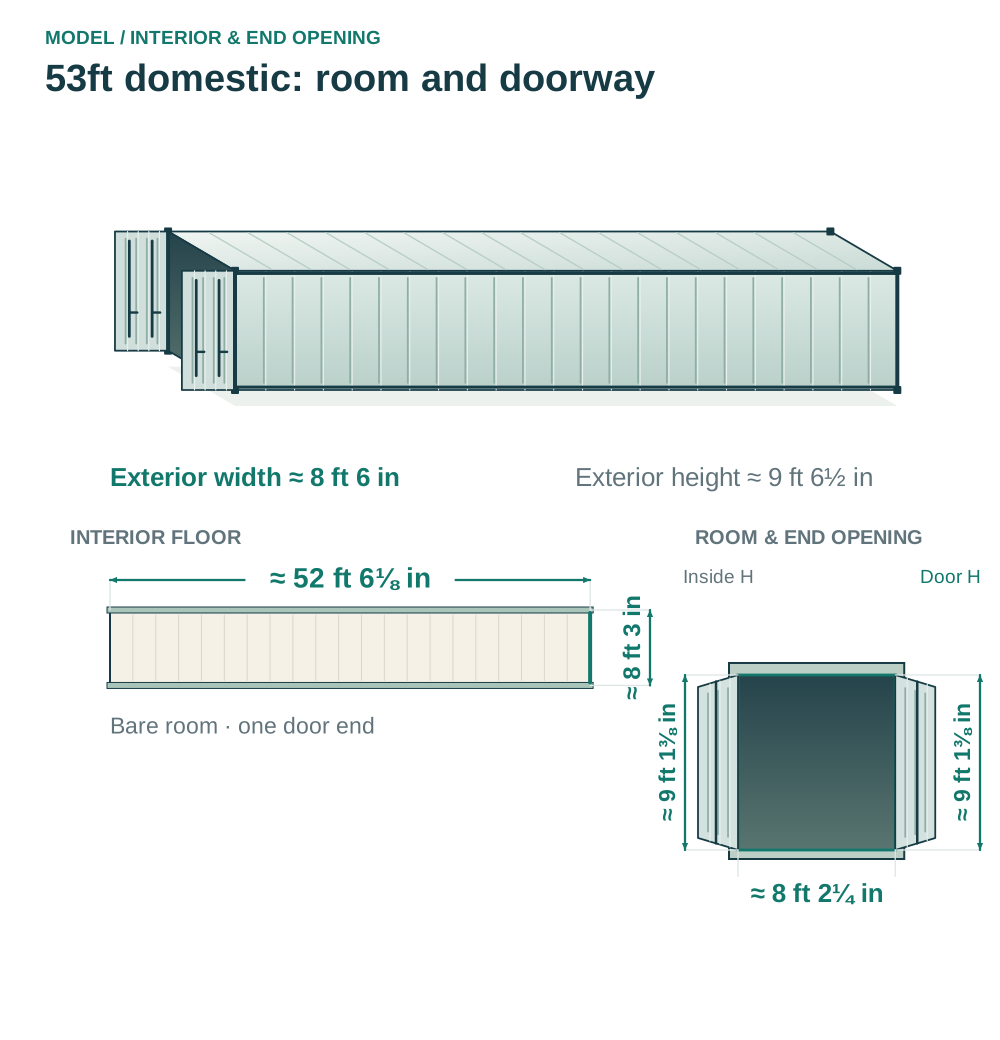
| Example-model measure | Length | Width | Height |
|---|---|---|---|
| Exterior | 53 ft | 8 ft 6 in | 9 ft 6 1/2 in |
| Interior | 52 ft 6 1/16 in | 8 ft 3 in | 9 ft 1 3/8 in |
| End cargo-door opening | — | 8 ft 2 1/4 in | 9 ft 1 3/8 in |
The body, the clear interior and the doorway answer different questions. Measure packaged items and plan their path through the opening, including handling equipment and the space needed to turn or retrieve them.
A full specification for an aluminum or composite-panel unit must come from that model. Keep its interior, doorway and body figures together rather than borrowing missing measurements from this steel example.
A long box is most useful when stored items remain accessible. Draw the storage and loading routine before choosing the shell.
Plan an aisle, shelves and retrieval space. Place frequently needed stock where it can be reached without moving every item in front of it. Check the actual floor specification before selecting racks or handling equipment.
Define the rooms, exits, insulation, ventilation and utilities as a separate fit-out. Wall linings and partitions reduce the usable interior. Ask the designer and local authority to review the proposed occupancy and placement.
Explore container offices ↗Map the equipment removal path, ventilation and maintenance clearances. Cutting openings or adding heavy equipment needs review for the actual shell and its intended future use.
Plan an equipment enclosure ↗If end access would make daily retrieval difficult, compare side-opening equipment or a designed roll-up-door modification. Confirm the available size and opening arrangement for that configuration; a smaller access model's specification does not carry over to a 53ft box.
Two 53ft listings can describe different wall systems, floors and repair histories. Review the offered unit rather than treating the length as a specification.
The reference model uses corrugated steel sides and roof. Aluminum and composite-panel listings need their own material details, joint condition and repair review. Ask for the manufacturer and model, the floor construction and the work already performed.
Ask what the seller means by new or one-trip for this domestic unit, when it was built and what service or handling it has seen. Request current photos and the included features, paperwork and warranty terms.
Obtain the prior service history, known damage and written repair scope. Fresh paint does not describe the underlying condition. An as-is unit needs a defect list and repair plan before its price can be compared.
Domestic intermodal equipment is commonly used on truck-and-rail services. A route plan still needs acceptance of the specific box and its condition.
Have the transporter confirm the chassis or trailer arrangement, box dimensions, empty or loaded movement, weight information and route restrictions. Separate the box purchase from the vehicle and transport services.
Check the intended rail operator and terminal's equipment requirements for the actual model, identification, condition and shipment. A manufacturer's rail-design claim does not settle acceptance of a used unit on your chosen service.
Get the intended carrier's approval of the exact 53ft model and route before buying for a water movement. Ask what plate, examination and inspection documents it requires. Domestic dimensions or corner castings alone do not establish maritime acceptance.
If the purpose is ground storage, state that clearly. If onward freight is part of the plan, disclose any alterations and confirm their effect on the proposed service before cutting, welding or fitting out the box.
The 53ft body needs a site plan that includes the approach, unloading operation and door access. Have the delivery operator review those spaces before committing.
The operator should select a suitable handling plan for the unit's dimensions and documented weight. Confirm attachment points and any lifting arrangements for that model; a nominal size or a corner fitting is not a lifting instruction.
Compare quotes for the same construction, condition and destination. Ask for each cost item so the purchase price can be assessed alongside transport and placement.
| Cost item | What the quote should specify |
|---|---|
| Container | Model, materials, condition, quantity, features and the actual unit offered |
| Transport | Origin, destination address and ZIP, equipment, movement scope and timing |
| Unloading and placement | Method, equipment, labor, placement location and access conditions |
| Inspection and documents | Included inspection, plate information and any separate survey or examination charge |
| Site work or alterations | Supports, preparation, repairs and the proposed fit-out |
| Taxes and extra charges | Tax treatment, waiting, storage, unsuccessful delivery and other applicable fees |
Include 53ft domestic dry container in the request, along with storage or freight use, preferred materials and condition, door arrangement and a layout or item list. Supply site photos and the planned door direction.
Ask the seller to confirm the offered unit's dimensions, history, availability at the stated origin and required documents. If a 40ft or 45ft High Cube would also serve the layout, request a comparable delivered quote before deciding.
A domestic container is a detachable box. A semi-trailer includes running gear and a road coupling arrangement. A container may travel on a separate chassis, so ask whether the sale covers the box alone, a chassis or a complete trailer.
The example's nominal exterior width is 8 ft 6 in, six inches wider than the 8ft-wide 40ft and 45ft examples. Other domestic and pallet-wide models differ. Use the actual body's width for site and transport planning and its clear interior and door measurements for the layout.
No. Length and a High Cube description do not identify the manufacturer or construction. This page's steel example is nominally 9 ft 6 1/2 in high. Request a complete specification for the model offered rather than combining dimensions from several listings.
Confirm that the intended carrier and route accept the exact model, then establish the unit's required plate, examination and inspection documentation. A domestic listing, a cargo-worthy description or corner castings alone do not confirm an overseas movement.
Review its identification, service history, roof and panel condition, floor, repairs, door operation and seals. Define the inspection and any storage-condition promise in writing. If you intend freight use, check the documentation and acceptance needed for that service.
Have the operator review the plan again for the longer and potentially wider body. The approach, turns, overhead obstacles, unloading equipment, supports and door direction all need to suit the actual 53ft unit.
A fit-out needs a separate design for the actual shell, intended occupancy or equipment, entry, utilities and ventilation. Finishes and partitions reduce interior space. Review alterations and local placement or use requirements before committing to the box.
Compare the configuration and condition with delivery and unloading specified.