
Show the last approach
Measure gate clearance and identify turns, gradients, bridge limits and overhead obstructions. Ask the haulier to review the route for the actual vehicle.
Plan your container purchase in the UK.Compare quotes in £ for the same container and delivery services.
For a Kirkwall delivery, identify the Orkney destination explicitly. Agree sea transport, local road delivery and the unloading equipment in one written scope, with scheduling and weather contingencies confirmed. A standard 40ft shell has a nominal exterior length of about 12.19 m. Have the operator assess the long vehicle approach and the full placement area before selecting the unit.
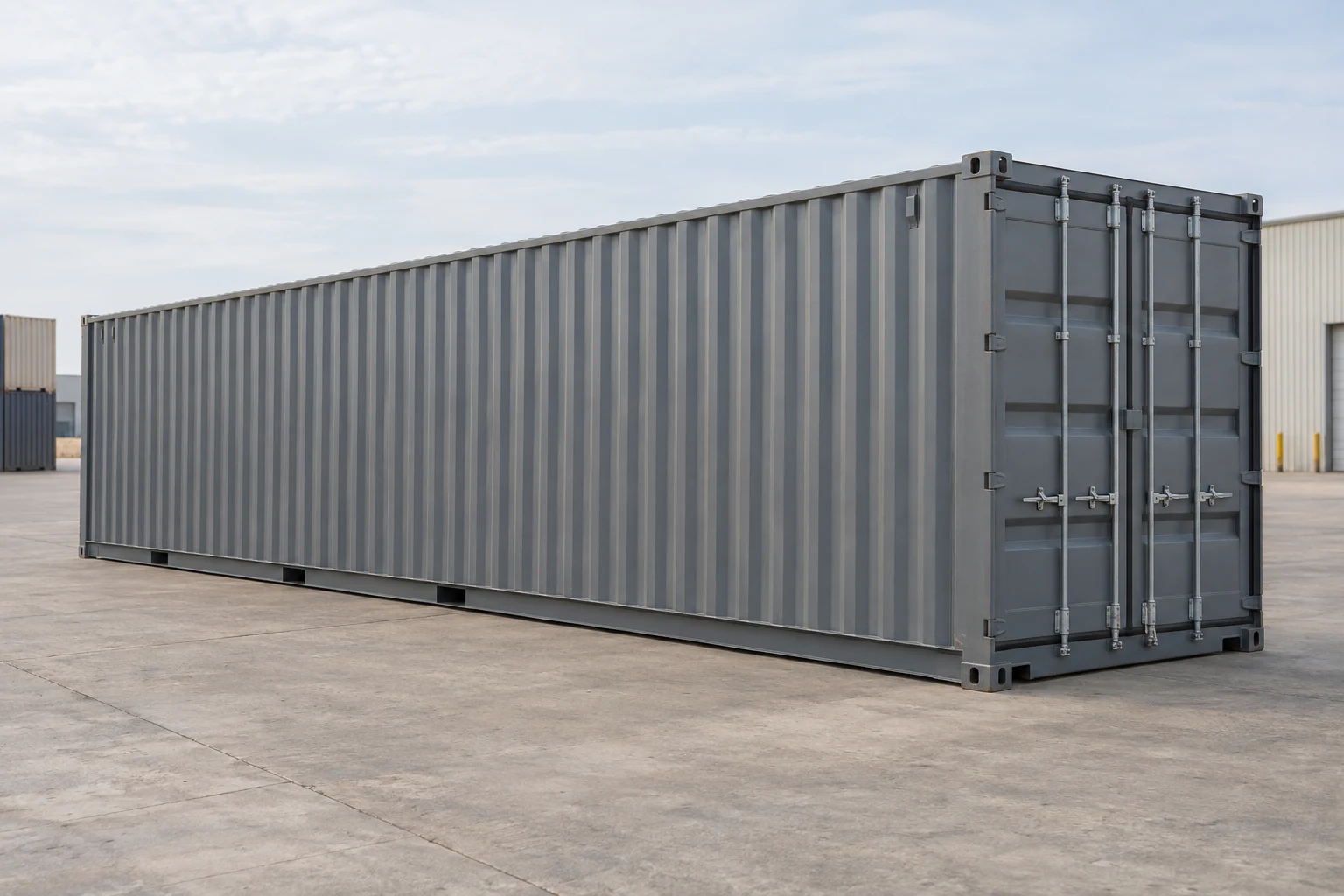
Use the full postcode, final address and site photographs for a firm written offer. Price depends on the offered unit, dispatch point, vehicle and unloading plan. If the actual destination requires a sea crossing, confirm the mainland/island transport chain, ferry vehicle acceptance, onward delivery and local offloading with the operator.
| Scope to agree | What the written quote should state |
|---|---|
| HIAB / lorry-mounted crane | The actual unit mass, lift position, reach, stabiliser footprint and supporting ground, assessed by the competent operator. A nominal container size does not guarantee a suitable lift. |
| Tilt-bed, sideloader or separate crane | The method proposed for this site, vehicle approach, unloading area, supplier of equipment and final placement responsibility. Availability is operator-confirmed. |
| Delivered total (£) | Unit price, transport, offloading, placement, VAT status and any ferry, waiting or failed-delivery charges, itemised on one scope. |
Say clearly whether the destination is on the mainland or an island. If a sea crossing is needed, confirm the ferry booking, vehicle acceptance, plans for bad weather and local unloading method.
Measure gate clearance and identify turns, gradients, bridge limits and overhead obstructions. Ask the haulier to review the route for the actual vehicle.
Have a competent person assess the ground for the unloading method and container supports. Show drainage runs, covers, soft edges and any recent ground works.
Mark cargo-door direction, opening space and the retrieval aisle. Keep emergency access and shared working routes available after placement.
The operator must approve the site and lifting plan. A container footprint or postcode does not establish safe unloading.
National guidance checked .
Scotland planning framework
Ask the relevant planning authority about the proposal before installation. Storage, a staffed workspace and a dwelling have different requirements; identify building warrant and service installation questions separately.
Authority for the actual property
Give the exact address, use, duration, height and alterations. Identify any protected designation, lease condition and public-road issue. A temporary label or postal town does not establish exemption.
Delivery and installation
Confirm the lifting plan, supporting ground and exclusion area with the unloading operator. Identify any separate electrical, plumbing, fire or building-control review for a conversion.
National guidance is a starting point. The responsible authority determines the requirements for your proposal; this guide does not establish site approval.
Browse delivery-planning guides for these areas. Listings are editorial guidance and do not identify depots, confirmed stock or supplier coverage.
Confirm the size, condition and intended use. Add the full postcode and access details before reviewing the request.