
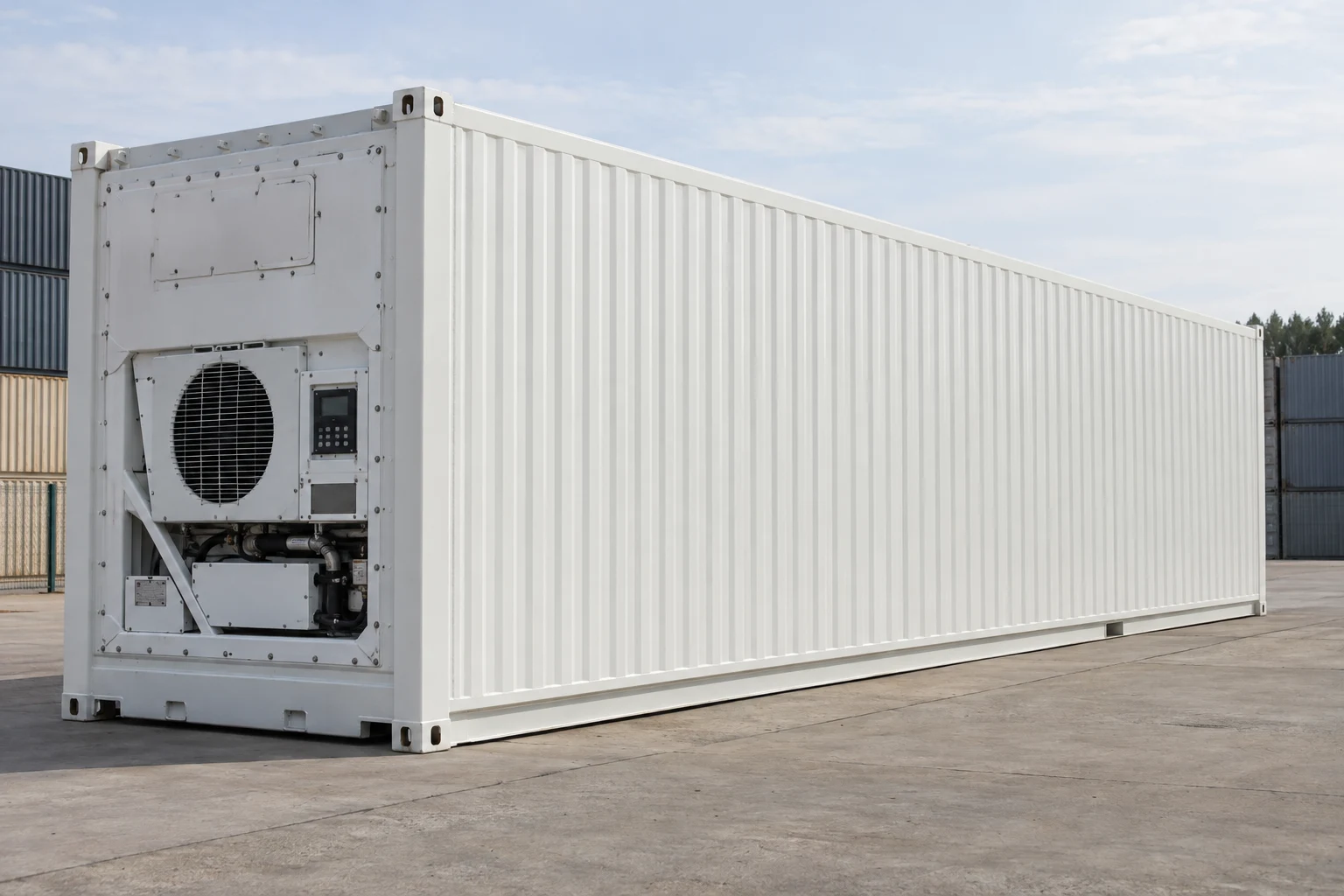
Start with the goods and the storage routine
A reefer can hold a chilled or frozen load, but stationary storage brings a different access pattern. Daily picking, repeated deliveries and warm incoming goods all need to be part of equipment selection. Ask whether the proposed unit is configured for storing pre-cooled products, cooling an incoming load or a separate freezing process.
- List the products, required temperatures and acceptable variation from your product specifications.
- Record peak inventory, packaged dimensions, total weight and the amount received each day.
- State the temperature of incoming goods and whether they arrive already chilled or frozen.
- Estimate how often doors open, how long loading takes and whether people retrieve individual items throughout the day.
- Describe the operating season, hours of use and expected outdoor conditions. Ask the specialist to document the assumptions used to select the unit.
Compare chilled or frozen storage with a specialist lower-temperature duty
These are selection questions for UK supplier proposals, not specifications for two stocked models. Confirm the actual equipment and performance for the products, loading pattern and site.
State the required product temperature and permitted variation in °C. Holding pre-cooled goods, cooling incoming products and achieving a specialist lower temperature are different duties. A controller setpoint or a lower advertised minimum does not establish the performance your load needs.
Compare the offered unit’s dimensions, door arrangement and UK-compatible electrical installation together. Do not assume equal usable space, a normal socket, or the same power requirements for two units described as 20ft. If a generator is proposed, have its compatibility, starting demand, operating costs and placement assessed for the selected system.
| Selection item | Chilled or frozen storage | Specialist lower-temperature storage |
|---|---|---|
| Temperature and duty | Give the required product temperature in °C, incoming load and door-use pattern. Request evidence of holding capacity and recovery for those conditions. | Give the product-specific temperature, permissible variation and cooling duty in °C. Ask the specialist to establish capacity, recovery and monitoring for that application. |
| Outside L × W × H | Obtain the selected unit’s metric body dimensions and space for machinery, unloading and maintenance. | Obtain the selected unit’s metric body dimensions; additional machinery or insulation can change the footprint. |
| Inside L × W × H | Measure usable room and agree the pallet or shelf layout with airflow and retrieval routes. | Use the actual insulated interior and specialist airflow requirements, rather than borrowing a standard reefer’s measurements. |
| Door and access | Confirm clear opening, threshold, staff access and safe exit arrangements for the proposed use. | Confirm the specialist door system, opening, safe entry and exit arrangements and any restrictions on access. |
| Electrical supply | Confirm model-specific voltage, phase, 50 Hz compatibility, connector, circuit demand and installation with a competent electrician. | Confirm the complete specialist system’s supply and installation requirements, including auxiliaries and any compatible backup arrangement. |
As a named UK hire-market example, ICS Cool Energy’s Cold Store 20 specifies a 400 V, three-phase, 50 Hz supply. That identifies one supplier’s hire model; it is not a ContainerPick sale offer, stock claim or electrical specification for another cold store.
Choose chilled or frozen storage from the product requirement
Give the target temperature in °C. Request the exact refrigeration model, controller, options and applicable performance documentation. Keep the product temperature requirement separate from the controller's selectable setpoint range.
The equipment range describes the model, not the required temperature of every product or its response to a warm delivery. Agree on loading, outdoor conditions and door use when setting acceptance criteria for your installation.
| Storage duty | Questions for the specialist |
|---|---|
| Chilled storage | Which temperature and variation does the product specification allow? Are humidity or fresh-air controls needed, and how will repeated access affect the selection? |
| Frozen storage | Can the proposed unit hold the specified temperature at the planned load and ambient conditions? How are defrost and door-opening recovery assessed? |
| Cooling or freezing incoming goods | What product quantity, starting temperature and completion time must the system handle? Ask for a separate capacity assessment for this process. |
| Products with different requirements | Can they share the same temperature, atmosphere and handling routine? Ask whether separate units or an engineered arrangement are required. |
Design access and airflow into the usable layout
Sketch pallets or shelves, the retrieval aisle and the door approach. Request actual inside dimensions, door clearance and loading limits. Include airflow space in the drawing before counting storage positions.
A transport reefer uses floor channels and defined loading limits to circulate air through the cargo. Shelves, an aisle or a different door can change that arrangement. Have the refrigeration specialist review the stationary layout and the proposed loading pattern together; keep floor channels and the designated air paths clear.
- Ask how shelving, racks, floor coverings and added openings affect airflow, cleaning, drainage and the refrigeration duty.
- If people enter the space, include interior lighting, entry and exit arrangements, door hardware and the loading equipment in the design review.
- Compare the proposed 20 ft and 40 ft configurations using their actual inside measurements and door clearances. Insulation, machinery and added fit-out reduce the space available for stock; a dry-container size chart does not describe your cold store.
Plan power, placement and service access together
Send the unit's nameplate and OEM connection requirements to your electrician. Confirm voltage, phase, frequency, circuit capacity, protection, connector and cable route. Ask the supplier to identify any transformer or generator required and which party supplies it.
Give the delivery operator the final postcode, approach photos, gate and turn details, overhead obstacles, ground conditions and placement plan. Agree on the unloading method and door orientation. Have the installer specify the supports and space needed to access the refrigeration equipment and discharge heat.
- Ask who checks the placement surface, levelling, drainage and electrical connection before commissioning.
- Include service access, condenser clearance, noise and nearby activity in the site review; request the unit's installation requirements.
- Ask the local authority which approvals apply to the proposed installation and use before ordering site work.
- Decide how an electrical outage will be detected and who responds. Have the specialist assess backup power or alternative storage where your operation requires it.
Agree on acceptance checks before storing inventory
Separate the seller's inspection and PTI from the checks needed after installation at your site.
Confirm what each temperature reading measures. Controller air readings and product-temperature measurements answer different questions. Ask the specialist to specify sensors, logging, calibration and any mapping required for the application; include alarm recipients and response procedures in the handover.
| Stage | Agree on the evidence and responsibility |
|---|---|
| Before delivery | Actual unit identity, condition photos, inspection and dated PTI report; documented repairs and the proposed storage configuration. |
| After placement and connection | Electrical verification and a commissioning record with settings, alarm checks and the responsible technician. |
| Storage performance | Specialist-defined acceptance criteria using the agreed load, ambient and access assumptions; required measurement locations and records. |
| Operating handover | Loading layout, cleaning and defrost instructions, monitoring procedure, alarm contacts, service schedule and warranty terms. |
Before buying for stationary cold storage, record the refrigeration model, refrigerant type and charge, service history and any available leak-check records. Have a suitably qualified refrigeration technician identify the current servicing restrictions and the applicable leak-check, record and recovery duties for the equipment and location. Agree who operates the system and who arranges maintenance; an electrical check or PTI alone does not settle these duties.
Use GOV.UK F-gas guidance for Great Britain and DAERA F-gas guidance for Northern Ireland. The regulatory routes differ, so do not transfer a gas, service interval or overseas equipment specification to every UK installation. Require the applicable technician qualifications and company certification before work on the refrigerant circuit.
Budget for the installation and ongoing operation
For electricity budgeting, request measured energy use or a documented estimate for a comparable duty, stating temperature, ambient conditions, load, access pattern and hours of operation. Use your utility rate and applicable demand or fixed charges. OEM laboratory power figures do not establish a monthly bill for your site.
| Budget component | Scope to compare |
|---|---|
| Equipment | Container condition, exact refrigeration unit, repairs, cleaning and any storage modifications. |
| Site and electrical work | Supports, access work, electrical circuit, cable, connector, transformer and backup arrangement. |
| Delivery and commissioning | Transport, unloading, placement, start-up, agreed acceptance testing and operator handover. |
| Monitoring and service | Sensors, logger, alarm connectivity, subscriptions, preventive maintenance and callout terms. |
| Ongoing operation | Electricity, any generator fuel, cleaning and planned service; identify assumptions, exclusions and VAT. |
Build a stationary cold-storage request
Include the product requirements and load profile, a storage layout, site photos, delivery postcode, electrical details, monitoring needs and the operating period. For seasonal overflow, a temporary installation or recurring use, state whether you are considering purchase or comparing a separate rental proposal. Ask the specialist to identify the actual unit, configuration, selection assumptions, service scope and itemised installed cost.
Check the size and intended-use fields and add stationary cold-storage details in Project notes. Review the request, then send it through the quote form with your consent, or copy or download it. The supplier confirms equipment, site work and delivery arrangements in writing.
Buying questions
Can a shipping reefer become stationary cold storage?
An OEM-supported marine refrigeration platform can be configured for storage on land. Have a specialist assess the actual unit, product load, door use, site conditions and power, then identify any adaptations and acceptance checks required.
Is a cold storage container the same as a walk-in freezer?
Describe how you expect to enter, load and retrieve goods. Ask the specialist to confirm the temperature duty, airflow, shelving, lighting, door and exit arrangements, and any required approvals for that configuration.
Can I connect a cold storage container to a domestic socket?
Confirm the actual voltage, phase, frequency, current and UK installation compatibility with the supplier and a competent electrician.
How many pallets will fit?
Use the proposed unit's measurements and the packaged pallet dimensions. Have the specialist check the arrangement against loading limits, airflow and retrieval access. Nominal container volume alone does not establish usable pallet positions.
How much electricity will the installation use?
Request measured data or a documented estimate for the intended unit and duty. Compare temperature, ambient conditions, load, door use and operating hours, then apply your utility's rates and charges. Confirm the electrical installation separately from the operating-cost estimate.
Should I buy or rent temporary cold storage?
Compare the operating period and later use with complete proposals. Include delivery, installation, electrical work, monitoring, service responsibilities and any collection charge. A short seasonal need and a recurring installation can justify different choices. Confirm the supplier’s actual rental terms or purchase scope before making arrangements.