
Before you pay: check the whole transaction
Work through these checks before a deposit or balance payment. A professional website, a container photo or a business registration cannot verify the whole sale.
Use reviews and complaint searches as extra checks. A low price, polished photos, HTTPS or a high star rating cannot, on its own, tell you whether this purchase is safe or fraudulent. Compare the full delivered price and written terms before judging the price.
- Identify the seller. Ask for the business name, invoice entity, address and the person handling the sale. Record who is responsible for the container and who is responsible for delivery.
- Contact the business independently. Find its contact details outside the advertisement, invoice or payment message. Confirm that the business issued this offer and that the person handling it is authorised. An impersonator can borrow a real company's name and documents.
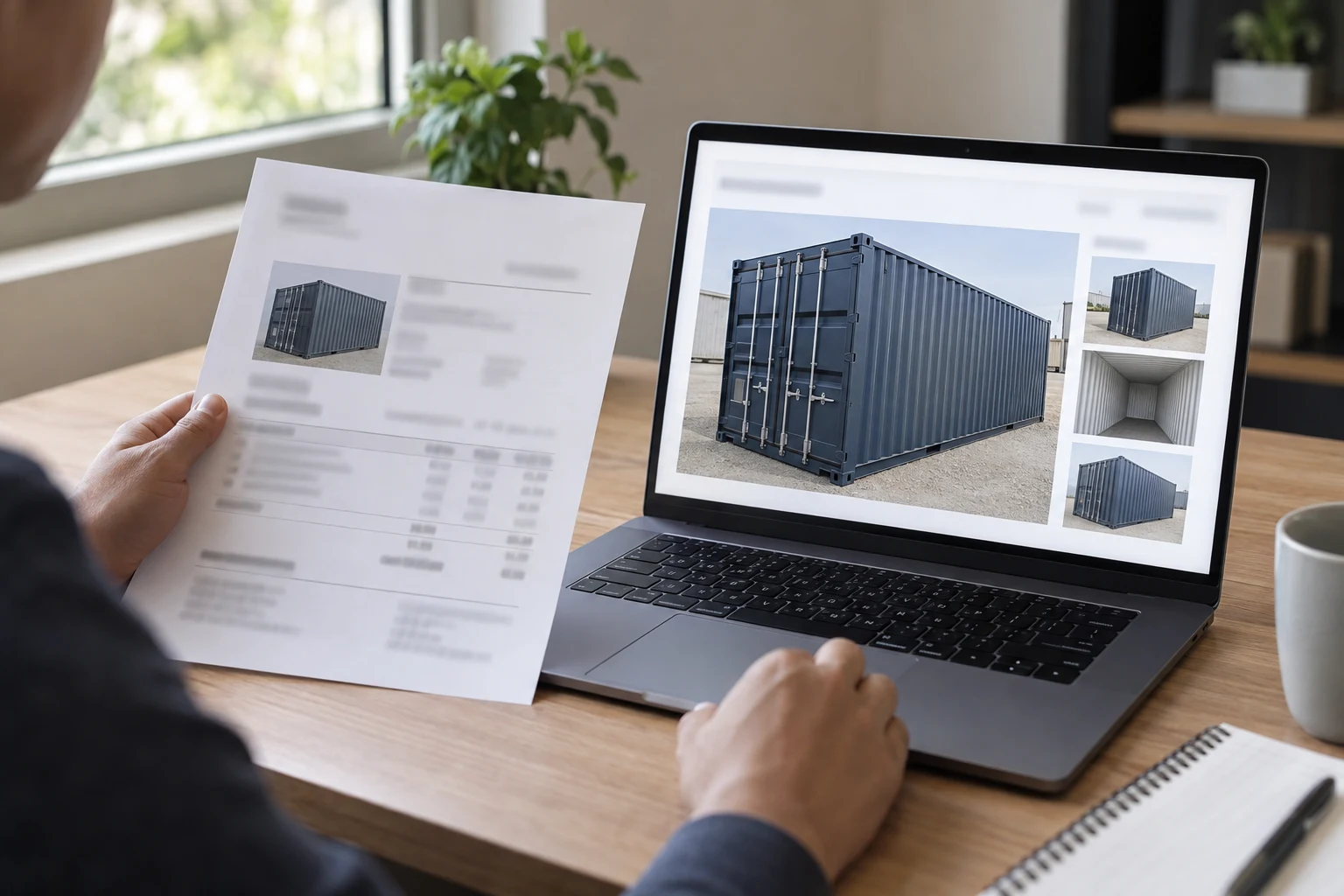
- Check what you are buying. Is it the container in the photos, or will the seller choose one later from an agreed condition grade? If the unit is already chosen, ask for current photos of its number, doors, outside, inside and disclosed damage. Otherwise, get the selection date, grade, inspection arrangements and replacement terms in writing.
- Agree how you will check the condition. Can you or an independent inspector inspect before acceptance? What will be checked? Which defects and repairs will be recorded? What happens if the unit differs from the agreement? A container number or recent video helps match the records to the unit. It does not prove who owns it.
- Pin down delivery. Confirm the depot or dispatch arrangements through the independently verified seller. Put the destination, delivery window, unloading method, site access assumptions and all charges in the offer. Ask who pays for waiting, failed placement, a return trip or equipment changes.
- Ask what the deposit covers. Get the answers in writing: what does it reserve, when is the unit chosen and when is the balance due? What cancellation or refund terms apply if selection or delivery fails? Check who receives the money. A deposit or sample photos alone do not prove fraud, but unclear terms still need answers.
- Check who will receive the payment and how you will pay. The recipient should match the business on the invoice. If another business collects it, check that relationship independently and get it in writing. Check changed instructions outside the message thread. Ask your payment provider whether purchase protection covers this seller, container and payment method.
- Save the offer, terms, messages and payment instructions before they change. Stop if the seller's identity, payment recipient or delivery details do not match and nobody can explain why. Do not let pressure to pay prevent you from checking independently.
Treat changed payment instructions as a new check
A familiar email thread can be compromised. If an account, recipient or payment procedure changes, contact the seller using details you obtained independently and confirm the change before paying. Do not use a new phone number supplied in the same message to authenticate it.
Ask what protections apply before choosing a payment method. A marketplace listing or linked card does not automatically give every transaction buyer protection. Pressure to use a hard-to-reverse payment route while avoiding independent checks is a reason to pause.
Two situations to work through
Illustrative examples. They do not describe actual businesses or website reports.
| Situation | What to check | What the facts establish |
|---|---|---|
| A seller uses sample photos and allocates a unit after a deposit. | Ask what the deposit reserves, when the actual unit is selected, how you can inspect it, and what written remedy applies if it differs. | The photos do not verify the eventual unit. Later allocation or a deposit alone does not establish fraud. |
| A familiar invoice thread suddenly gives new bank details and says delivery depends on paying today. | Call the seller through the independently verified contact. If it denies the change, keep the message and stop the replacement payment. | The changed instruction conflicts with the independently verified seller. Preserve that fact without inventing who sent the message. |
Already paid? Contact the payment provider now
Start here if the container was not delivered as agreed, payment details appear false, or someone used your account. Preparing a website report does not contact your bank or stop a payment.
- Use a known channel now: the number on your card, your bank's genuine app, or the provider contact you independently verify. Explain the payment and what happened. Do not wait for a ContainerPick review or for the seller to promise another delivery date.
- Ask for the correct route: a purchase dispute, unauthorised-payment report, cancellation, or recall, as the facts require. Request a reference number, the applicable deadline and any required written notice or documents. Keep a copy and follow the provider's instructions promptly.
- Keep the original order and payment records. Write a short timeline with dates. If your account or login details were exposed, tell the provider immediately. Change exposed or reused passwords and enable multifactor authentication.
- Report suspected fraud through official channels found independently. Keep the report confirmation. Reporting supports the record of the incident; it does not replace a dispute, required notice or recall, and does not guarantee money back.
Say who made the payment and what went wrong
Tell the bank or provider what happened. If you approved a purchase and the container was not delivered, describe non-delivery. Identify any separate charge or transfer made without your authority as a separate event; do not change the facts to fit a dispute category.
If someone accessed your account after obtaining a password or verification code, explain what you did and what the other person did. The bank needs the sequence and the transaction details to assess the applicable process.
A card chargeback, bank-transfer recall, direct-debit dispute and payment-platform claim are different processes. Ask the actual provider which route, deadline and evidence apply; none guarantees recovery.
Use the steps for the actual payment method. If you are unsure, check your receipt and ask the provider to identify the transfer type.
Credit card
- Contact the issuer immediately through the number on your card or the genuine banking app. Describe non-delivery, incorrect goods or any charge made without your authority accurately.
- Ask whether a chargeback or another purchase dispute is available for this transaction, which documents are needed and what deadline applies under your card terms.
- Follow any required written or secure-channel process and keep the case reference and copies. A request for a chargeback is not a guarantee of reimbursement; do not wait for a website report or a new seller promise before contacting the issuer.
Check card-issuer deadlines and notice requirements
NZ card dispute deadlines are determined by the applicable issuer and payment rules. Ask the issuer for the deadline for your actual transaction and how to provide the required information; do not assume a universal 60-day window.
Give the transaction date, amount and payment reference, the written offer and promised delivery, and a concise timeline through the issuer’s verified channel. Keep confirmation of receipt and respond promptly to requests for more evidence.
A new promised delivery date does not automatically extend a dispute deadline. If time has passed, contact the issuer anyway and ask what processes remain available. Business and personal card terms can differ.
Debit card
- Contact your bank immediately. Describe the debit-card purchase and whether the problem is non-delivery, an incorrect transaction or use without your authority.
- Ask whether a chargeback or other dispute is available for the actual card/payment route and what deadline and evidence apply. A debit card and an EFTPOS payment should not be assumed to have identical protections.
- Use the bank’s verified secure channel, retain the reference and promptly provide the requested records. Do not describe a purchase you authorised as an unauthorised payment solely because the seller failed to deliver.
Bank transfer
- Contact the sending bank immediately and explain the suspected scam or payment problem. Ask whether it can stop or recall the transfer and contact the receiving bank.
- Give the reference, date, NZD or original-currency amount and beneficiary information through the bank’s secure channel. Explain any changed invoice or bank details and retain the case reference.
- Recovery is less likely after money has moved and is not guaranteed. Do not send another payment to release, protect or recover the first one; a transfer recall is different from a card chargeback.
Direct debit or automatic payment
- Ask your bank to identify the actual transaction type and applicable cancellation or dispute process. Distinguish an automatic payment you scheduled from a direct debit initiated under an authority.
- Report any payment made without your authority and ask how to stop further payments where appropriate. Contact the bank promptly rather than relying only on a message to the seller.
- An authorised payment and a seller’s failure to deliver are different facts. Ask for the correct NZ bank process, its deadline and required evidence for that payment.
Payment app
- Use the genuine platform or independently verified support immediately. Ask which cancellation, dispute or buyer-protection process applies to the exact transaction.
- Explain whether this was a goods purchase or person-to-person transfer, the currency and how it was funded. Protection may differ for a wallet balance, linked card or friends-and-family transfer.
- If the account was compromised, report it to the platform and relevant bank, secure the account and retain each reference. A platform report does not replace any separate bank deadline.
Cryptocurrency
- Contact the actual exchange or cryptocurrency ATM operator promptly to ask what action is possible. Completed cryptocurrency transfers are typically irreversible; provider contact does not mean the blockchain payment can be undone.
- Preserve the receiving address, coin or token, amount, transaction hash, date and time, and messages. Share these through independently verified provider or official reporting channels.
- If an account or wallet was compromised, tell the provider and secure the exposed access. Do not pay an unsolicited recovery agent who promises reimbursement or asks for credentials or another transfer.
Another method or unsure
Contact the company you used to pay immediately and ask which cancellation or dispute process applies. If you used a money-transfer company, contact that company directly through a verified channel.
For a business account or business purchase
Tell the provider whether the card/account and purchase are personal or business. The applicable contract, purchase protection and dispute process can differ. Ask which rules apply and obtain the actual deadline and documentation requirements.
Report unauthorised use, suspected fraud and non-delivery promptly and describe each event accurately. A business purchase is not a reason to skip bank contact. Consumer and trade-contract rights require their own assessment and do not guarantee that a payment can be recalled.
Keep the records and a clear account of what happened
Keep originals securely. Build a dated timeline that distinguishes what you observed from what you suspect; a delay alone is not proof of fraud.
Send sensitive transaction details only through a secure channel you have checked with the payment provider or official agency. Never publish account numbers, card details, identity documents or raw records. The website report tool below asks only which records you have. It does not upload them.
- The listing or offer, its website address, seller identity, invoice and contract.
- The agreed size, quantity, condition, unit number if supplied, or later allocation and inspection terms.
- The delivery destination, promised date or window, unloading agreement, and later delivery explanations.
- The payment receipt, transaction reference and payee details, plus any changed instructions.
- Original messages and emails, including full headers where available; saved web pages and relevant photos.
- Inspection, depot-release or delivery records you received, cancellation or refund requests, and bank or official report references.
Prepare a short message for your bank or provider
Use the template below to organise the facts, then edit it in your own document or the provider's secure channel. Choose the description that actually happened and remove unused placeholders. Add any required name or account identification only in that verified channel.
Ask the provider how to deliver the required notice. Copying this template or preparing a website report does not send a dispute, satisfy a deadline or start a recall.
Subject: Container payment problem — request for the appropriate dispute or recall

Payment date: [date]
Amount and currency: [amount]
Payment method and transaction reference: [method/reference]
Seller or payee shown in my records: [name]
What was agreed: [container, allocation terms and promised delivery]
What happened: [short dated facts and checks made]
Who initiated the payment: [I made and authorised this purchase / another person initiated it without my authority / I am unsure — explain the steps]

Please identify the correct dispute, error-reporting or recall process for these facts and my account. Can you take any urgent action now? Please give me a reference number, the required notice channel or address, the receipt deadline, and the records you need.

I hold: [offer/invoice/payment receipt/messages/delivery records]. I can provide relevant copies through your verified secure channel.
Secure exposed accounts and make an official report
If account access, passwords or verification codes were exposed, alert the provider, change compromised or reused passwords and enable multifactor authentication. Do not share a new code because someone claims it will reverse the scam.
Report online scam or cyber incidents to the National Cyber Security Centre through its official reporting service. Suspected fraud can be reported to NZ Police online or through non-emergency 105. Use 111 when urgent safety or an emergency response is needed.
Keep original messages, invoices, transaction records and a dated timeline securely. Report the account or listing to the platform where it appeared. Official reporting is separate from your bank dispute or recall and does not guarantee an investigation or a refund.
Do not pay an unexpected recovery service that promises to get the money back for an upfront fee, further transfer or account access. Verify an alleged agency using independently obtained contact details.
Check or report a website
Use the tools below to check a hostname or organise your account of events.
Check the reviewed website reports
Enter the exact website domain. A missing result does not mean a website is safe.
No reviewed reports are published yet.
Enter a domain or paste an HTTP or HTTPS website address.
We compare the exact hostname you confirm. Other subdomains are checked separately.
A reviewed report describes one case. It does not prove that every offer from that domain is fraudulent. A domain with no report is not necessarily safe.
Prepare your account of events →Prepare a website report
Prepare a factual draft to review, copy or download. Preparing it sends nothing. This tool does not submit or publish reports.
Your draft stays in this open page. You choose whether to copy or download it and share it with your payment provider or an official reporting service.
Review your draft
Prepare a draft to see your report here.
Nothing has been sent.
Copying or downloading does not contact your bank or an official agency. Contact your payment provider directly about a payment.
Common questions
How can I verify that a container supplier and its offer are legitimate?
Check the business independently and confirm that it issued the offer. Match the container or selection terms, condition records, payment recipient and delivery agreement. Registration details, a container number, photos or HTTPS are only part of the check. Stop if identity, payment or delivery details still conflict. This guide and the website report tool do not certify sellers.
Does a deposit mean a container offer is fraudulent?
No. Check what it reserves, when the unit is allocated, when the balance is due and what written cancellation or failure terms apply. Verify the seller and payment recipient independently.
Is a container number or a fresh video enough to verify a sale?
It can help match photos or reports to the container in an offer. It does not prove ownership, confirm who should receive payment or guarantee delivery.
Can I wait for the seller before contacting my bank?
Contact the bank or payment provider immediately and ask for the applicable process and deadline. A new delivery promise or a ContainerPick draft report does not stop the clock or start a dispute.
Does no website report mean the seller is safe?
No. It means no reviewed report is published for the exact hostname checked. It does not verify the business, its offer or a related subdomain.
Will preparing a report recover my payment?
No. It prepares text for your own use and sends nothing. Contact the provider directly for a dispute or recall and follow its required notice process.