
40FT / CHOOSE YOUR FORMAT AND CONDITION
40ft Shipping Containers for Sale in New Zealand
Compare 40ft shipping containers for storage, cargo transport or a planned conversion. Choose standard height or High Cube, match the condition to your project, and compare the container price with delivery, unloading and any work your unit needs.
Standard-height ISO nominal exterior: 12.192 × 2.438 × 2.591 m. Confirm the offered model dimensions. Compare 40ft High Cube →
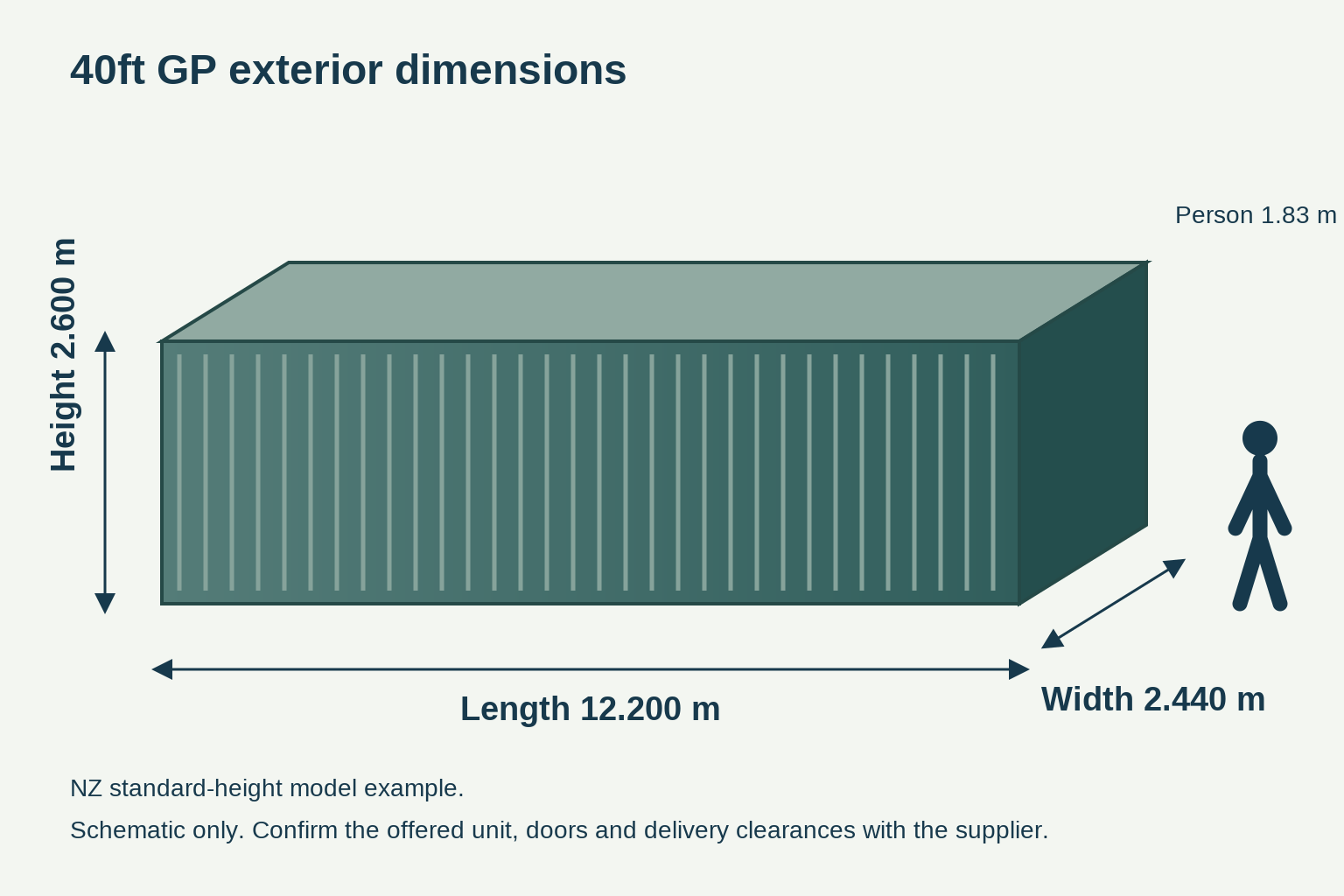
View full-size dimensions ↗
Models to compare
40ft Shipping Containers to request in New Zealand
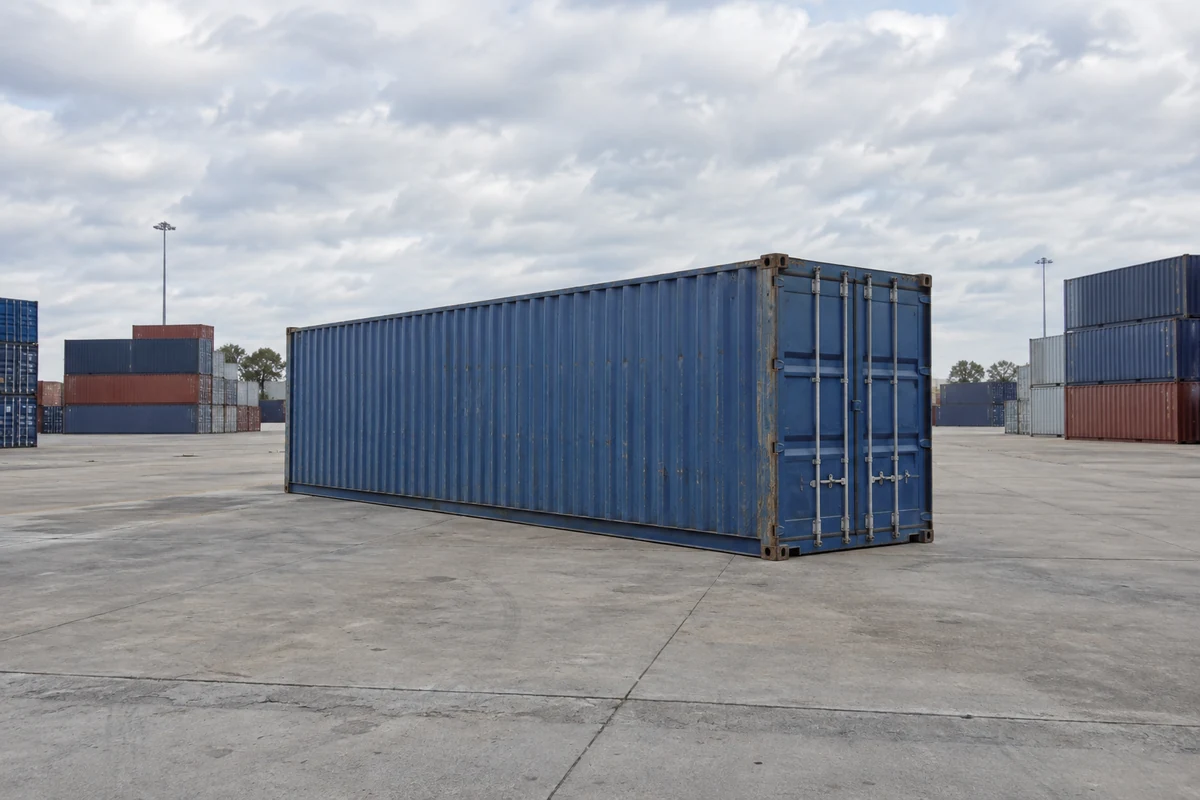
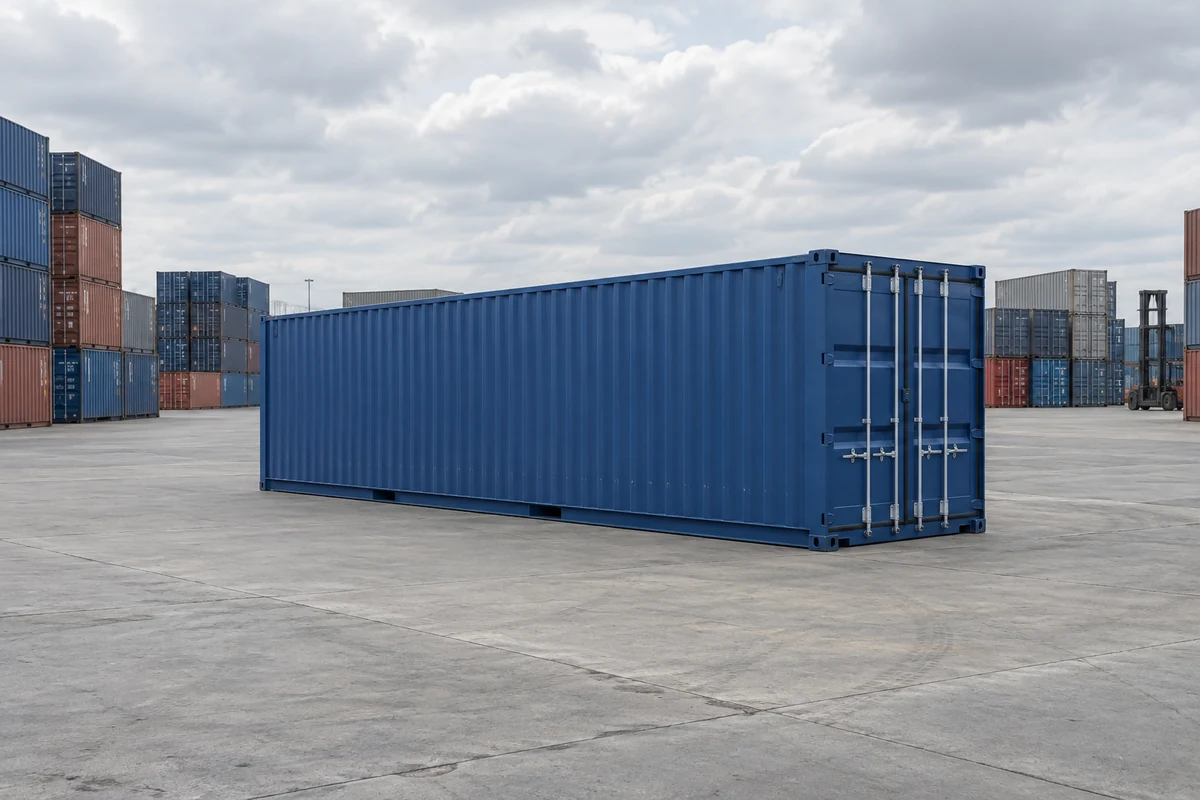
40ft standard container — new / one-trip
- New / one-trip
Price on request
Delivery quoted to your postcode
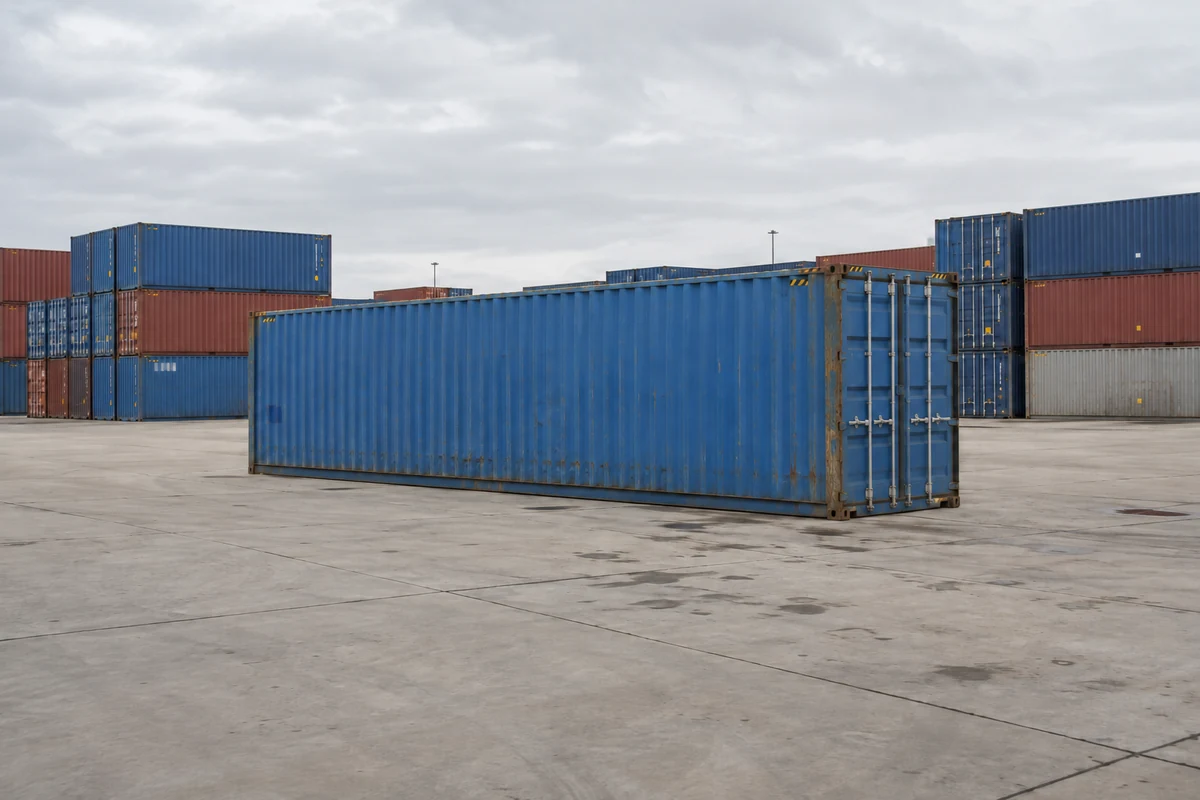
40ft high cube container — used
- Used
From NZ$5,060
Advertised price, checked 16 Oct 2026 · incl. GST · before delivery
Delivery quoted to your postcode
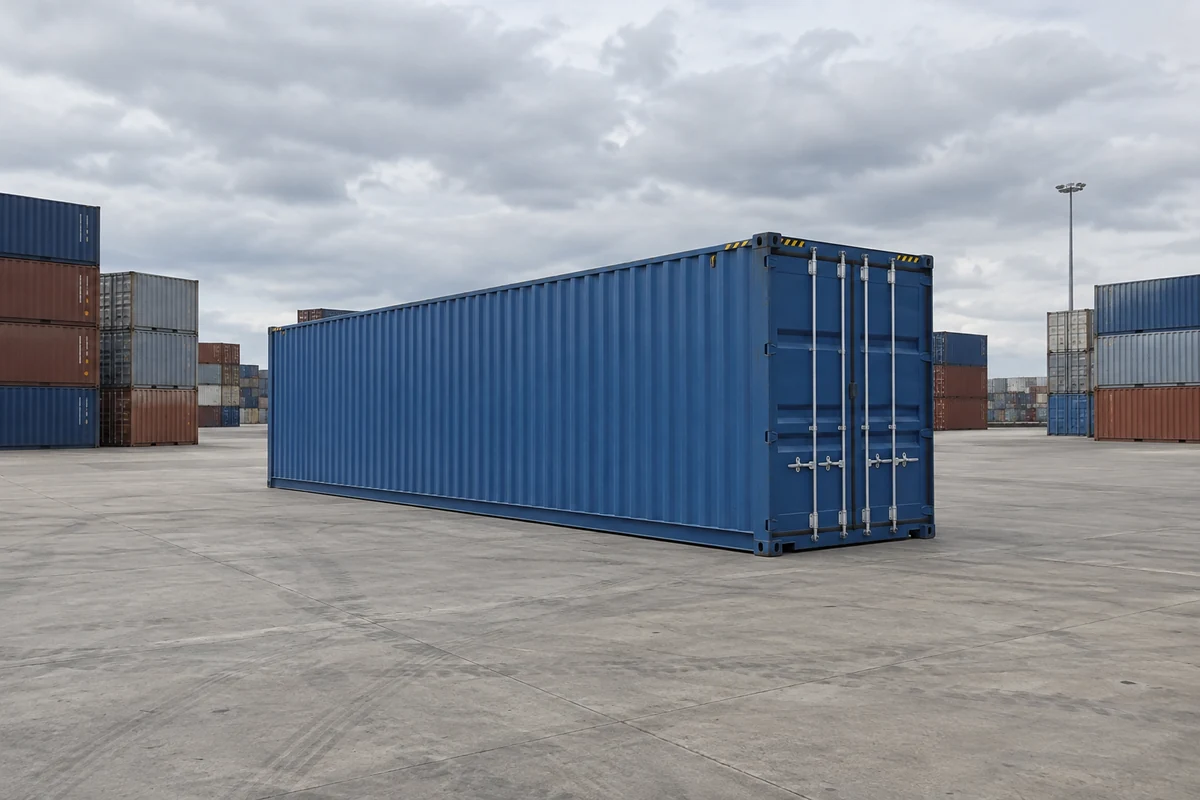
40ft high cube container — new / one-trip
- New / one-trip
From NZ$8,050
Advertised price, checked 16 Oct 2026 · incl. GST · before delivery
Delivery quoted to your postcode
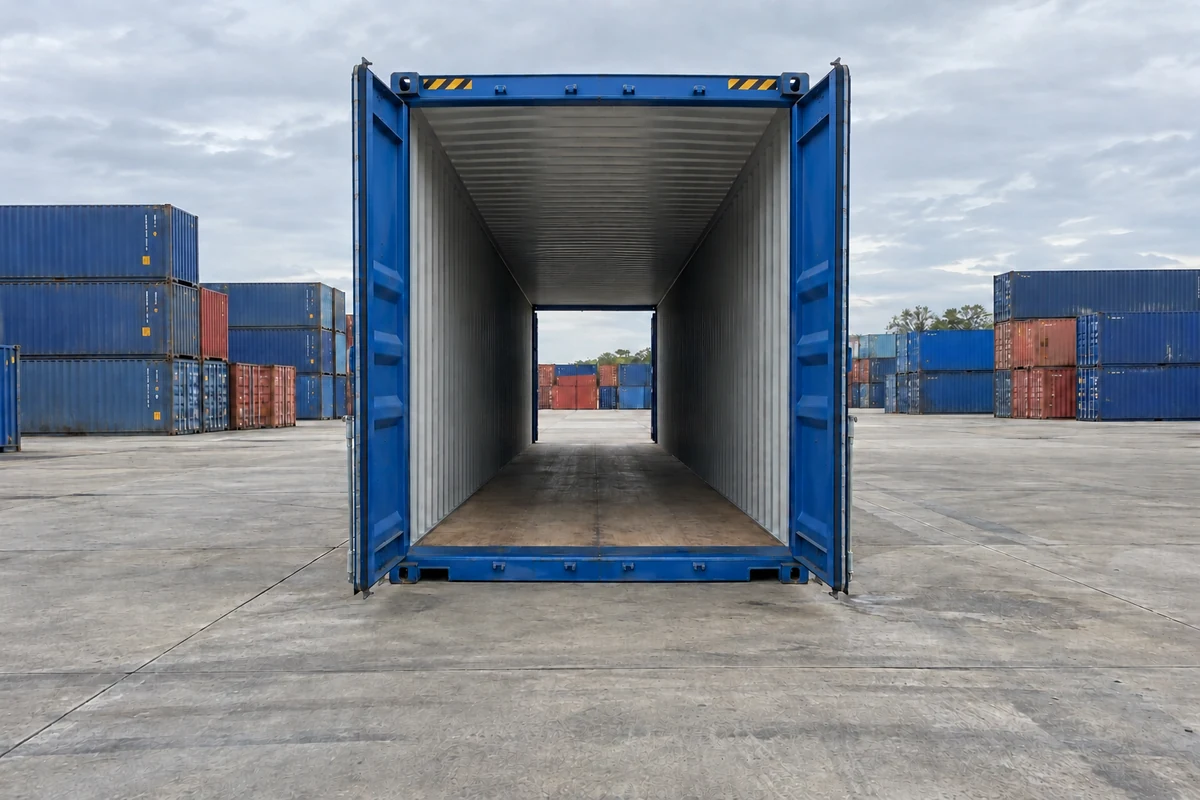
40ft high-cube double door container — new / one-trip
- New / one-trip
Price on request
Delivery quoted to your postcode
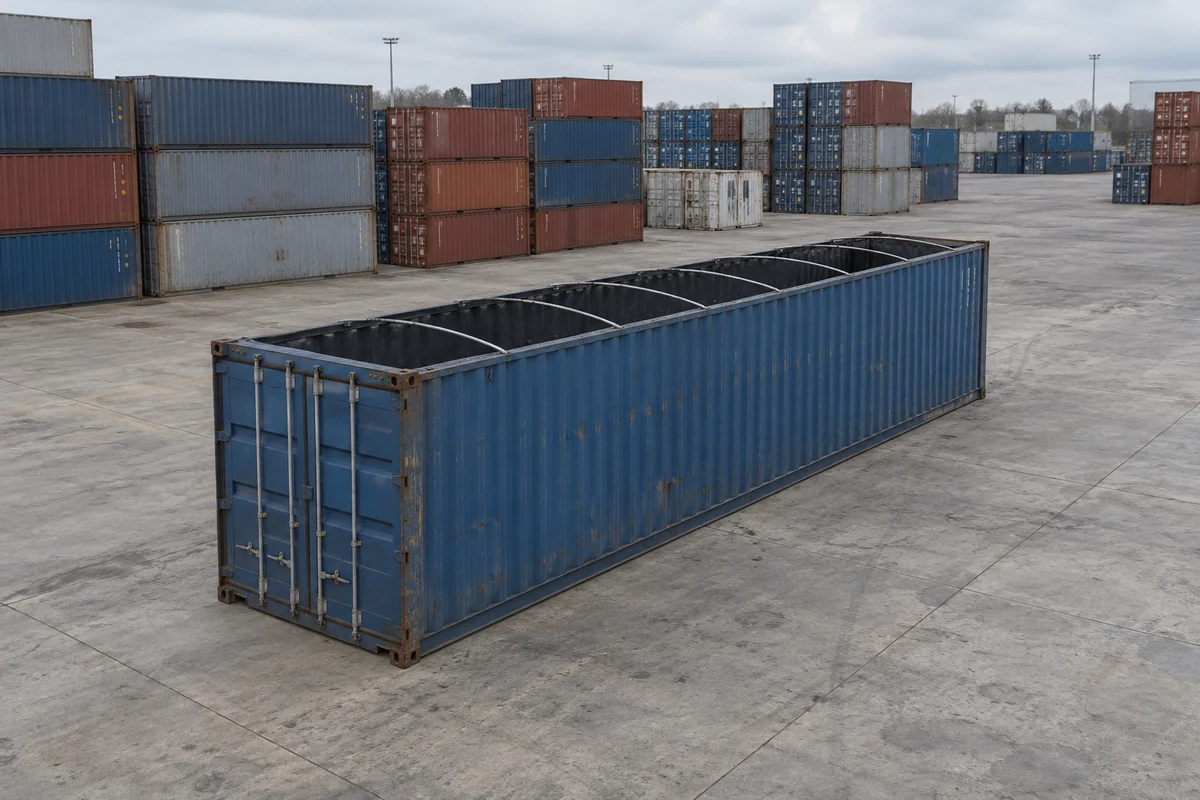
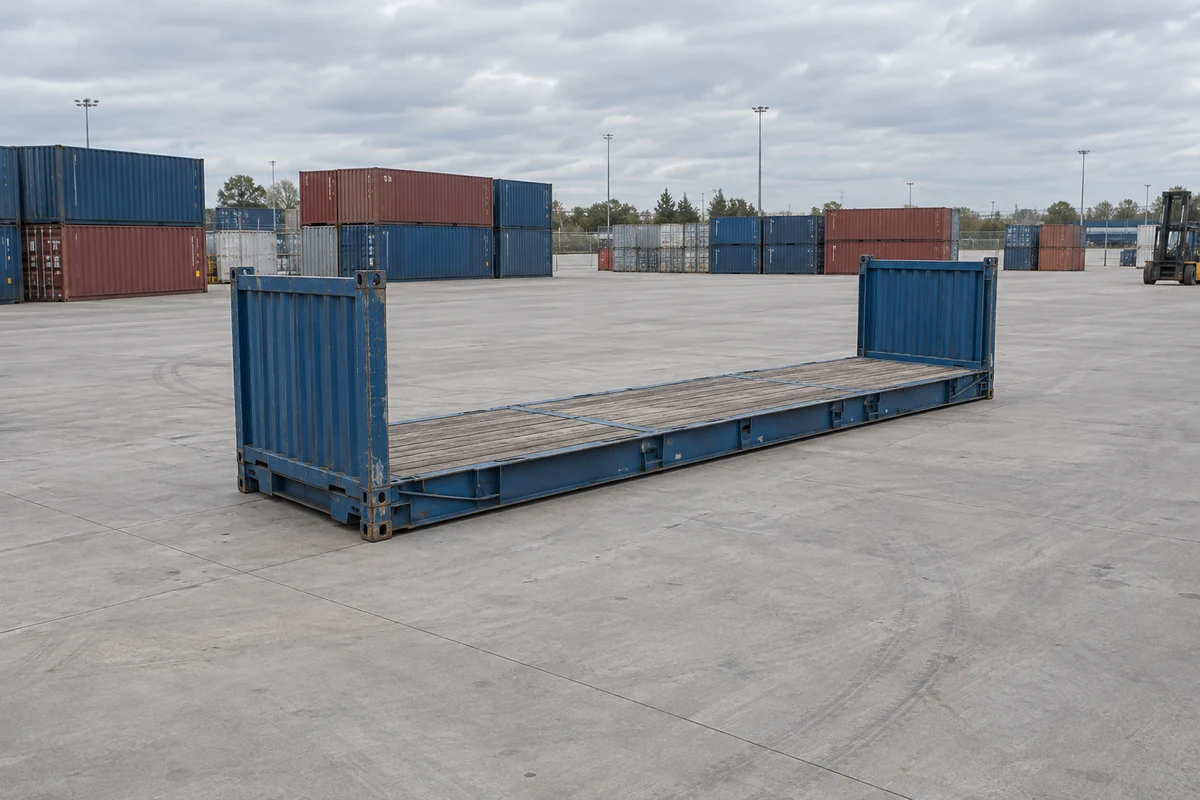
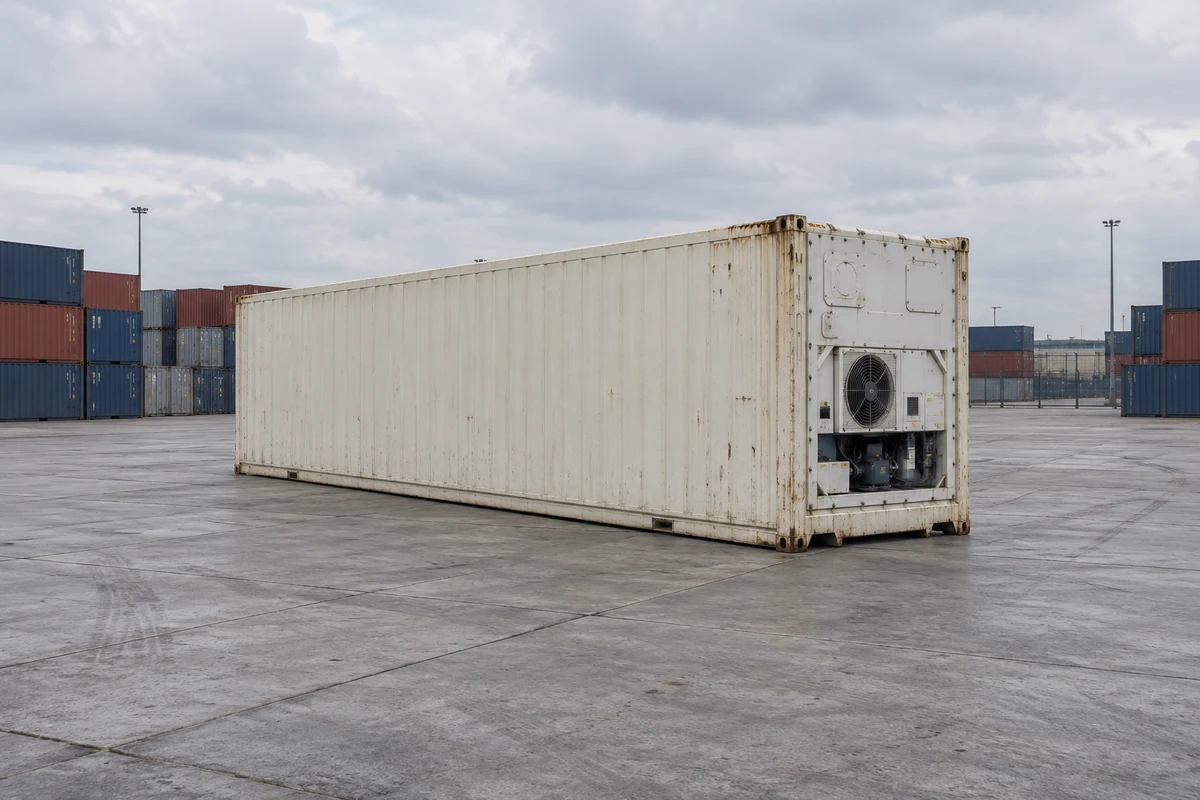
Prices are examples advertised by sellers on the date shown, not ContainerPick offers. Stock, condition and the delivered total are confirmed in each quote.
40ft delivery and siting in NZ: side-loaders and paired containers
Plan for a long vehicle. Published guidance from two NZ operators works on about 19 m of truck length reaching the site: one for a 12 m swinglift, the other for a 40ft crane-truck delivery. The swinglift figure also calls for 6 m of clear width, because a swinglift side-loader lowers the container beside the truck.
Swinglifts are commonly used for 40ft containers and unload to one side only, which one operator gives as the right-hand, driver's side. Tell the operator whether the truck must reverse into the property or can drive straight in, so the box lands on the side you need.
If you plan to join two 40ft containers with a roof between them, MBIE assesses the result as one building. In Determination 2023/025, two 12 m containers spanned by an arch canopy in Palmerston North were measured as a whole for floor area, height and boundary distance, which put the work outside the Schedule 1 clause 3A exemption for single-storey detached buildings of more than 10 and up to 30 m². The determination adds that a neighbour's permission cannot waive the clause 3A requirement to be no closer than the building's own height to a legal boundary, although it may matter for district plan rules.
| Container | Advertised price | Details |
|---|---|---|
| 40ft high cube, used | NZ$5,060 | incl. GST · checked 16 Oct 2026 |
| 40ft high cube, new / one-trip | NZ$8,050 | incl. GST · checked 16 Oct 2026 |
Sources: MBIE Determination 2023/025 (Palmerston North), paragraphs 2.2-2.3 and 5.6-5.8 (checked 20 Oct 2026); Clause 3A text as quoted in MBIE Determinations 2023/005 and 2023/025 (checked 20 Oct 2026).
Choose standard height or High Cube
Standard 40ftApproximately 12.2 × 2.44 × 2.60 m exterior for the NZ standard-height example; compare the four condition choices below.Compare this format →40ft High CubeHigh cube adds about 300 mm in height. Confirm the exact interior and door opening before loading taller goods.Compare this format →
CHOOSE BY CONDITION
Compare 40ft containers by condition
Choose the condition your project needs. The supplier confirms the actual unit, condition criteria and availability.
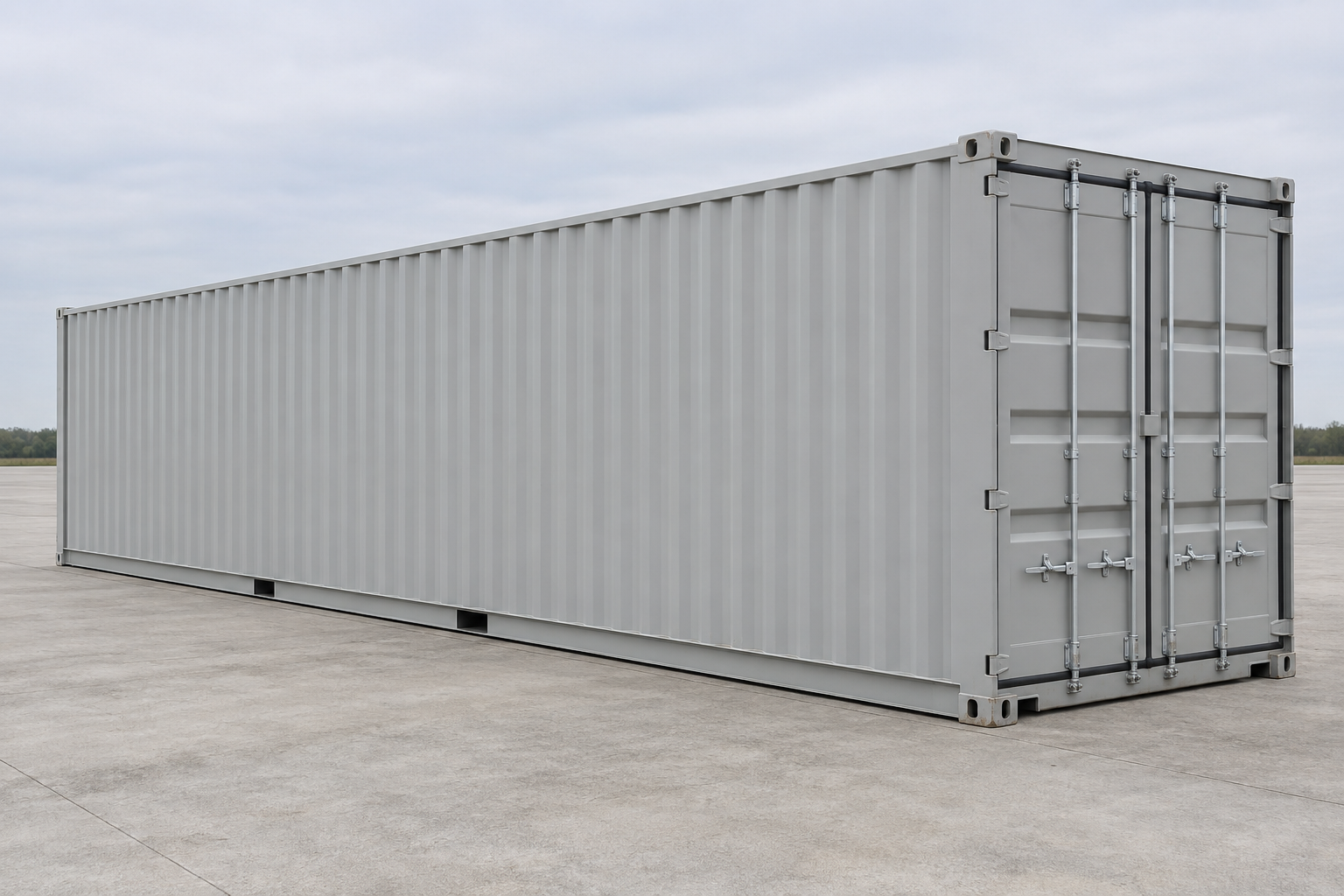
40FT / STANDARD HEIGHT
New / one-trip
A less weathered finish
Compare handling marks, included fittings and the work a used shell would need.
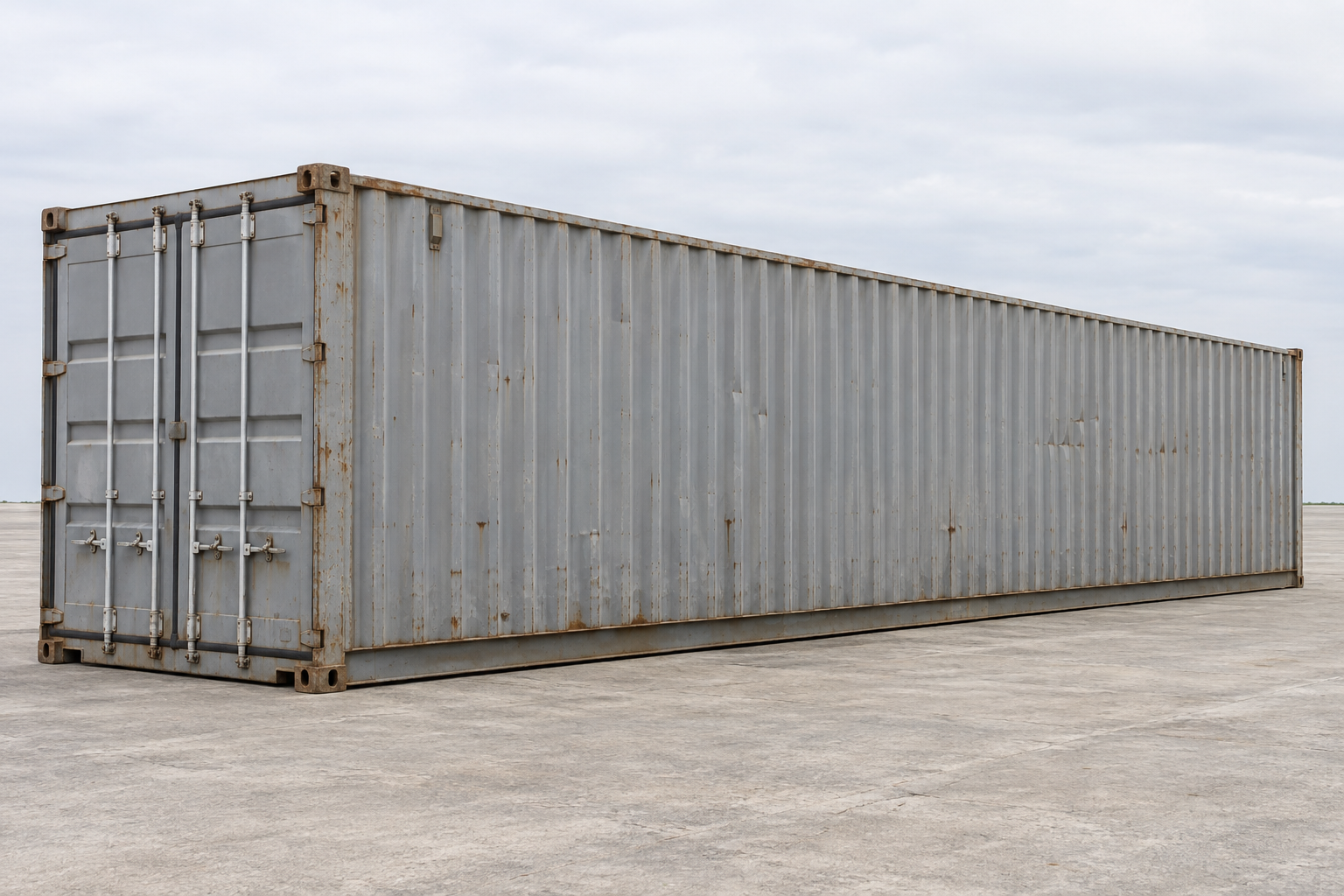
40FT / STANDARD HEIGHT
Wind & water tight
For enclosed on-site storage
Establish sealing, floor and door condition. Plan moisture-sensitive storage separately.
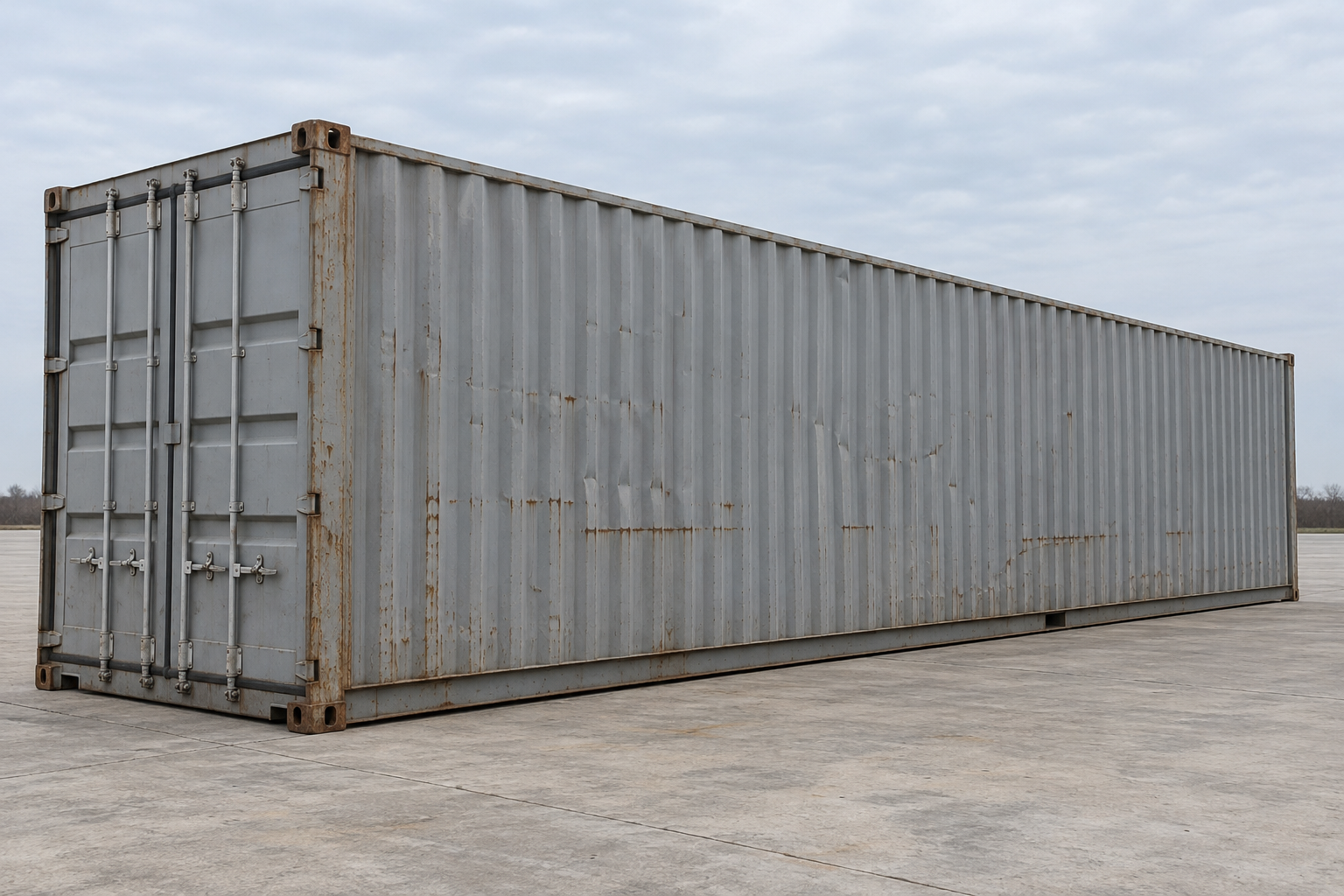
40FT / STANDARD HEIGHT
Cargo worthy
For a cargo-transport project
Establish the unit inspection, current examination and documents required for the shipment.
40FT / STANDARD HEIGHT
As-is
For an assessed repair project
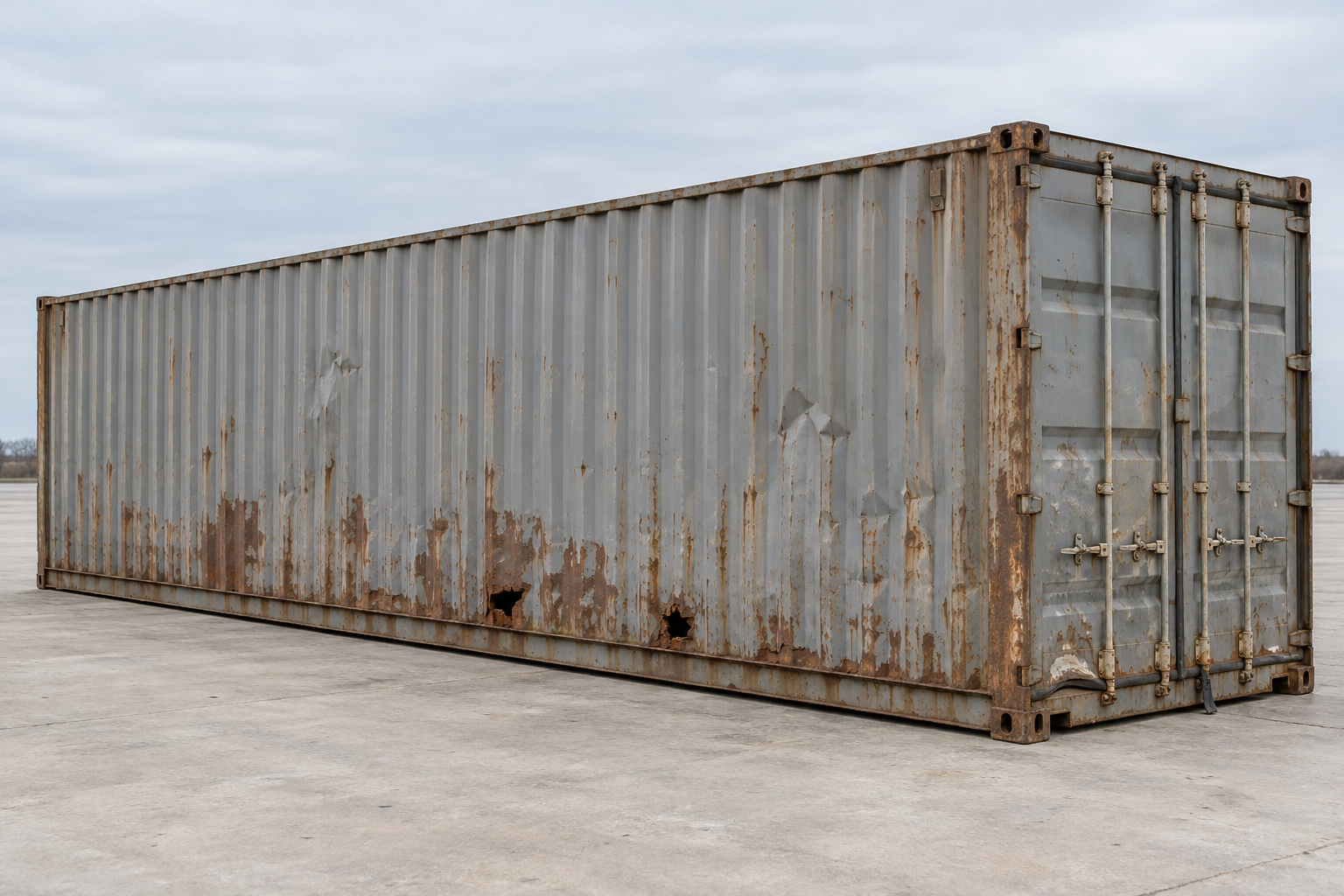
Compare disclosed defects, handling and repair costs with a WWT alternative.
Used appearances can overlap across grades. An illustration cannot establish watertightness, cargo suitability or the defects of an offered unit.
- Standard / High Cube
- 2.591 m / 2.896 m exterior height
- Standard usable floor
- About 28.30 m² in the fleet example
- Published nominal capacity
- 67.6 m³ — NZ GP model example; separate from a length × width × height calculation
- Your delivered quote
- postcode, grade, unloading and placement
How much does a 40ft shipping container cost in New Zealand?
A seller advertised a used 40ft High Cube at NZ$5,060 and a new / one-trip 40ft High Cube at NZ$8,050, GST included and before delivery (checked 16 Oct 2026). Ask for a standard-height 40ft price separately; these listings do not cover it.
40ft Standard vs High Cube: compare the extra height
Both formats share a nominal 12.192 m × 2.438 m footprint. Choose around the clear doorway and finished interior your project needs.
Exterior class figures are nominal ISO references. Interior and door values are separate NZ-market model examples, not a paired specification from one manufacturer. High Cube adds approximately 300 mm of usable height in these examples; confirm the offered unit and any changes to it.
| Height to compare | 40ft GP NZ model example | 40ft HC NZ model example |
|---|---|---|
| ISO nominal exterior height class | 2.591 m | 2.896 m |
| Example clear interior height | 2.395 m | 2.699 m |
| Example cargo-door height | 2.280 m | 2.585 m |
Use metric room and doorway dimensions
High cube is approximately 300 mm taller than standard. Exact exterior/door/interior figures depend on the manufacturer. Nominal 10ft/20ft/40ft names remain familiar NZ product labels.
| NZ format example | Outside L × W × H | Inside L × W × H | Door W × H |
|---|---|---|---|
| 40ft GP | 12.2 × 2.44 × 2.6 m | 12.032 × 2.352 × 2.395 m | 2.34 × 2.28 m |
| 40ft HC | Confirm exact exterior | 12.032 × 2.352 × 2.699 m | 2.352 × 2.585 m |
Is 40ft the right length for your storage?
A long interior is useful when the load needs continuous length. Plan how you will load it and reach the contents afterward.
Standard and High Cube 40ft formats share a nominal 12.192 m × 2.438 m footprint. High Cube adds approximately 300 mm of exterior height; it does not add floor length or width. Compare clear door and interior heights when tall items drive the choice.
| Your storage need | Check before choosing |
|---|---|
| Long equipment or materials | Measure the longest packed item against the clear interior length, then check its route through the doors. |
| Inventory, tools or supplies accessed regularly | Allow a working aisle and keep frequently needed items close to the cargo doors. |
| A smaller load or a constrained delivery site | Compare a 20ft unit and its delivery plan before committing to the longer format. |
Choose around how you will use the long interior
A standard dry container does not actively control temperature or humidity. Discuss the goods and storage conditions before choosing ventilation, insulation or climate-controlled equipment. For an occupied conversion, confirm local requirements and the finished design before ordering the shell.
| Project | What to specify before buying |
|---|---|
| Tools, equipment or inventory | Grade, floor condition, moisture requirements, lock arrangements and a route to the far end. |
| Frequent stock picking | Shelving depth, lighting, working aisle, entry space and whether end-door access suits the daily loading sequence. |
| Cargo transport | A suitable unit, current examination evidence, shipment documents and acceptance for the planned journey. |
| Workshop, office or home conversion | Finished clear height, openings, insulation and services, with the shell and design assessed for the intended use. |
End doors, double doors, side access or roller?
A usual dry-container arrangement has a pair of cargo doors at one end. Extra openings are separate configurations to quote and measure.
| Access arrangement | When to compare it | What changes in the quote |
|---|---|---|
| Cargo doors at one end | A single loading entrance with an aisle or planned sequence to reach the back. | Door operation, swing space, loading route and included hardware. |
| Cargo doors at both ends (double-door) | Access from either end helps with separate loads or a long stock route. | A different shell configuration and clear space at both entrances. |
| Side access | Frequent access along the long side or loads that need a wider loading approach. | The actual opening, door swing, reinforcement and weather sealing. |
| Roll-up access | An opening suited to the planned workflow and site layout. | Clear opening, overhead mechanism, fabrication and finished sealing. |
Confirm the actual unit behind the condition label
Compare the actual unit, its condition description and the complete quote. Appearance and suitability are separate decisions.
Ask for views of the roof, walls, floor, door seals and locking bars. Confirm which doors and accessories are included, and whether the photos show the quoted unit. Choose the condition that meets your use and appearance requirements, then compare delivered totals.
| Condition | Buying reason | Evidence to establish |
|---|---|---|
| New / one-trip | A less weathered finish and fewer prior-service repairs to assess. | Actual travel history, handling damage, current photos and included fittings. |
| Wind & water tight | Enclosed land storage with defined rain-exclusion, floor and door criteria. | Unit photos, leak checks, floor and door condition; plan humidity separately. |
| Cargo worthy | A unit intended for cargo transportation. | Actual-unit inspection, current examination and the shipment’s required documents. |
| As-is | A shell whose defects and repair responsibilities can be costed for the project. | Written defect list, handling assessment, repair scope and sale assurances or exclusions. |
Compare the full delivered cost
A unit price alone does not tell you the cost of getting a 40ft container into position. Use the same postcode, condition and placement requirements when comparing quotes.
Request an itemised total and clarify what happens if access or unloading requirements change. Compare used and one-trip totals on those same terms.
| Quote component | What to confirm |
|---|---|
| Container | The quoted size, height, condition and included fittings. |
| Transport | Delivery to your postcode and any charges for the route or site access. |
| Unloading and placement | The delivery method, equipment, operator and positioning work included. |
| Other charges | Optional work, GST and any other applicable fees or exclusions. |
Plan access for the truck and the doors
The truck needs room to approach, turn and unload beyond the container's footprint. Confirm the delivery plan with the operator before scheduling.
Agree the delivery method before paying. A tilt-bed slides the unit off the trailer; a flatbed normally requires separate lifting equipment. Ask who provides and operates that equipment and whether the quoted service includes final placement.
Share photos or a site sketch with the operator and confirm the clearances for the actual truck and trailer. The 12.192 m × 2.438 m footprint alone does not establish that the delivery vehicle can enter or unload.
- Share gate widths, turns, slopes, surface conditions and overhead obstructions along the approach.
- Confirm the required manoeuvring and unloading space for the selected truck or trailer.
- Identify who supplies and operates unloading equipment, and whether placement is included.
- Prepare suitable firm, level, drained support and confirm which direction the cargo doors should face.
- Leave room to open the doors fully and use the loading equipment or access aisle you have planned.
Compare the offers before you commit
Use the same postcode, height, condition and intended use in each request. Compare the allocated unit, itemised delivered total, unloading method, actual-unit photos, sale terms and any written warranty together.
Review the request, then send it through the quote form with your consent, or copy or download it. A supplier must confirm the unit, complete price and delivery terms.
Buying questions
What affects the price of a 40ft shipping container?
Height, condition, door arrangement, availability and delivery requirements affect the quote. Compare the same configuration and condition, then confirm the actual unit and the complete total with unloading, GST and any repairs or modifications specified.
Is a 40ft container about 29.7 m² inside?
About 29.7 m² is the ISO nominal exterior footprint (12.192 × 2.438 m), not usable interior floor. The standard-height NZ GP reference on this page has about 28.30 m² inside before an aisle, shelving, lining or other fit-out. Confirm the dimensions of the offered unit.
How much does an empty 40ft shipping container weigh?
The standard GP model example is 3,730 kg (3.73 t) empty. This is one documented NZ example, not a weight guarantee for every 40ft container. Obtain the offered unit’s actual tare and any modification weight, then have the operator confirm suitable transport and lifting equipment.
When should I compare a 40ft High Cube instead?
Compare High Cube when packed-item height, shelving or vertical working room matters. Its nominal exterior height is 2.896 m, versus 2.591 m for standard height. Check the actual doorway and interior measurements, along with transport and unloading clearance.
Can I load from either end?
Confirm the quoted door layout. A unit with cargo doors at one end must be loaded with access to the far end in mind. If you need doors at both ends or side access, ask for that configuration and its own measurements and quote.
Is a container suitable for storage automatically ready for overseas shipping?
Storage condition alone does not establish transport suitability. For overseas use, confirm the unit's condition, CSC plate, current examination status and any survey or documents required for the planned shipment.
Does the container price include delivery and unloading?
Ask for an itemised delivered total for your postcode. Confirm transport, unloading equipment, operator, final placement, GST and any access charges. A quote that includes transport may still have separate unloading or placement requirements.
When will availability and delivery timing be confirmed?
Have the supplier confirm the offered unit and delivery window together with access and unloading arrangements. Your preferred date can be included in the request; a catalogue image or market price example does not establish availability for your address.
Can I see the actual container before buying?
Request current photos of the quoted unit, including both long walls, roof, floor, corners, doors and seals. Confirm the unit identity, repairs and acceptable appearance in writing. The condition images on this page are illustrations.