
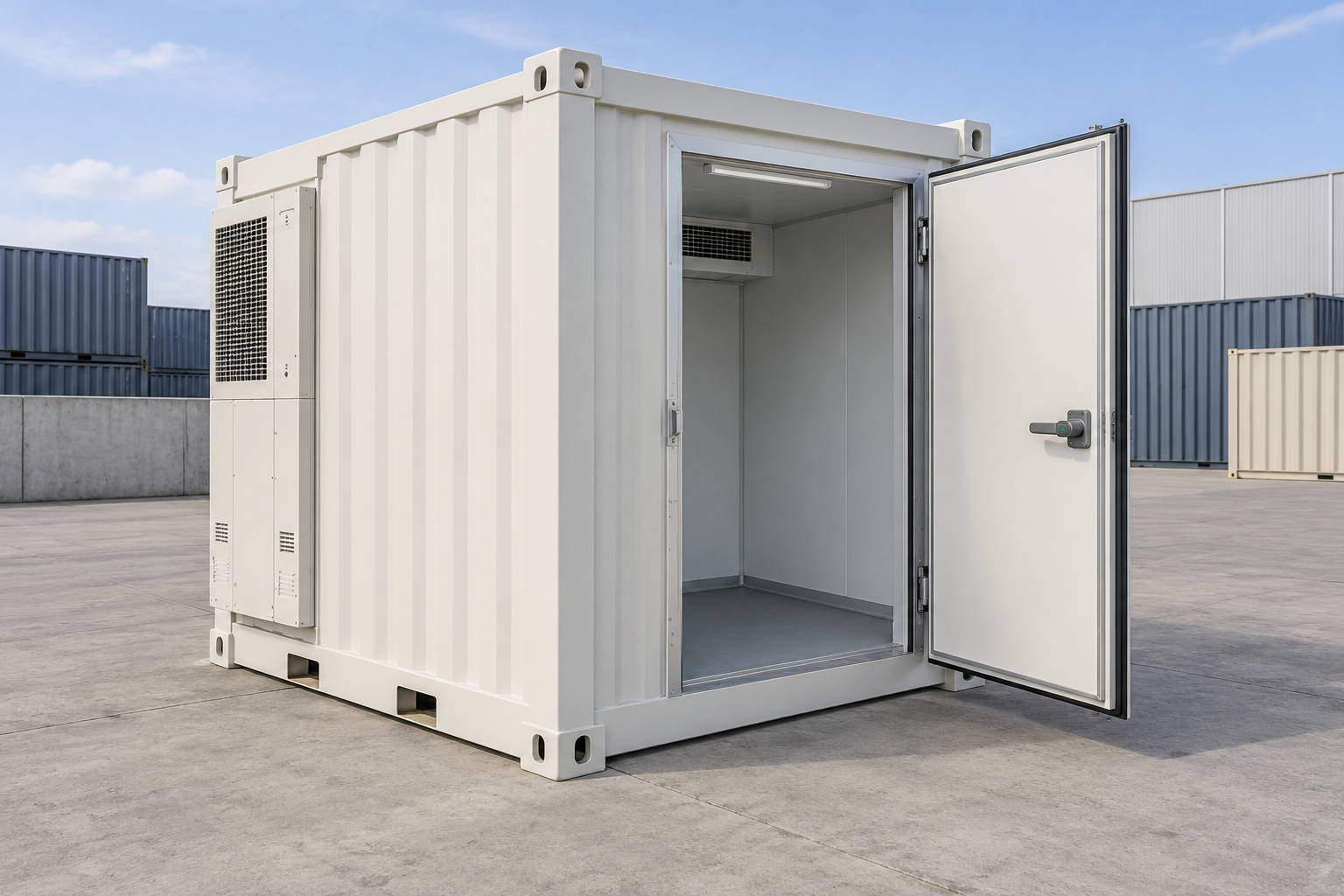
10ft refrigerated
Compact cold-storage configuration.
Confirm its door opening, internal room and refrigeration duty.
View 10ft details →Compare offers from multiple suppliers. Find the right price for your project.
Choose refrigerated storage for your New Zealand site by usable room, packaged load, holding temperature and the actual refrigeration machine. Compare metric model examples, confirm 50 Hz site compatibility and request a tested unit with its full NZD scope and GST stated.
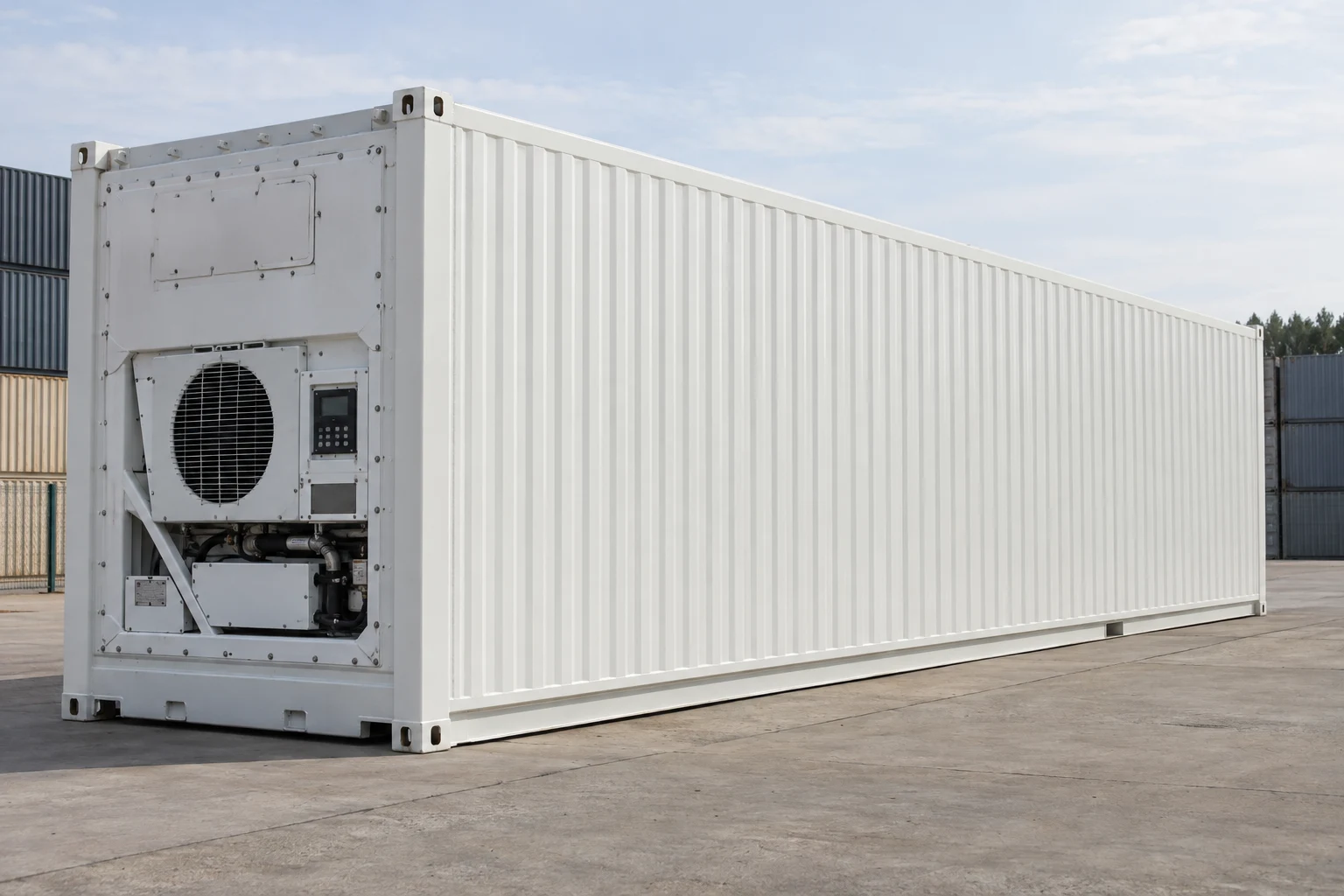
Compact cold-storage configuration.
Confirm its door opening, internal room and refrigeration duty.
View 10ft details →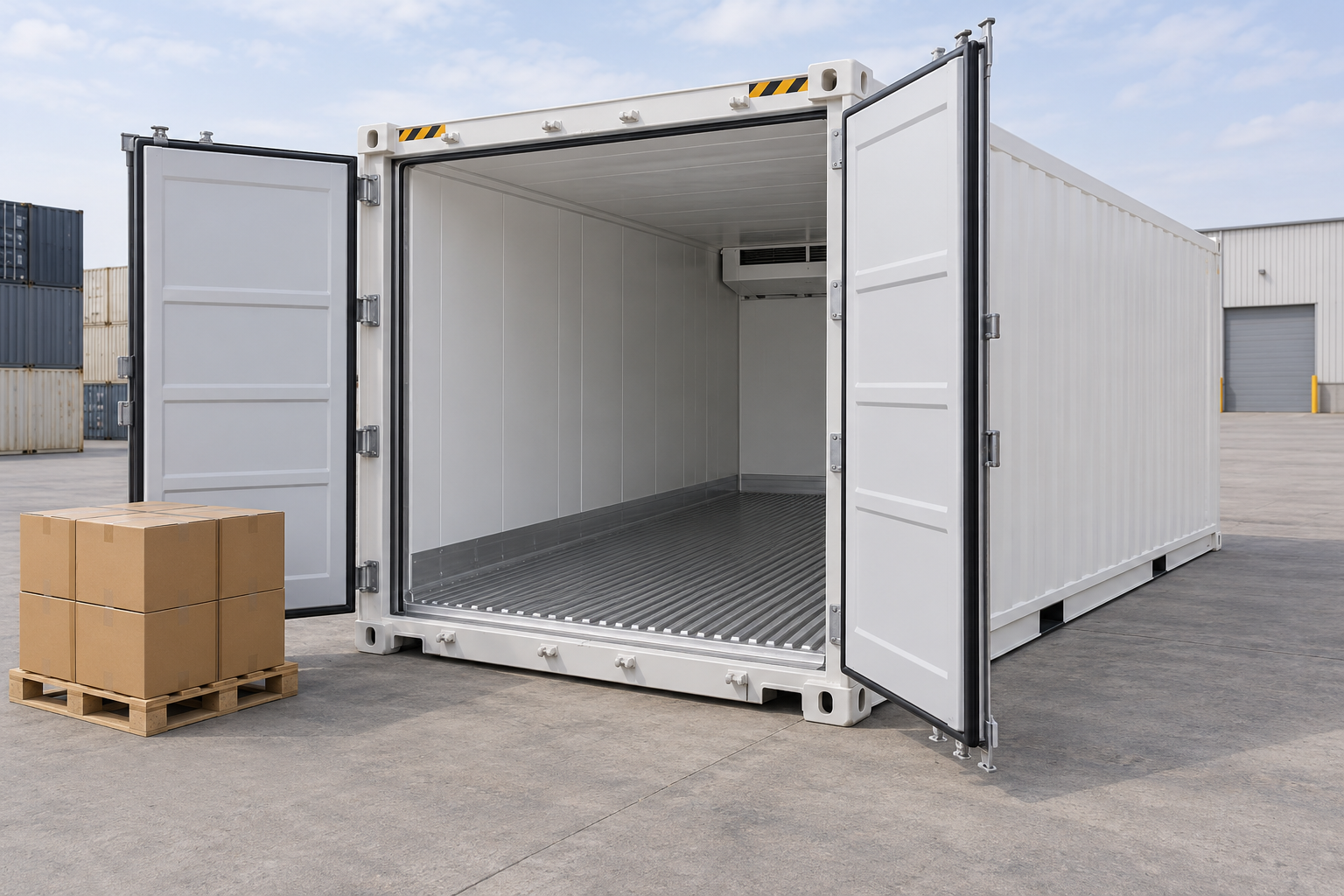
Compare ISO, high-cube and pallet-wide configurations.
Match the actual model and power connection to your site.
View 20ft details →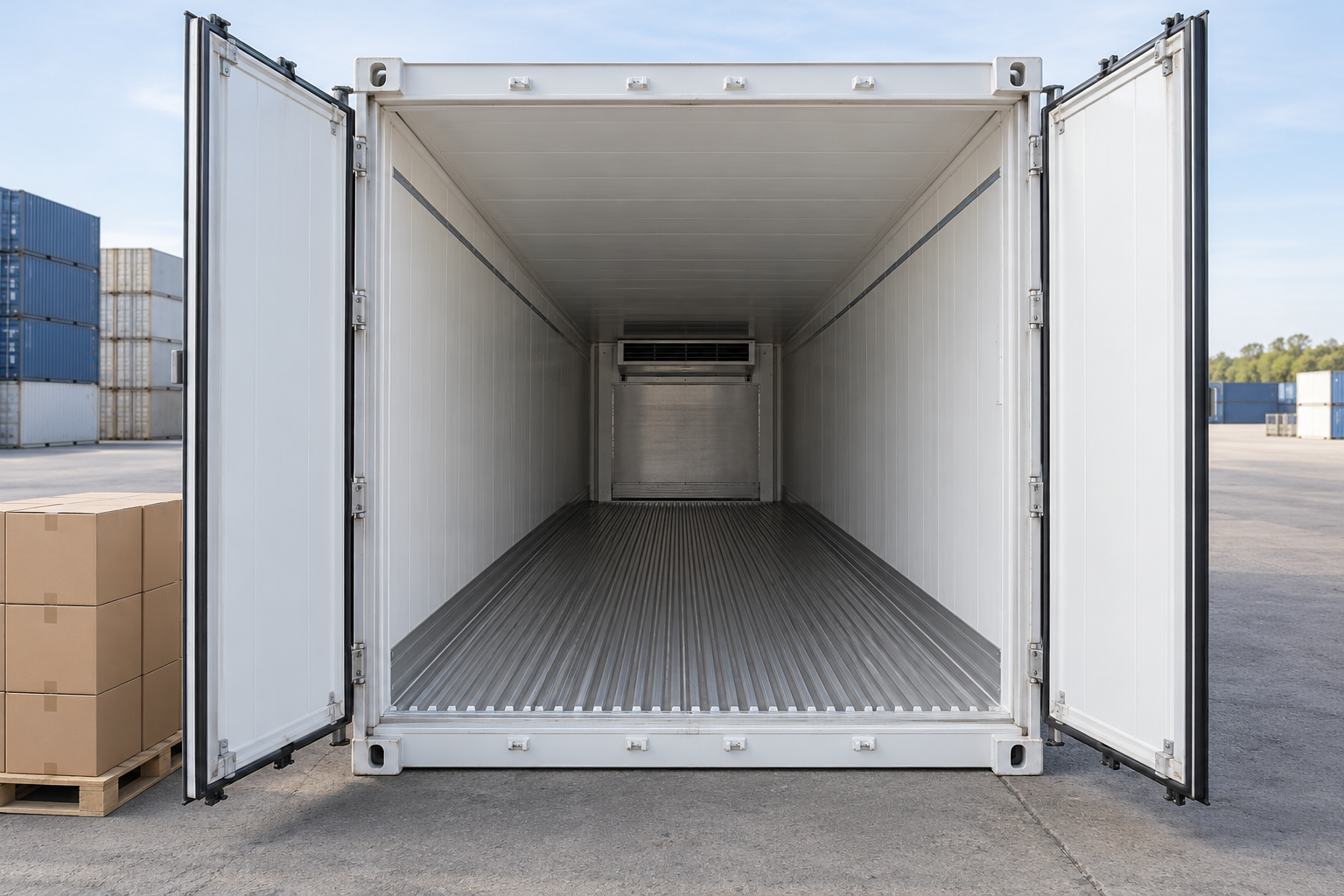
Compare standard and high-cube configurations.
Confirm usable room, loading access and the allocated machine.
View 40ft details →Compare usable interior space, door access and the refrigeration duty before choosing a nominal length. A 10ft compact chiller, a 20ft ISO reefer and a 20ft pallet-wide High Cube are different configurations; a length label does not establish temperature range or electrical supply.
For a New Zealand site, confirm the machine nameplate, 50 Hz compatibility, phase, current and connection. Document the actual packaged pallet dimensions and airflow clearance, then compare a tested configuration and the full delivered NZD quote with GST stated.
Use the actual packaged load. The NZ blue-pallet reference is 1,200 × 1,000 mm; an Australian pallet is a different 1,165 × 1,165 mm footprint. Allow for wrapping, airflow and retrieval; container length alone cannot establish a safe pallet count.
Ordinary examples with a 2.29 m interior width cannot fit two 1.165 m Australian pallet widths side by side. A 2.39 m pallet-wide box is a separate configuration; it still needs the manufacturer’s clearance and airflow plan.
For NZ 1.2 × 1.0 m pallets, sketch the actual orientation, wrapping and removal sequence in the offered unit. Reserve machinery-end and door clearance plus an aisle where goods need individual access. Do not treat every geometric position as validated storage.
Confirm the actual unit, refrigeration equipment, operating test and warranty. Ask for the full NZD total with GST, transport, unloading, electrical work and commissioning clearly identified. A non-operational insulated shell does not provide active cooling.
| Separate supplier configuration | Published range | Connection example |
|---|---|---|
| Single-phase chiller range | 0°C to +20°C | 15 A / 240 V supplier rating |
| Three-phase refrigerated range | −25°C to +20°C | 32 A / 415 V supplier rating |
New Zealand sites use 50 Hz electricity, with nominal 230 V single-phase and 400 V three-phase supplies. Have an electrician match the actual machine’s voltage range, phase, 50 Hz compatibility, current, connector and circuit to the site before delivery.
The ranges below belong to a documented local supplier range. A separately sourced or converted unit needs its own nameplate, operating test and temperature specification. Single-phase chilled storage does not establish frozen-storage capability.
A selectable setpoint does not establish pull-down speed or the time to freeze a warm batch. Specify incoming temperature, batch mass, target temperature and required completion time.
Ask for measured kWh over a representative period for the proposed machine, load, ambient conditions and door routine. Use the energy price on your own New Zealand tariff, including its GST basis.
Energy charge = measured kWh × your NZD/kWh tariff. Add any relevant fixed or capacity charges separately. Nameplate amperage and one maximum operating point cannot establish a daily bill.
Compare monitoring, alarms, service arrangements and breakdown response in the written scope. A device with remote connectivity does not establish a supplied subscription or a monitored response service.
| NZ format example | Outside L × W × H | Inside L × W × H | Door W × H |
|---|---|---|---|
| 10ft HC | 2.99 × 2.44 × 2.9 m | 2.28 × 2.29 × 2.59 m | 1.79 × 2.46 m |
| 20ft HC single phase | 6.06 × 2.44 × 2.9 m | 5.19 × 2.29 × 2.59 m | 1.79 × 2.46 m |
| 20ft GP ISO | 6.06 × 2.44 × 2.6 m | 5.45 × 2.29 × 2.28 m | 2.29 × 2.26 m |
| 20ft HC pallet wide | 6.06 × 2.5 × 2.9 m | 5.45 × 2.39 × 2.57 m | 2.39 × 2.53 m |
| 40ft HC ISO | 12.2 × 2.44 × 2.9 m | 11.6 × 2.29 × 2.57 m | 2.29 × 2.54 m |
| 40ft GP standard | Confirm exact exterior | 11.554 × 2.29 × 2.238 m | 2.29 × 2.204 m |
These NZ-market model examples have separate doors, insulation and equipment. Confirm the allocated unit, floor, marked load line and finished doorway before loading.
A walk-in configuration and a marine cargo-door reefer can share a nominal length while having different usable room. Keep each model’s dimensions and operating requirements together.
Give the operator the full address, suburb/town, region and postcode, with access photographs. Confirm HIAB or swinglift delivery, the actual unloading side, door direction, overhead services, firm ground and the complete placement scope.
Leave the refrigeration end clear for ventilation and maintenance to the assigned machine’s instructions. Arrange any site connection, commissioning and safe access before the unit arrives.
Moving an empty cold-storage box is separate from transporting cold goods under power. Agree on the transport duty, load and power arrangements with the actual operator.
Match box and machine identifiers to the quote, condition photographs and test report. Check the floor, doors, seals, insulation and any repairs at delivery.
Ask for operation and alarm demonstrations, emergency release where provided, defrost/temperature controls and safe access. Keep the operating instructions, service arrangements and written warranty scope.
Give the operator the full address, suburb/town, region and postcode, with access photographs. Confirm HIAB or swinglift delivery, the actual unloading side, door direction, overhead services, firm ground and the complete placement scope.
State size, condition, intended use, quantity, preferred delivery date and any fittings. Request unit photos and the complete delivered amount in NZD, with GST, inspection, unloading and extra access costs itemised.