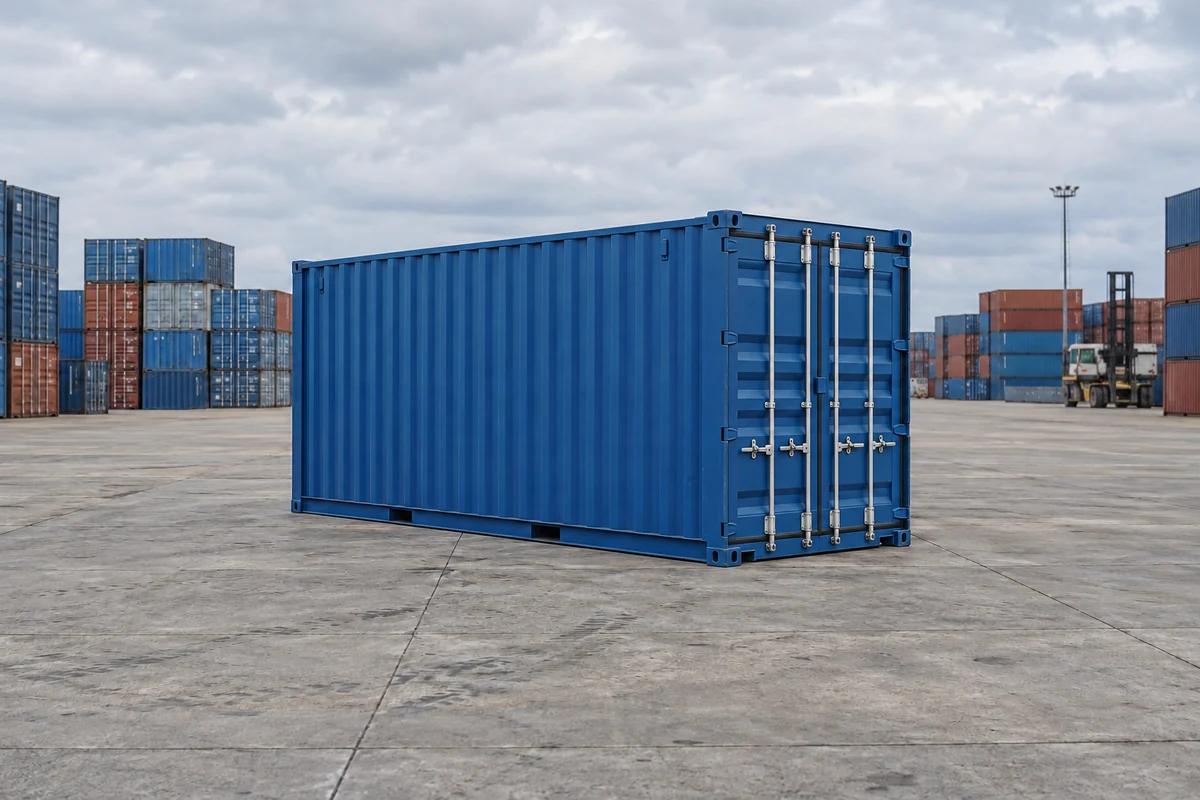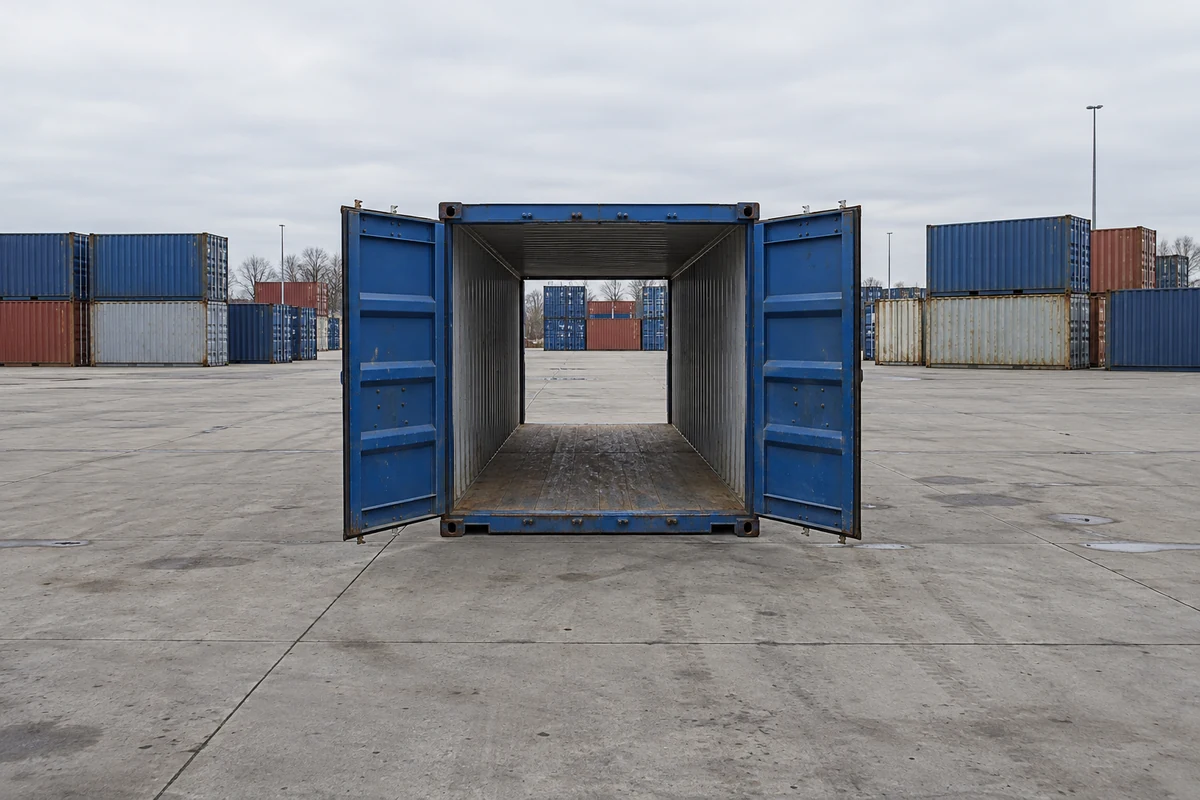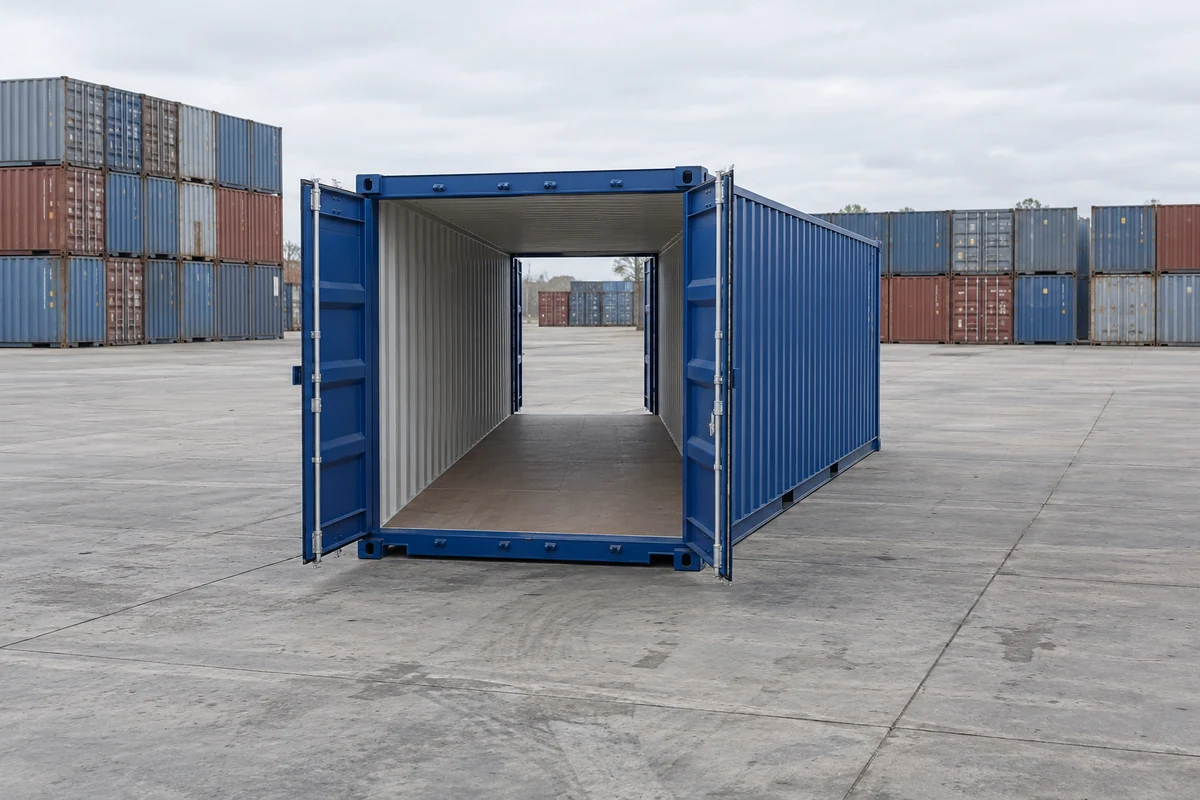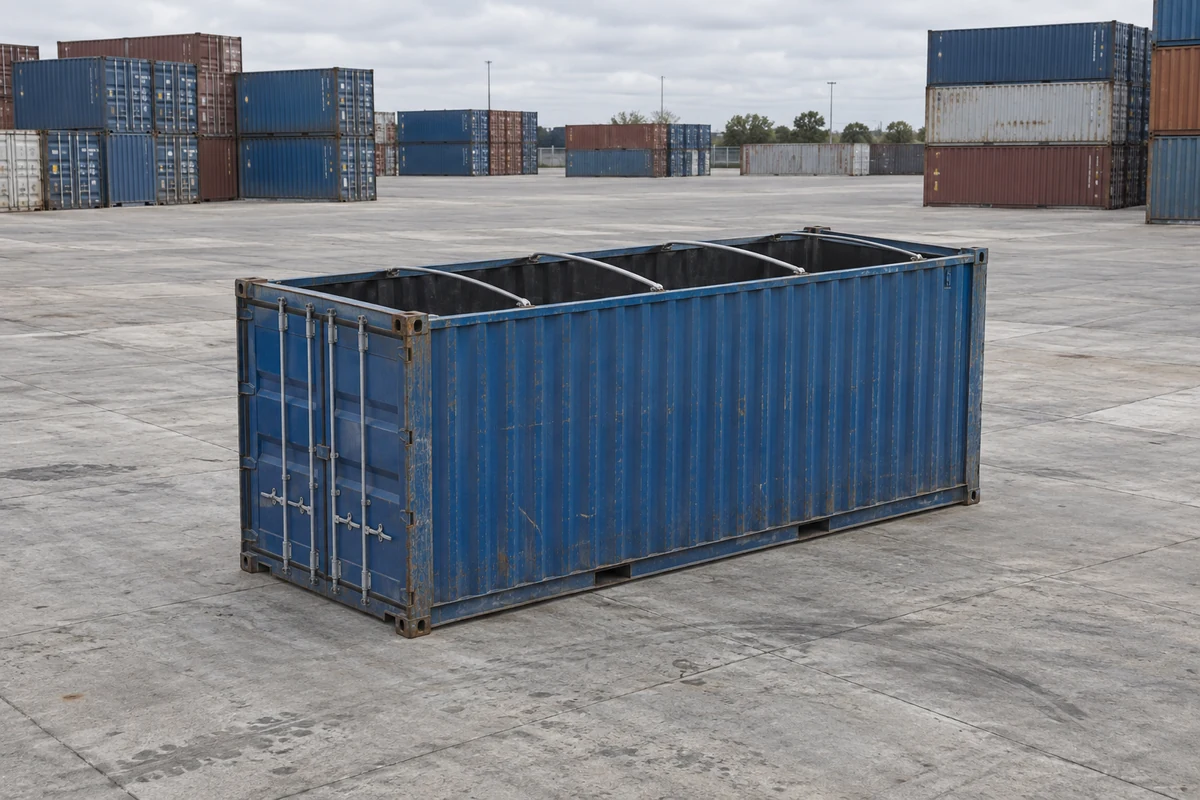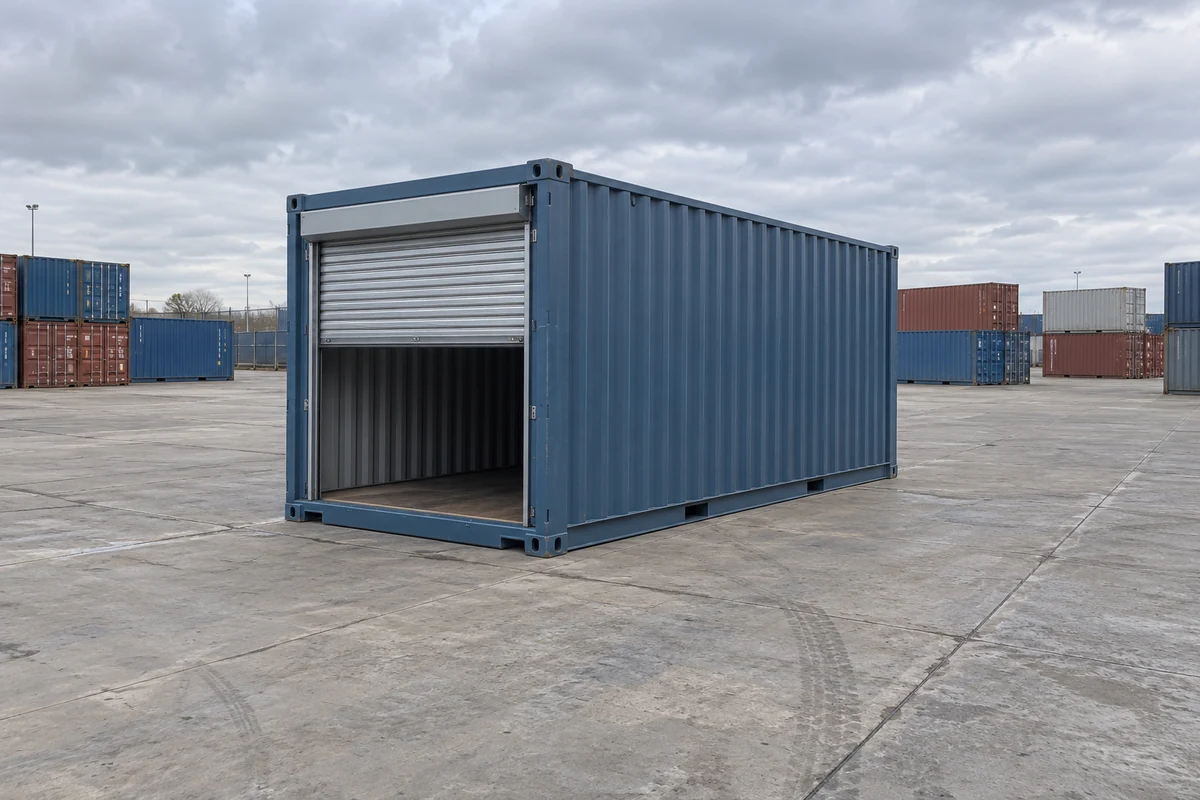
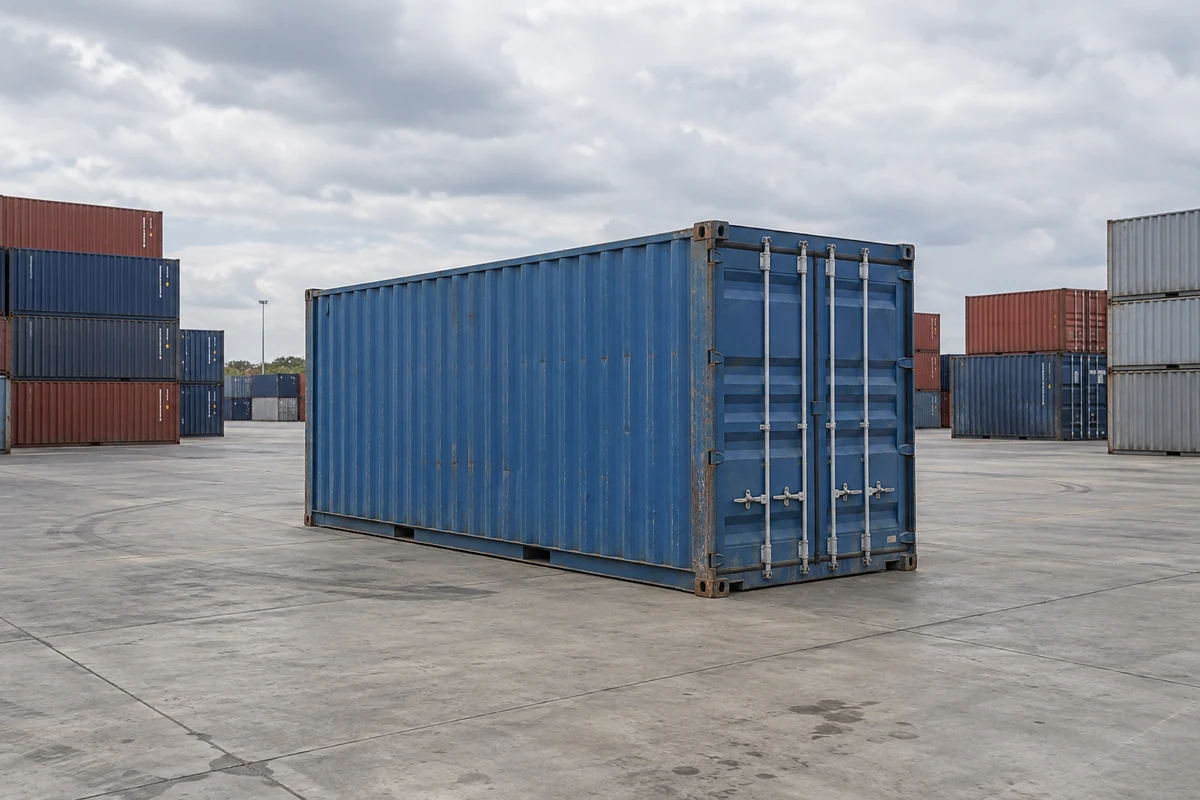
20ft standard container — used
- Used
From NZ$3,335
Advertised price, checked 16 Oct 2026 · incl. GST · before delivery
Delivery quoted to your postcode
Compare offers from multiple suppliers. Find the right price for your project.
A compact footprint for storage, inventory or your next conversion. Compare condition, check what fits and plan the full delivered cost before you buy.
From NZ$3,335
Advertised price, checked 16 Oct 2026 · incl. GST · before delivery
Delivery quoted to your postcode
From NZ$4,945
Advertised price, checked 16 Oct 2026 · incl. GST · before delivery
Delivery quoted to your postcode
Price on request
Delivery quoted to your postcode
Price on request
Delivery quoted to your postcode
From NZ$13,650
Advertised price, checked 16 Oct 2026 · incl. GST · before delivery
Delivery quoted to your postcode
Price on request
Delivery quoted to your postcode
Price on request
Delivery quoted to your postcode
Prices are examples advertised by sellers on the date shown, not ContainerPick offers. Stock, condition and the delivered total are confirmed in each quote.
NZ yards that deliver by HIAB crane truck describe lifting the container off the deck and placing it, over fences and gardens where access allows. One operator says a HIAB can set the box down at 90 degrees to the truck. HIAB trucks have weight restrictions, so operators ask you to discuss the lift with them before booking.
What the box sits on affects consent. In Determination 2014/030, about two containers on a Greymouth property, MBIE found that placing containers on timber sleepers that were not intended to secure them was not building work, and that placing the containers on the site was not building work either. The same determination noted that a concrete footing a council had built to secure its own storage container was building work, and that the council was right to obtain consent for it.
Whangārei District Council's guidance draws the same line: laying concrete, piles or any other foundation to site a container is building work, and connecting the container to reticulated services also needs an approved public utilities connection. Decide which of these your 20ft needs before you order, because it changes who you deal with after the truck leaves.
| Container | Advertised price | Details |
|---|---|---|
| 20ft used | NZ$3,335 | incl. GST · checked 16 Oct 2026 |
| 20ft new / one-trip | NZ$4,945 | incl. GST · checked 16 Oct 2026 |
Sources: MBIE Determination 2014/030 (Greymouth), paragraphs 3.6 and 4.4 (checked 20 Oct 2026); Whangārei District Council, 'Relocated buildings, tiny houses and shipping containers' (checked 20 Oct 2026).
Compare the finish, buying budget and checks that matter to your project.
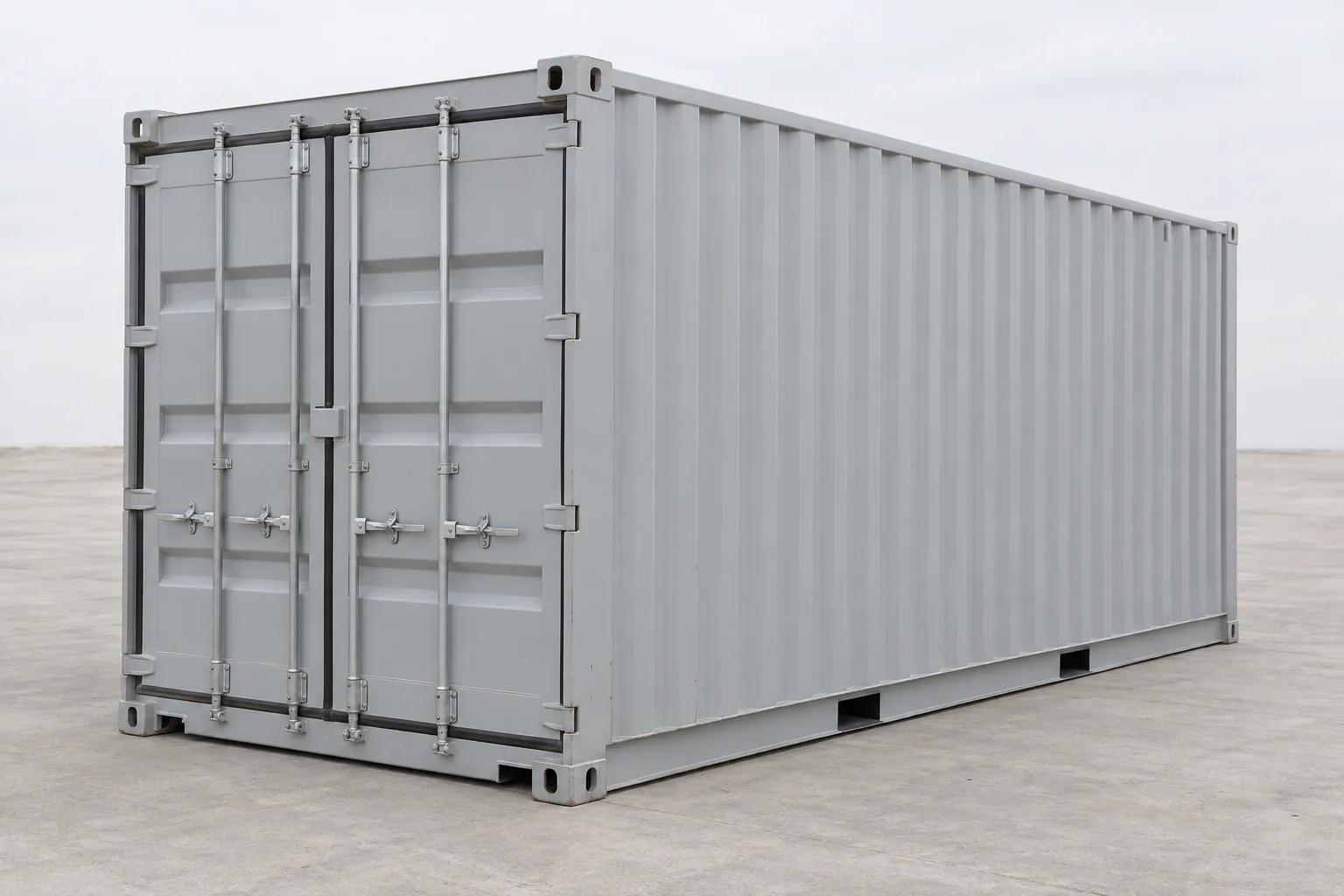
A cleaner finish, with less visible wear. Check the included features and any handling marks.
Explore 20ft new / one-trip →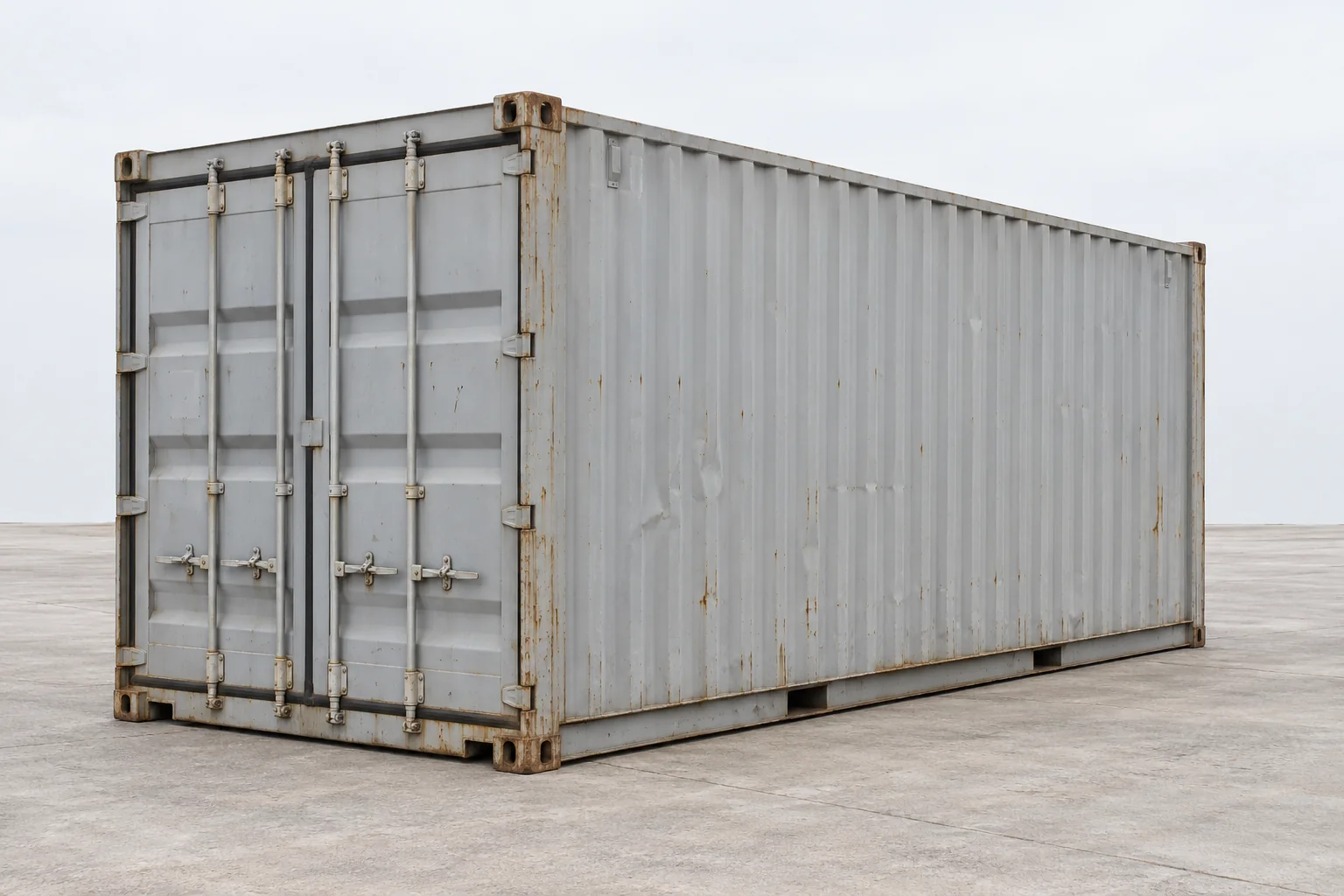
Compare storage and cargo-worthy options. Check the actual floor, doors, repairs and weather sealing.
Explore 20ft used →Used means the container has been used before. Check its grade and condition records to see whether it suits your plans.
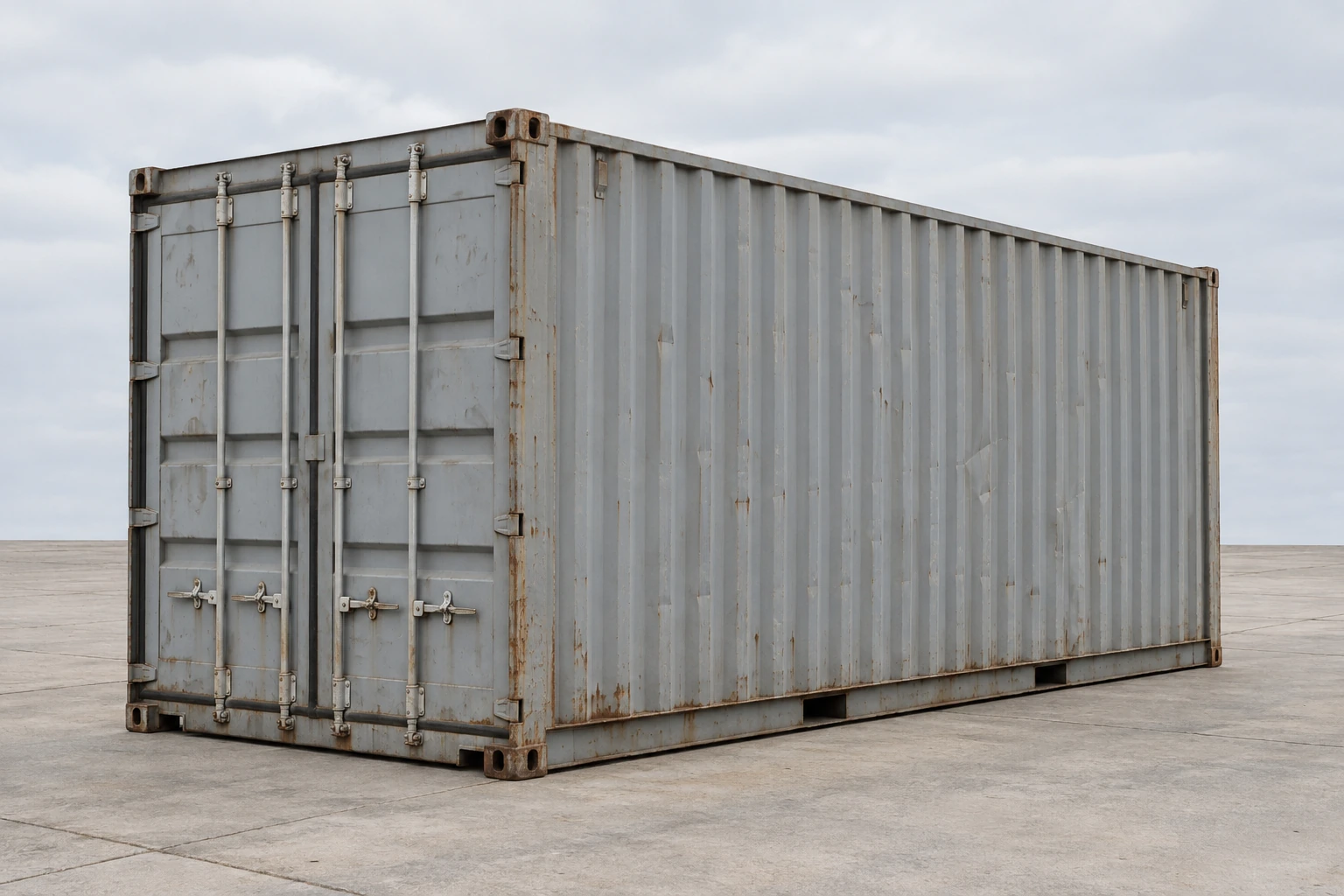
For storage: compare weather sealing, floor condition and working doors. A WWT label does not establish approval for ocean shipping.
Explore wind & watertight →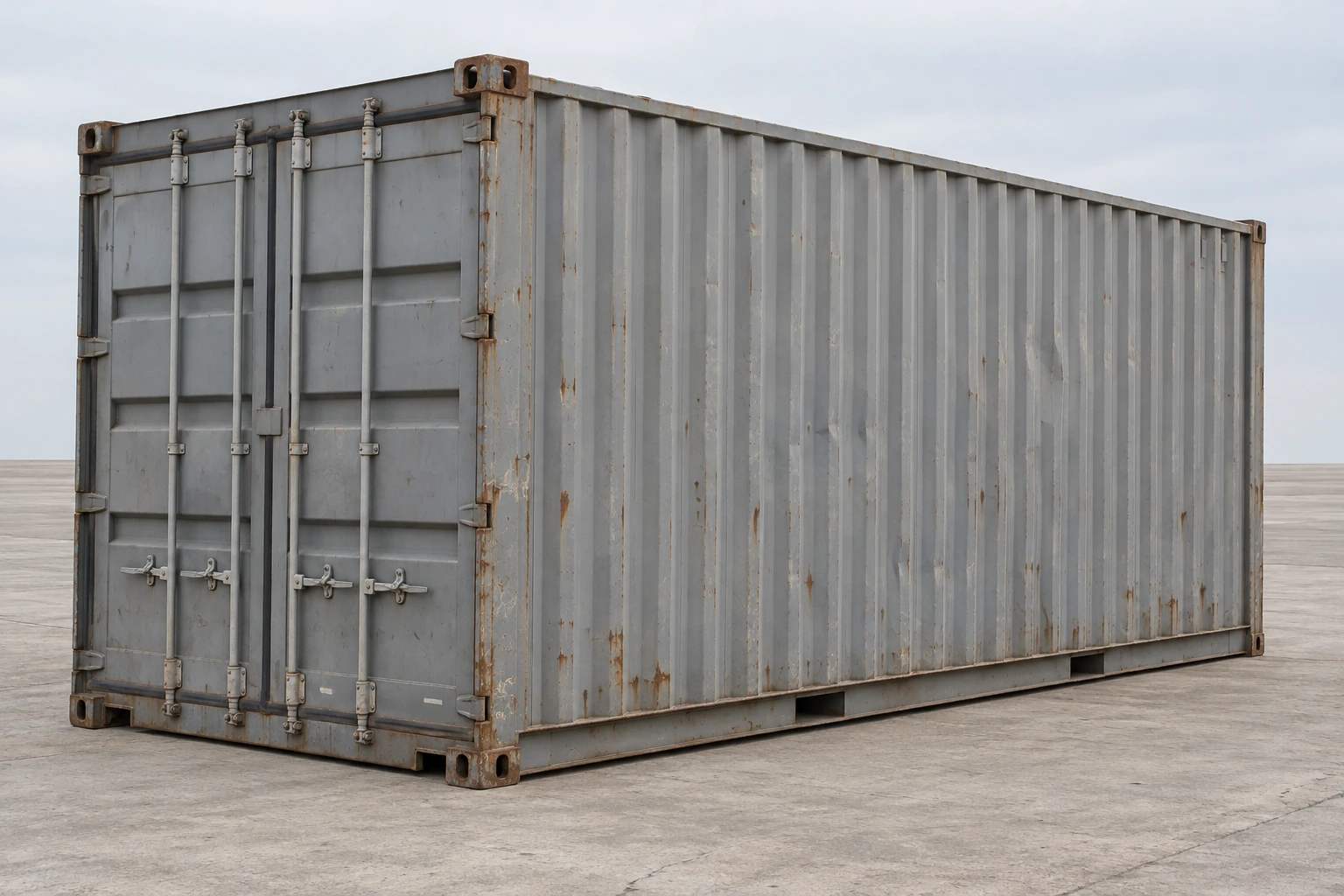
For a transport project: compare the actual inspection, CSC examination records and acceptance by your intended carrier.
Explore cargo-worthy →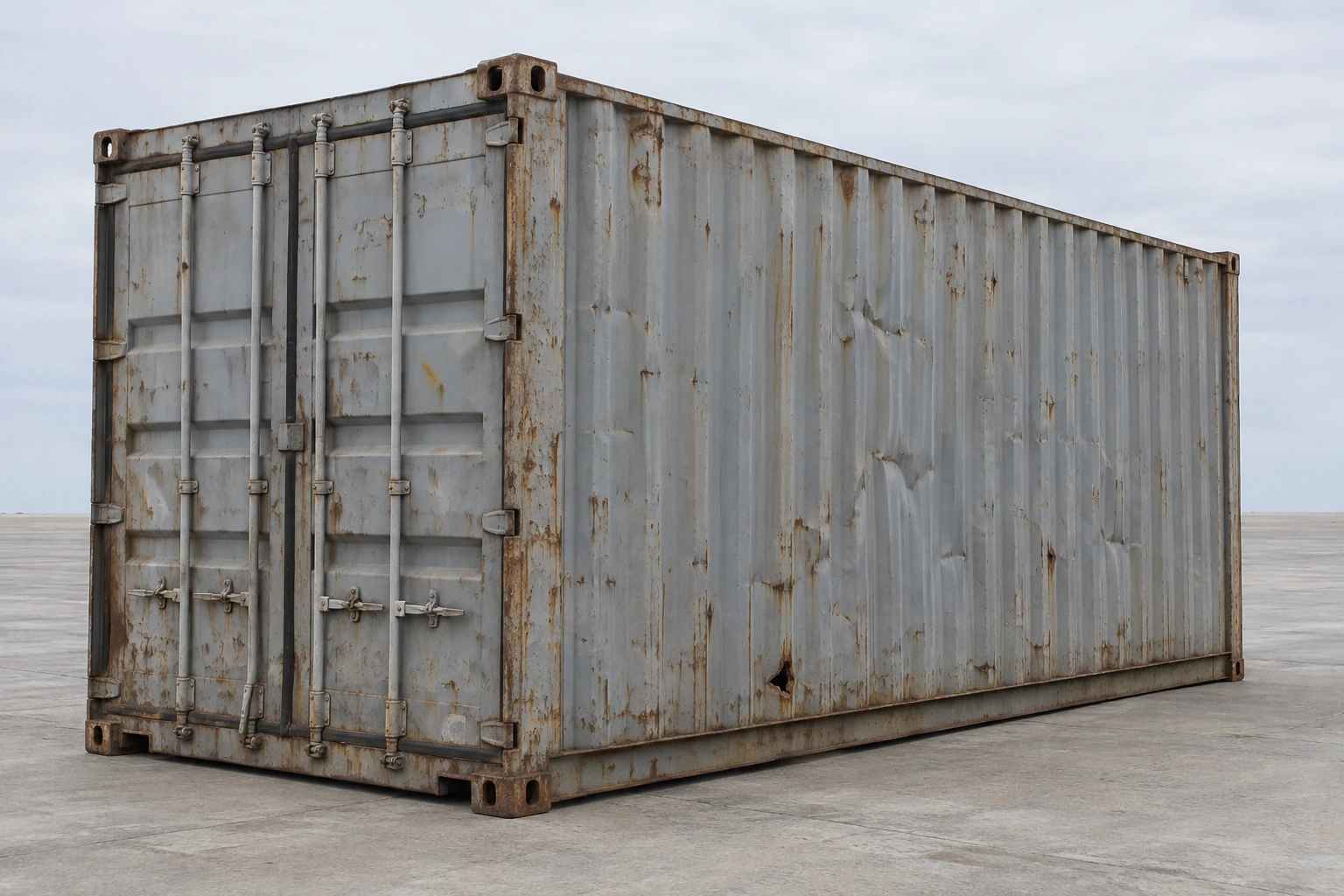
For a repair project: identify the defects and price the work before comparing the complete cost with a usable container.
Explore as-is →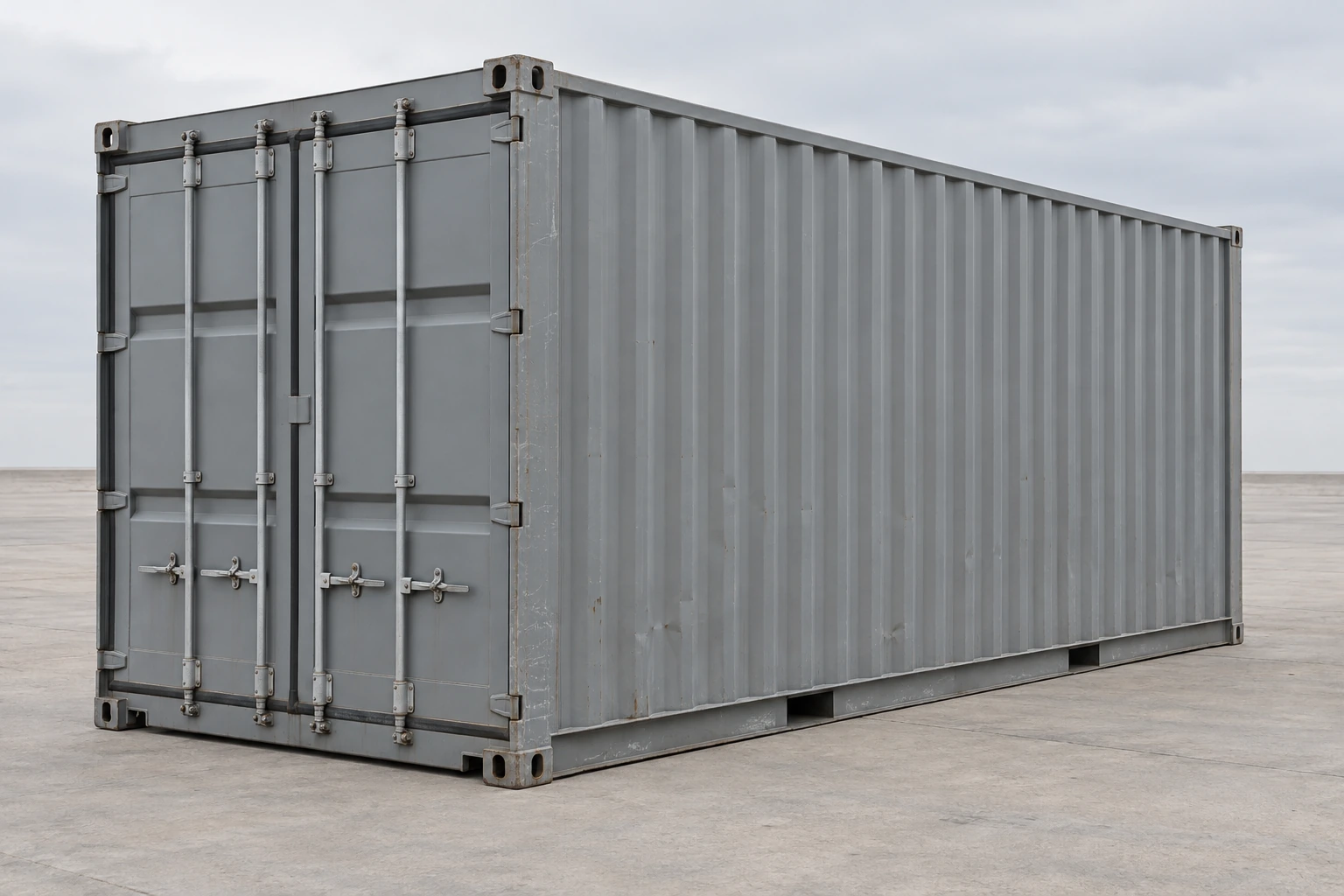
Compare an offer described as lightly used with one-trip. Confirm the actual history and finish; the label is defined by the seller.
Explore multi-trip / limited use →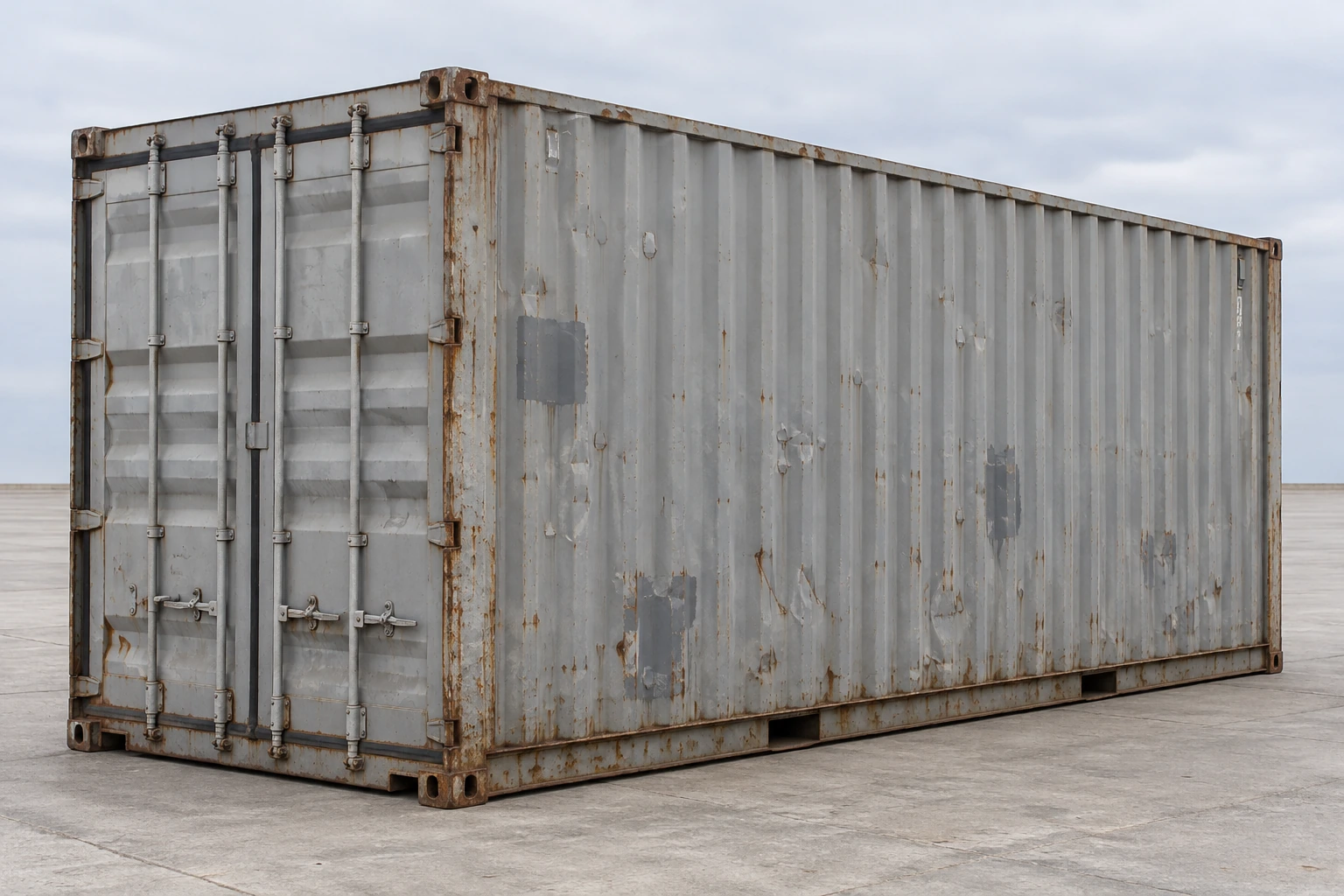
Compare budget storage offers by the defects accepted and the protection included. Economy does not automatically mean WWT or as-is.
Explore economy grade →Compare the floor surface, wall wear and visible repairs, then request close-up photos of the actual unit.
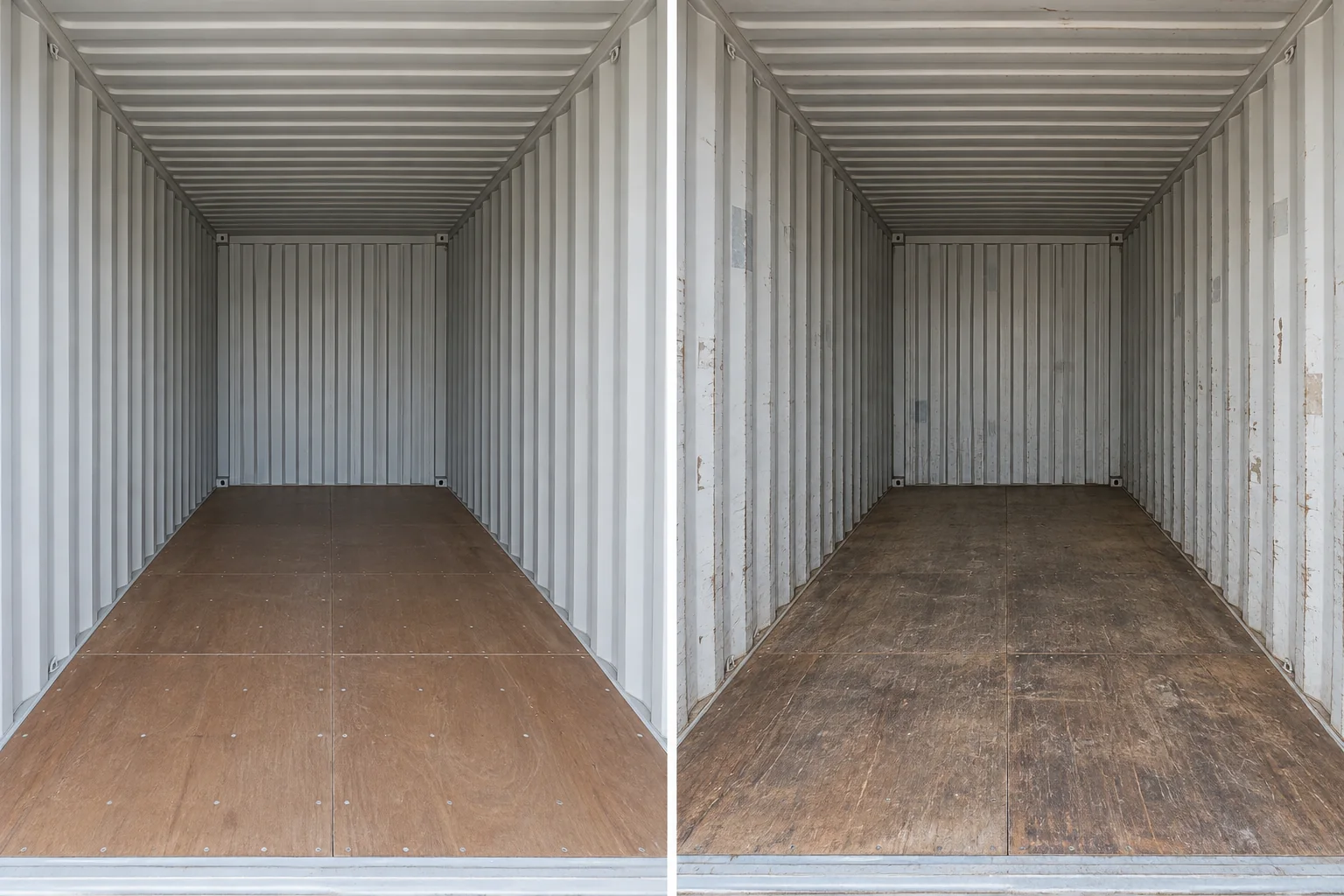
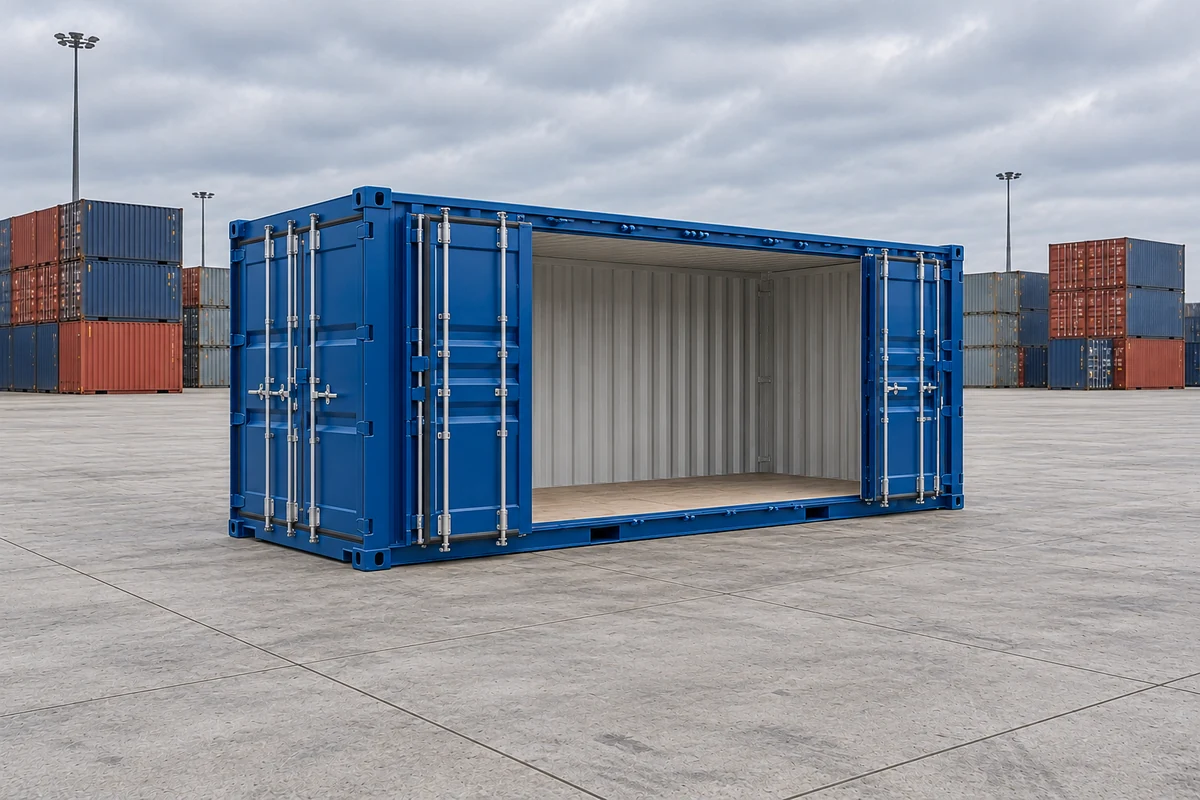
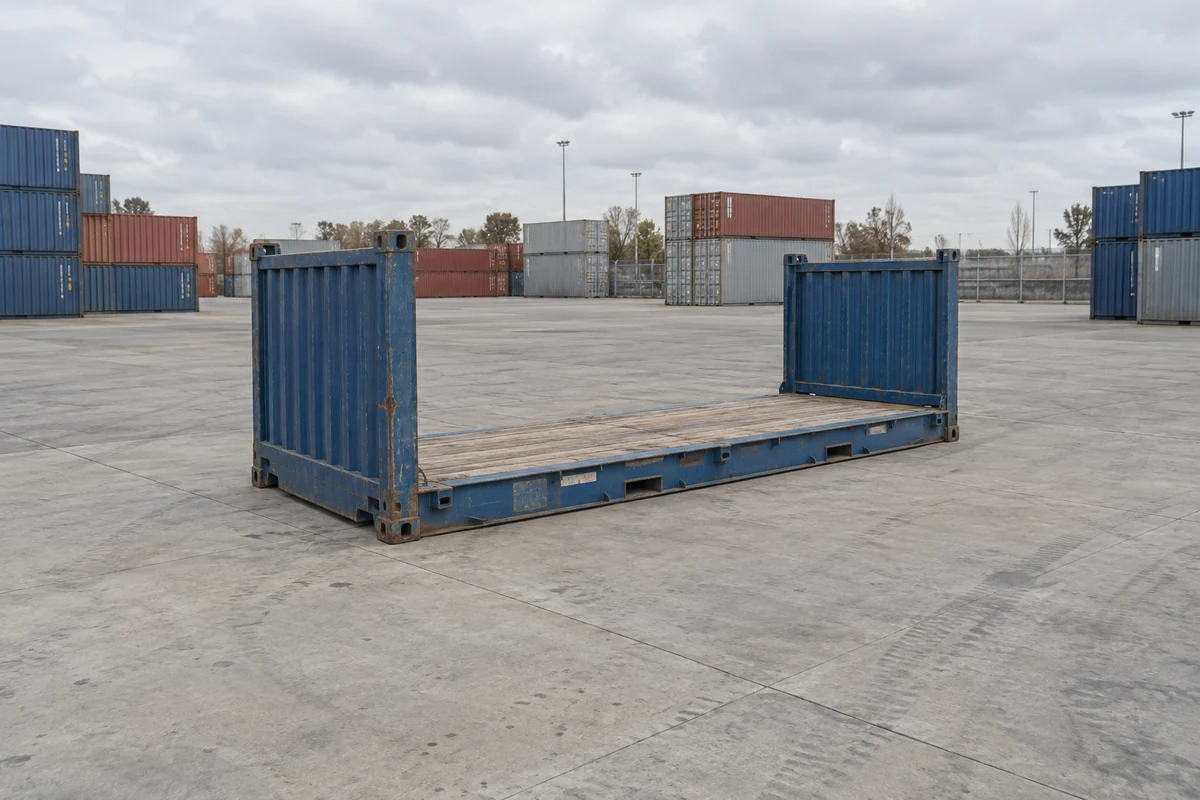
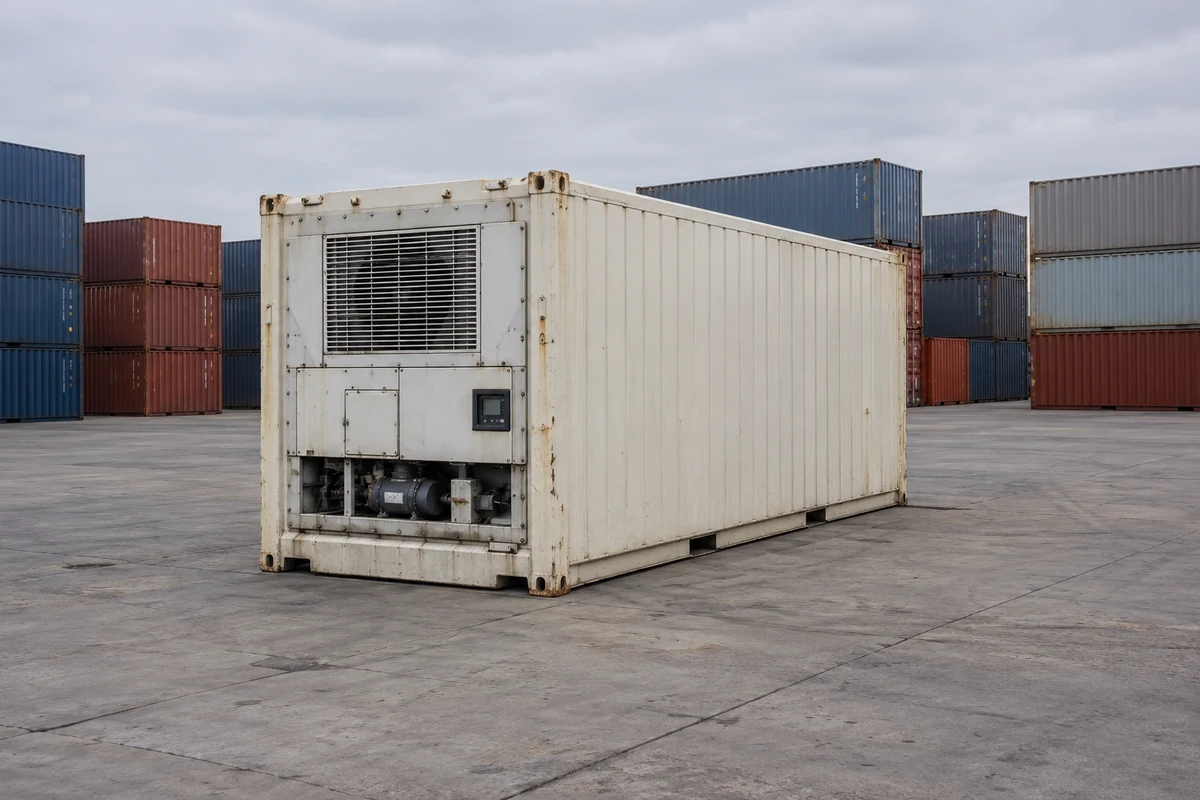
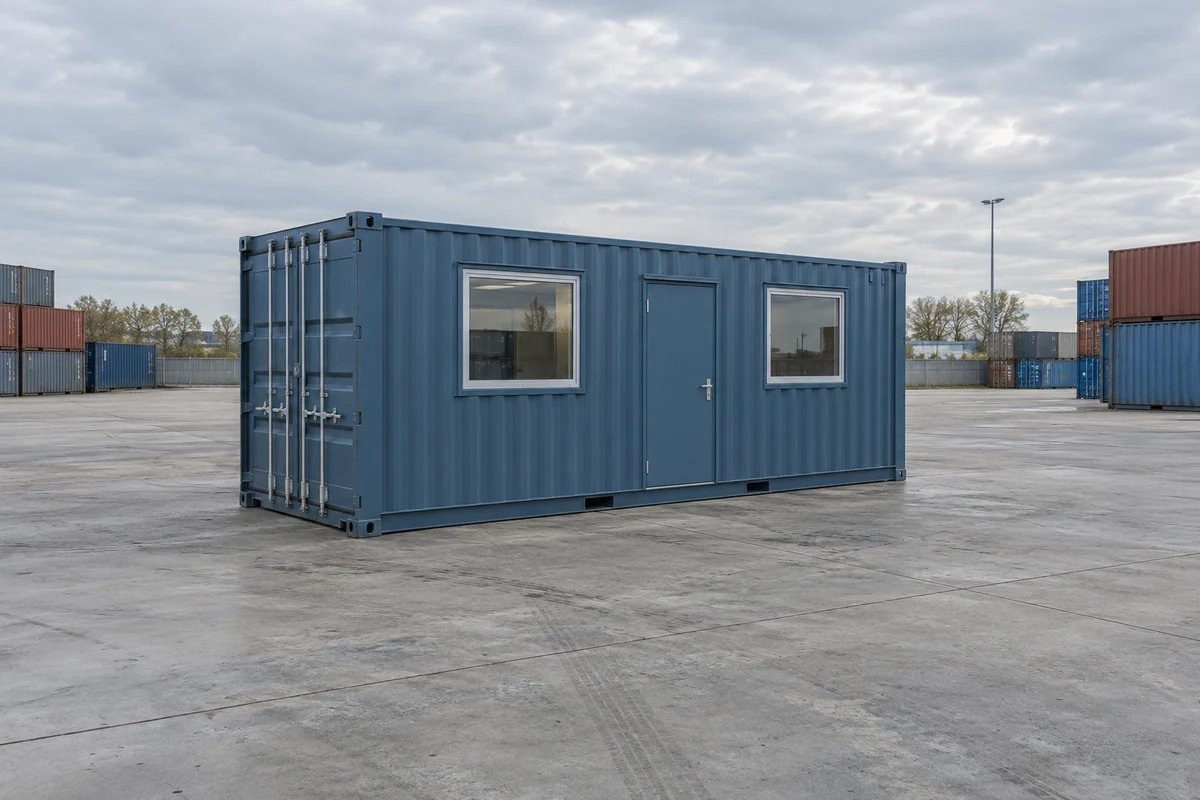
Illustrative appearances. Paint and rust alone do not establish weather-tightness or suitability for shipping.
Choose the space, access and finish your project needs.
Plan shelving and an aisle before filling the floor. Check the floor, seals and door operation on the actual unit.
Use the buying checklist ↗Measure packed goods and pallets, including how you will move them through the doors. Reserve access to items at the back.
See interior dimensions ↗Keep tools near the work area. Plan a firm placement spot, door clearance and truck access as the site changes.
Plan your site ↗A workspace needs insulation, ventilation, power and comfortable access. Allow for the interior space taken by the fit-out.
Explore container offices ↗A roller opening can change how you reach equipment. Its clear opening and structural work need to match your use.
Compare roller access ↗A container is the shell. Plan the layout, structure, utilities and local approval requirements before buying it.
Explore container homes ↗Prices advertised by a named seller for one standard 20ft container, GST included and before delivery.
Advertised price, incl. GST
Standard 20ft used dry container, before delivery.
Prepare a used-container request →Advertised price, incl. GST
Standard 20ft new / one-trip dry container, before delivery.
Prepare a one-trip request →Ask your supplier to confirm the container condition, door configuration, included fittings, delivery, unloading, any repairs and quote validity in writing.
A lower listing price can still mean a higher delivered total.Compare the same condition, address and unloading scope.
Prepare my price request →Condition affects appearance, repairs and the evidence you should request.
New build / one trip / one way are established NZ terms. Minor handling marks may remain; confirm actual manufacture date, journey and unit photos.
WWT describes a used container offered as keeping wind and water out. Dents, worn paint, surface rust and repairs can still be part of the condition.
Cargo worthy refers to suitability for cargo transport, rather than a cosmetic grade. The label alone does not prove a current examination or carrier acceptance.
Last-trip has no single agreed condition meaning. Ask what the seller means and confirm actual condition, examination status and intended use separately.
Only if you understand the defects and repair scope. “As-is” may describe a damaged condition category or the terms of a used sale. Request a written defect list, photos and any promised repairs; do not assume it is watertight.
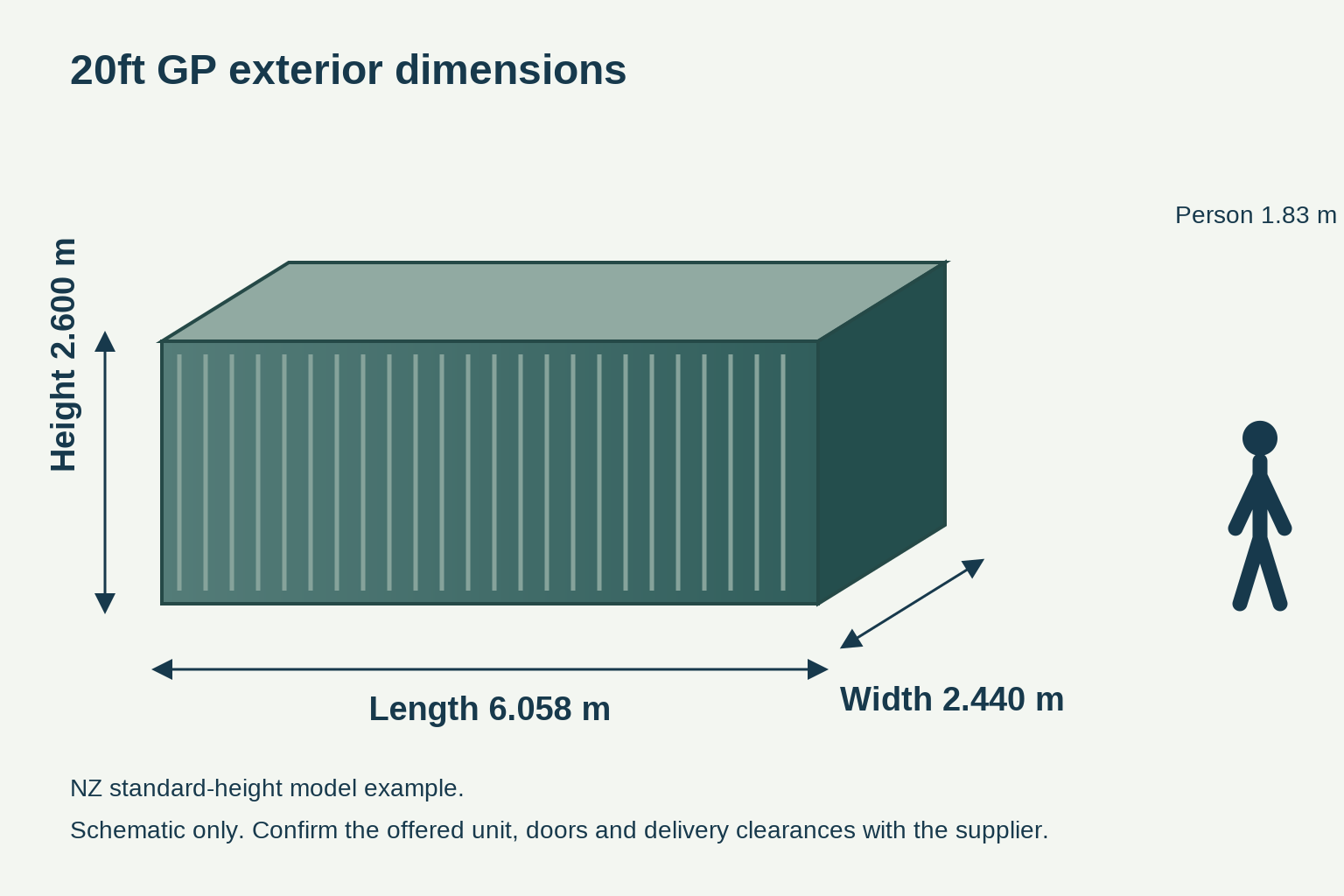
The floor area and the door opening answer different questions. Measure both.
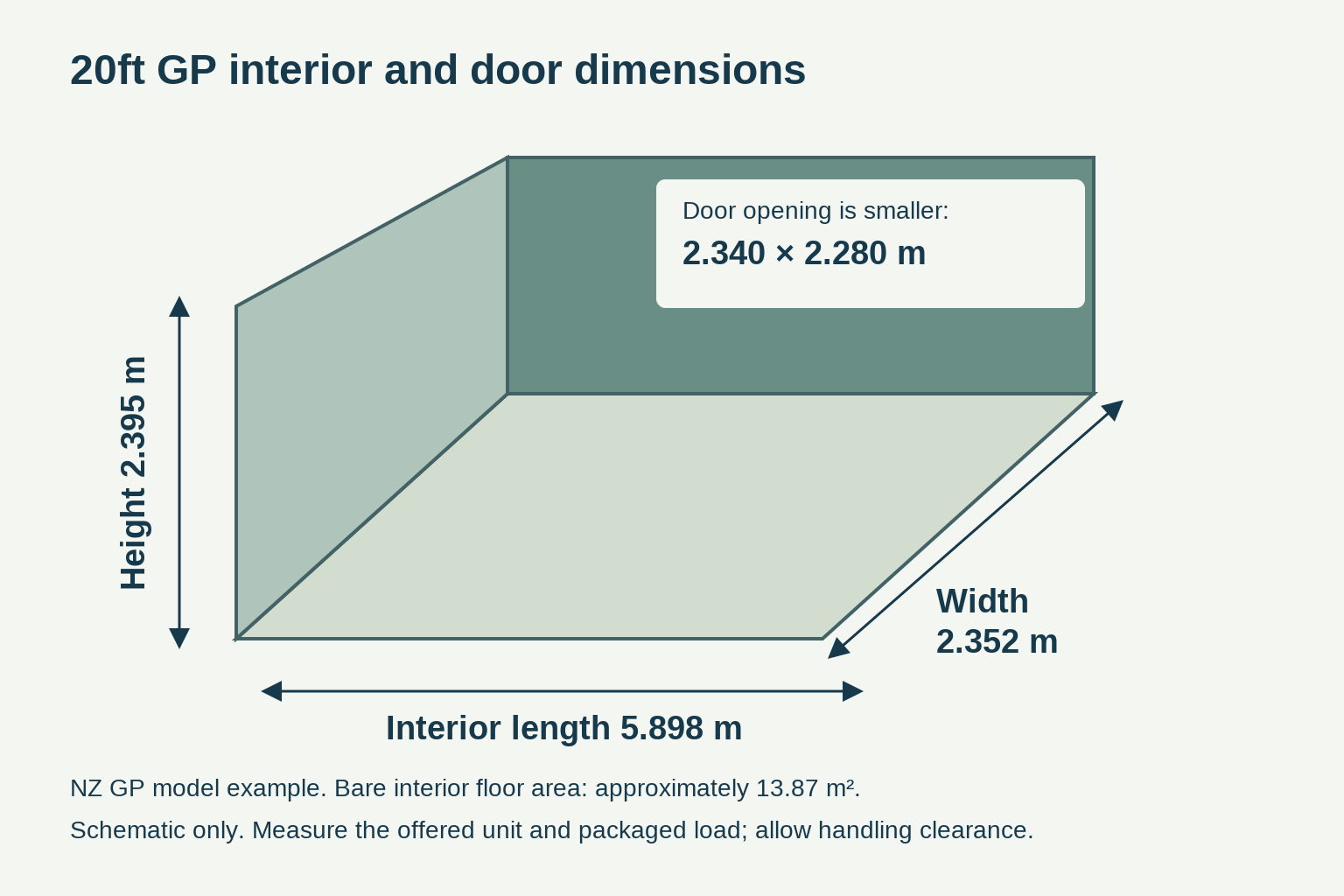
Representative standard-height dimensions. Interior and door measurements vary by manufacturer and unit; confirm the container offered to you.
The door is smaller than the room.Check your largest item with its pallet, packaging and handling equipment.
Floor area is not all usable storage once you add shelving and access.
A dry steel box does not control indoor temperature or humidity.
Ask for the actual unit’s payload and concentrated floor-load limits.
Both standard formats are approximately 2.44 m wide and 2.60 m high in these NZ model examples. The main difference is length.

Useful when the placement area is limited and your storage list fits roughly 13.87 m² of bare floor.
Build my 20ft request →More room for longer items or a larger storage layout, with roughly 28.30 m² of bare floor. Check the longer delivery vehicle’s access.
Explore 40ft shipping containers →Send the delivery postcode and access photos before agreeing to a delivered quote.
Share gate width, turns, slopes and overhead obstructions. The transporter needs space beyond the container’s footprint.
Compare a HIAB crane truck, swinglift or other confirmed method. Agree on the unloading side, placement and who supplies any separate lifting equipment.
Prepare a firm, level support plan suited to the ground and intended loads. Confirm it before the truck arrives.
Mark the exact spot and which end should face the access area. Leave room to swing the doors and load your items.
The images on this page are illustrations. Before buying, request current photos of the specific unit or confirm how the seller selects it. Put any colour or appearance requirement in the order.
A standard dry container does not actively control temperature or humidity. Explain what you will store so you can assess ventilation, condensation management, insulation or refrigerated equipment.
Check with the local authority for your address and intended use before delivery. Storage, an occupied workspace and a dwelling can have different requirements; buying the container does not establish approval.
Have the supplier confirm the unit, delivery date, unloading method and site access together. A container listing alone does not confirm availability for your postcode.
Put the size, condition and site details in one clear request.