
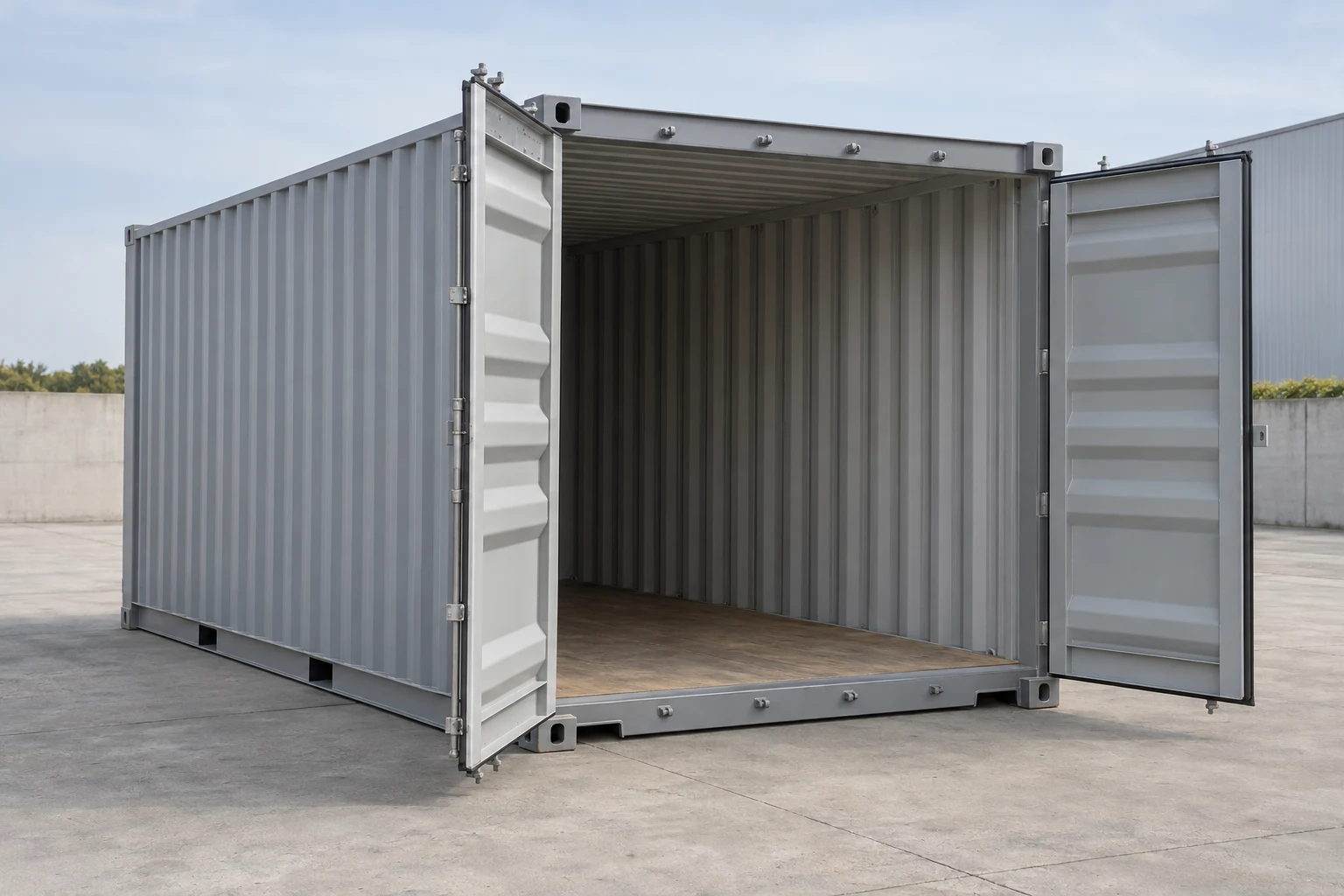
Shipping container, sea container and storage container
A shipping or sea container normally refers to a steel freight-container shell. Storage describes its proposed use; it does not establish that the offered unit is still approved for loaded sea transport. Names such as Conex or sea can are also used in some markets, but the supplier should identify the actual size, construction and condition.
Nominal feet, measured metres
NZ product labels commonly retain feet. Read the offered model’s metric drawing when checking an opening, truck route or foundation. A compact 10ft can be a manufactured or shortened configuration with its own measurements.
| Label | Nominal footprint | What to confirm |
|---|---|---|
| 20ft | About 6.06 × 2.44 m | Exact exterior, interior and door measurements |
| 40ft | About 12.19 × 2.44 m | Exact model, site access and placement space |
| High Cube | Typically about 300 mm taller | Exterior height, door opening and usable interior height |
One-trip, used, wind and watertight, cargo-worthy and as-is
One-trip describes a usage history and can still include handling marks. Used does not define a single cosmetic or structural grade. Wind and watertight is a storage-condition description; cargo-worthy and CSC evidence concern a different transport assessment.
An as-is or economy description needs a written defect and repair scope. Ask how the seller defines the grade and inspect the actual unit. Do not assume grading letters mean the same thing between suppliers.
Converted, insulated and refrigerated are different specifications
A converted container needs a schedule of openings, structural work, insulation, services and finishes. A non-operational refrigerated shell can be insulated storage with no working refrigeration. A powered reefer requires its actual machine, temperature duty, electrical nameplate and test condition documented.
Put the actual specification in the NZD quote
- Nominal format and exact model/dimensions.
- Actual condition, repairs and identity or allocation terms.
- The supplied modifications or refrigeration equipment.
- GST, dispatch point, transport, unloading, site work and exclusions.
Buying questions
Is a storage container the same as a shipping container?
It can be the same type of shell, but a storage description does not prove approval for loaded transport. Match the offered unit’s condition and documents to the proposed use.