
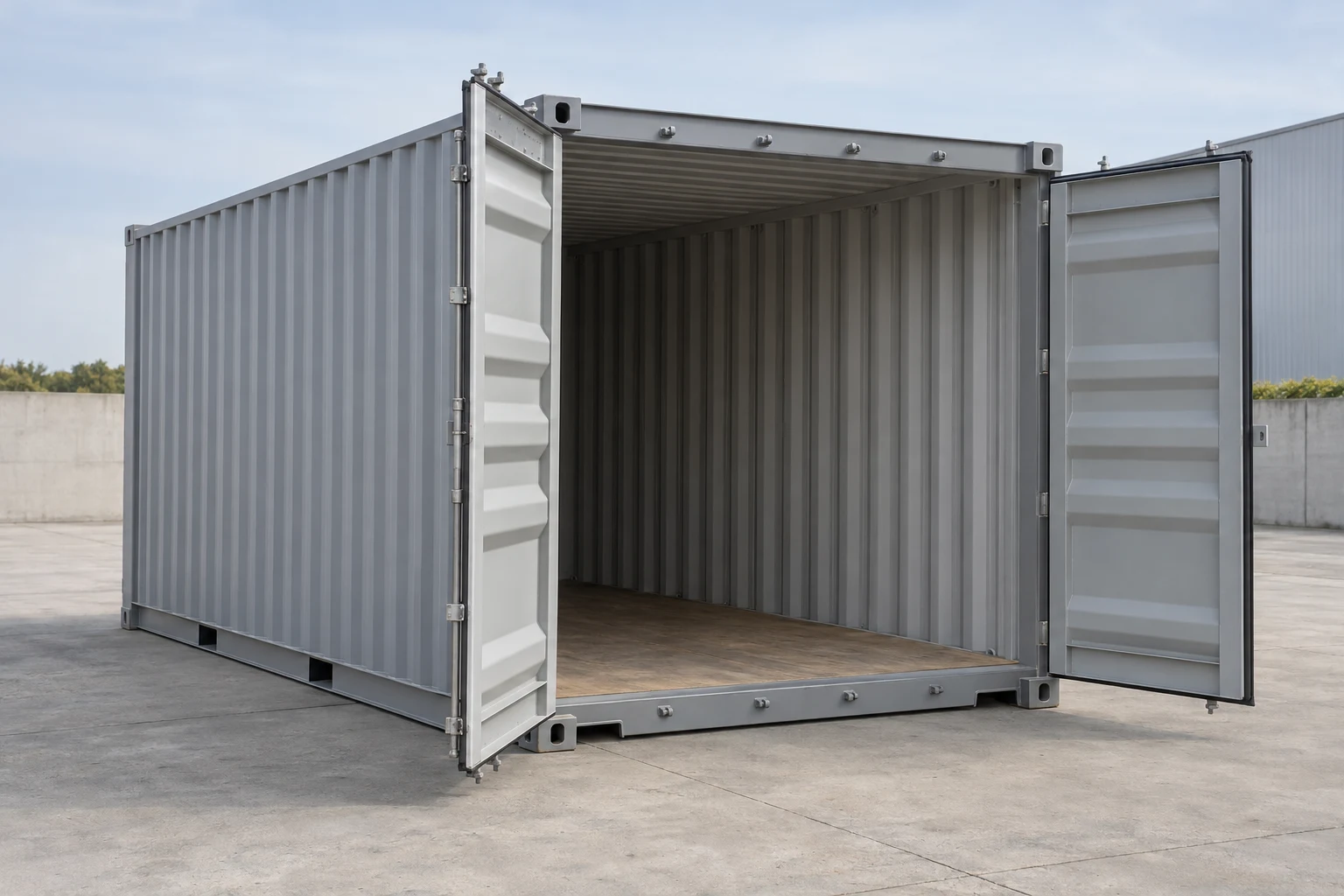
Conex, ISO and intermodal: what the names tell you
The original military Conex boxes were different from the modern containers sold for storage. A historical photograph or dimension is not a specification for the unit you are considering today. Use the name to start the conversation, then ask for the actual format and condition.
A freight container is a separate box. It can be transferred between transport modes without unloading and repacking the goods inside. A truck, trailer and chassis are different pieces of equipment.
| Term | What it describes | What to confirm |
|---|---|---|
| Conex box | Common US terminology with military origins. | The actual size, doors and condition in the offer. |
| Shipping or cargo container | The box used to carry goods or provide storage. | Whether the offered unit suits stationary storage, transport or conversion. |
| Intermodal container | A container used across different transport modes. | The unit and documents accepted for your intended movement. |
| ISO container | A description referring to applicable container standards. | Which specifications apply; the term does not establish current condition. |
| Trailer or chassis | A vehicle or wheeled support used to carry a load or container. | Whether you need the box alone, a vehicle, or a transport service. |
Choose the size and door arrangement
Start with the items, how often you need to reach them and the space available at the site.
An end-door container can be enough when you load once and access occasionally. Doors at both ends or a side-opening arrangement can be worth comparing when you need regular access to different zones. Choose the opening for the workflow rather than treating every container of the same length as interchangeable.
Use the dimensions guide for exterior size, interior space, door openings, capacity and weight. Confirm the measurements of the particular unit; installed fittings can reduce usable space.
| Format | Reason to compare it | Check before choosing |
|---|---|---|
| 10ft | A compact storage footprint. | Usable space, the exact format and delivery access. |
| 20ft | Storage or projects that need less length than a 40ft unit. | The items, an access aisle and room outside the doors. |
| 40ft | More length for inventory, equipment or a larger project. | The prepared area, unloading route and access to items at the far end. |
| High Cube | Additional height compared with the corresponding standard-height format. | The actual interior and door opening, especially after lining or shelving. |
Match condition to storage, transport or conversion
Used, wind and watertight, Cargo Worthy and One Trip are descriptions to investigate. Their meaning and scope can vary between sellers. A grade name is not a substitute for evidence about the unit offered.
A safety approval plate concerns transport and handling. It does not approve a finished building or establish that every later modification is suitable. The grades guide explains the separate condition and transport records.
| Planned use | Evidence to compare |
|---|---|
| Stationary storage | Door operation, seals, roof and wall condition, floor findings and the written weather-resistance terms. |
| Cargo transport | Current condition evidence, the applicable safety approval and examination status, plus acceptance for the planned movement. |
| Conversion | An assessment of the shell and any damage or repairs for the proposed alterations. |
What to confirm before buying a Conex box
Compare the container formats and buying options below once those requirements are clear. If you are still defining the unit, preparing a container request can help you record the size, condition, location and delivery questions in one place.
- State the use: storage at one site, a cargo movement or a planned conversion.
- Choose length, height and doors; identify the space you need for access, not just the volume of the goods.
- Establish whether you are selecting an identified unit or a unit allocated later. Ask when photos and condition evidence become available.
- Compare the written scope of any repairs and condition commitments.
- Check site preparation and the delivery method before relying on the available space.
Buying questions
Is a Conex box the same as a shipping container?
In current US sales usage, the terms often refer to the same general equipment. The original military Conex system was different. Ask for the actual size, condition and door configuration rather than relying on the name.
What does Conex stand for?
The term comes from Container Express, the military container system that preceded many modern uses of the name.
Is every Conex box approved for international shipping?
No approval follows from the word Conex alone. Check the actual unit, its applicable safety approval and examination status, and the intended transporter’s requirements.
Where can I compare Conex box dimensions?
Use the shipping container dimensions guide for reference sizes, interior space, door openings, capacity and weight. Confirm the measurements of the unit offered before ordering.