
← Compare all 40ft containers
Used 40ft containers · standard height
Used 40ft Shipping Containers for Sale in New Zealand
Make room for tools, seasonal equipment or surplus stock with a used 40ft container. Compare WWT and cargo-worthy grades, repair costs and delivered pricing to choose the condition that fits your project.
Estimated priceFrom NZ$4,000
Low-end estimate, incl. GST, before delivery. Confirm with a written quote for the actual unit.
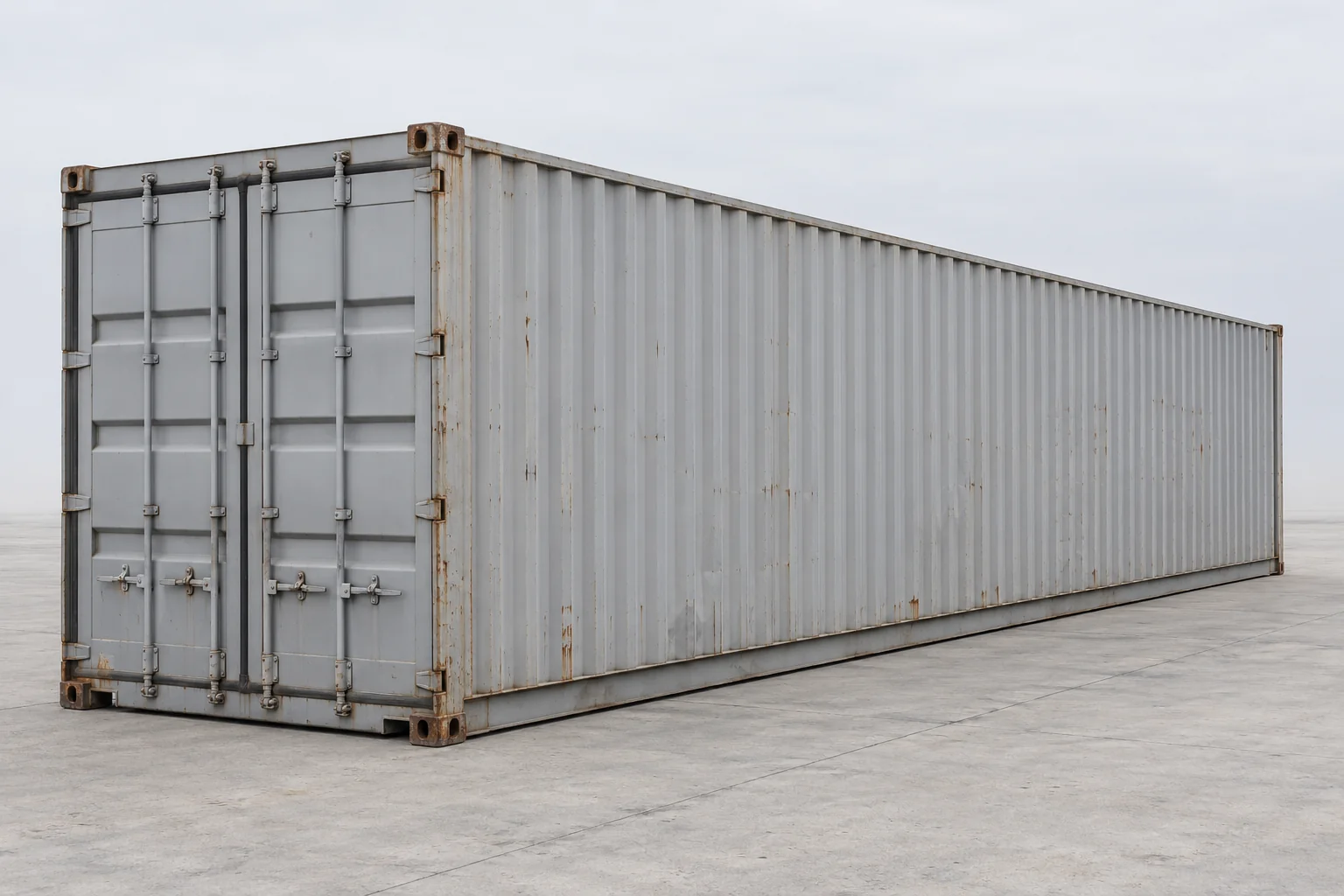
40ft standardUsed condition
Models to compare
Used 40ft Shipping Containers to request in New Zealand
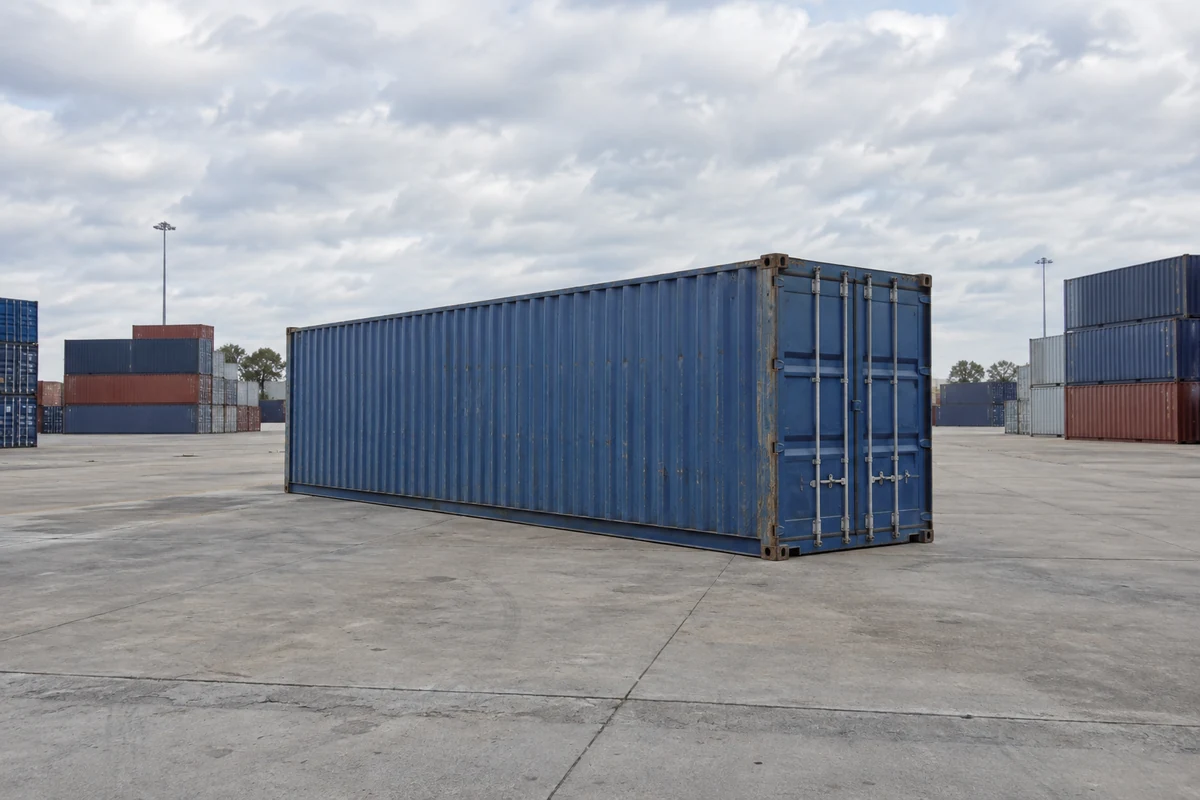
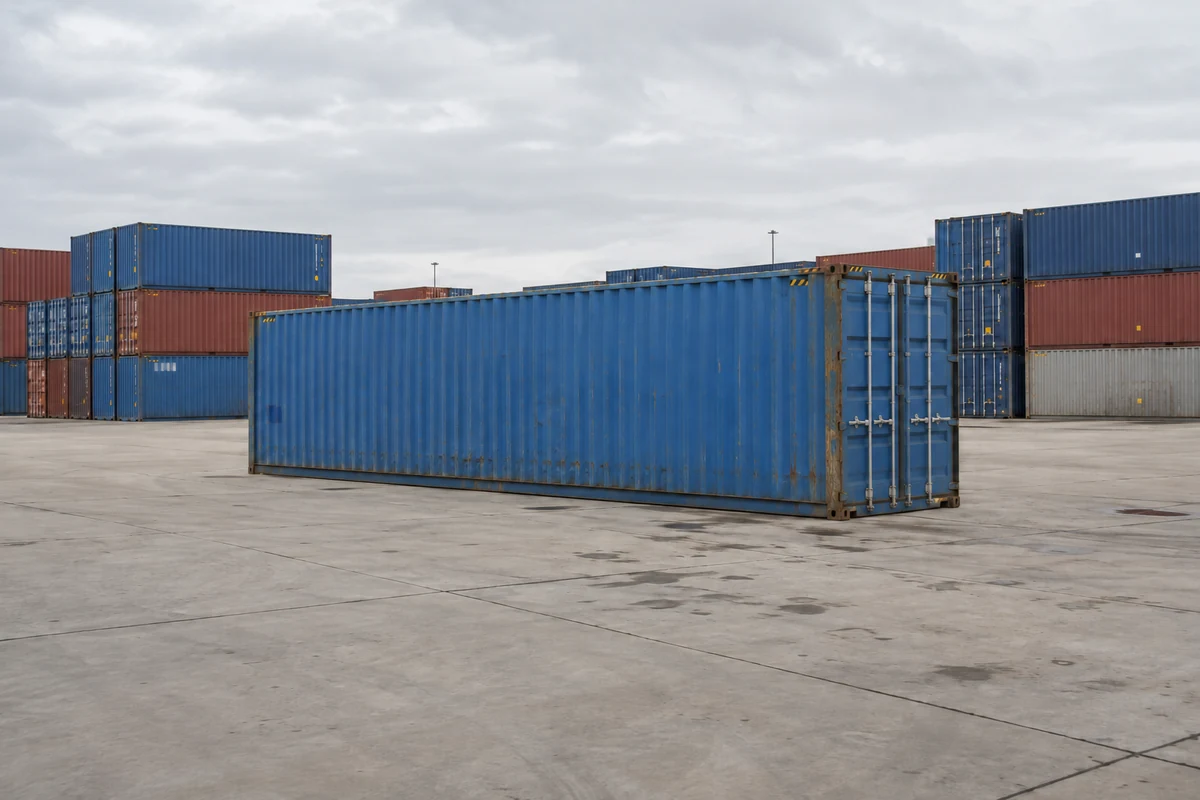
40ft high cube container — used
- Used
From NZ$5,060
Advertised price, checked 16 Oct 2026 · incl. GST · before delivery
Delivery quoted to your postcode
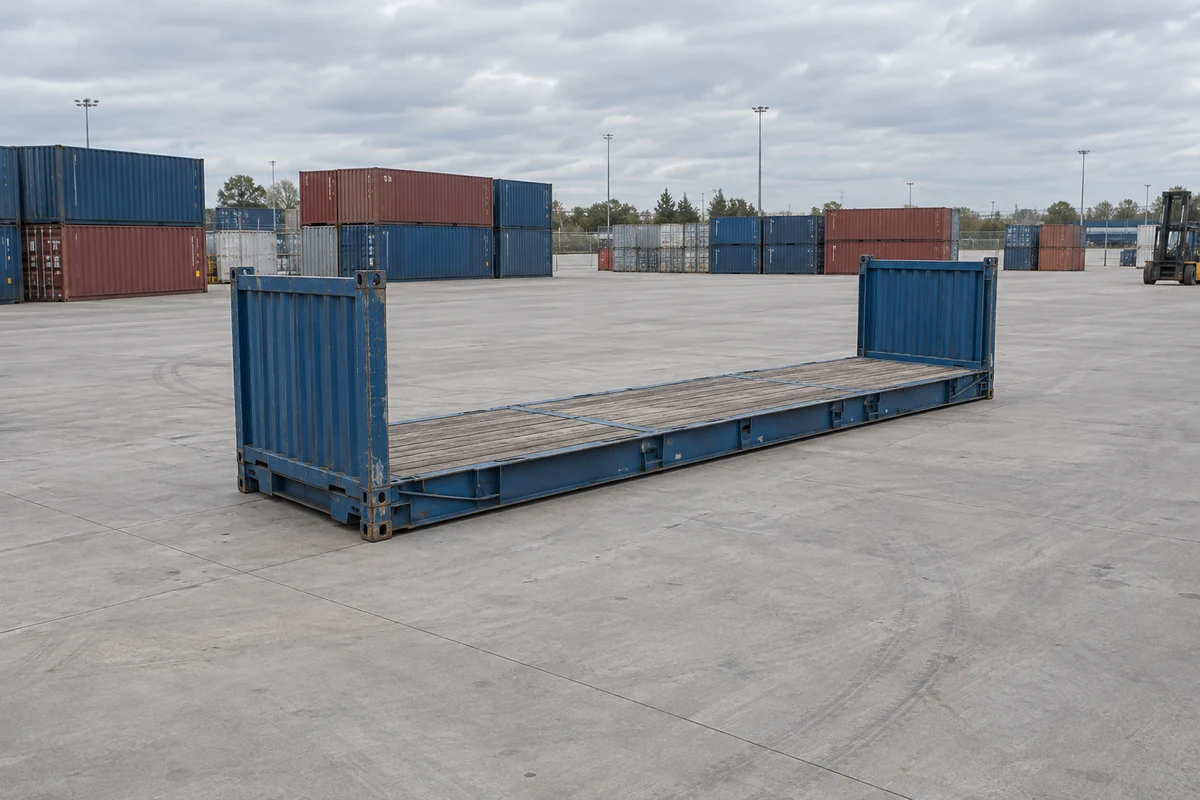
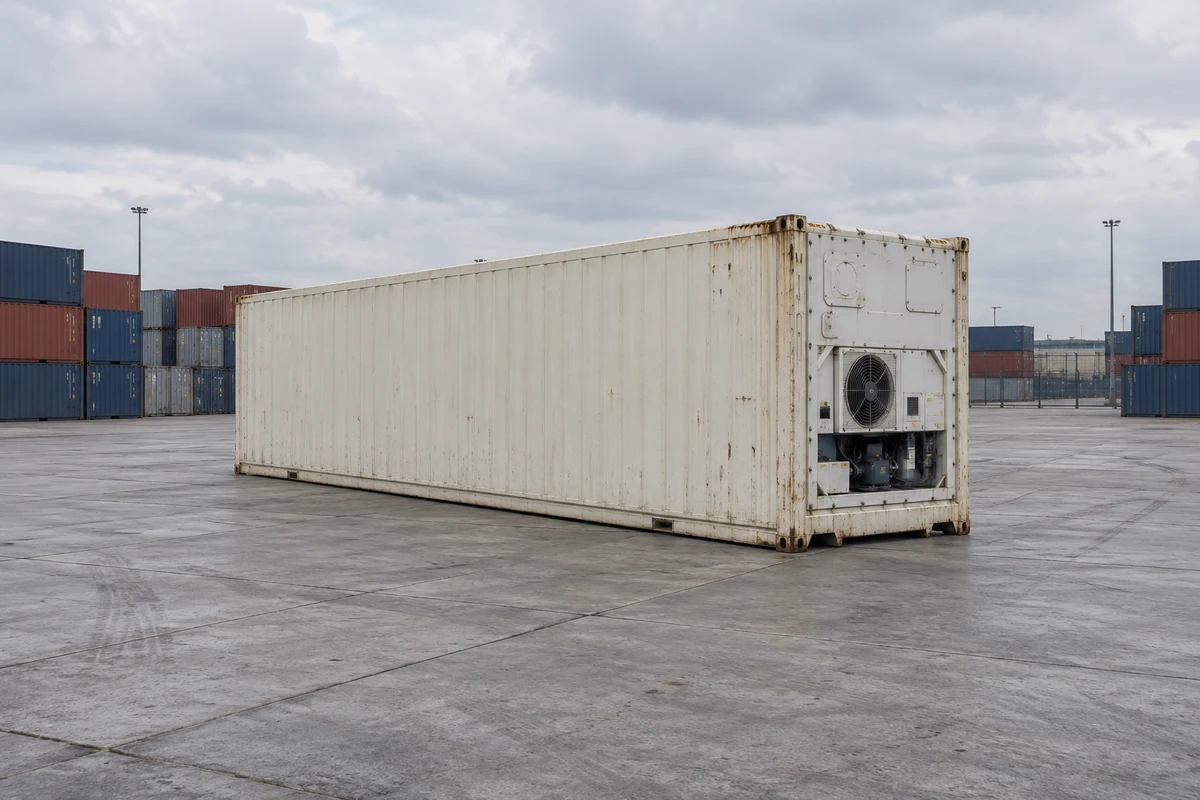
Prices are examples advertised by sellers on the date shown, not ContainerPick offers. Stock, condition and the delivered total are confirmed in each quote.
Used 40ft in NZ: secondhand GST credits and like-for-like rows
If your business is GST-registered and buys a used 40ft from a seller who charges no GST, IRD's secondhand goods rules may still give you a credit. IRD defines secondhand goods as goods previously used by someone else, and covers purchases where the seller is not registered for GST or the goods are private (exempt).
Two IRD conditions are worth planning around. You must make a payment before you can claim the credit, and you must record the supplier's name and address, the purchase date, a description of the goods, the quantity and the price paid. IRD adds that you need to keep details of the transaction if you will make a claim for income tax purposes.
Check what the dated used-40ft observation beside this text describes before comparing: it is a high cube, B-grade, wind-and-watertight unit priced at a Waikato yard, before delivery. A standard-height 40ft or a lower grade is a different product, so ask for its price separately.
| Container | Advertised price | Details |
|---|---|---|
| 40ft high cube, used | NZ$5,060 | incl. GST · checked 16 Oct 2026 |
Sources: Inland Revenue, Special supplies (secondhand goods) (checked 20 Oct 2026); Inland Revenue, Claiming GST (checked 20 Oct 2026).
- Standard exterior
- Nominally 12.192 m × 2.438 m × 2.591 m
- Specify the grade
- WWT, cargo worthy or clearly stated As-Is terms
- Inspect beyond paint
- Roof, floor, frame, doors and repairs
- Price comparison
- Delivered total plus necessary work
YOUR BUYING DECISION
Compare the seller’s New Zealand grading
A, B, C and D grades vary between New Zealand suppliers. Ask for the seller’s definition, photos of the allocated unit, the roof/floor/door report, repairs included and written weather-tightness terms. A grade letter alone does not establish freight certification.
Wind and watertight describes weather exclusion, not a guarantee against condensation or a valid overseas-shipping examination.
Cargo worthy concerns structural transport suitability. Request current CSC/examination evidence and acceptance by the proposed carrier for the actual route and loaded unit.
COMPARE YOUR TWO OFFERS
Compare used plus repairs with one-trip
Use two quotes for the same 40ft format and delivery address. Include the work needed to make each unit suit your project.
Used · up-front total
One-trip · up-front total
This compares up-front costs. Condition, repair quality and suitability still matter; future maintenance and resale are outside this calculation.
Use the same GST basis for both offers. If a price already includes GST, do not add GST again as a separate charge; confirm any separate taxable work and charges.
YOUR BUYING DECISION
Make the long interior work for your storage
Use the door end for frequent collections, the middle for organised stock and the far end for reserves. Keep a retrieval aisle through the full length so one delivery does not bury the next item you need.
Scroll sideways to see the full layout.
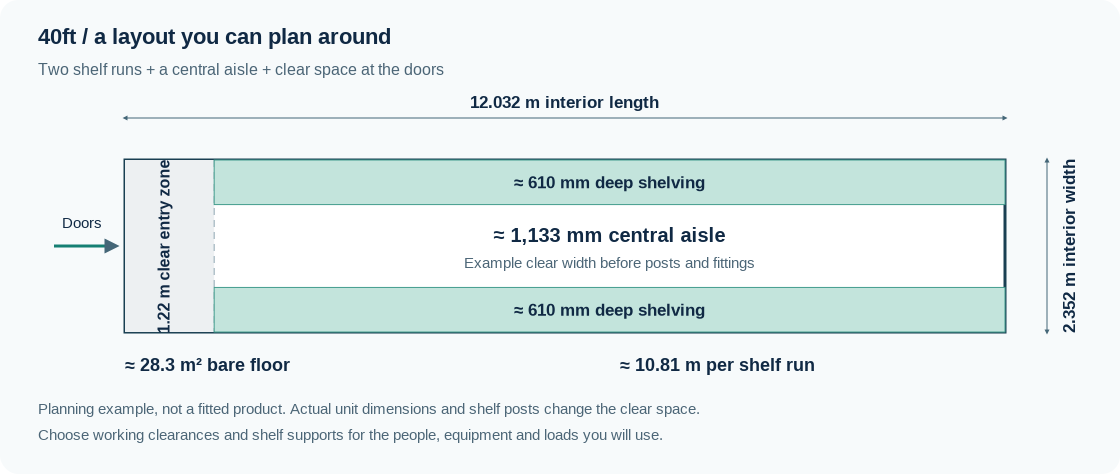
Front: daily tools and receiving
Keep daily tools and supplies within easy reach. Leave a clear receiving space to sort incoming goods before moving them farther inside; door handles and the threshold need to stay accessible.
Middle: shelves and repeat stock
Group cartons or parts by use and label their locations. Allow space to lift items from the shelves and turn with them. A tightly packed room can hold stock that is difficult to retrieve.
Rear: seasonal and bulky reserves
Place slower-moving items here and plan their removal before filling the front. Load large reserves first, then maintain a clear route back to them instead of stacking temporary deliveries in the aisle.
This example sets aside a 1.22 m entry zone and uses approximately 610 mm-deep shelving zones on both sides. A representative bare standard 40ft interior leaves about 1.13 m between those zones before uprights, lining or protruding goods. Check the actual repaired interior and the room required by your trolley, stock and shelf installation.
Choose aisle width for how you handle the goods; the sketch is not an access standard or a load plan. For less floor length, compare 20ft. For more vertical room, compare High Cube before choosing the used grade.
YOUR BUYING DECISION
Would two used 20ft containers work better?
A single 40ft keeps stock in one long room. Two 20ft units can separate tools from reserves or give two crews independent access. Budget for the condition of each unit and how both will reach their positions.
| Compare | One used 40ft | Two used 20ft units |
|---|---|---|
| Retrieval | Long or bulky stock can stay in one continuous space; frequently used items should be near the entrance. | Each entrance serves a shorter room. Separate locks and stock lists can keep different users or supplies apart. |
| Repair scope | Inspect the full long body, floor and one cargo-door assembly. | Inspect both units. There are two roofs, floors and cargo-door assemblies to assess, with potentially different defects. |
| Total delivered budget | Price one unit, its identified repairs, transport, unloading and the prepared location. | Price two units and their individual repairs, plus both placements and support locations. Separate delivery trips may be needed; use the transporter’s quoted plan. |
Two shorter containers still need working space outside both doors. Side-by-side placement changes the overall site shape; end-to-end placement does not remove the walls between them. Check each intended position against the delivery approach.
Using the NZ GP interior examples (12.032 m for 40ft and 5.898 m for 20ft) and a chosen 1.22 m entry zone in each unit, the horizontal shelving runs total about 21.62 m along two walls of one 40ft, versus 18.71 m across four walls in two 20ft units. These are layout lengths before frames, repairs and bay gaps, not shelf capacities or required clearances.
Compare the complete alternatives using the same grade and repair requirements. Two low advertised unit prices do not settle the cost of moving, placing and preparing two usable stores.
YOUR BUYING DECISION
Inspect the whole 40ft body, not only the door end
Arrange a competent inspection where needed. Confirm whether photos show the assigned unit or a grade example, and agree how defects or substitutions are handled before payment.
- Review both long sides, roof seams and low spots, the full interior and floor, accessible underside and corners. Roof dents can retain water; a photo only from ground level may miss the affected area.
- Distinguish surface wear from holes, deep corrosion, deformation or damaged structural members. Fresh paint does not settle that assessment.
- Ask where repairs were made, what they addressed and how they were checked.
- Test doors, seals and locking bars. Look for floor damage, stains, residues or odours; ask about previous contents and cleaning.
YOUR BUYING DECISION
Compare repairs with the one-trip alternative
Faded paint and ordinary dents may be acceptable for a working yard once the unit meets the project requirements. Separate the work needed for usable storage from painting wanted for appearance. Across a 40ft body, a full repaint and a local touch-up have different scopes.
Compare the delivered used option plus identified repairs, cleaning and equipment with a one-trip offer of the same height and door layout. Include when the work can be completed and any extra handling. A cheaper shell helps only if the finished storage meets your needs within your project budget.
YOUR BUYING DECISION
What should a repair or repainting quote include?
Price the defects of the actual unit. A useful quote separates necessary repairs from the finish you want, with photos identifying the areas to be worked on.
| Work | Scope to compare |
|---|---|
| Steel and roof | Identify holes, corrosion or damaged panels; state the proposed repairs, replacement areas and checks after the work. A paint-only quote does not describe a steel repair. |
| Paint and preparation | State cleaning and rust or loose-paint removal, primer, finish and colour. Define whether both long sides, roof, door end and interior are included. |
| Wood floor panels | Locate damaged areas and specify which panels will be replaced, the replacement material, fastening and disposal. Check the support beneath affected areas; covering the surface is a different job. |
| Doors and seals | Separate work on alignment, hinges, locking bars, handles and gaskets. Include a check that the doors operate and close properly after the work. |
Include labour, materials, whether work takes place at the depot or your site, any lifting or extra transport, and the agreed handover checks. Establish which repairs are completed before delivery and who handles an unresolved defect.
After floor or structural work, suitability for your stored loads still depends on the actual unit and repair. A repaired section or new coating is not a substitute for an assessment where the condition is uncertain.
YOUR BUYING DECISION
Budget for the equipment you will use every day
Start with a sound storage shell, then choose accessories around the goods and the handling route. Keeping a leak, damaged floor or stiff doors in the plan can make a cheap fit-out expensive to rework.
| Need | Practical choice |
|---|---|
| Small tools and cartons | Shelves and labelled bins keep items visible. Match the shelf rating and attachment method to the stored loads and the actual shell; leave room to remove stock without blocking the aisle. |
| Access to the far end | Include lighting along the room and a usable switch location. If power is needed, budget for the supply and installation as well as fixtures. |
| Wheeled loads | Choose a ramp for the installed threshold, ground and intended equipment. Include the combined moving load and how the ramp will be stored without blocking the doors. |
| Security | Check the doors and locking hardware first. A compatible lockbox protects the padlock area; include fitting and the lock if they are separate. |
| Moisture-sensitive stock | Define the goods’ temperature and humidity needs. WWT addresses water ingress; it does not actively control the storage environment. |
Resolve necessary shell repairs before attaching shelves or adding services. On a used unit, map fixtures around repaired areas and keep those areas accessible for later inspection. Compare the installed setup, including accessories and any remedial work, with the one-trip alternative.
YOUR BUYING DECISION
Confirm standard height and assess the delivery route
Standard-height 40ft dry containers are nominally 12.192 m × 2.438 m × 2.591 m. High Cube adds approximately 300 mm of exterior height with the same footprint. See the parent comparison for interior and doorway examples, and confirm dimensions after repairs or alterations.
Allow for the vehicle, turning and unloading beyond the footprint. Share gates, slopes, overhead obstructions, ground conditions and door orientation. Have suitable firm, level support assessed.
Confirm whether tilt-bed delivery includes ground placement. A flatbed normally requires separate lifting; pickup also leaves transport and unloading to arrange. Specify equipment responsibilities, placement limits and special-access charges.
CHOOSE YOUR CONDITION
New / one-trip or used?
Compare the finish, buying budget and checks that matter to your project.
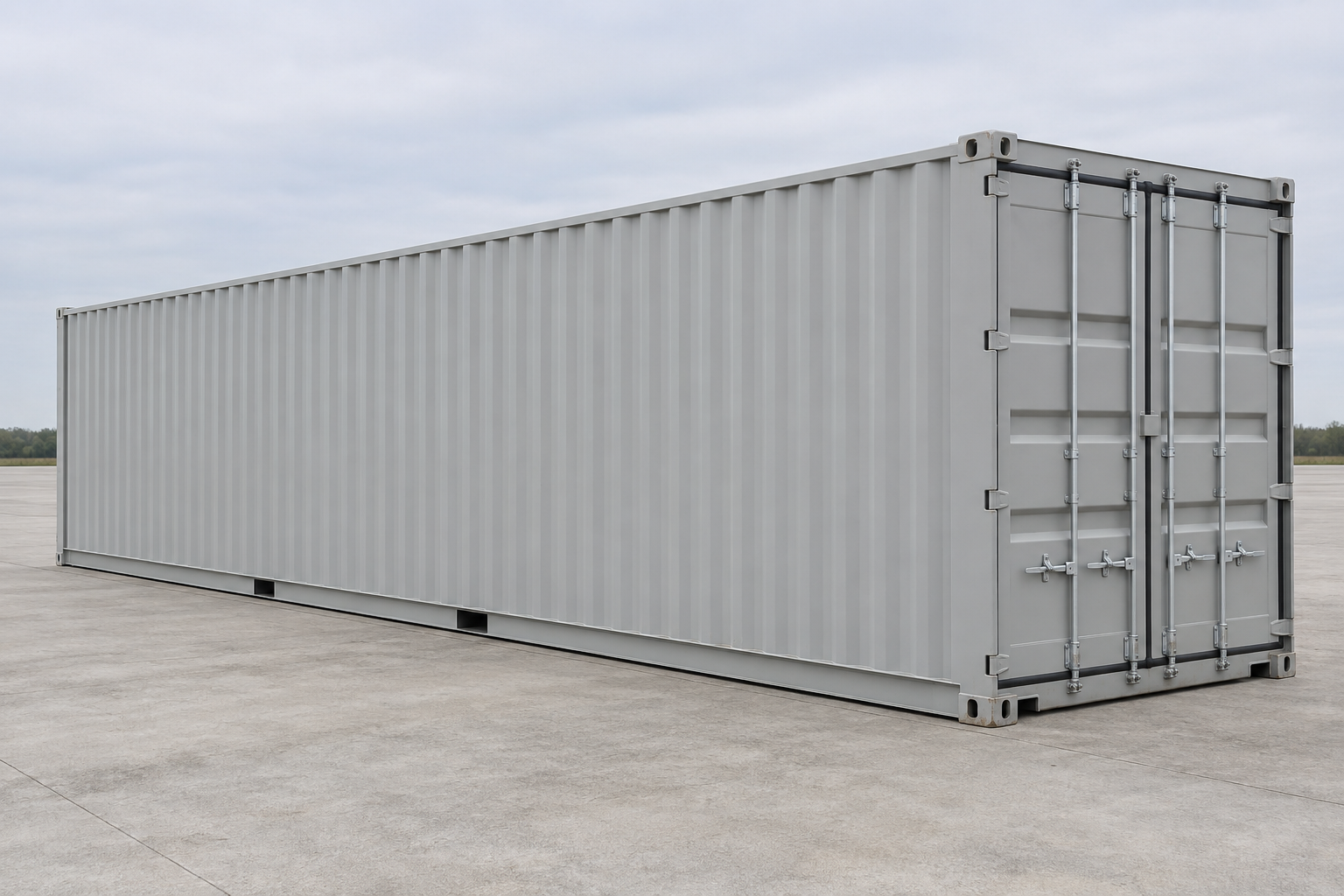
40ft / STANDARD HEIGHT
New / one-trip
A cleaner finish, with less visible wear. Check the included features and any handling marks.
Explore 40ft new / one-trip →40ft / STANDARD HEIGHT
Used
Compare storage and cargo-worthy options. Check the actual floor, doors, repairs and weather sealing.
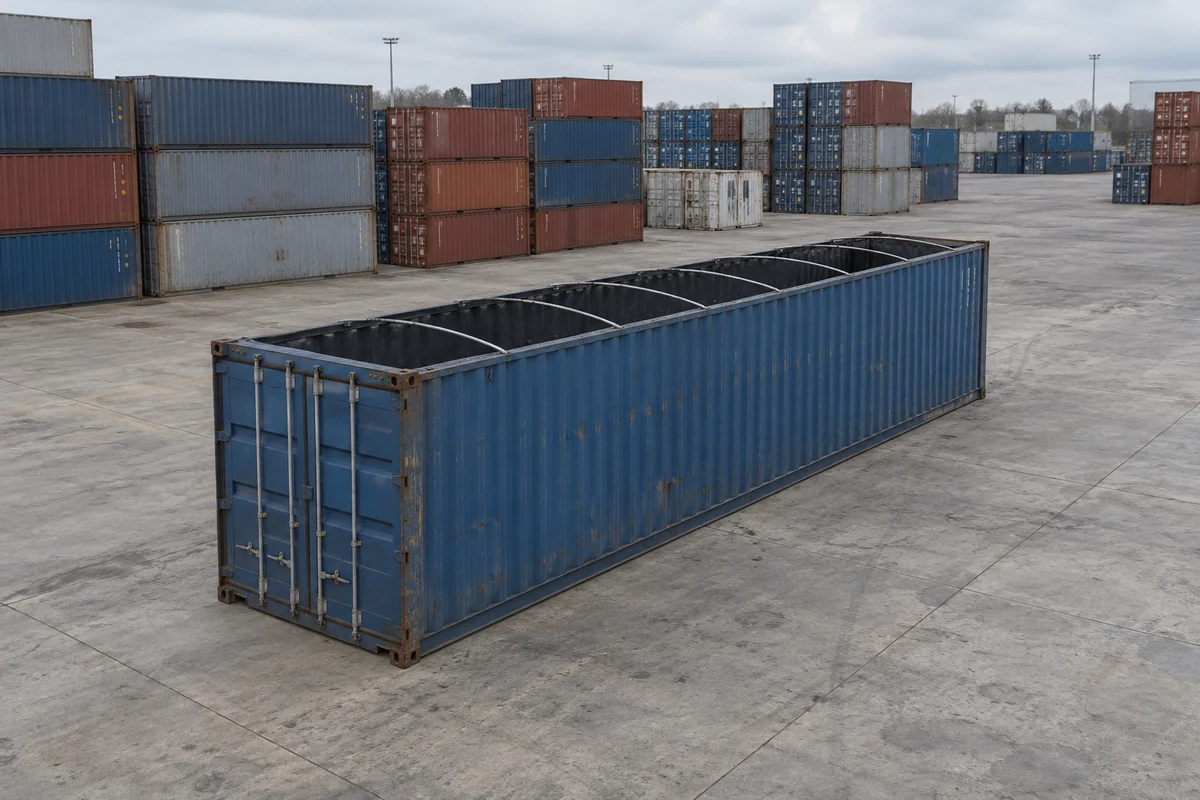
You are viewing this optionLook inside, too.
Compare the floor surface, wall wear and visible repairs, then request close-up photos of the actual unit.
New / one-tripUsed
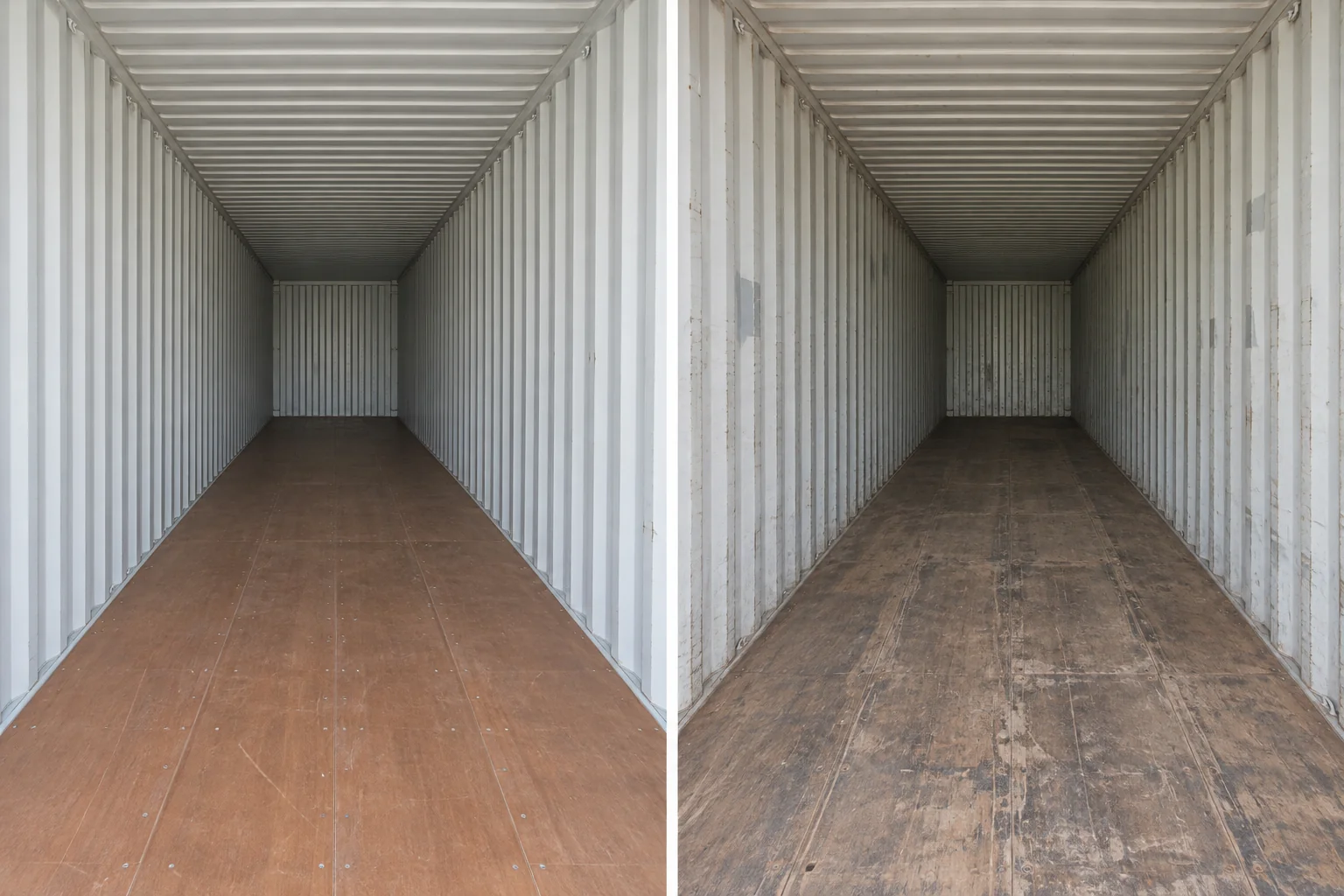
Illustrative appearances. Paint and rust alone do not establish weather-tightness or suitability for shipping.
BEFORE YOU ORDER
Your buying questions
Can a used 40ft WWT container be used for overseas shipping?
WWT describes storage condition. Confirm actual structural condition, the CSC plate, current examination status and documents your carrier requires. WWT alone does not establish acceptance.
How old are used 40ft containers?
“Used” does not establish age. Request the manufacture date and known service or repair history. Age alone does not establish condition or remaining life.
Do rust, dents or patches mean the container is unsuitable?
Location, severity and repair quality matter. Cosmetic wear does not prove structural damage, and a clean exterior does not prove sound structure. Obtain a competent assessment of uncertain areas.
Will I receive the used container in the illustration?
The image is illustrative. Request assigned-unit photos or confirm the selection process, acceptable condition and remedies for a mismatch before buying.
YOUR CONTAINER. YOUR DELIVERY POSTCODE.
Prepare my quote →Compare the complete delivered cost.
Include the condition, unloading and any work your container needs.
CHOOSE BY CONDITION
Compare 40ft containers by condition
Choose the condition your project needs. The supplier confirms the actual unit, condition criteria and availability.
40FT / STANDARD HEIGHT
New / one-trip
A less weathered finish
Compare handling marks, included fittings and the work a used shell would need.
Explore New / one-trip →40FT / STANDARD HEIGHT
Wind & water tight
For enclosed on-site storage
Establish sealing, floor and door condition. Plan moisture-sensitive storage separately.
Explore Wind & water tight →40FT / STANDARD HEIGHT
Cargo worthy
For a cargo-transport project
Establish the unit inspection, current examination and documents required for the shipment.
Explore Cargo worthy →40FT / STANDARD HEIGHT
As-is
For an assessed repair project
Compare disclosed defects, handling and repair costs with a WWT alternative.
Explore As-is →Used appearances can overlap across grades. An illustration cannot establish watertightness, cargo suitability or the defects of an offered unit.