
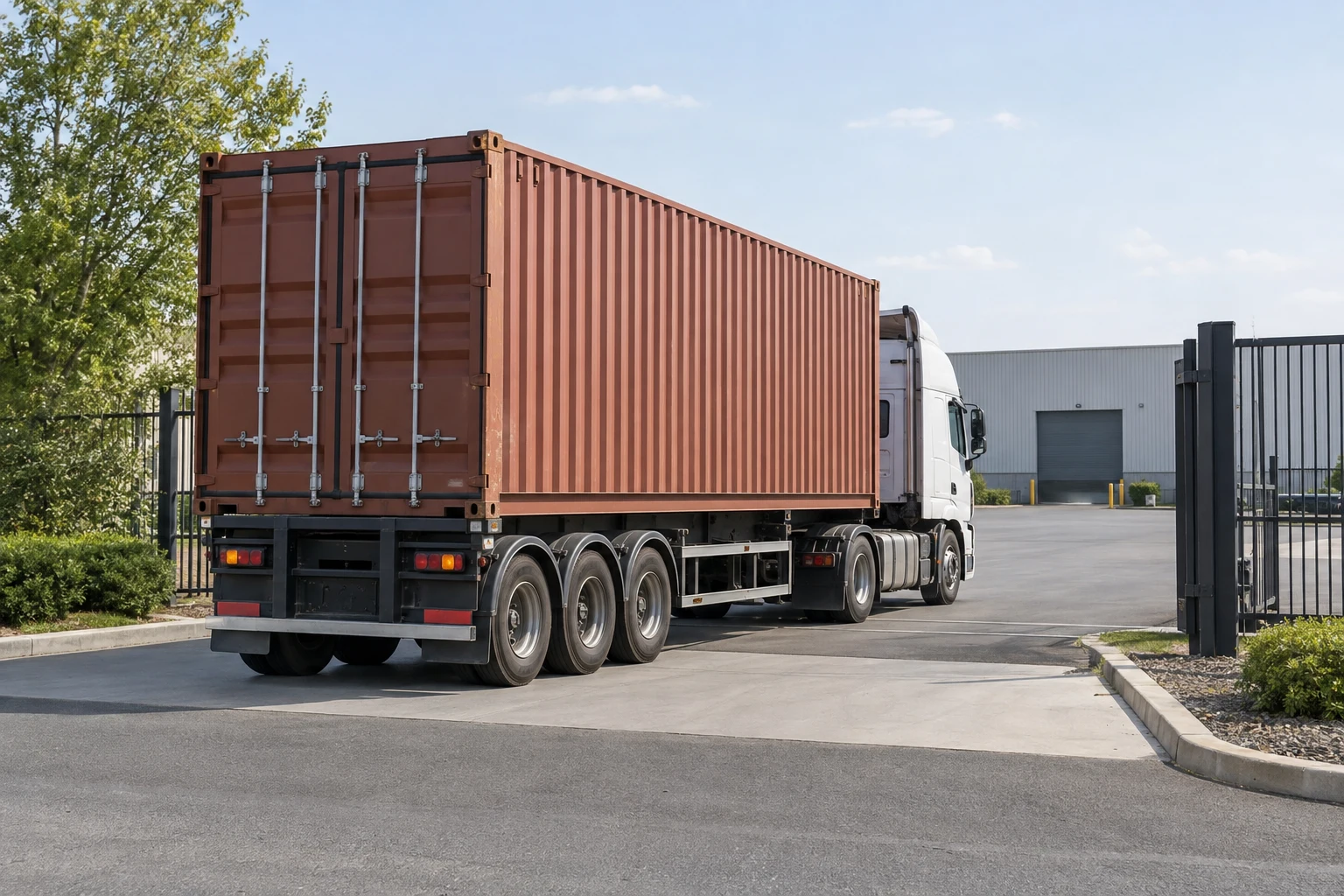
Define what is being moved
Do not compare a cargo freight rate with a quote to deliver an empty container. Ask the provider to accept the loaded container, or the one you already own, for the job you describe. A purchase-delivery quote does not confirm the price or availability of that separate move.
When comparing alternative container purchases, each seller may dispatch from a different location. Keep that origin with its quote rather than force an artificial match. When seeking transport for one container you already own, every provider should price the same pickup and destination.
| Your situation | Information to put in the request |
|---|---|
| Delivery with a container purchase | The seller's pickup location, unit size and condition, quantity and final placement. |
| Moving a container you already own | Unit details, pickup access, who loads it and who unloads it at the destination. |
| A loaded container | Contents, stated weights and relevant loading information for the provider to assess. |
| International cargo shipping | Route and cargo requirements for a freight quote, separate from buying and delivering an empty storage unit. |
Give the provider more than a postcode
Use your postcode or suburb or town and state/territory to start the request, then provide the actual delivery address and site details to the provider assessing the job. A recognised postcode does not confirm inventory, coverage, vehicle access or the final placement price.
| Information | What it helps the provider confirm |
|---|---|
| Origin and unit | Actual pickup point, size, quantity, empty or loaded status, release arrangements and loading responsibility. |
| Site approach | Route into the property, entrance restrictions, turns, overhead obstacles and any access limits. |
| Placement area | The intended spot, surface and ground conditions, door orientation and a useful sketch or site photos. |
| Unloading plan | Whether the transport vehicle unloads, whether separate lifting equipment is needed, and who supplies and pays for it. |
| Timing and access | Requested window, appointment arrangements, who opens the site and any waiting or rescheduling terms. |
Have the operator assess the actual vehicle, method and site. A footprint measurement alone does not establish the manoeuvring or unloading space required. If the agreed facts change, ask for a revised scope before dispatch.
Ask for the delivery line items
Ask for each possible extra charge, or how it will be calculated, in writing. Keep site work, permanent supports and optional alterations separate from transport costs. Count each cost once in the full purchase budget.
| Item | What to resolve in writing |
|---|---|
| Pickup and loading | Exact origin, depot or seller handling, loading arrangements and any charge. |
| Road transport | The route and journey covered, number of trips, and the equipment assumed. |
| Unloading | Whether the transport vehicle unloads the unit or a separate lift is required, and who pays for it. |
| Placement | The agreed spot and whether additional repositioning or handling is included. |
| Waiting or access changes | Which events trigger a charge, how it is calculated and who approves extra work. |
| Failed delivery or rescheduling | The circumstances and any return-trip, storage or new appointment charges. |
| Taxes and other fees | Which amounts are included, excluded or still subject to confirmation. |
Compare equivalent quotes before comparing totals
A quote that stops at delivery to the address is not directly comparable with one that includes unloading at the agreed position. Ask for the missing part to be priced or confirm a separate provider before adding the totals.
- Match size, quantity and empty or loaded status. For the same existing-container move, also match the pickup location.
- For alternative purchases, record each seller’s actual origin and compare delivery to the same final site.
- Give every provider the same destination, access information and placement sketch.
- Match unloading equipment and the responsibility for supplying it.
- Record what is included, excluded or conditional, with quote date and validity.
- Get missing prices and agree what is included before deciding that one quote is cheaper.
Collecting from an Australian depot or paying for delivery
Collection only saves money if your own transport can legally carry the box. An empty 20ft weighs about 2,350 kg in our fleet example and a 40ft about 3,750 kg, so the vehicle's rated mass has to cover that payload. In New South Wales, a rigid truck above 4.5 t GVM needs at least a light rigid (LR) licence rather than a car licence.
On a heavy vehicle, the national loading performance standards require the load to be restrained against 80% of its weight forwards and 50% sideways and rearwards; the Northern Territory and Western Australia set their own heavy-vehicle rules. The NHVR's container loading guide treats four twistlocks as the standard fixing. On a truck or trailer without them, its methods cover empty containers only, with chains and rubber matting or timber dunnage, and it recommends loading with the doors facing the rear. Vehicles up to 4.5 t GVM come under the National Transport Commission's separate light-vehicle guide.
Set the delivered quote against truck hire, the right licence, restraint gear and unloading at your end before choosing.
- Does the depot load onto customer vehicles, and which types?
- Does that unit need a twistlock-equipped truck or trailer?
- What collection window and paperwork does release require?
- Who records the unit's condition as it is loaded?
Sources: NSW Government, Licence classes (checked 20 Oct 2026); National Heavy Vehicle Regulator, Loading performance standards (checked 20 Oct 2026); National Heavy Vehicle Regulator, Loading Guide - Shipping Containers (checked 20 Oct 2026); National Heavy Vehicle Regulator, Load Restraint Guide (checked 20 Oct 2026).
Check what could change the price
Ask what the quote assumes about pickup equipment, vehicle access, the ground, waiting time and placement. Tell the provider about changes before dispatch. Ask for revised written terms where needed.
A closer seller or a smaller container does not by itself establish a lower delivered price. Compare the actual pickup, vehicle and unloading plans. Use the site-preparation guide to assemble the information the operator needs; this page helps compare the resulting costs.
Keep a short comparison record
For each quote, record the provider, unit and load, pickup, destination, equipment, transport amount, unloading amount, other charges, exclusions and validity. Mark an unanswered item as unresolved rather than entering zero.
Take the confirmed delivery subtotal into your overall acquisition budget alongside the container price, taxes and any separately quoted work. The shipping-container cost guide covers that complete purchase comparison.
Buying questions
How much does it cost to deliver a 40ft shipping container?
Request a quote for its pickup location, destination, load and unloading plan. A size alone does not supply a reliable delivered amount, and this guide does not publish a nationwide rate.
Can I calculate delivery cost using only distance?
Ask the provider for its pricing basis. Distance alone leaves pickup, equipment, unloading, placement and conditional charges unresolved.
Why might two delivery quotes be different?
For the same existing-container move, compare origin, destination, trips, equipment and unloading position. Alternative purchases can start at different seller locations; compare their actual delivery scope to the same final site. In both cases, identify included, excluded and conditional charges before comparing totals.
Is moving my own container the same price as purchase delivery?
Ask for a separate quote for the actual pickup and handling at both ends. A purchase-delivery price does not tell you what that move includes or costs.
Can I get a final delivery price from only my postcode?
A postcode can start the request, but the provider needs the actual pickup, unit and site information to confirm the job. Explain access and placement, confirm the unloading method and ask which assumptions could change the quoted price.
Does container delivery include unloading and final placement?
Check the written scope. Delivery to an address, unloading from the vehicle and placement at an agreed spot can have different responsibilities and charges. Price any required separate lifting or handling before treating the comparison as complete.
Is depot collection always cheaper than delivery?
Compare the depot price plus loading, actual transport, unloading, placement and applicable fees with the complete delivered offer. Confirm release and acceptance terms too. Collection offers a saving only when that complete, workable budget is lower.