
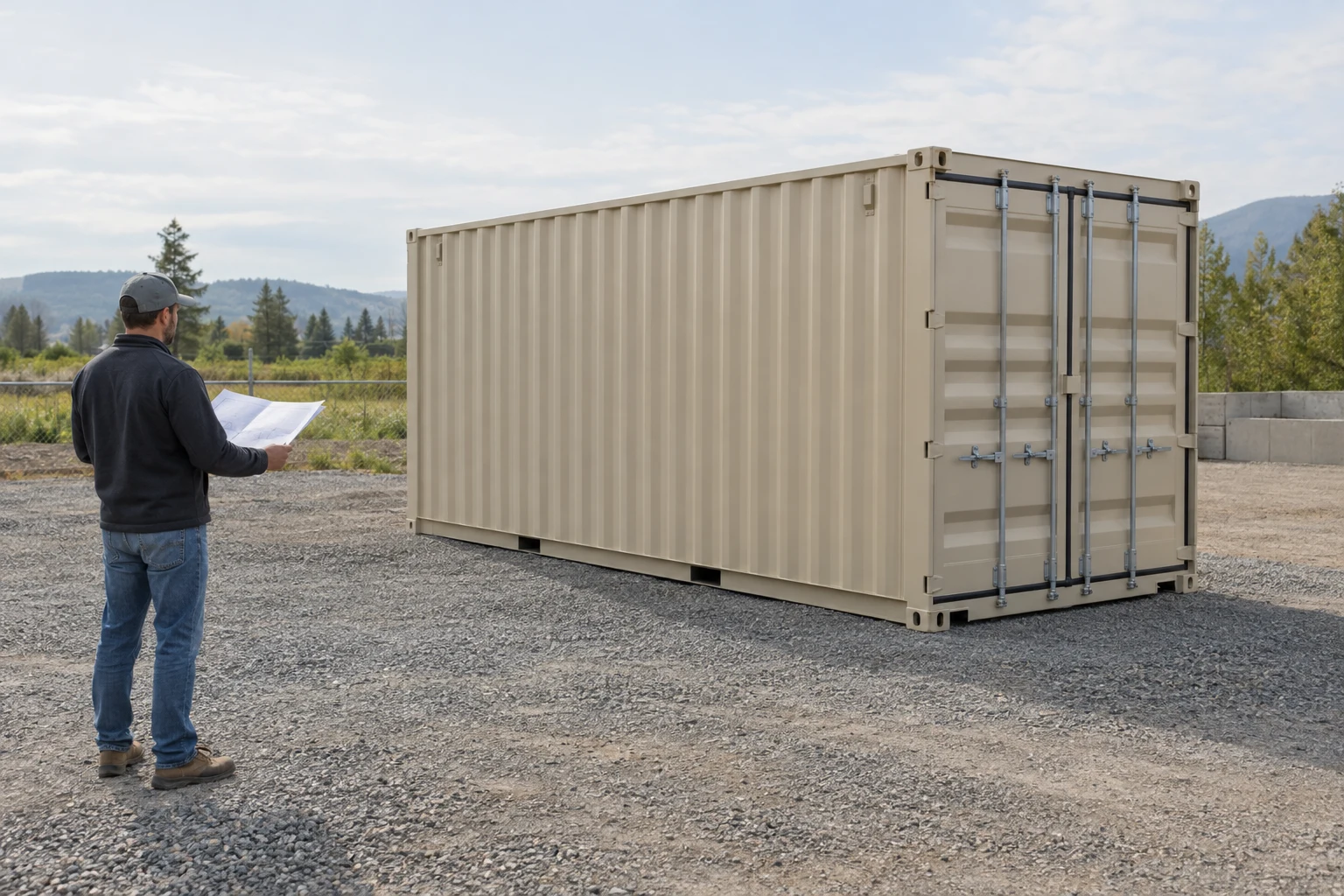
Check placement rules before preparing the site
Contact the local council’s planning and building team and the relevant building certifier or surveyor for your address. Describe the dimensions, intended use, duration, placement, utilities, modifications and any stacking. Ask which planning or building approvals, setbacks, structural support, drainage and site documents apply. Any local exemption depends on its exact conditions; use the rules for your property.
Ask separately about occupying or working on the road reserve, verge or other public land. Confirm permission, traffic management and the delivery operator's responsibilities with the road owner. An exemption from one approval does not resolve every planning, building or site requirement; keep the authority's written response.
Record the site details for the delivery operator
Draw the route from the street through the entrance to the placement area, including the truck's exit. Number the photos to match the sketch, record when they were taken and note whether the ground was wet or dry. Ask the operator which measurements they need and how to record them.
| Area | Record | Ask the operator |
|---|---|---|
| Approach and entrance | Street views from both directions, gate posts, turns and narrow points | Which access and turning measurements do you need for your vehicle? |
| Travel and setup ground | Surface type, slopes, pavement edges, soft spots and recent excavation | Can the equipment travel and set up here, or is a site assessment needed? |
| Overhead and below-ground features | Visible wires and branches; known utilities, tanks, drains or voids marked on the sketch | Who will review these hazards and any utility coordination? |
| Final container position | Container outline, door end, nearby structures and intended access | Can this position be reached with the proposed unloading method? |
Discuss ground conditions and support
Mark two areas on the sketch: where the delivery equipment will travel and set up, and where the container will remain. Have each reviewed for its own load and purpose. A support plan for the container does not establish that the truck or lifting equipment can use the same ground.
Have the delivery or crane operator assess ground bearing capacity, level, compaction, drainage and known underground hazards. Agree on safe setup, exclusion areas, overhead powerline clearances and the unloading plan under the rules applicable to the job.
Ask who specifies the container's final supports for its condition, stored load and intended use, and who checks the completed preparation. For a permanent, modified or occupied installation, involve the relevant local authority and qualified design professional. Get the support and anchoring requirements before ordering blocks, gravel or concrete.
Record drainage before choosing support materials
Photograph standing water and note where runoff crosses the route or placement area after rain. Include nearby drains, recent grading and places that stay soft. Show these observations to whoever evaluates the ground and final supports; a dry-day photo leaves those questions unanswered.
Ask how the placement and site work will manage water around the container. Check whether local drainage approval is needed. Confirm any levelling or drainage work with the responsible authority or professional before changing the site.
Have overhead obstacles reviewed for the unloading movement
Mark power lines, branches and other overhead obstacles around the setup area as well as along the route. Review them against the proposed equipment movement, container and rigging. A truck passing beneath a line does not establish that unloading there is safe.
Have the delivery or lift provider assess overhead electrical lines with the electricity supply authority. Confirm the exclusion zones, controls and approvals required in the relevant state or territory; vehicle loads and mobile plant also need assessment. Do not infer a safe clearance from a photograph or apply one distance to every line.
Agree on door direction and the final position
- Show which end should have the doors and where users will approach them.
- Check the room needed to open the doors and move your stored items.
- Point out nearby fences, buildings, drains and other limits on placement.
- Ask whether the operator can place the unit at that exact spot with the proposed equipment.
- Keep the agreed door direction and support locations on the final sketch.
Prepare a delivery-day handoff
Have the site contact, gate access, reviewed sketch and preparation instructions ready. Confirm who checks the supports and where people should stay while unloading. Clear the route agreed with the operator.
Recheck the site before dispatch. If rain, excavation, parked equipment or a changed placement affects the plan, send updated photos and ask the operator to review the change before arrival. Keep unresolved access, ground or placement questions visible to the seller and operator.
Buying questions
How much space should I leave for container delivery?
Ask the actual operator for the requirements of their vehicle and unloading method. Record the approach, turns, setup area, overhead obstacles and exit. The container's length and width do not describe the equipment's working space.
Do I need a concrete slab or blocks?
Have the final support arrangement specified for the ground, container condition, intended load and use. Ask who designs and checks it before purchasing materials. This checklist does not prescribe a slab, gravel depth or block size.
When should I decide which way the doors face?
Include that direction in the placement sketch before booking. Ask the operator whether the proposed vehicle and unloading method can achieve it.
Do I need a permit for a storage container?
Ask the authority responsible for your address. Rules and exceptions depend on local requirements, use, duration, size and location. A shipping specification is not permission to place the container there.
Does driving under a power line mean unloading is safe there?
No. Flag lines in the route and placement sketch. Ask the delivery or lift provider to evaluate the equipment, container and unloading movement, and coordinate with the utility owner as needed.