
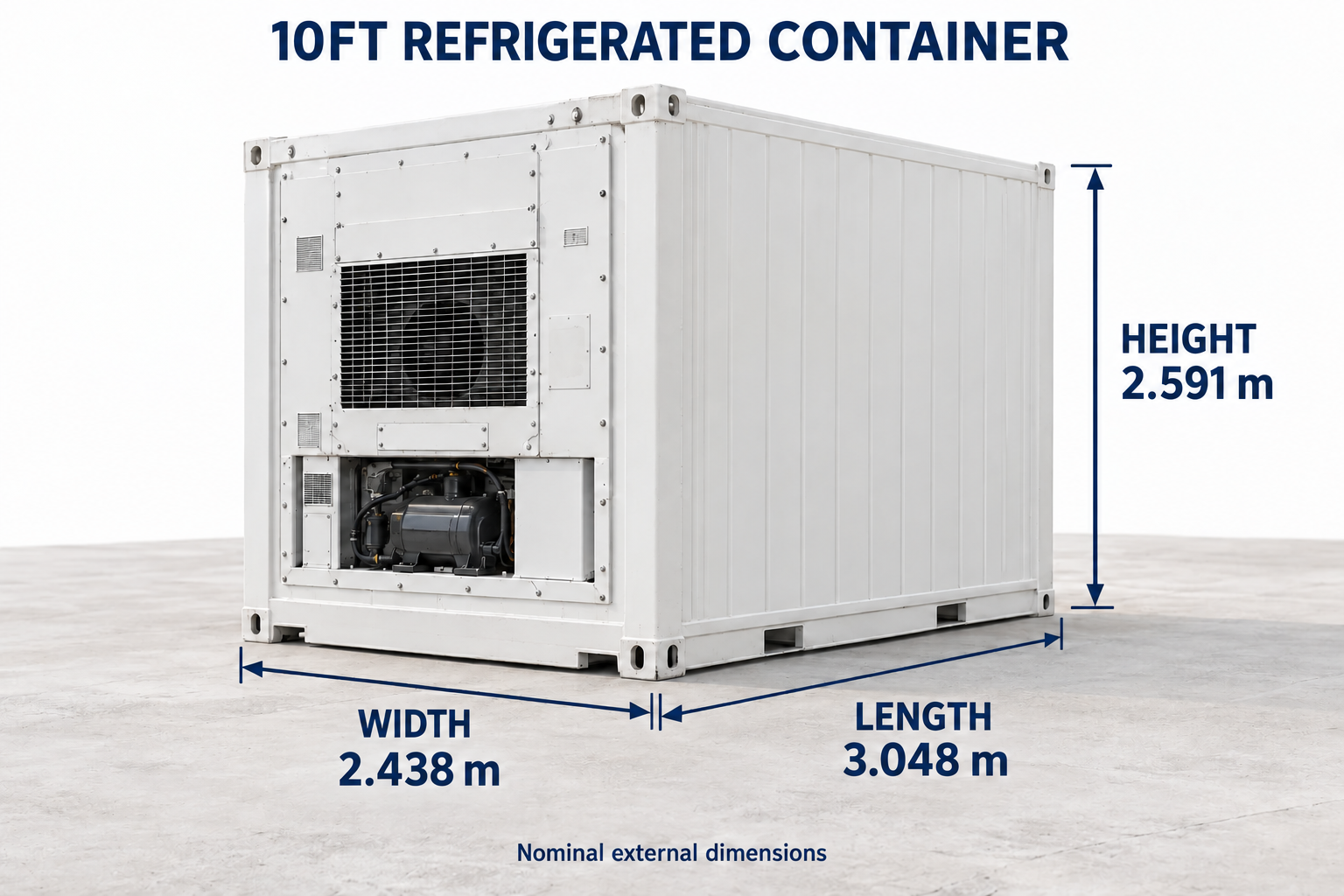
10ft
A small on-site inventory or a constrained placement area.
Door configuration can change pallet positions. Small size alone does not establish household-outlet compatibility.
View 10ft details →Prepare your Australian container request. Find the right price for your project.
Compare 10ft, 20ft and 40ft refrigerated containers by usable space, temperature duty, site power and installed scope. Add your load and delivery postcode to a quote request, then confirm the offered unit’s specification and availability.
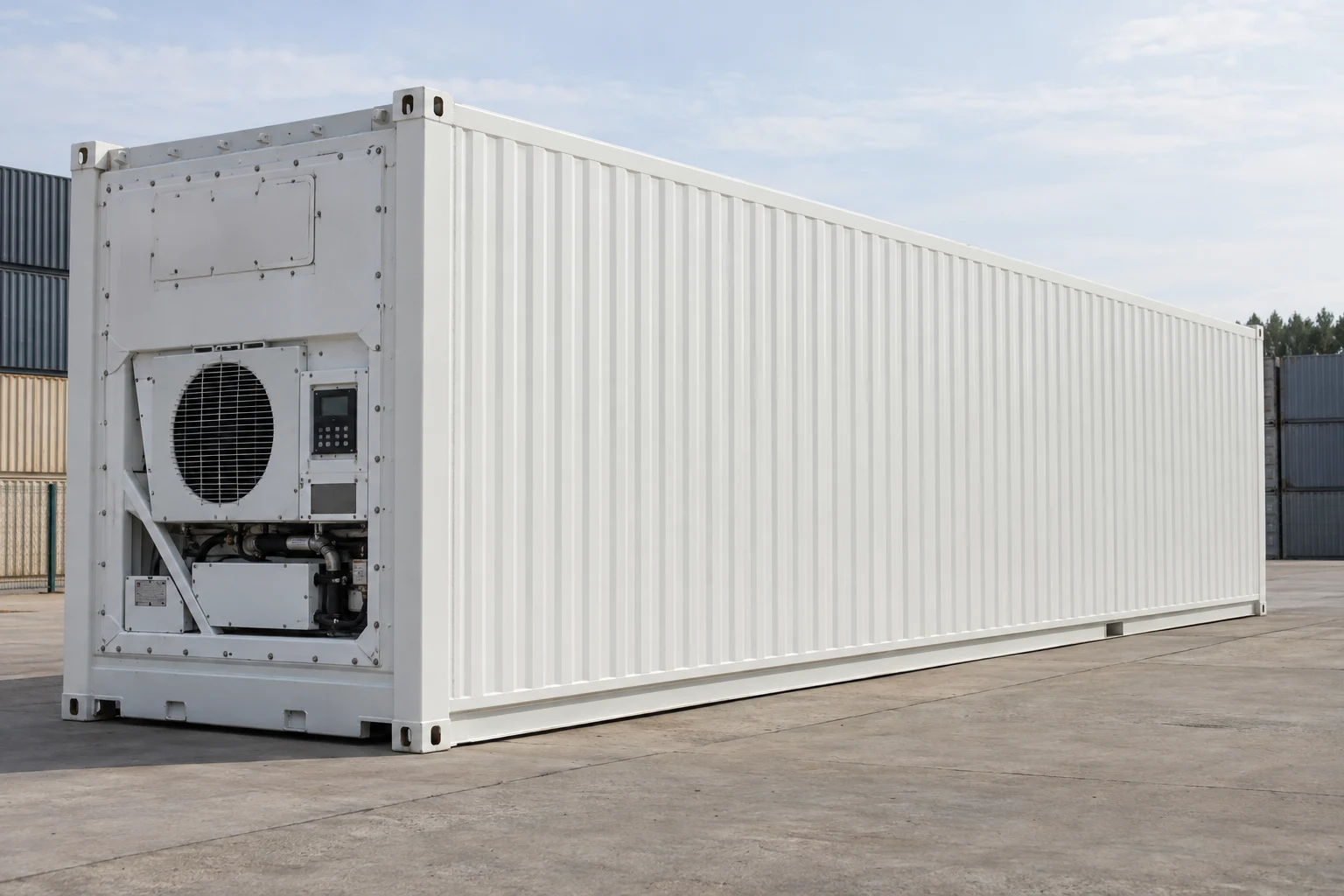
A small on-site inventory or a constrained placement area.
Door configuration can change pallet positions. Small size alone does not establish household-outlet compatibility.
View 10ft details →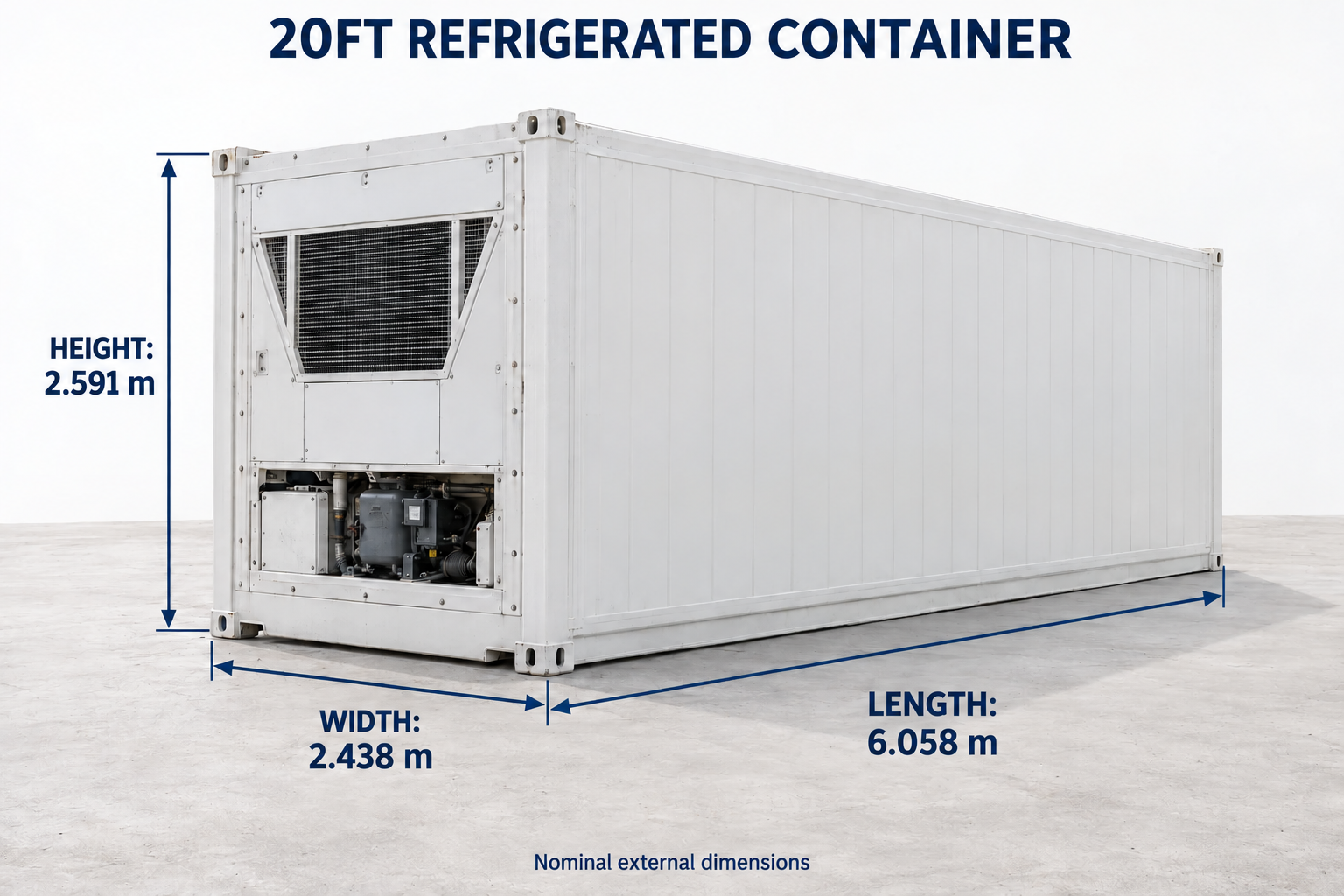
A moderate pallet inventory with regular receiving.
Reserve retrieval and loading access before treating every advertised position as usable storage.
View 20ft details →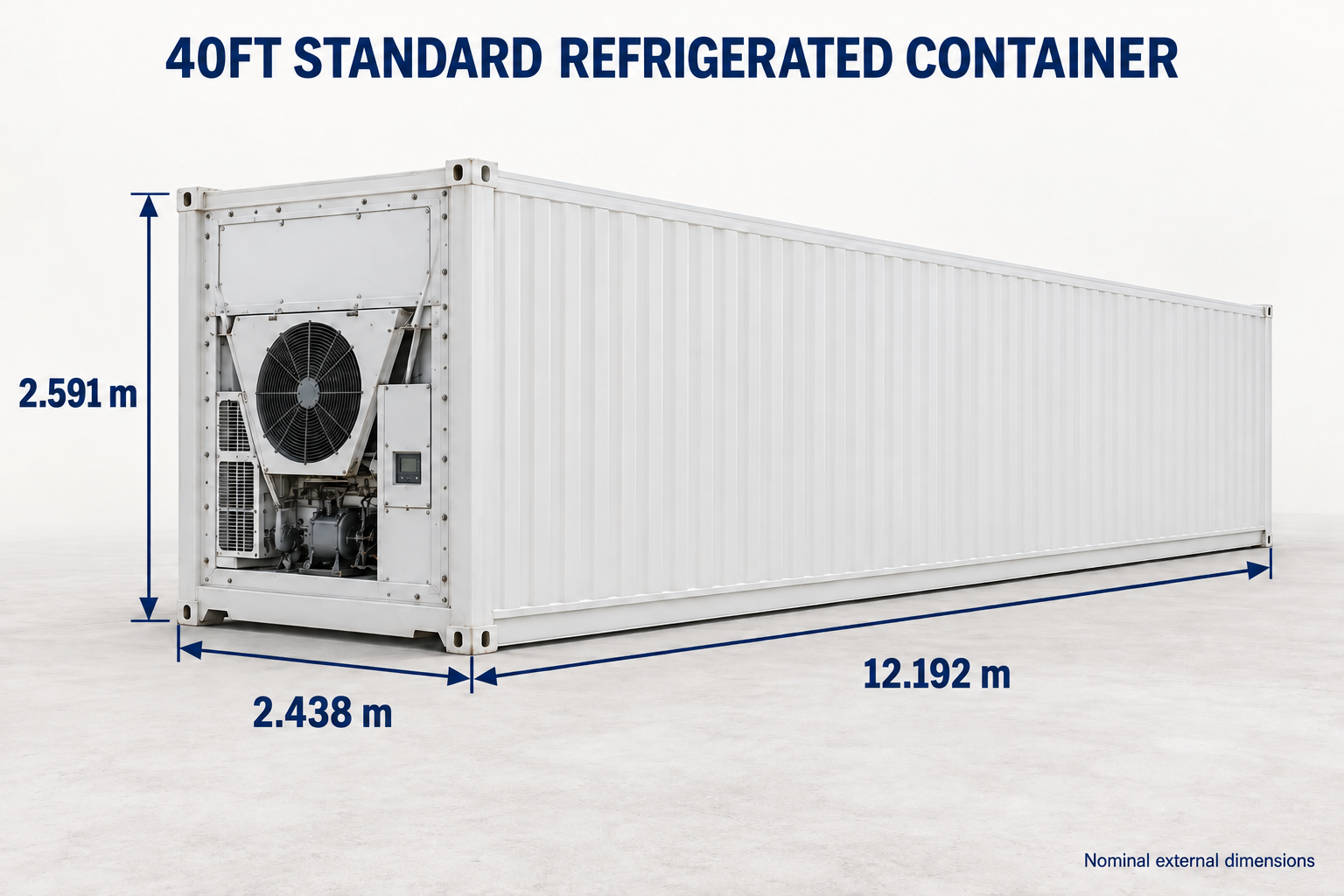
A larger batch held at temperature.
More floor length requires a loading and retrieval plan. Compare standard height with high cube; energy use does not follow a fixed 2× rule.
View 40ft details →Holding already chilled or frozen goods is a different duty from cooling warm arrivals or freezing a batch. State the incoming temperature, quantity and completion time when that work is required. An insulated shell without working refrigeration provides no active temperature control.
Plan with the Australian 1165 × 1165 mm pallet footprint and the dimensions of your actual packaged load. Confirm interior and door clearance, loading pattern, airflow, weight and operational space with the supplier; nominal length does not guarantee capacity.
| Overseas portable model example | Published inside floor, L × W | Australian pallet plan | Access and airflow |
|---|---|---|---|
| Portable 10ft example | 2.337 × 2.235 m | Obtain a dimensioned loading plan | Confirm load line, air paths and retrieval |
| Portable 20ft example · three phase | 5.410 × 2.235 m | Obtain a dimensioned loading plan | Confirm load line, air paths and retrieval |
| Portable 40ft example | 11.582 × 2.235 m | Obtain a dimensioned loading plan | Confirm load line, air paths and retrieval |
These dimensions are examples for particular models. Check the offered unit’s measurements, openings, ratings and usable clearances before planning storage, transport or installation.
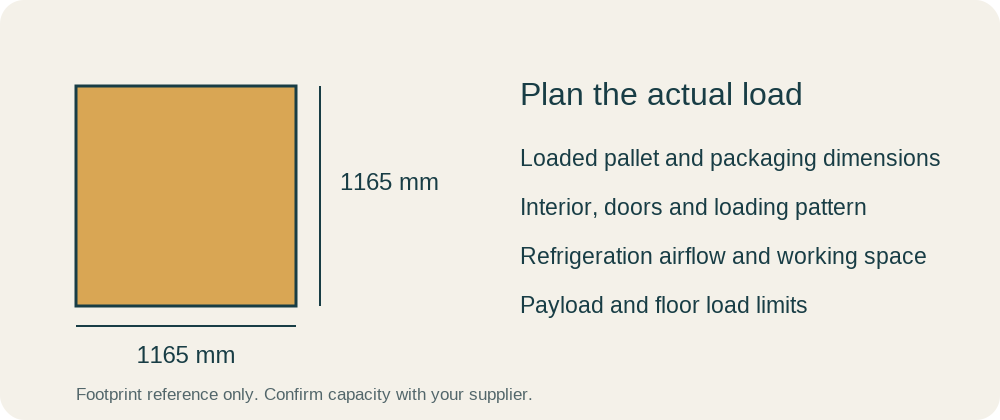
Keep the unit’s designated floor air channels, return-air path and load line clear. Include pallet overhang, wrapping, package height, handling and retrieval in the loading plan. A floor rectangle that fits geometrically does not establish a suitable refrigeration layout.
Compare Australian proposals for the same temperature duty, condition, refrigeration equipment and delivery postcode.
| Configuration to quote | Equipment evidence | Australian price confirmation |
|---|---|---|
| Used refrigerated container | Unit and machine identity; box condition; dated temperature test; warranty terms | Current total in AUD including applicable GST |
| Used box with replacement refrigeration | Identify the box and replacement machine separately; 50 Hz compatibility; guarantees | Confirm equipment, delivery, unloading and site electrical costs |
| New or one-trip reefer | Actual condition, machinery specification, temperature duty and electrical nameplate | Supplier confirms availability and complete written scope |
Request a current written offer for the assigned unit. Confirm the dispatch depot, availability, applicable GST, transport, unloading and site work. A missing charge is unresolved, not zero.
Confirm the assigned unit’s nameplate voltage, phase, frequency, current and connector. Australian supply is nominally 230 V single phase or 400 V three phase at 50 Hz; a licensed electrician must confirm equipment compatibility, circuit protection and any transformer.
| Operating requirement | What the supplier must confirm | Site confirmation |
|---|---|---|
| Holding temperature | Required setpoint, product temperature and dated test for the actual machine | Airflow, loading, insulation and door-opening routine |
| Cooling duty | Whether the unit can perform the required holding or pull-down duty | Incoming batch size and temperature; local ambient conditions |
| Electrical supply | Nameplate voltage, phase, 50 Hz compatibility, current and connector | Licensed electrician checks circuit, protection, earthing and any transformer |
A controller setpoint or documented product range does not establish performance at your site's ambient conditions, loading or door-opening routine. Request the operating limits and a duty assessment for the actual refrigeration machine; confirm any required holding or pull-down performance separately.
Electricity use depends on the refrigeration system, temperature setting, weather, load and door openings. Compare measured consumption for the same operating duty rather than applying a size-only ratio.
| Information to request | How to use it |
|---|---|
| Metered energy in kWh | Use a representative holding period with the intended temperature, load and door routine. |
| Electricity tariff | Apply your actual energy rate and identify demand charges, fixed fees and taxes separately. |
| Cooling capacity and electrical input | Keep heat-removal capacity separate from electricity consumption; confirm both for the actual selected unit. |
Energy cost = metered kWh × the applicable price per kWh. Record warm-load cooling separately from holding operation.
Ask the supplier and licensed electrician to confirm the actual unit’s nameplate, site-supply compatibility, connection and installation requirements. Include maintenance and any generator fuel separately in the operating budget.
These manufacturer examples are different products from the portable fleet above. Dimensions are nominal; prepare a pallet and retrieval layout for the actual marine unit rather than transferring a layout from another model.
| Marine product example | Inside L × W × H, metres | Door W × H, metres |
|---|---|---|
| Marine 20ft example | 5.321 × 2.235 × 2.248 m | 2.235 × 2.248 m |
| Marine 40ft standard example | 11.602 × 2.276 × 2.226 m | 2.276 × 2.299 m |
| Marine 40ft high cube example | 11.602 × 2.276 × 2.531 m | 2.276 × 2.603 m |
These dimensions are examples for particular models. Check the offered unit’s measurements, openings, ratings and usable clearances before planning storage, transport or installation.
The high-cube example adds interior height, while its floor length and width match this standard-height example. Use the proposed unit floor, doorway and load line for a packaged-load plan; dry-container dimensions are not a reefer specification.
A non-operating reefer or NOR shell is not a working refrigerated purchase. For a used working unit, match condition photos, the machinery identity and the dated test report to the offered container. A PTI can include cooling and heating checks; review the procedure, results, skipped checks and repairs. A display photo shows one reading, rather than the temperature history or the performance of your load.
Have the quote itemise the shell and refrigeration, testing or repairs, delivery and placement, electrical equipment and setup, and taxes. Separate shell warranty from refrigeration warranty. Give the delivery operator the postcode, approach and placement photos, unloading access and door orientation; retain access to the machinery for service. Moving an empty reefer is a different arrangement from carrying cold goods under power.
Before taking over the installed container, agree on the operating conditions, records and named contacts below. Confirm which recording and notification functions are included in the delivered configuration.
| Handover item | Evidence to keep | Person to name |
|---|---|---|
| Unit identity and handover file | Container and refrigeration identifiers; document list and unresolved items. | Person handing over the equipment; person accepting the file. |
| Operating conditions and site checks | Agreed duty, load, ambient and door-use assumptions; completed check record and outstanding conditions. | Person completing the checks; person accepting the operating conditions. |
| Sensors and stored history | Recorded sensor or channel and its location; logging settings, retention period, and whether and how records can be exported. | Person checking readings and keeping the records. |
| Remote notification, if supplied | Installed alert capability, connectivity and power-loss behaviour; named recipient and confirmation that the agreed notification reaches them. | Person verifying notification delivery; alert recipient. |
| Response to an alarm or failure | Named response owner, contact route and agreed action; note any service arrangements still unresolved. | Operating contact; person responsible for intervention. |
| Loss of refrigeration or site power | Agreed contingency for the stored goods, including any alternative storage or power arrangement; record unresolved arrangements. | Person authorised to activate the contingency. |
A displayed reading or stored history does not establish that an alert has reached someone who will act on it. A recorder battery does not establish refrigeration backup power.
Choose a format and chilled or frozen holding duty below to keep both in the editable request notes.
Add your load, required temperature, site power and delivery details. Review the format and intended-use selections before sharing the draft. The request builder prepares a draft you can edit, copy or download. Review the request and submit it online with your consent. You can also keep a copy.