
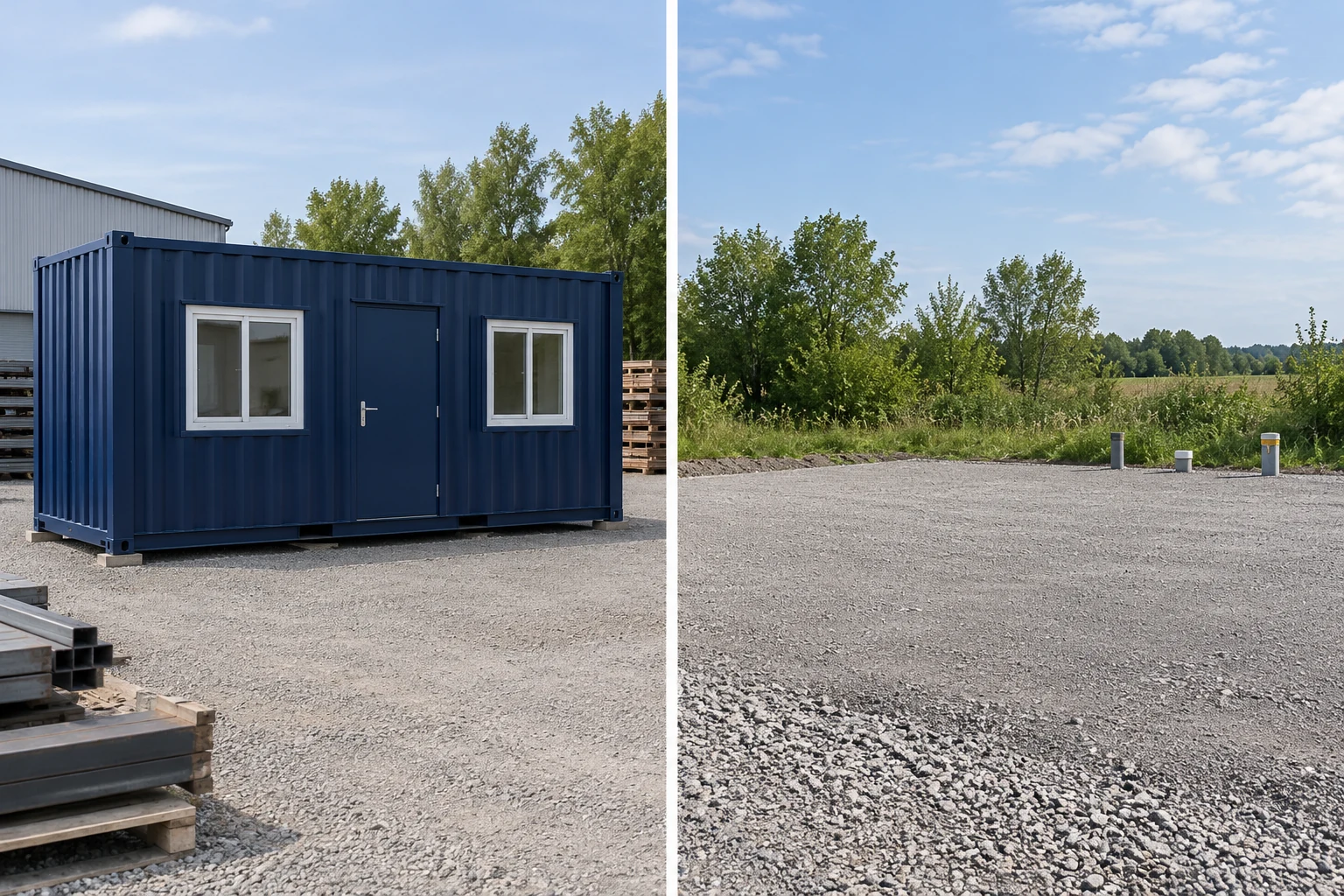
Which conversion scope are you pricing?
These scope categories help you request comparable New Zealand offers. They are not quoted local prices or an assumed stock list.
Two conversions with the same nominal length can have different insulation, finishes, openings and equipment. A quote difference is not the isolated price of one upgrade unless the other work is the same.
Ask each supplier to price the same drawing and completion level. Align GST and include transport and site work, or keep those amounts explicitly unresolved. Compare a complete total only when the required work has been covered.
| Scope | Amount to request | Factory work to specify | Other work to resolve |
|---|---|---|---|
| Modifications to an owned unit | Written NZD/GST amount for defined work. | Openings, structural reinforcement, fittings and finish. | Collection/return, shell condition, design, lifting and site work. |
| Fitted container office | Container plus an itemised office fit-out quote. | Finished dimensions, insulation coverage, lining, doors/windows, electrical and heating/cooling. | Transport, unloading, foundations, local connections and council requirements. |
| Occupied custom conversion | Design, factory and site scopes priced separately. | The actual occupancy, layout, structural work, envelope and systems. | Local consent route, ground/design work, services and documented handover. |
Identify what the quoted price buys
Do not add the price of an empty container to a package that already includes it. Check the same for doors, insulation, electrical work, heating and cooling included at the factory. An internal electrical package does not tell you the cost of bringing power to the site.
| Quote type | What to establish before using the total |
|---|---|
| Modifications only | Whether you supply the container; which repairs, cuts, framing, finishes and equipment are included; where the work occurs. |
| Container plus factory conversion | Shell size, height and condition; the finished factory specification; the point at which responsibility passes to you. |
| Rough-in or partial conversion | Exactly what is unfinished. Separate internal wiring or plumbing from fixtures, tests, final connections and any locally completed work. |
| Delivered and installed project | Transport, unloading, foundation, placement, utility connections and completion responsibilities. Identify every allowance and exclusion. |
Build the missing-cost list
For each item, record whether it is included, excluded or unclear. Name who does it and list the written price or allowance. Keep unpriced work visible instead of counting it as zero.
Decide the use, layout and local approval steps before ordering changes that cannot easily be undone. Cutting openings can affect the structure. Agree opening and reinforcement details with the designer or fabricator. Also settle access, foundations and utility routes before treating a factory price as a complete budget.
| Budget line | Scope question |
|---|---|
| Container and initial condition | Is the shell included? What inspection, repairs, cleaning or floor work does the quote assume? |
| Design, cuts and reinforcement | Are drawings, openings and structural work defined before fabrication? Who prices changes to the layout? |
| Doors, windows and weather detailing | Which units, installation details, seals, trim and exterior finishes are included? |
| Insulation and interior completion | Which walls, ceiling, floor and doors are covered? Are framing, protective lining and finished flooring included? |
| Electrical, plumbing and conditioning | What equipment and internal work are included, and where do site connections begin? |
| Transport, unloading and placement | Does the quote reach the final placement point, and who provides the unloading equipment? |
| Foundation and utilities | Who handles site design, ground work, foundation, drainage, trenches and service connections or upgrades? |
| Approvals, tax and changes | Which design reviews, council-consent fees, inspections and GST or other applicable charges are priced? How are scope changes authorised and charged? |
Keep a home budget separate
A dwelling requires its own NZ project assessment. Define the structural and envelope design, kitchen, bathroom, hot water, electrical/plumbing systems and the exact factory completion level before requesting a price.
Price land-related work, council/professional requirements, foundations, delivery/lifting, utility connections, decks or stairs and final completion separately. A factory-finished module price is not an occupancy-ready project budget.
Confirm the current building consent or eligible exemption route and any resource consent for the actual property. The intended use and site requirements must be established before committing to a residential module.
Resolve differences before choosing a total
- Send the same layout, shell condition and finish schedule to each provider. Identify alternatives as separate options.
- Reconcile different opening counts, insulation coverage, lining, equipment and connection boundaries before comparing prices.
- Ask for a dated written quote. Check how long it is valid, which site details it relies on and what it excludes.
- Keep the factory subtotal, transport and placement, site completion, and applicable fees visible as separate groups. Add only non-overlapping priced work.
- Ask who handles each unpriced item and what they need to price it. The budget is incomplete until that work is priced.
Prepare a clear conversion request
Prepare an editable request with the intended use, project postcode, size and height, shell condition and a layout showing doors, windows and equipment. State whether you already own the container. Include the required finish, insulation coverage, heating/cooling and utility needs.
- Describe delivery access and the final placement area, with site photos or a plan where available.
- Identify known foundation and utility arrangements and who will complete local work.
- Ask for separate lists of factory work, transport and placement, and work to finish on site. List anything still unknown.