
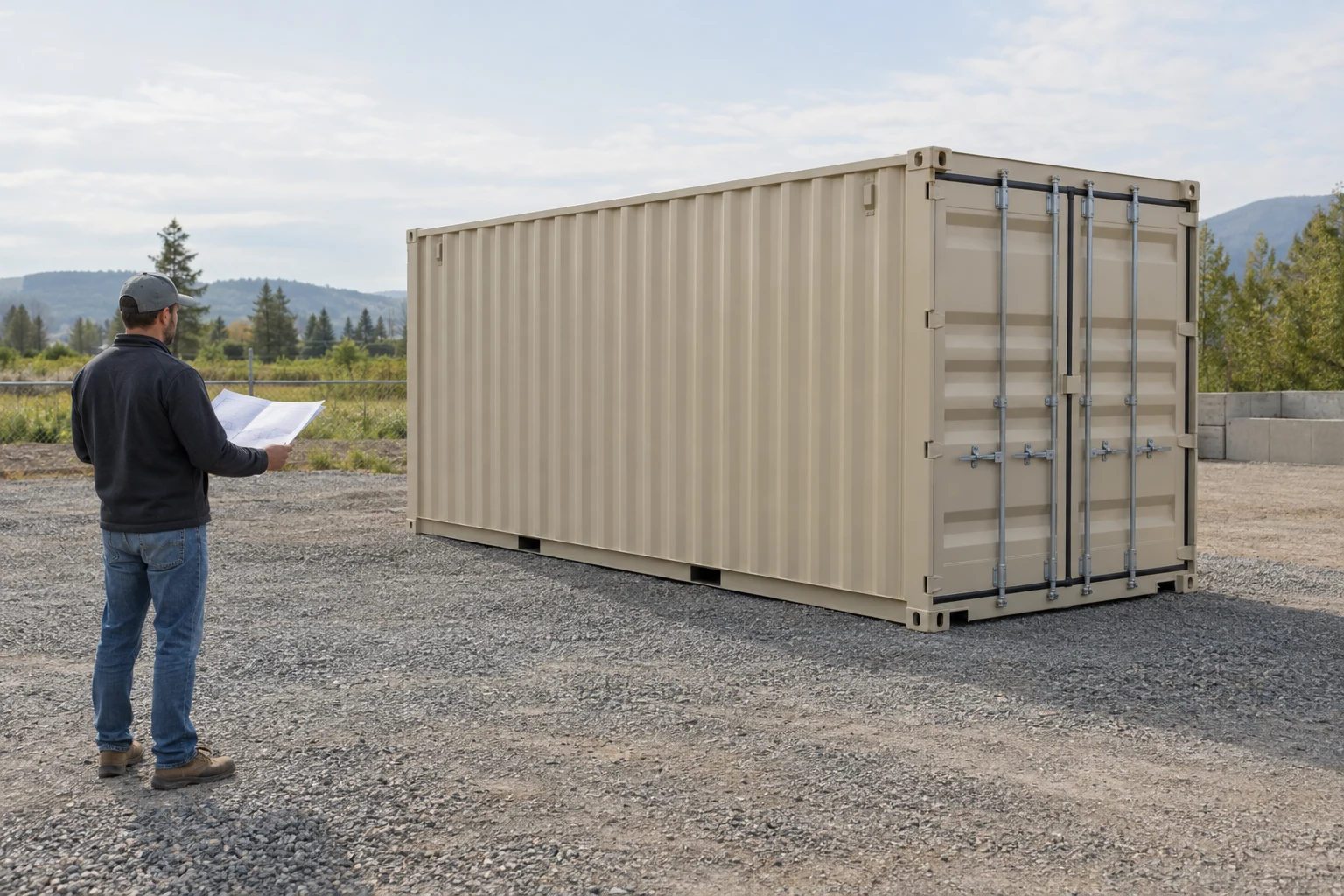
Check placement rules before preparing the site
Contact the local council and building consent authority for the delivery address. Describe the dimensions, use, length of stay, placement, utilities and any planned modifications or stacking. Ask which building consent or eligible exemption route applies, whether resource consent is required under the district or unitary plan, and which setbacks, anchoring, drainage and site-plan documents need assessment.
Ask the relevant road controlling authority separately about road corridor access or occupation approvals for work or temporary placement on a road, berm or footpath. If a building consent exemption is suggested, confirm all of its conditions and check resource consent, district or unitary plan rules, anchoring and drainage separately. Keep the authorities' responses with your site records.
Check the council’s placement, building and planning requirements for the actual use. A container used for domestic storage, an occupied office, a dwelling and a commercial storage site can raise different questions. Where site hazards apply, confirm the required assessment before establishing the final position.
Record the site details for the delivery operator
Draw the route from the street through the entrance to the placement area, including the truck's exit. Number the photos to match the sketch, record when they were taken and note whether the ground was wet or dry. Ask the operator which measurements they need and how to record them.
| Area | Record | Ask the operator |
|---|---|---|
| Approach and entrance | Street views from both directions, gate posts, turns and narrow points | Which access and turning measurements do you need for your vehicle? |
| Travel and setup ground | Surface type, slopes, pavement edges, soft spots and recent excavation | Can the equipment travel and set up here, or is a site assessment needed? |
| Overhead and below-ground features | Visible wires and branches; known utilities, tanks, drains or voids marked on the sketch | Who will review these hazards and any utility coordination? |
| Final container position | Container outline, door end, nearby structures and intended access | Can this position be reached with the proposed unloading method? |
Discuss ground conditions and support
Separate the ground supporting the final container from the ground supporting the delivery truck, crane, outriggers or side loader during the operation. Ask the operator for the actual equipment’s bearing, level and working-space requirements before preparing supports.
Disclose slopes, recent fill, soft or waterlogged areas, drains, underground tanks or services and known hazards. A visual check or postcode cannot establish bearing capacity. Have the responsible operator and site professionals resolve ground support, drainage and safe access for the actual New Zealand job.
Record drainage before choosing support materials
Photograph standing water and note where runoff crosses the route or placement area after rain. Include nearby drains, recent grading and places that stay soft. Show these observations to whoever evaluates the ground and final supports; a dry-day photo leaves those questions unanswered.
Ask how the placement and site work will manage water around the container. Check whether local drainage approval is needed. Confirm any levelling or drainage work with the responsible authority or professional before changing the site.
Have overhead obstacles reviewed for the unloading movement
Mark power lines, branches and other overhead obstacles around the setup area as well as along the route. Review them against the proposed equipment movement, container and rigging. A truck passing beneath a line does not establish that unloading there is safe.
For a New Zealand crane or truck-mounted lifting operation, have the operator assess overhead lines under the applicable NZ electrical safe-distance requirements, including NZECP34, and coordinate with the line owner. Treat lines as live unless their status is formally confirmed. Do not use one clearance number for every line and operation.
Agree on door direction and the final position
- Show which end should have the doors and where users will approach them.
- Check the room needed to open the doors and move your stored items.
- Point out nearby fences, buildings, drains and other limits on placement.
- Ask whether the operator can place the unit at that exact spot with the proposed equipment.
- Keep the agreed door direction and support locations on the final sketch.
Prepare a delivery-day handoff
Have the site contact, gate access, reviewed sketch and preparation instructions ready. Confirm who checks the supports and where people should stay while unloading. Clear the route agreed with the operator.
Recheck the site before dispatch. If rain, excavation, parked equipment or a changed placement affects the plan, send updated photos and ask the operator to review the change before arrival. Keep unresolved access, ground or placement questions visible to the seller and operator.
Buying questions
How much space should I leave for container delivery?
Ask the actual operator for the requirements of their vehicle and unloading method. Record the approach, turns, setup area, overhead obstacles and exit. The container's length and width do not describe the equipment's working space.
Do I need a concrete slab or blocks?
Have the final support arrangement specified for the ground, container condition, intended load and use. Ask who designs and checks it before purchasing materials. This checklist does not prescribe a slab, gravel depth or block size.
When should I decide which way the doors face?
Include that direction in the placement sketch before booking. Ask the operator whether the proposed vehicle and unloading method can achieve it.
Do I need building or resource consent for a storage container?
Ask the authority responsible for your address. Rules and exceptions depend on local requirements, use, duration, size and location. A shipping specification is not permission to place the container there.
Does driving under a power line mean unloading is safe there?
No. Flag lines in the route and placement sketch. Ask the delivery or lift provider to evaluate the equipment, container and unloading movement, and coordinate with the utility owner as needed.