
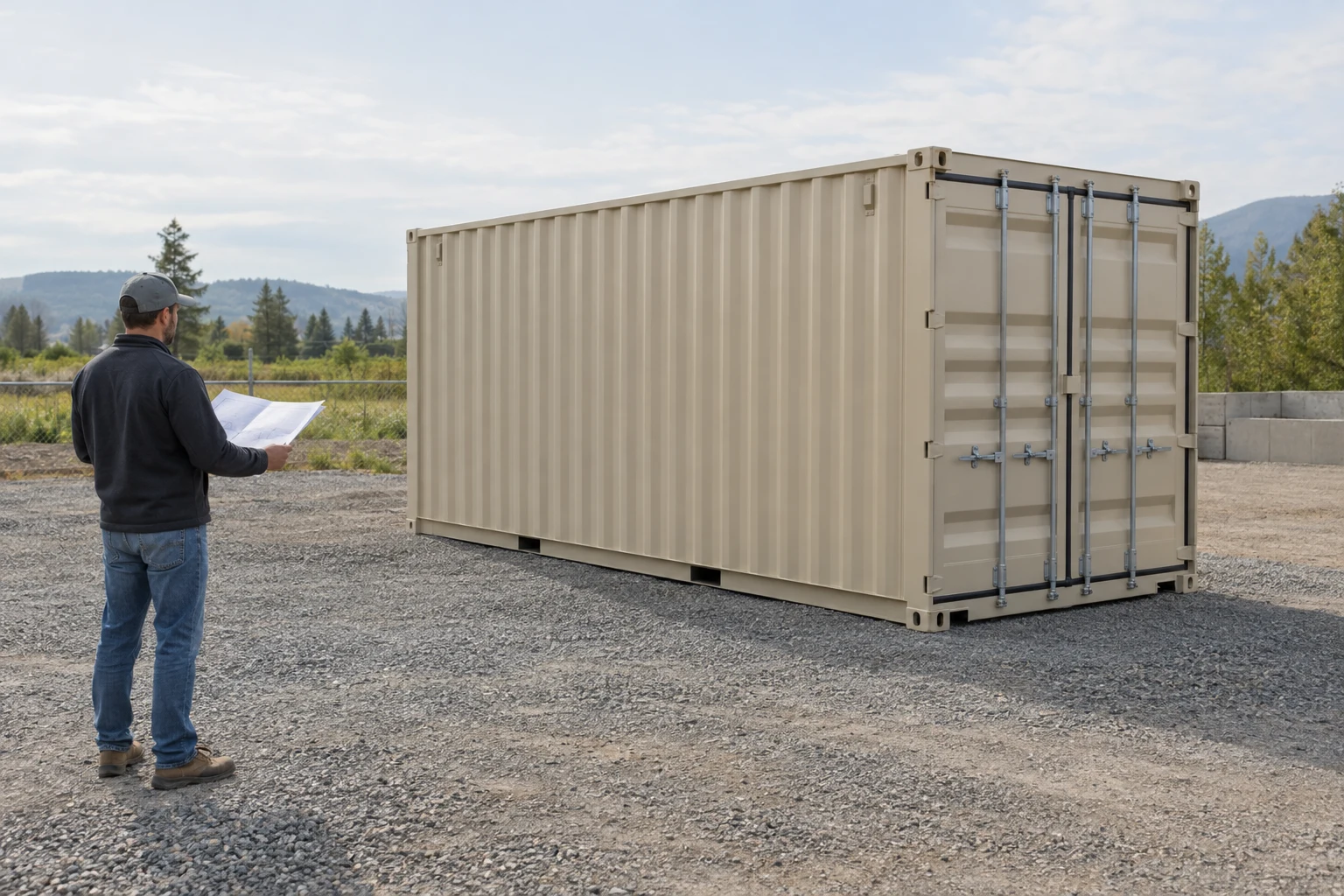
Check placement rules before preparing the site
Contact the building and zoning departments responsible for the delivery address. Describe the dimensions, use, length of stay, placement, utilities and any planned modifications or stacking. Ask about permits, setbacks, anchoring, drainage and site-plan documents.
Ask separately about work or temporary placement in the public right-of-way. If an exemption is suggested, ask which conditions it covers and whether zoning, anchoring or drainage requirements still apply. Keep the authority's response with your site records.
Make a site record the operator can review
Draw the route from the street through the entrance to the placement area, including the truck's exit. Number the photos to match the sketch, record when they were taken and note whether the ground was wet or dry. Ask the operator which measurements they need and how to record them.
| Area | Record | Ask the operator |
|---|---|---|
| Approach and entrance | Street views from both directions, gate posts, turns and narrow points | Which access and turning measurements do you need for your vehicle? |
| Travel and setup ground | Surface type, slopes, pavement edges, soft spots and recent excavation | Can the equipment travel and set up here, or is a site assessment needed? |
| Overhead and below-ground features | Visible wires and branches; known utilities, tanks, drains or voids marked on the sketch | Who will review these hazards and any utility coordination? |
| Final container position | Container outline, door end, nearby structures and intended access | Can this position be reached with the proposed unloading method? |
Discuss ground conditions and support
Mark two areas on the sketch: where the delivery equipment will travel and set up, and where the container will remain. Have each reviewed for its own load and purpose. A support plan for the container does not establish that the truck or lifting equipment can use the same ground.
For crane operations covered by the US construction crane standard, ground conditions must meet equipment support and level requirements, including firmness, slope, compaction and drainage. Known below-ground hazards also matter. The standard has scope limits and exclusions; ask the operator which requirements apply to the job.
Ask who specifies the container's final supports for its condition, stored load and intended use, and who checks the completed preparation. For a permanent, modified or occupied installation, involve the relevant local authority and qualified design professional. Get the support and anchoring requirements before ordering blocks, gravel or concrete.
Record drainage before choosing support materials
Photograph standing water and note where runoff crosses the route or placement area after rain. Include nearby drains, recent grading and places that stay soft. Show these observations to whoever evaluates the ground and final supports; a dry-day photo leaves those questions unanswered.
Ask how the proposed placement and site work will handle water around the container and whether local drainage approval is needed. Confirm any required grading or drainage work with the responsible authority or professional before changing the site.
Have overhead obstacles reviewed for the unloading movement
Mark power lines, branches and other overhead obstacles around the setup area as well as along the route. Review them against the proposed equipment movement, container and rigging. A truck passing beneath a line does not establish that unloading there is safe.
For applicable construction crane operations, the power-line rule requires planning and treats lines as energized unless the utility owner confirms otherwise under its requirements. Have the lift provider handle the required assessment and utility coordination. Use the job's requirements rather than a single clearance number for every delivery.
Agree on door direction and the final position
- Show which end should have the doors and where users will approach them.
- Check the room needed to open the doors and move your stored items.
- Point out nearby fences, buildings, drains and other limits on placement.
- Ask whether the operator can place the unit at that exact spot with the proposed equipment.
- Keep the agreed door direction and support locations on the final sketch.
Prepare a delivery-day handoff
Have the site contact, gate access, reviewed sketch and preparation instructions ready. Confirm who checks the supports and where people should stay while unloading. Clear the route agreed with the operator.
Recheck the site before dispatch. If rain, excavation, parked equipment or a changed placement affects the plan, send updated photos and ask the operator to review the change before arrival. Keep unresolved access, ground or placement questions visible to the seller and operator.
Buying questions
How much space should I leave for container delivery?
Ask the actual operator for the requirements of their vehicle and unloading method. Record the approach, turns, setup area, overhead obstacles and exit. The container's length and width do not describe the equipment's working space.
Do I need a concrete slab or blocks?
Have the final support arrangement specified for the ground, container condition, intended load and use. Ask who designs and checks it before purchasing materials. This checklist does not prescribe a slab, gravel depth or block size.
When should I decide which way the doors face?
Include that direction in the placement sketch before booking. Ask the operator whether the proposed vehicle and unloading method can achieve it.
Do I need a permit for a storage container?
Ask the authority responsible for your address. Requirements and exceptions depend on local rules and the installation use, duration, dimensions and location. A shipping specification does not establish placement approval.
Does driving under a power line mean unloading is safe there?
No. Flag lines in the route and placement sketch. Ask the delivery or lift provider to evaluate the equipment, container and unloading movement, and coordinate with the utility owner as needed.