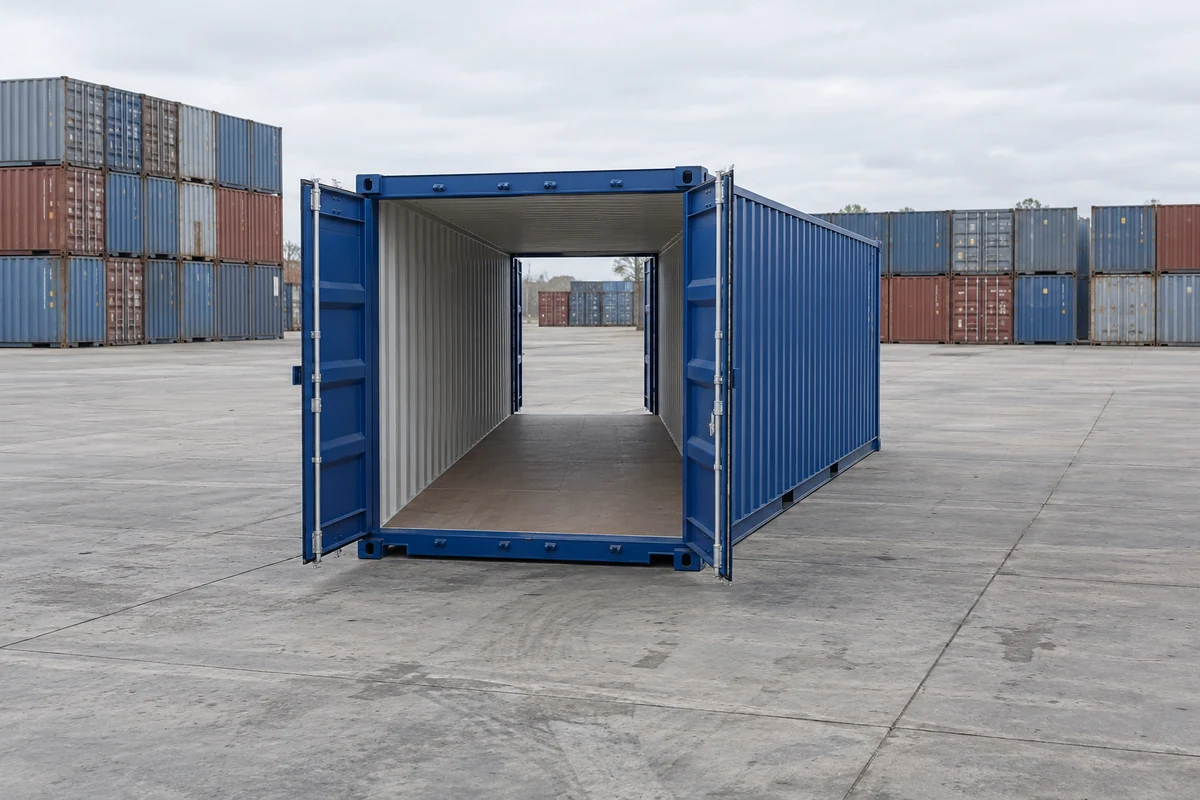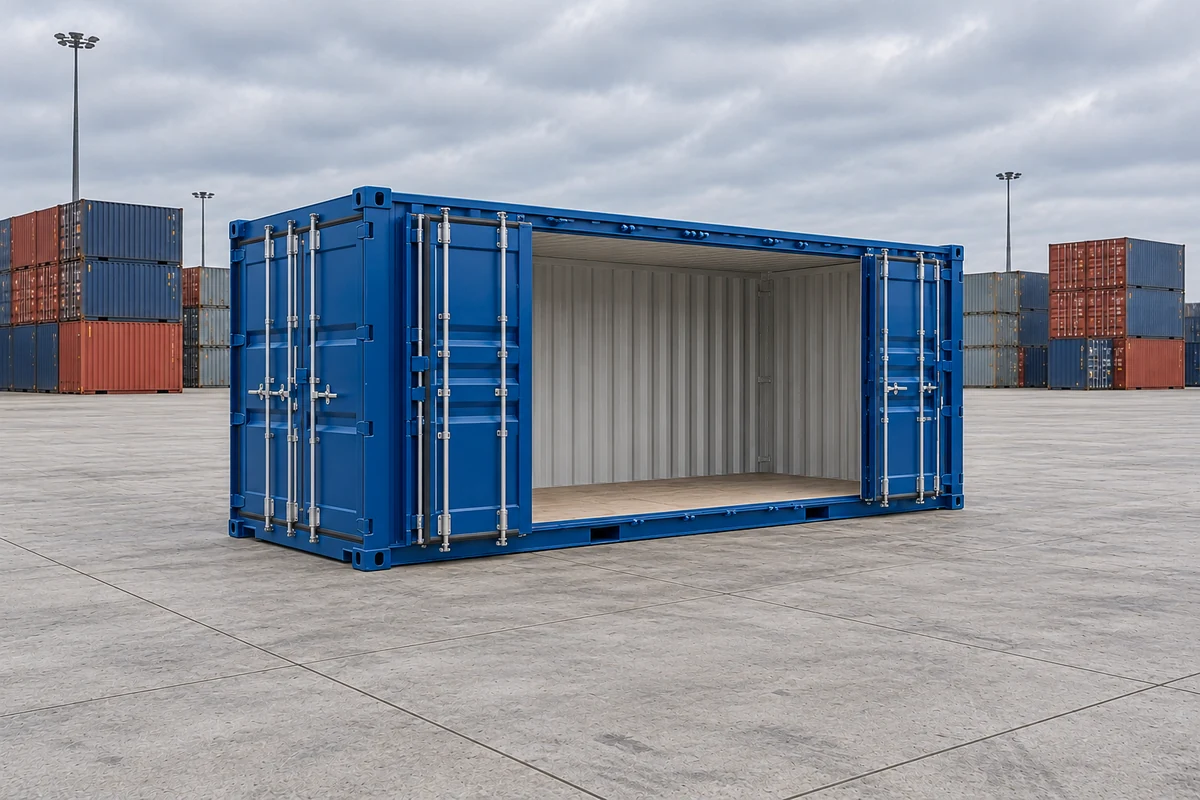
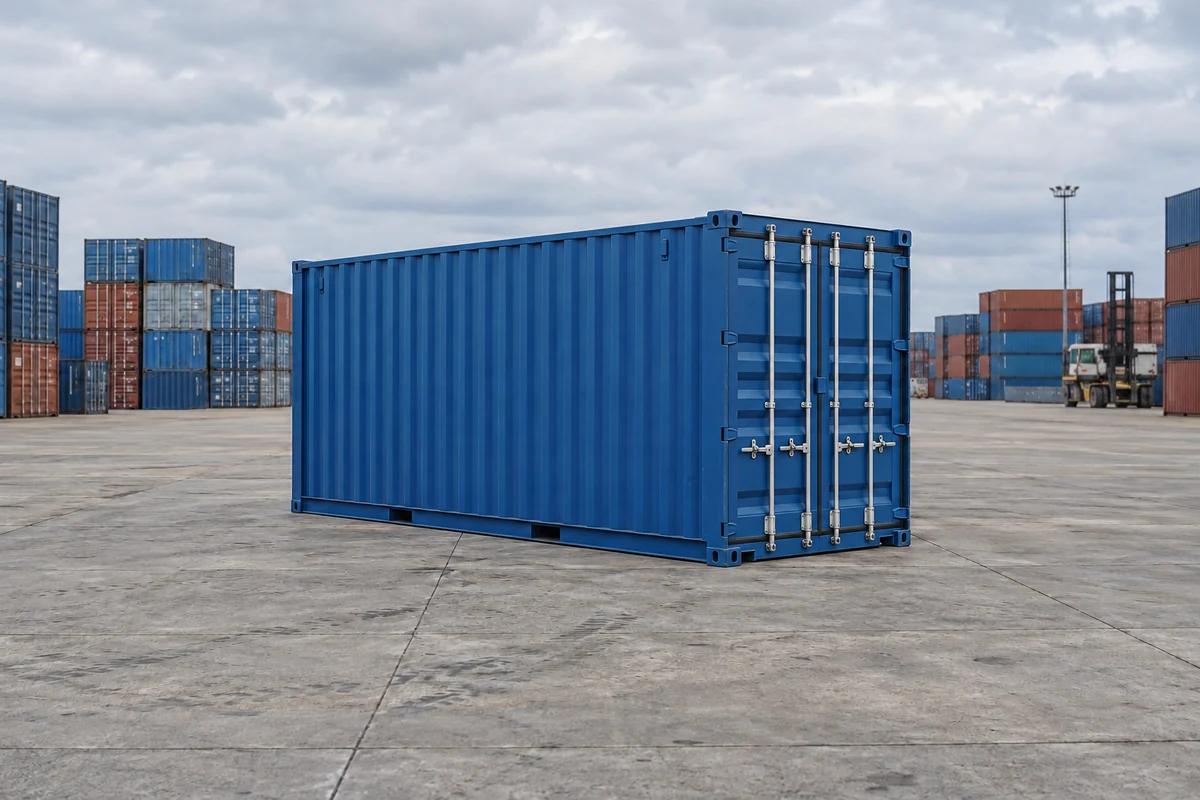
20ft standard container — new / one-trip
- New / one-trip
From A$3,050
Advertised price, checked 16 Oct 2026 · ex. GST · before delivery
Delivery quoted to your postcode
Prepare your Australian container request. Find the right price for your project.
20FT / NEW & ONE-TRIP
Choose a new or one-trip 20ft shipping container when appearance and limited wear matter to your storage or conversion project. Compare the extra purchase cost with the work a used unit would need, then specify the condition and complete delivered price for your postcode.
New / one-trip 20ft · ex. GST · checked 16 Oct 2026. Before delivery.
See price details ↓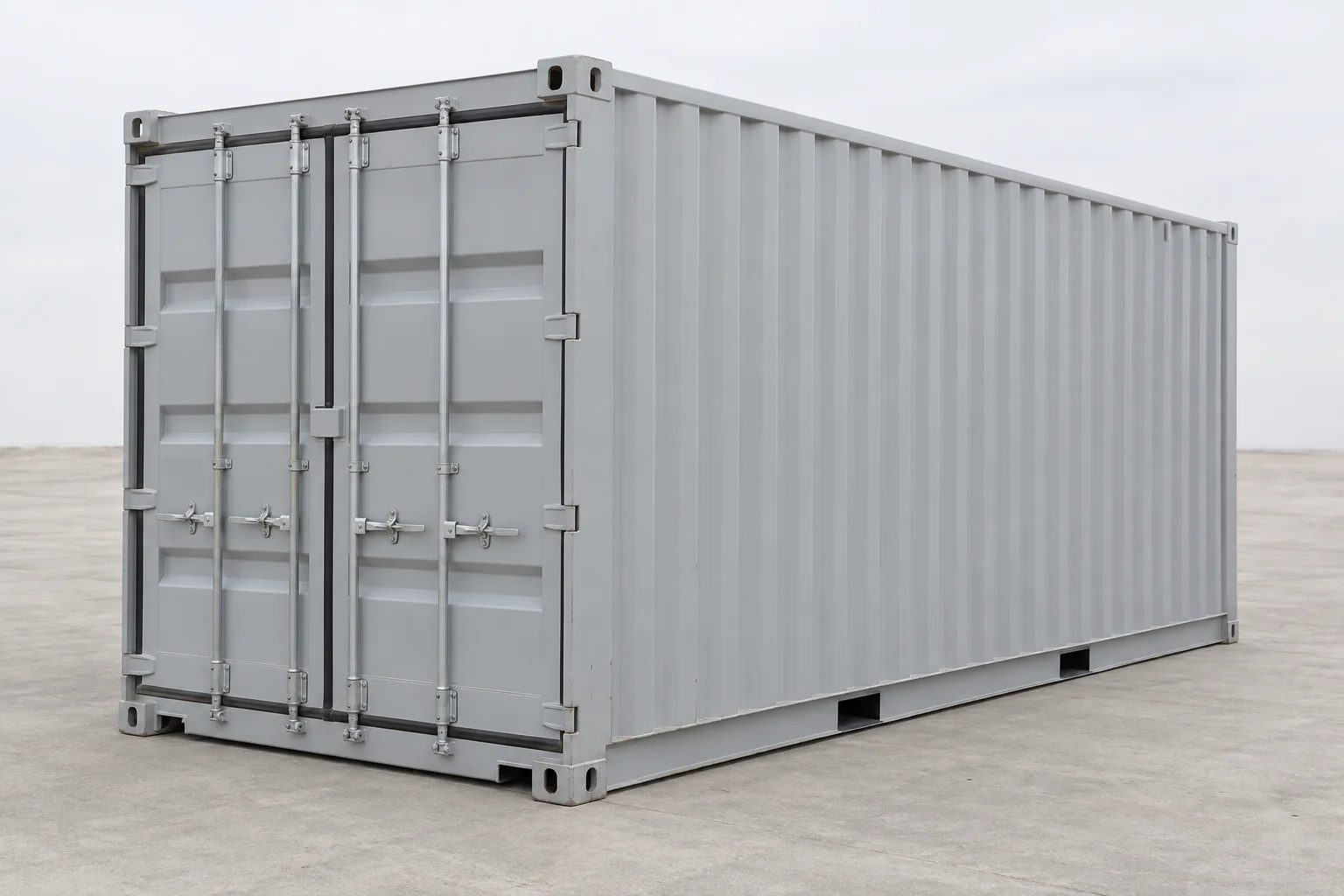
From A$3,050
Advertised price, checked 16 Oct 2026 · ex. GST · before delivery
Delivery quoted to your postcode
Price on request
Delivery quoted to your postcode
Price on request
Delivery quoted to your postcode
Prices are examples advertised by sellers on the date shown, not ContainerPick offers. Stock, condition and the delivered total are confirmed in each quote.
Under the Australian Consumer Law, a business's description of what it sells must be accurate, written or spoken. For a one-trip 20ft that turns the quote into your specification: if it says one-trip, a colour or free of dents, the unit that arrives has to match.
Promises that go further, such as a rust-free period or a stated warranty, are express warranties the seller must honour. They bind spoken or written, but a written quote is what you can point to later.
Ask the seller to identify the unit by its container number before you pay, and to state whether it is one-trip or a new build that has never been loaded. Anything left off the quote is harder to insist on later.
Items to put in the quote:
| Container | Advertised price | Details |
|---|---|---|
| 20ft new / one-trip | A$3,050–A$3,500 | ex. GST · checked 16 Oct 2026 |
Sources: ACCC, Consumer rights and guarantees (checked 20 Oct 2026).
Spend the premium on a benefit your project needs: a more consistent finish, limited wear or less preparation before fitting out the shell.
For a customer-facing business, driveway or tidy property, a more uniform finish may be worth paying for. Set the required colour and acceptable dents or paint marks in the order; small handling marks can still be present.
A one-trip shell can be a useful starting point for a fitted workspace or organised stockroom. Decide the shelving, insulation and door layout before commissioning work, and assess the actual floor and structure before openings or services are added.
Explore fitted offices →Compare the delivered one-trip price with a used unit plus the repairs, cleaning and finish you actually need. If a sound used unit works as it stands, its worn appearance alone may not justify the premium.
Compare used 20ft containers →Use the advertised prices above as a reference, then request written quotes for the same container condition, specification and delivery postcode.
Use two quotes for the same 20ft format and delivery address. Include the work needed to make each unit suit your project.
This compares up-front costs. Condition, repair quality and suitability still matter; future maintenance and resale are outside this calculation.
Compare every amount on the same GST basis. If a quoted price already includes GST, count it once; do not add it again as a separate tax charge. Include any other known mandatory fees and keep unquoted charges unresolved. The examples are arithmetic assumptions, not Australian market prices or tax assessments.
In Australian container sales, new commonly means one-trip: a container that carried cargo once from its manufacturing country before resale. That journey, loading and depot handling can leave small dents, scratches or floor marks. One-trip does not promise an untouched or zero-mile unit.
Confirm what the seller means by new, how the unit will be selected and which blemishes are acceptable. If never loaded, a particular colour or an especially clean finish is essential, make that requirement part of the written order. A condition name alone does not establish freight approval or suitability for an occupied conversion.
Choose from evidence of the allocated unit. A one-trip label can describe its journey while leaving colour, marks, floor condition and door features unspecified.
For cargo transport, ask for the actual unit’s approval plate, current examination or survey records and acceptance by your intended carrier. One-trip describes its travel history; it does not replace those checks.
A representative standard 20ft dry container has about 13.9 m² of bare interior floor and 33.2 m³ of empty volume. Those figures describe the shell before shelving, lining, an entry area or an aisle; they are not a promise that every cubic metre can be filled with accessible stock.
For a storage plan, count the footprint and height of your actual boxes, equipment and shelves. One-trip condition does not increase the standard interior, and a lined conversion has less clear space. The 20ft comparison page has the full dimension reference.
For inventory you retrieve regularly, use shelving and a clear route to the back. Here is a chosen layout for an example interior measuring 5,900 × 2,352 mm.
Scroll sideways to see the full layout.
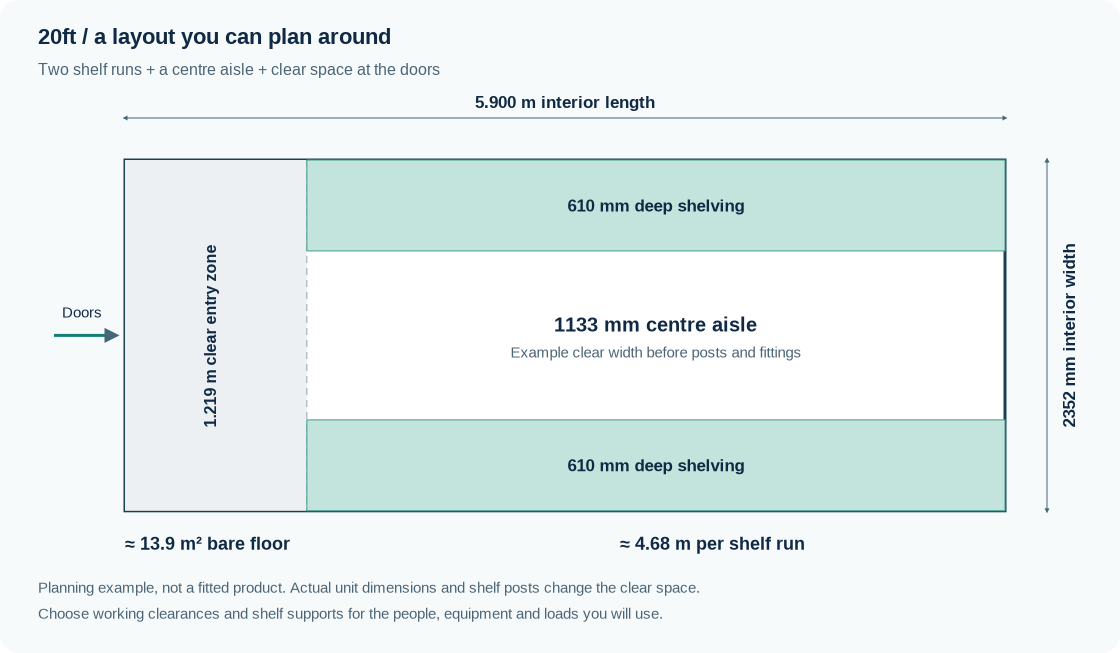
For seasonal goods, denser labelled stacks may use more of the floor, but items at the rear can require unloading the front. Decide whether occasional bulk access or daily picking matters more before choosing shelf depth.
The shelf depth and entry space are planning choices, not required clearances or a supplied installation. Actual shelf frames, load ratings, door movement and the way you carry items determine the finished layout.
A clean shell still needs the right storage setup. Prioritise an option when it solves a specific access, security or moisture problem.
| Option | When it earns its place in the quote |
|---|---|
| Lockbox and suitable padlock | For tools or stock, a lockbox shields the padlock from direct access. Specify the box, compatible lock and keys together; a photo should show the actual fitting. |
| Shelving | Useful for repeated picking and keeping small items identifiable. Select depth, bay sizes and rated loads from the contents; include installation and the mounting method in the scope. |
| Doors for frequent access | Working cargo doors may be enough for occasional visits. For daily access, compare easy-opening hardware or a separate personnel door with the effort of operating the actual cargo doors. Any added opening and finishing work belongs in the modification quote. |
| Ventilation or moisture control | Consider larger vents or a designed fan system for air exchange. For moisture-sensitive stock, include the operating conditions and any insulation or powered humidity control, rather than buying vents solely because the shell is one-trip. |
Water-tightness and condensation are different issues. Moist air can condense on colder steel, including in a one-trip container. Load dry goods and dry packaging, separate wet equipment from paper or textiles, and avoid blocking the chosen air path.
The small vents on an ordinary dry container mainly equalise pressure; they do not provide controlled temperature or humidity. If your contents need a specified storage range, design that control into the project before purchase.
Provide the delivery postcode, quantity and site photos showing the access route and intended position. Have the transporter confirm turning room, overhead clearance, ground suitability, unloading equipment and the direction the doors will face. The box footprint does not describe the room needed by the delivery truck.
Name the unloading method in the order. A tilt-tray delivery places the box by sliding it off the truck; a flatbed normally needs suitable lifting equipment arranged for the site. Allow space outside the cargo doors for their swing and your normal loading activity, as well as the truck’s working area.
For an occupied workspace, include floor materials, available cargo history, structure, ventilation, insulation and local requirements in the conversion design.
Keep the allocation photos, order, finish requirements and included-option list together for delivery day. They provide a clear reference for checking what arrives.
Match the container number where a particular unit was sold. Photograph the exterior as it arrives, including any visible new handling damage, and compare the colour and accessories with the order.
Operate both cargo doors through opening, closing and latching. Check the lock fitting, seals and visible floor condition, then take overall and close-up photos of any difference from the dispatch record.
Note the affected area, what differs from the written order and whether it prevents use. Retain the delivery record and contact the seller promptly using the agreed reporting process; a small accepted paint mark and a non-working door need different responses.
If doors worked before dispatch but bind after placement, have the supports, level and door alignment checked before loading. Uneven placement can put the container out of square. Keep the placement photos with the condition evidence so the issue can be traced.
Compare the finish, buying budget and checks that matter to your project.
A cleaner finish, with less visible wear. Check the included features and any handling marks.
You are viewing this option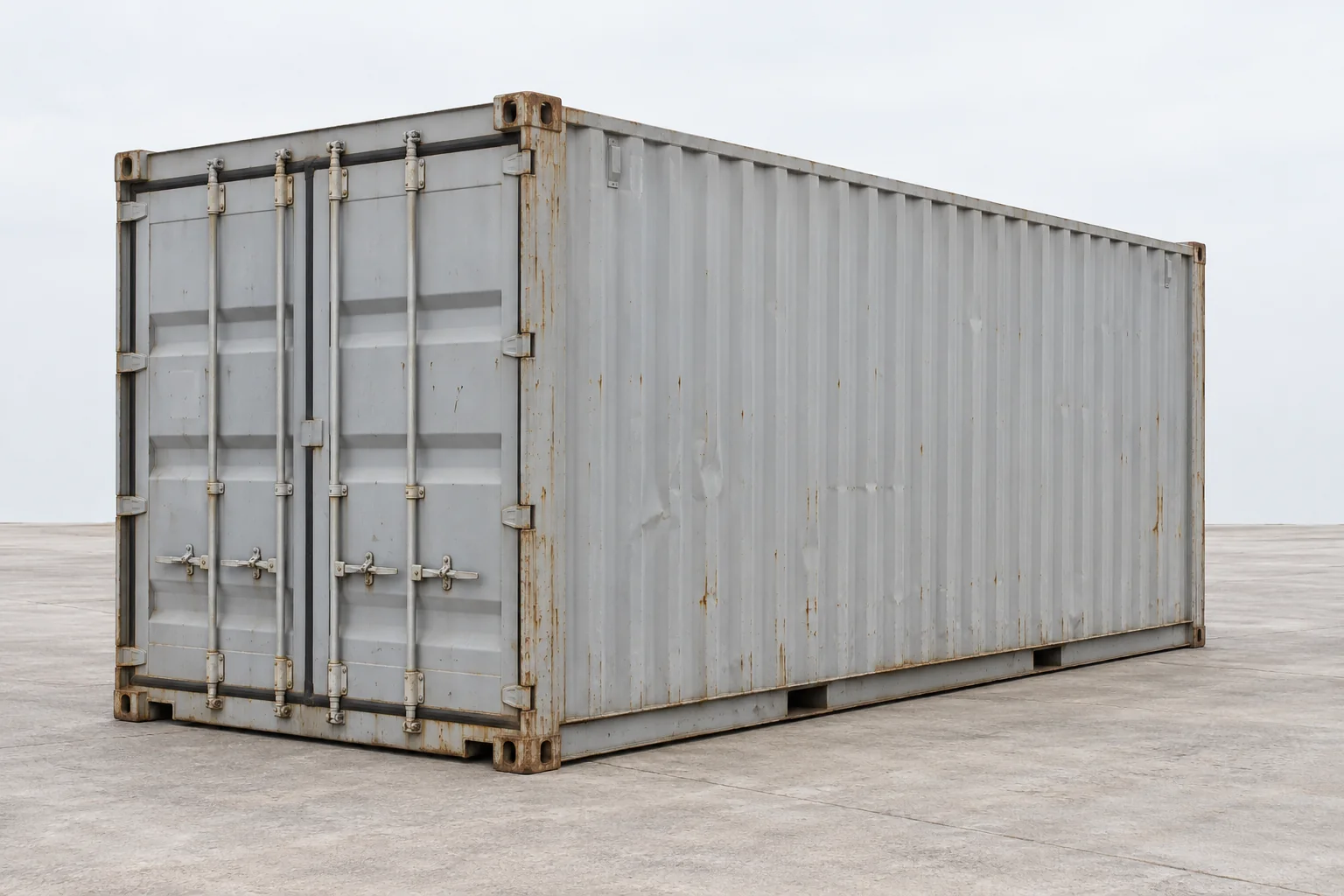
Compare storage and cargo-worthy options. Check the actual floor, doors, repairs and weather sealing.
Explore 20ft used →Used means the container has been used before. Check its grade and condition records to see whether it suits your plans.
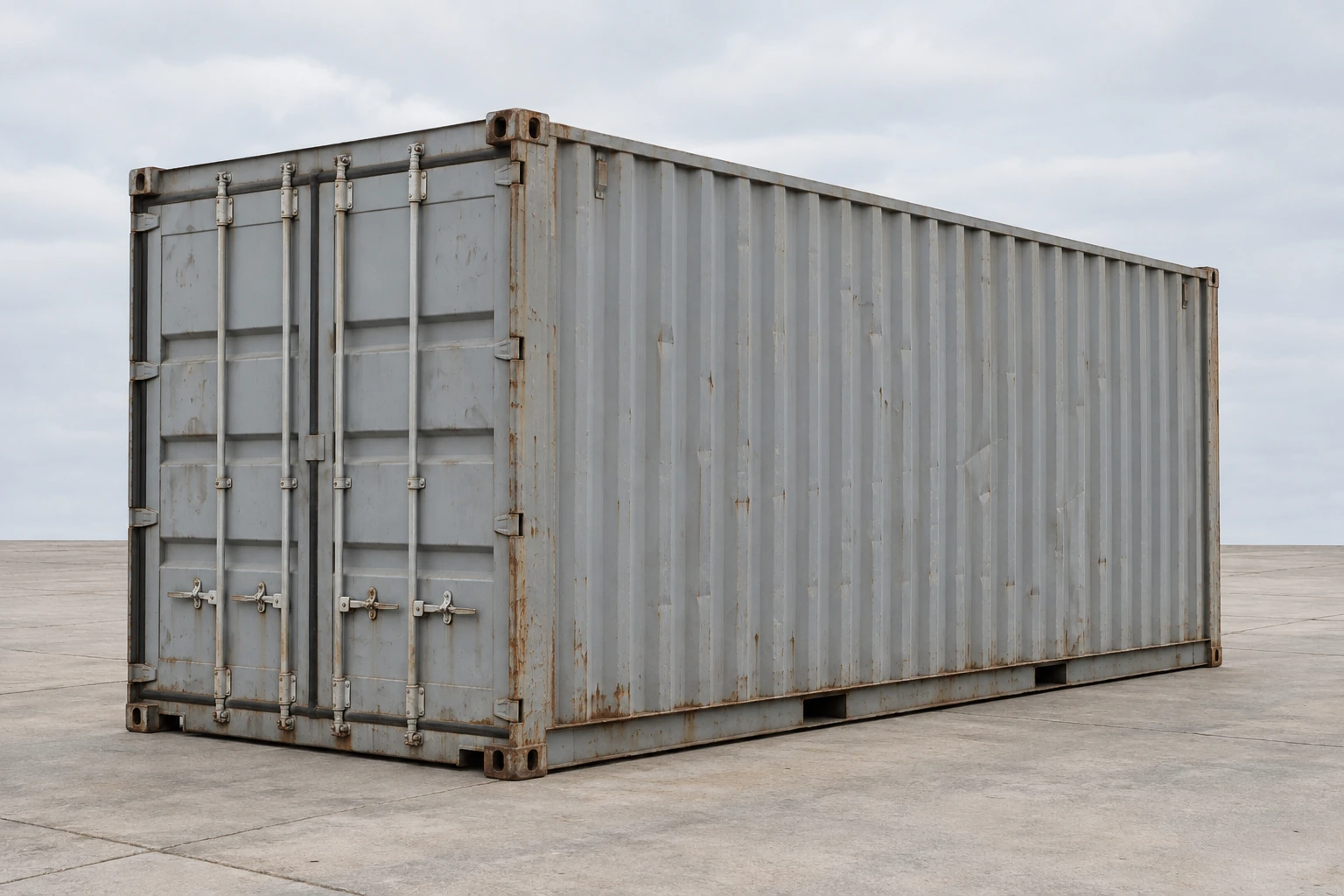
For storage: compare weather sealing, floor condition and working doors. A WWT label does not establish approval for ocean shipping.
Explore wind & watertight →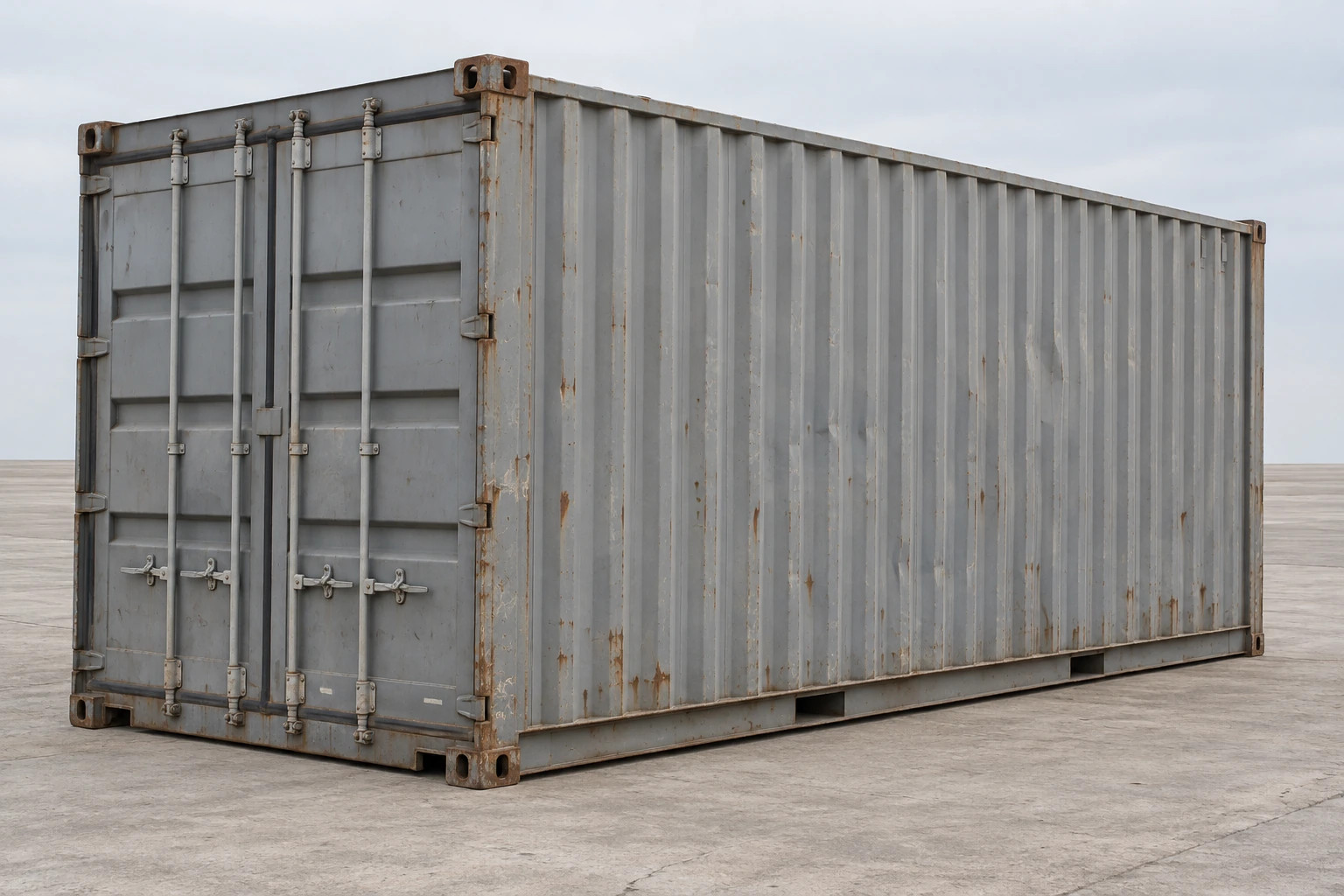
For a transport project: compare the actual inspection, CSC examination records and acceptance by your intended carrier.
Explore cargo-worthy →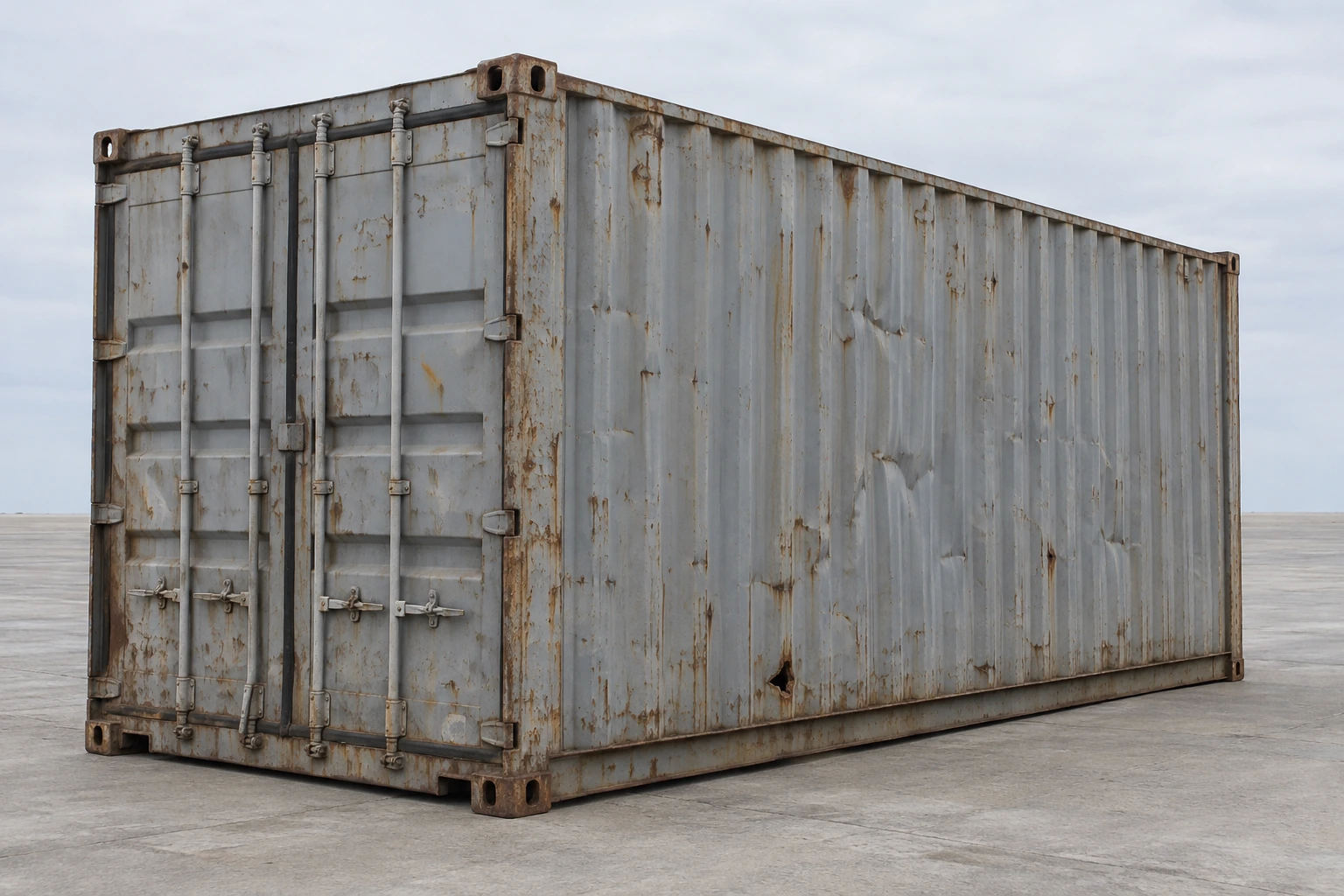
For a repair project: identify the defects and price the work before comparing the complete cost with a usable container.
Explore as-is →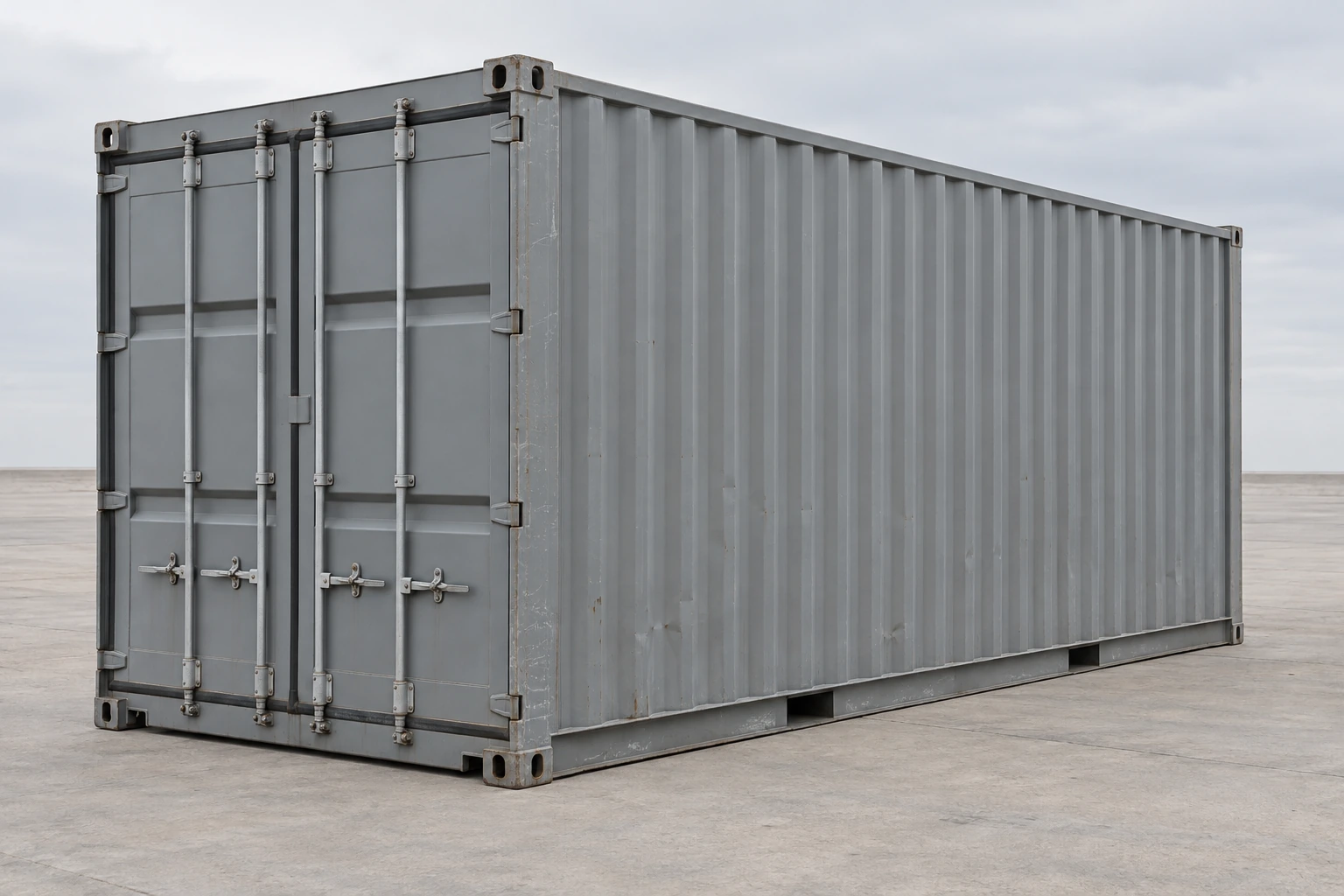
Compare an offer described as lightly used with one-trip. Confirm the actual history and finish; the label is defined by the seller.
Explore multi-trip / limited use →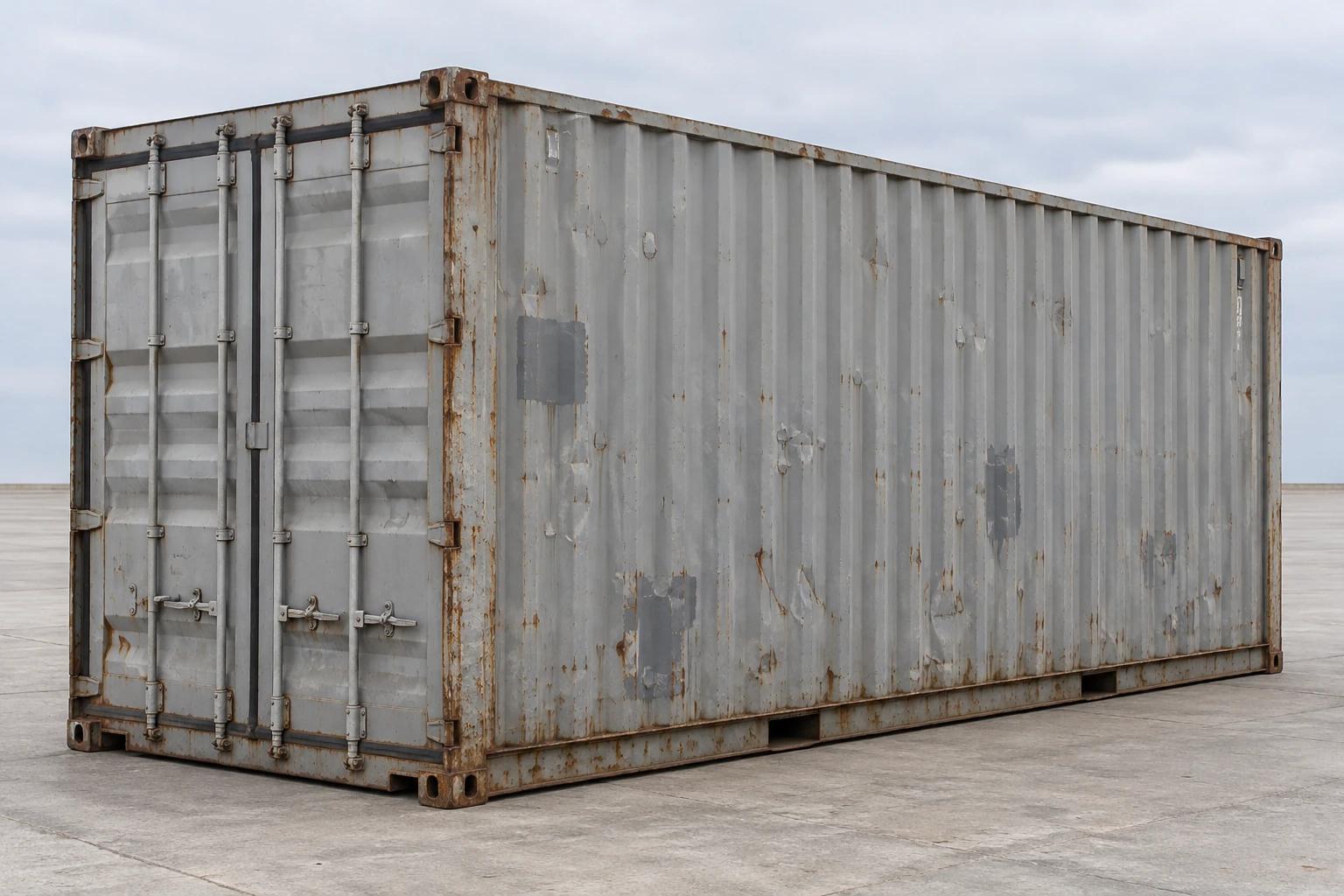
Compare budget storage offers by the defects accepted and the protection included. Economy does not automatically mean WWT or as-is.
Explore economy grade →Compare the floor surface, wall wear and visible repairs, then request close-up photos of the actual unit.
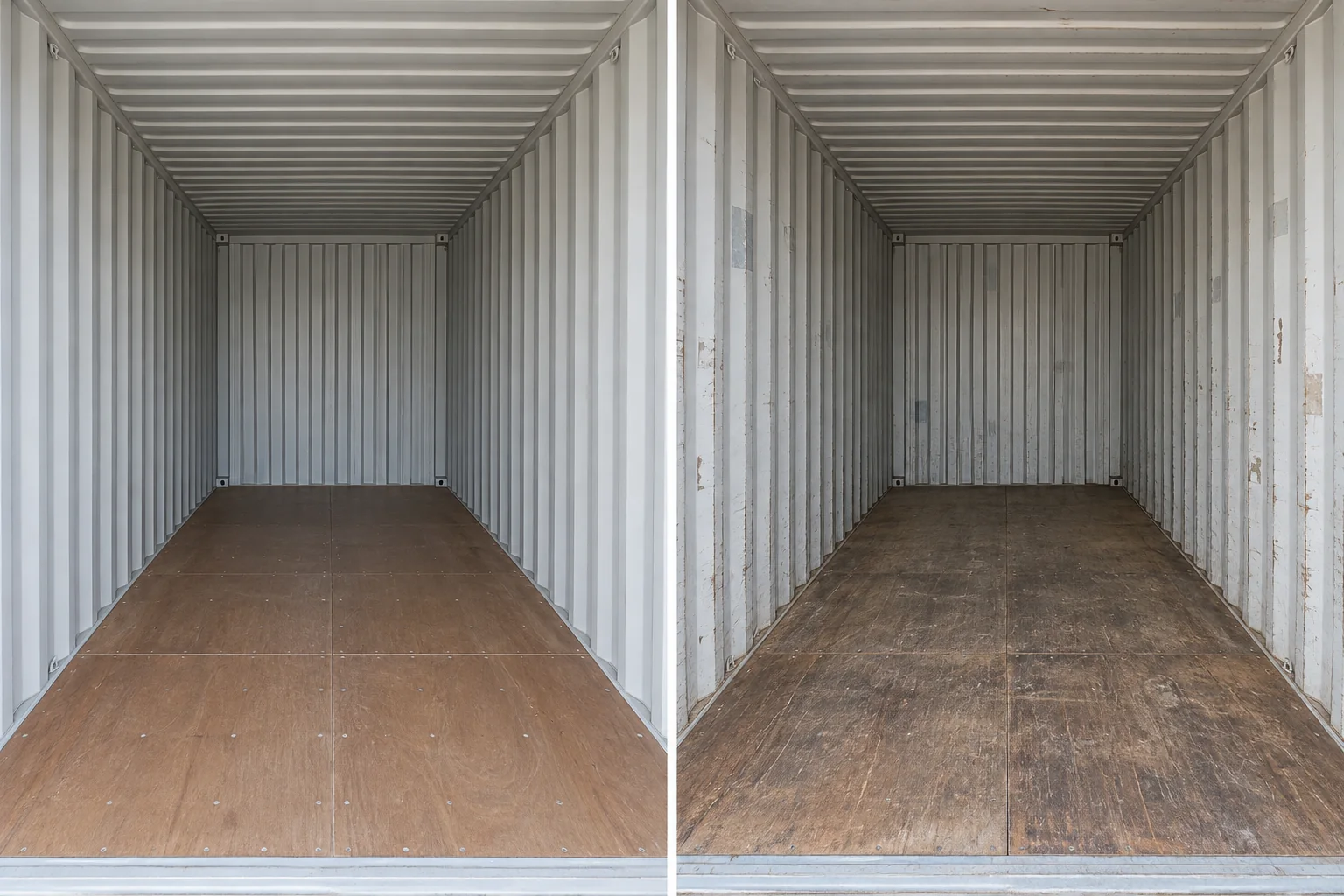
Illustrative appearances. Paint and rust alone do not establish weather-tightness or suitability for shipping.
Selection varies by seller and depot. Ask whether you can inspect and choose a unit, receive current photos of an allocated unit, or buy from a condition-defined stack. Have any colour or appearance requirement confirmed in writing.
Decide from the actual finish and your intended appearance. Handling marks may be acceptable for storage but matter in a visible location. Include any requested touch-up or repainting in the quote rather than assuming it is part of the condition label.
Include the condition, unloading and any work your container needs.