← Compare all 20ft containers

20FT / NEW & ONE-TRIP

New & One-Trip 20ft Shipping Containers for Sale

Choose a new or one-trip 20ft shipping container when appearance and limited wear matter to your storage or conversion project. Compare the extra purchase cost with the work a used unit would need, then specify the condition and complete delivered price for your ZIP.

Observed container prices$1,990–$2,350

Chicago · 2 listings checked October 8, 2026. Before delivery, unloading and applicable taxes.

See price details ↓

Request your delivered price

Prepare and review your request. Sending requires your consent on the quote form.

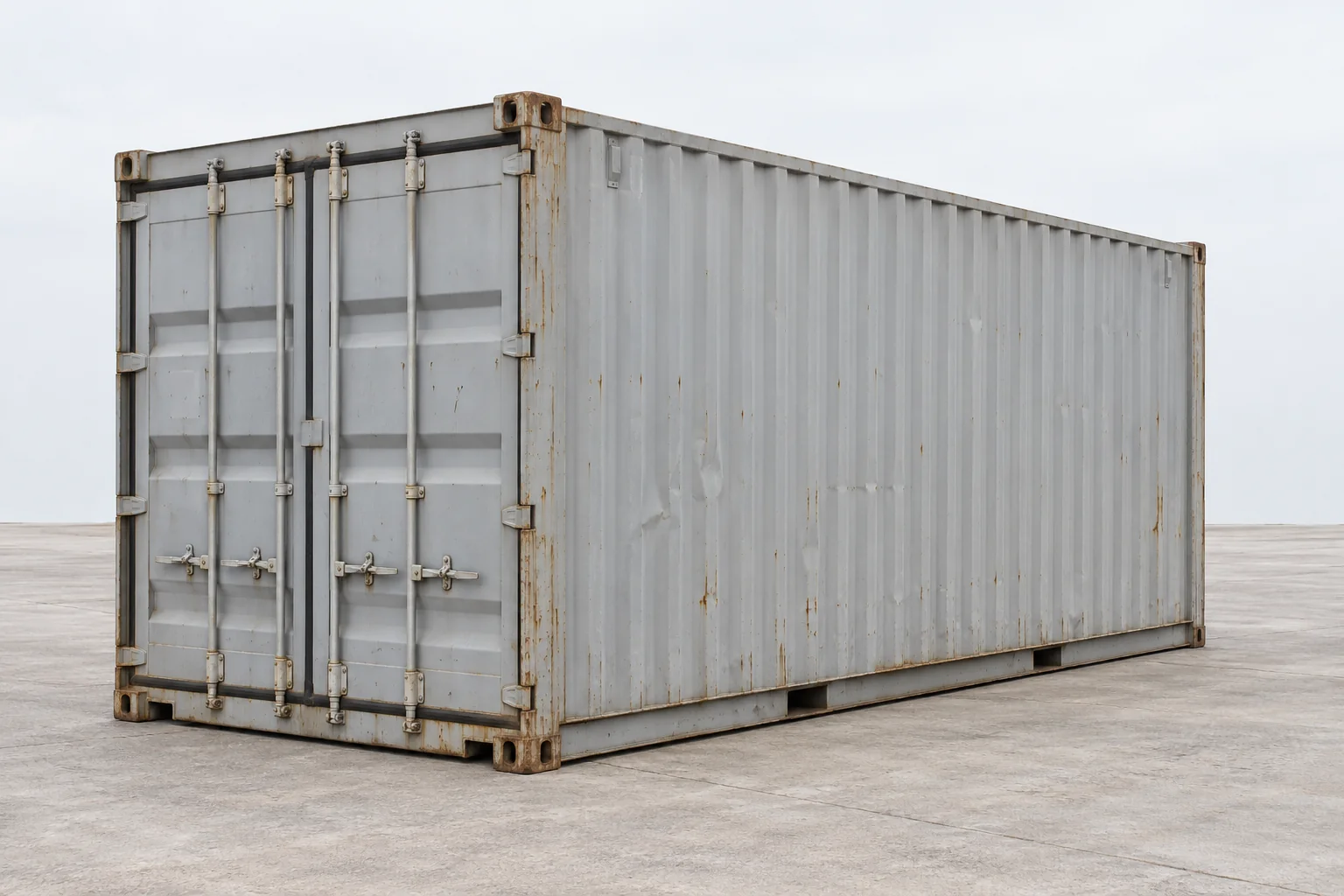
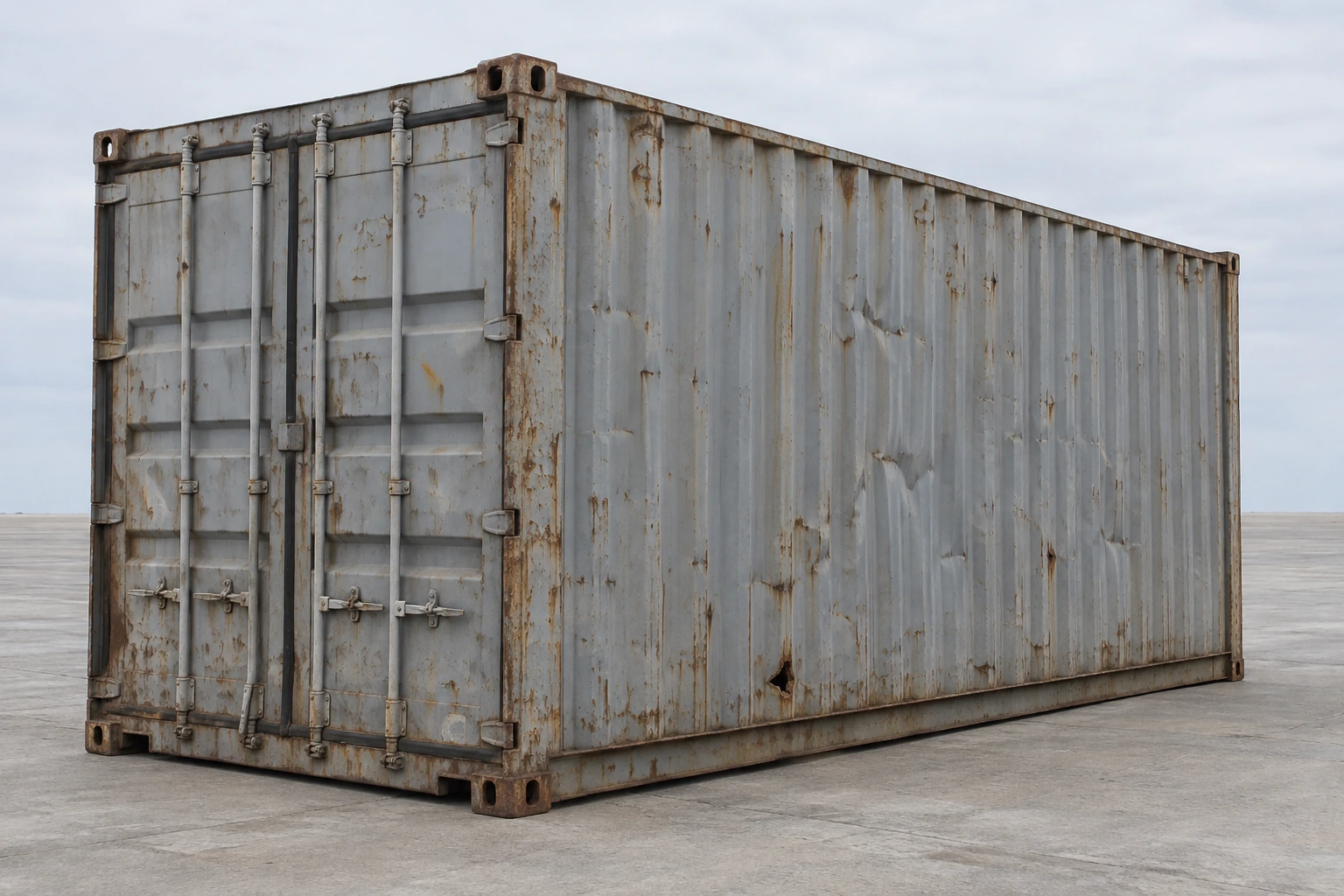
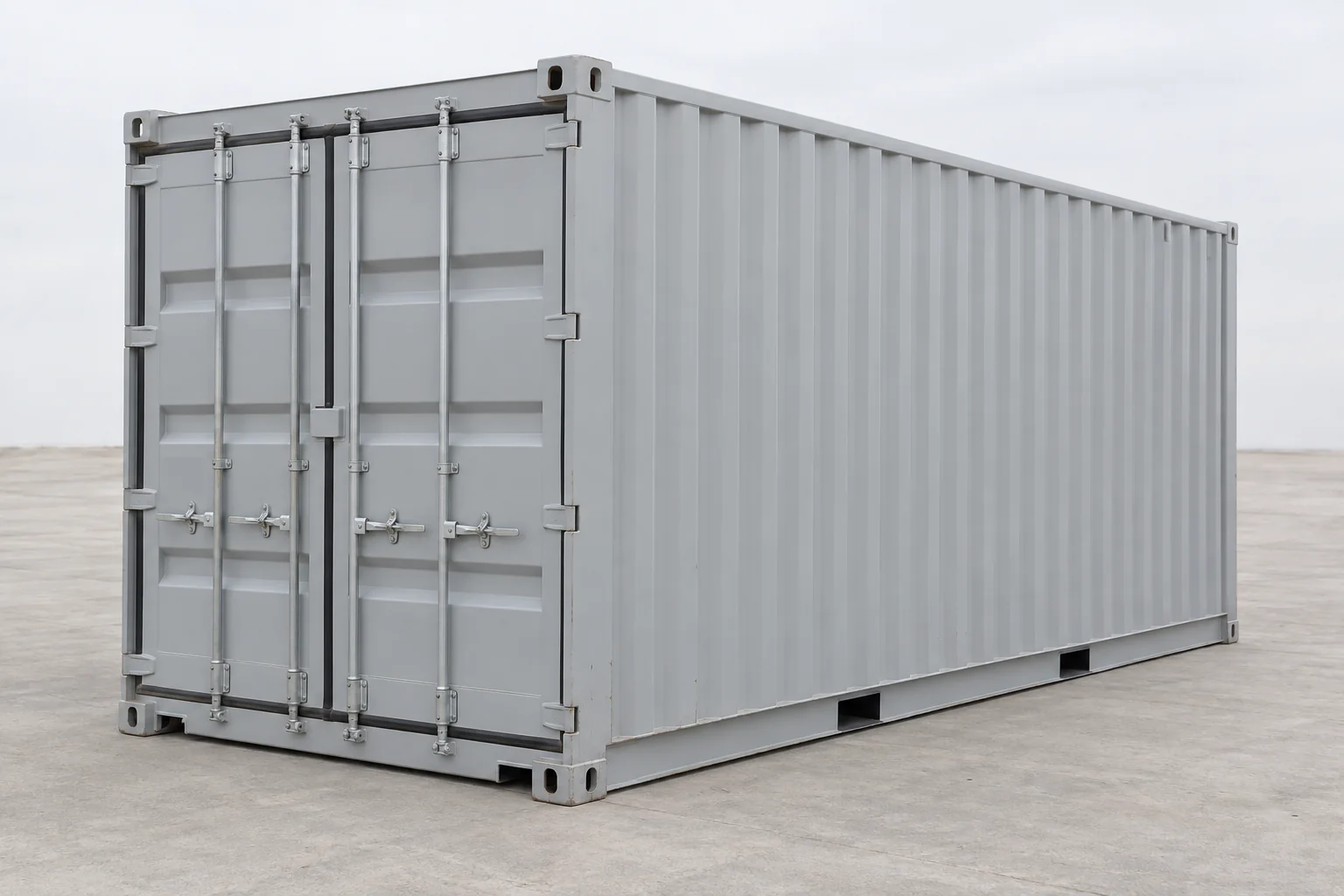
Illustration of a standard 20ft one-trip shipping container with closed end cargo doors and lightly marked painted steel sides.
Illustrative container. Confirm the actual unit before buying.
20ft standardNew / one-trip
Format
Standard dry 20ft
Nominal exterior
20ft × 8ft × 8ft 6in
Condition
One cargo journey can leave handling marks
Price to request
Container, delivery and placement specified
YOUR BUYING DECISION

When is a one-trip container worth the extra cost?

Spend the premium on a benefit your project needs: a more consistent finish, limited wear or less preparation before fitting out the shell.

Storage in a visible location

For a customer-facing business, driveway or tidy property, a more uniform finish may be worth paying for. Set the required color and acceptable dents or paint marks in the order; small handling marks can still be present.

A conversion starting shell

A one-trip shell can be a useful starting point for a fitted workspace or organized stockroom. Decide the shelving, insulation and door layout before commissioning work, and assess the actual floor and structure before openings or services are added.

Explore fitted offices →

A project with a limited repair budget

Compare the delivered one-trip price with a used unit plus the repairs, cleaning and finish you actually need. If a sound used unit works as it stands, its worn appearance alone may not justify the premium.

Compare used 20ft containers →
YOUR BUYING DECISION

How much does a new 20ft container cost?

Advertised standard 20ft one-trip prices in Chicago ranged from $1,990 to $2,350 in two listings checked October 8, 2026.

Price referenceScope
$1,990–$2,350 USDTwo listings from two sellers in the Chicago market; standard 8ft 6in height and ordinary end cargo doors.
Before delivery and applicable taxesUnloading, placement, site work and requested options must be included in your own budget.

These Chicago container-only prices are reference points. Request a current delivered quote for your ZIP, preferred finish and unloading method.

Compare quotes with the same scope: the container, transport and placement service, applicable taxes, requested accessories or modifications, and any survey needed for freight use. Count an included service once; a fee left unspecified is still unknown.

COMPARE YOUR TWO OFFERS

Compare the one-trip premium with the work a used unit needs

Use two quotes for the same 20ft format and delivery address. Include the work needed to make each unit suit your project.

Used
New / one-trip

Enter 0 only when a cost is included or does not apply. Leave an unknown cost blank until it is quoted.

YOUR BUYING DECISION

Compare the premium with the work you would avoid

Compare two containers ready for the same job. The one-trip premium is the difference between their delivered prices; its value depends on which used-container expenses it removes.

Budget itemHow to make the comparison useful
Necessary workPrice identified leaks, damaged floor sections, defective seals or door repairs on the used unit. If the seller includes a repair, retain its written scope and count the charge once.
Finish you wantSeparate cleaning and corrosion preparation from the color finish. A full repaint may matter at a visible site; minor scuffs may be acceptable. Price any required one-trip touch-up too.
The same storage projectShelving, a lockbox, lining and additional doors can be needed on either shell. Compare the same accessories and installation scope rather than treating them as savings from buying new.

If the used unit meets your functional requirements without repair or repainting, compare the premium mainly with the appearance benefit. If quoted used preparation brings its total close to one-trip, the better starting finish and lower wear may make one-trip preferable.

Include repair labor, materials and any extra transport to a workshop. Use an agreed completion date if your project has a deadline. Leave an unpriced defect unresolved in the comparison; do not turn the condition label into a repair allowance or a remaining-life estimate.

YOUR BUYING DECISION

Does “new” mean never used?

In US container sales, new commonly means one-trip: a container that carried cargo once from its manufacturing country before resale. That journey, loading and depot handling can leave small dents, scratches or floor marks. One-trip does not promise an untouched or zero-mile unit.

Confirm what the seller means by new, how the unit will be selected and which blemishes are acceptable. If never loaded, a particular color or an especially clean finish is essential, make that requirement part of the written order. A condition name alone does not establish freight approval or suitability for an occupied conversion.

YOUR BUYING DECISION

Confirm the unit behind the description

Choose from evidence of the allocated unit. A one-trip label can describe its journey while leaving color, marks, floor condition and door features unspecified.

For cargo transport, ask for the actual unit’s approval plate, current examination or survey records and acceptance by your intended carrier. One-trip describes its travel history; it does not replace those checks.

  • An exterior photo set should show both long sides, the closed doors, the opposite end and the roof. Close-ups make dents, chipped paint and any repairs easier to judge than a distant yard photo.
  • A short door video should show both leaves opening, closing and latching, plus the hinges, locking bars, gaskets and any included lockbox or easy-opening hardware.
  • Interior views should run from the doorway to the far end, including floor edges and corners. Floor gouges, damp patches, residues or persistent odors need a specific response rather than an assumption that the unit is new.
  • For a selected unit, record its identification number with the photos. For a condition-defined allocation, record the promised color, acceptable blemishes and substitution terms in the order.
YOUR BUYING DECISION

How much space is available inside?

A representative standard 20ft dry container has about 149 sq ft of bare interior floor and 1,172 cu ft (33.2 m³) of empty volume. Those figures describe the shell before shelving, lining, an entry area or an aisle; they are not a promise that every cubic foot can be filled with accessible stock.

For a storage plan, count the footprint and height of your actual boxes, equipment and shelves. One-trip condition does not increase the standard interior, and a lined conversion has less clear space. The 20ft comparison page has the full dimension reference.

YOUR BUYING DECISION

Plan stock storage around access, not just volume

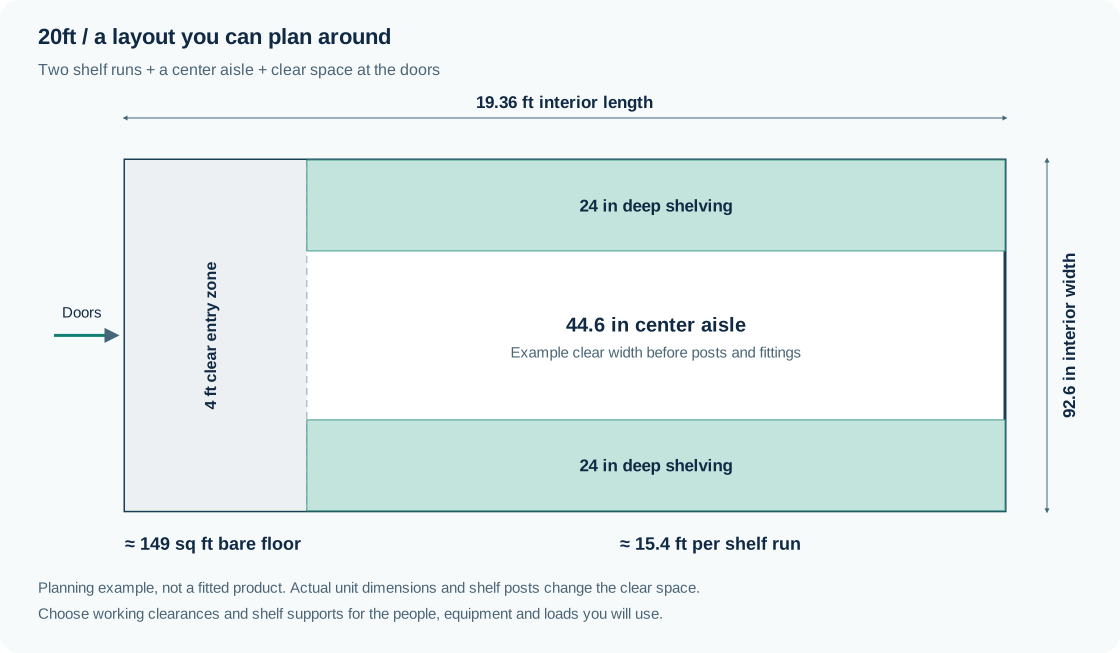
For inventory you retrieve regularly, use shelving and a clear route to the back. Here is a chosen layout for an example interior measuring 5,900 × 2,352 mm.

Scroll sideways to see the full layout.

Top-down example of a 20ft container with two 24-inch shelving zones, a 44.6-inch center aisle and a four-foot clear entry zone.
Illustrative layout: 24in shelving zones and a chosen 4ft entry zone. Dimensions are before shelf uprights or lining; shelving is quoted separately.

For seasonal goods, denser labeled stacks may use more of the floor, but items at the rear can require unloading the front. Decide whether occasional bulk access or daily picking matters more before choosing shelf depth.

The shelf depth and entry space are planning choices, not required clearances or a supplied installation. Actual shelf frames, load ratings, door movement and the way you carry items determine the finished layout.

  • Two 24in-deep shelving rows leave about 44.6in between their footprints, before uprights, stored items that overhang and wall lining.
  • Keeping the first 4ft clear leaves about 15.4ft of shelf run on each side, or 30.7 linear ft combined at each shelf level before bay gaps.
  • Use the entrance for sorting incoming boxes. Put frequently picked stock on reachable shelves nearer the doors, heavier boxes low down and slow-moving stock farther back.
YOUR BUYING DECISION

Choose options that improve the way you use it

A clean shell still needs the right storage setup. Prioritize an option when it solves a specific access, security or moisture problem.

OptionWhen it earns its place in the quote
Lockbox and suitable padlockFor tools or stock, a lockbox shields the padlock from direct access. Specify the box, compatible lock and keys together; a photo should show the actual fitting.
ShelvingUseful for repeated picking and keeping small items identifiable. Select depth, bay sizes and rated loads from the contents; include installation and the mounting method in the scope.
Doors for frequent accessWorking cargo doors may be enough for occasional visits. For daily access, compare easy-opening hardware or a separate personnel door with the effort of operating the actual cargo doors. Any added opening and finishing work belongs in the modification quote.
Ventilation or moisture controlConsider larger vents or a designed fan system for air exchange. For moisture-sensitive stock, include the operating conditions and any insulation or powered humidity control, rather than buying vents solely because the shell is one-trip.

Water-tightness and condensation are different issues. Moist air can condense on colder steel, including in a one-trip container. Load dry goods and dry packaging, separate wet equipment from paper or textiles, and avoid blocking the chosen air path.

The small vents on an ordinary dry container mainly equalize pressure; they do not provide controlled temperature or humidity. If your contents need a specified storage range, design that control into the project before purchase.

YOUR BUYING DECISION

Prepare the placement and project details

Provide the delivery ZIP, quantity and site photos showing the access route and intended position. Have the transporter confirm turning room, overhead clearance, ground suitability, unloading equipment and the direction the doors will face. The box footprint does not describe the room needed by the delivery truck.

Name the unloading method in the order. A tilt-bed delivery places the box by sliding it off the truck; a flatbed normally needs suitable lifting equipment arranged for the site. Allow space outside the cargo doors for their swing and your normal loading activity, as well as the truck’s working area.

For an occupied workspace, include floor materials, available cargo history, structure, ventilation, insulation and local requirements in the conversion design.

YOUR BUYING DECISION

Receive the unit against the agreed order

Keep the allocation photos, order, finish requirements and included-option list together for delivery day. They provide a clear reference for checking what arrives.

Identify it before unloading

Match the container number where a particular unit was sold. Photograph the exterior as it arrives, including any visible new handling damage, and compare the color and accessories with the order.

Check it after placement

Operate both cargo doors through opening, closing and latching. Check the lock fitting, seals and visible floor condition, then take overall and close-up photos of any difference from the dispatch record.

Record a discrepancy precisely

Note the affected area, what differs from the written order and whether it prevents use. Retain the delivery record and contact the seller promptly using the agreed reporting process; a small accepted paint mark and a non-working door need different responses.

If doors worked before dispatch but bind after placement, have the supports, level and door alignment checked before loading. Uneven placement can put the container out of square. Keep the placement photos with the condition evidence so the issue can be traced.

CHOOSE YOUR CONDITION

New / one-trip or used?

Compare the finish, buying budget and checks that matter to your project.

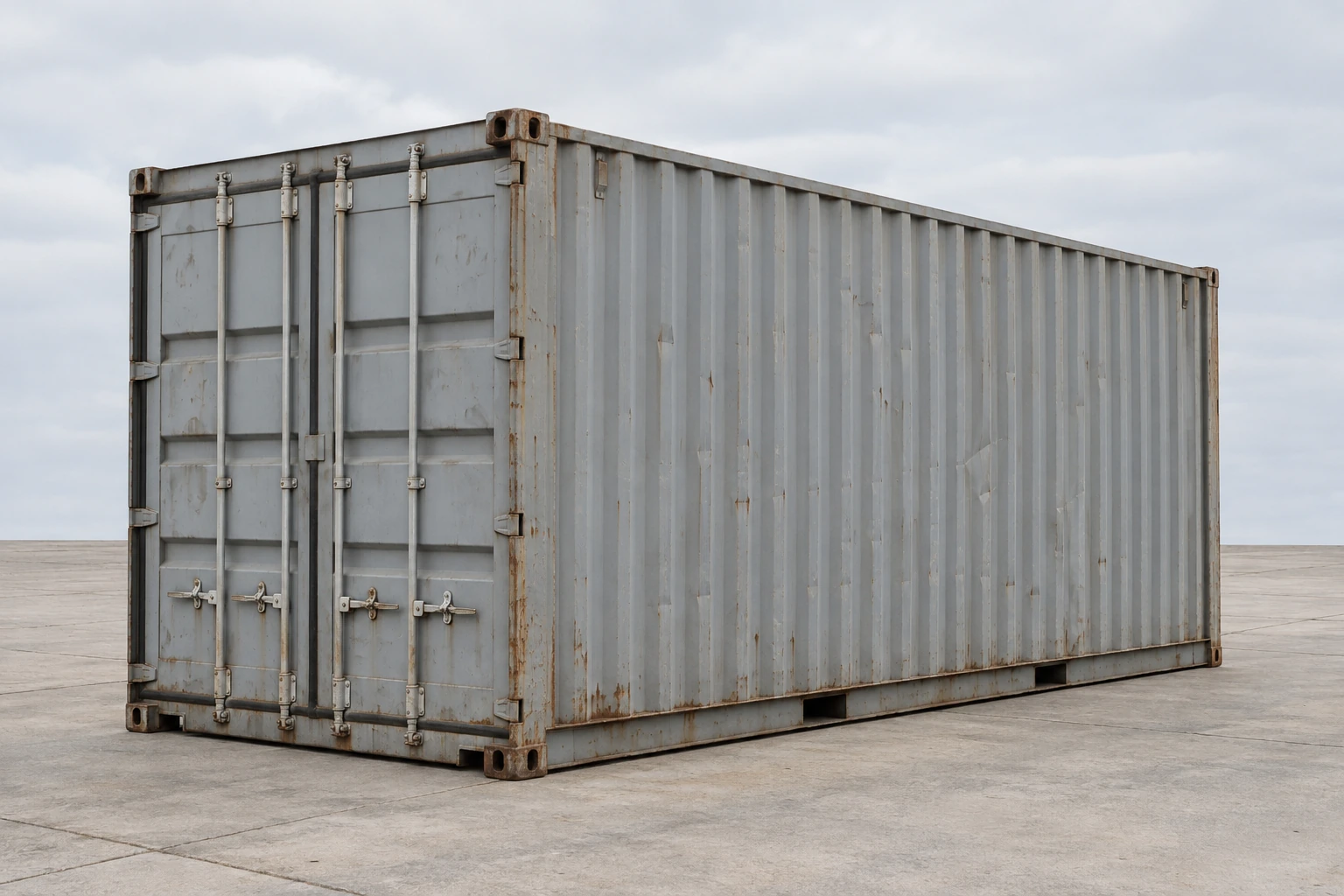
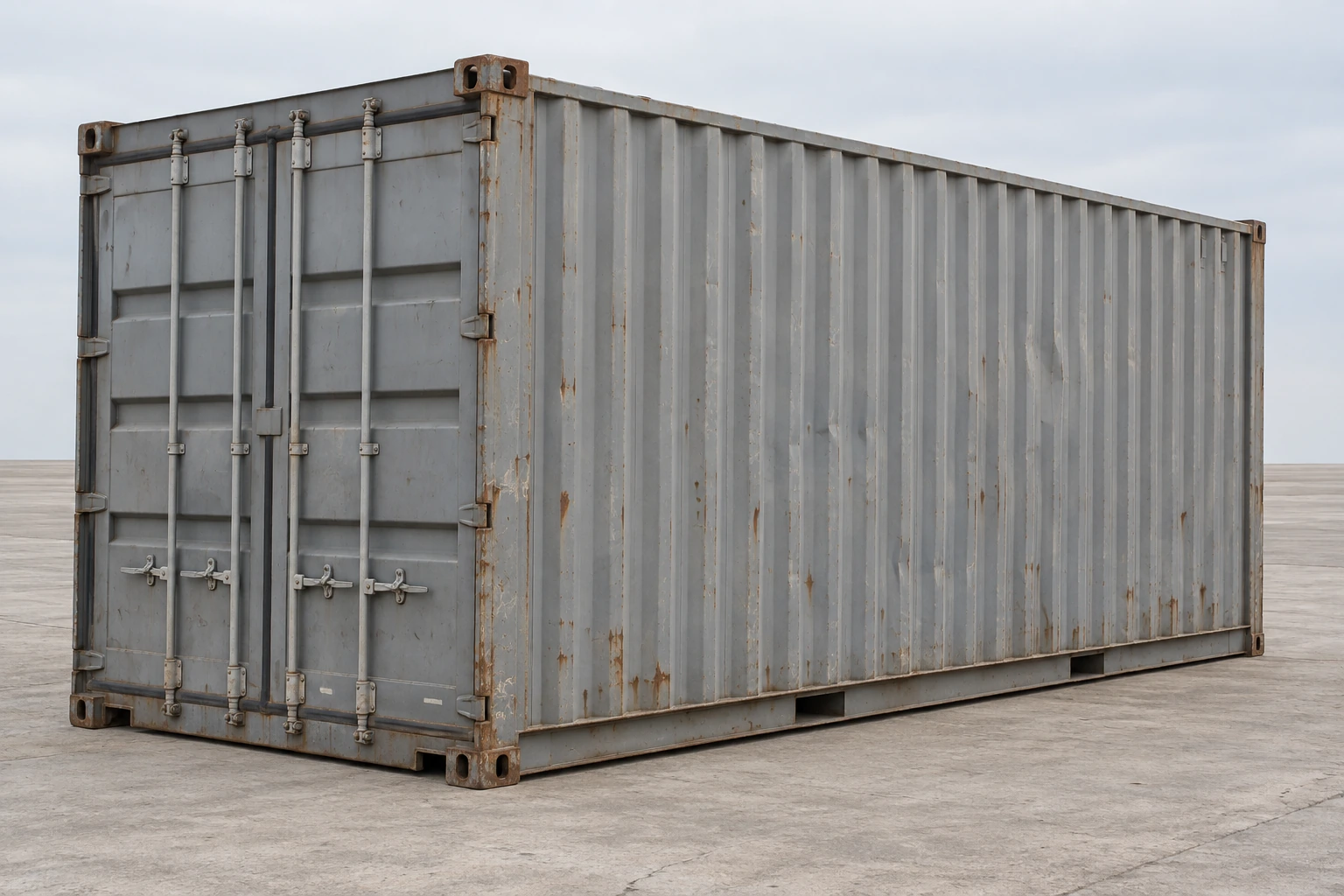
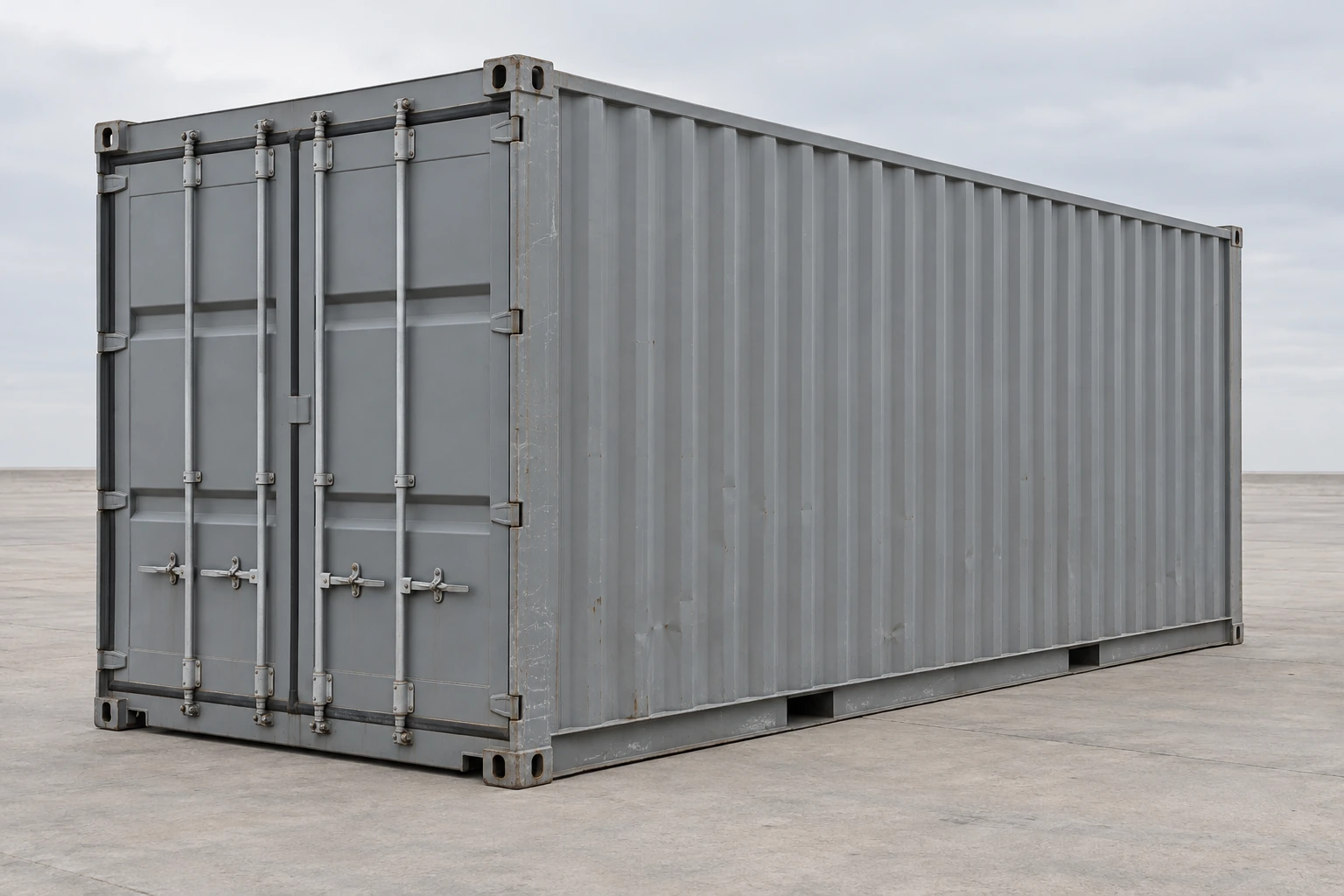
Illustration of a standard 20ft one-trip shipping container with closed end cargo doors and lightly marked painted steel sides.
Illustrative container. Confirm the actual unit before buying.
20ft / STANDARD HEIGHT

New / one-trip

A cleaner finish, with less visible wear. Check the included features and any handling marks.

You are viewing this option
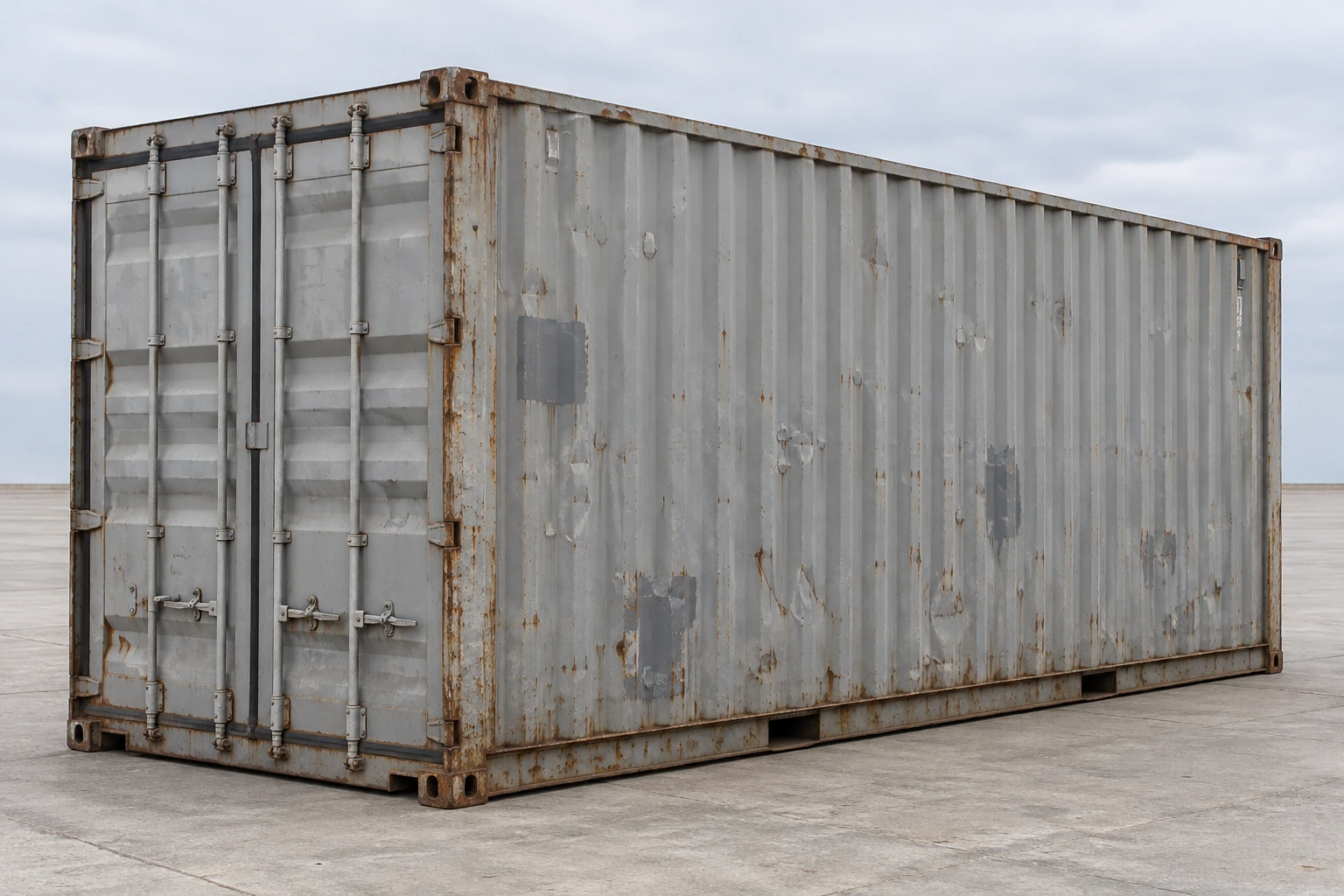
Illustration of a used standard 20ft shipping container with closed end cargo doors, worn paint and small exterior dents.
Illustrative container. Confirm the actual unit before buying.
20ft / STANDARD HEIGHT

Used

Compare storage and cargo-worthy options. Check the actual floor, doors, repairs and weather sealing.

Explore 20ft used →

Choose the used grade for your job

Used describes previous service. The grade and the evidence behind it determine what you can buy it for.

Photorealistic illustration of a gray used 20ft container with closed cargo doors, intact side panels, worn paint and localized surface rust.
Condition illustration. Appearance does not prove weather sealing; check the actual unit.
20ft / USED GRADE

Wind & watertight

For storage: compare weather sealing, floor condition and working doors. A WWT label does not establish approval for ocean shipping.

Explore wind & watertight →
Photorealistic illustration of a gray used 20ft container with straight side panels, aligned cargo doors, complete locking hardware and surface wear.
Condition illustration. Appearance does not establish cargo-worthiness or certification.
20ft / USED GRADE

Cargo-worthy

For a transport project: compare the actual inspection, CSC examination records and acceptance by your intended carrier.

Explore cargo-worthy →
Photorealistic illustration of a gray damaged 20ft container with worn paint, rust perforations, side-panel dents and weathered cargo doors.
Illustration of possible repair needs. Actual as-is defects vary; inspect the offered unit.
20ft / USED GRADE

As-is

For a repair project: identify the defects and price the work before comparing the complete cost with a usable container.

Explore as-is →
Photorealistic illustration of a gray 20ft container with mostly intact paint, light handling scratches and small shallow dents.
Condition illustration. Light wear does not verify journey history or the seller’s grade.
20ft / USED GRADE

Multi-trip / limited use

Compare an offer described as lightly used with one-trip. Confirm the actual history and finish; the label is defined by the seller.

Explore multi-trip / limited use →
Photorealistic illustration of a gray used 20ft container with faded paint, shallow dents, repair patches and surface corrosion.
Condition illustration. Worn paint and repairs do not establish sealing or structural condition.
20ft / USED GRADE

Economy grade

Compare budget storage offers by the defects accepted and the protection included. Economy does not automatically mean WWT or as-is.

Explore economy grade →

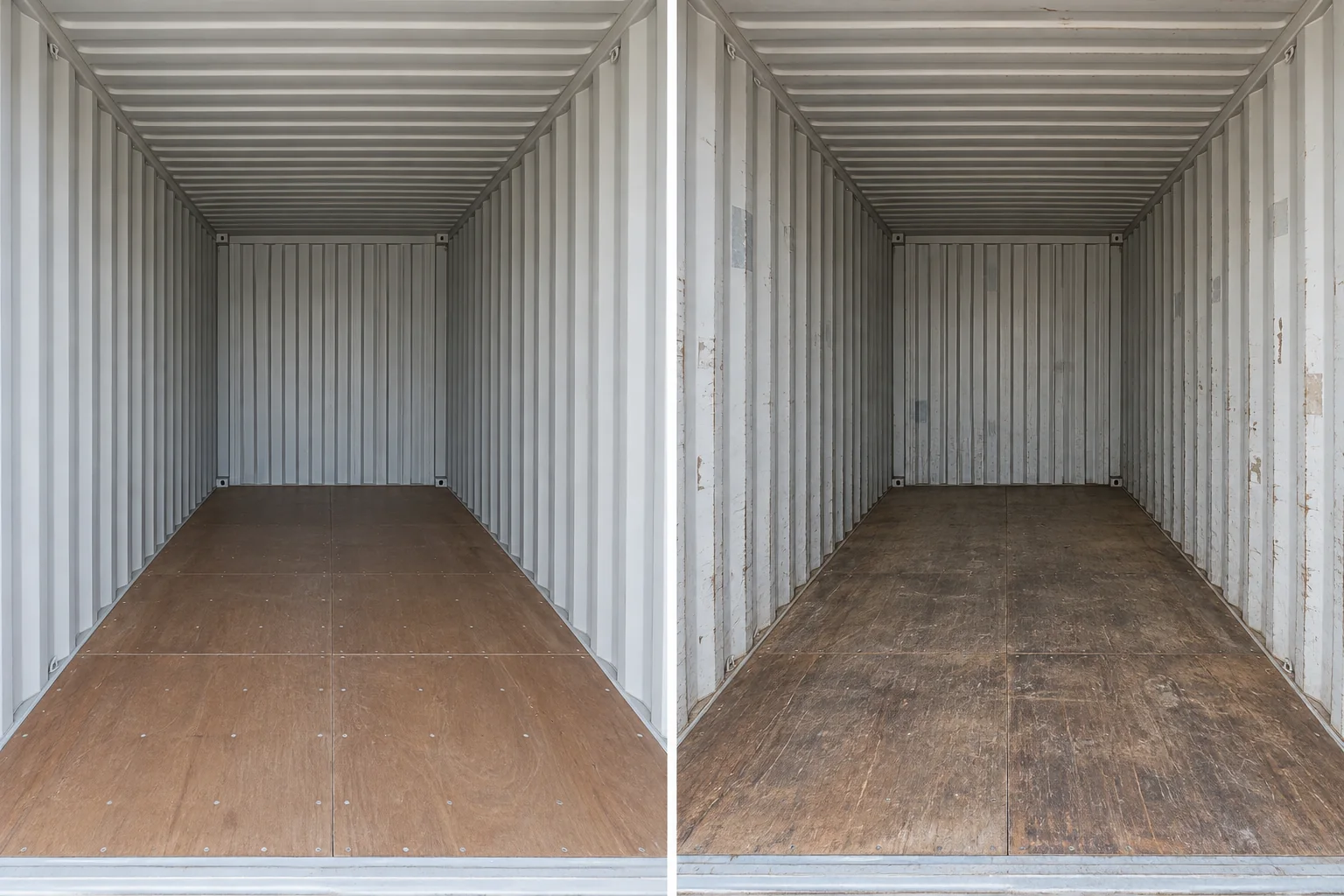
Look inside, too.

Compare the floor surface, wall wear and visible repairs, then request close-up photos of the actual unit.

New / one-tripUsed
Illustrative 20ft interiors compared side by side: new or one-trip on the left and used on the right.
Illustrative interiors. Appearance does not establish cleanliness, cargo history or floor strength.

Illustrative appearances. Paint and rust alone do not establish weather-tightness or suitability for shipping.

BEFORE YOU ORDER

Your buying questions

Can I choose a color or the exact container?

Selection varies by seller and depot. Ask whether you can inspect and choose a unit, receive current photos of an allocated unit, or buy from a condition-defined stack. Have any color or appearance requirement confirmed in writing.

Does a one-trip container need painting?

Decide from the actual finish and your intended appearance. Handling marks may be acceptable for storage but matter in a visible location. Include any requested touch-up or repainting in the quote rather than assuming it is part of the condition label.

YOUR CONTAINER. YOUR DELIVERY ZIP.

Compare the complete delivered cost.

Include the condition, unloading and any work your container needs.

Get My Best Price →