
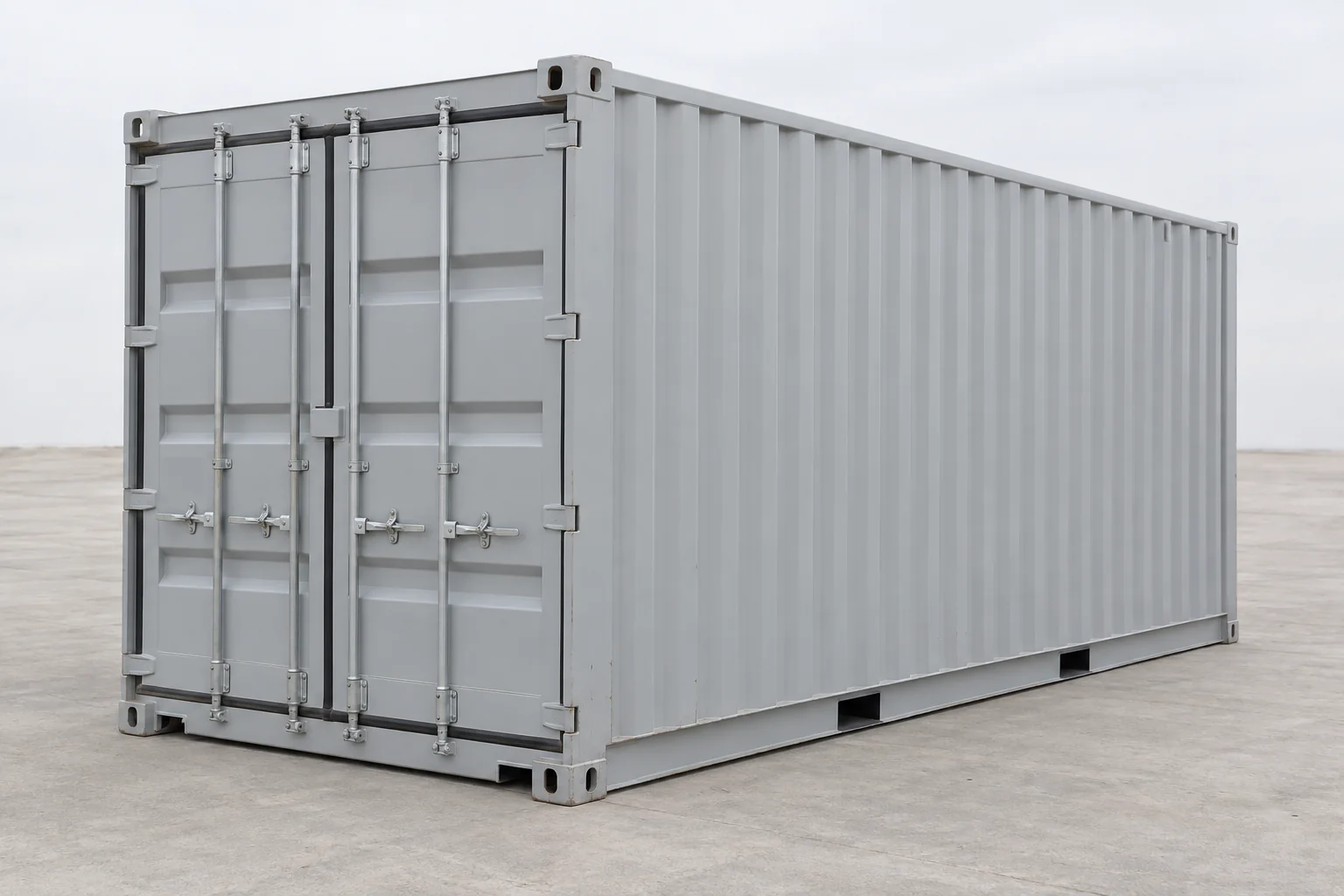
20ft / STANDARD HEIGHT
New / one-trip
A cleaner finish, with less visible wear. Check the included features and any handling marks.
Explore 20ft new / one-trip →Compare offers from multiple suppliers. Find the right price for your project.
A compact footprint for storage, inventory or your next conversion. Compare condition, check what fits and plan the full delivered cost before you buy.
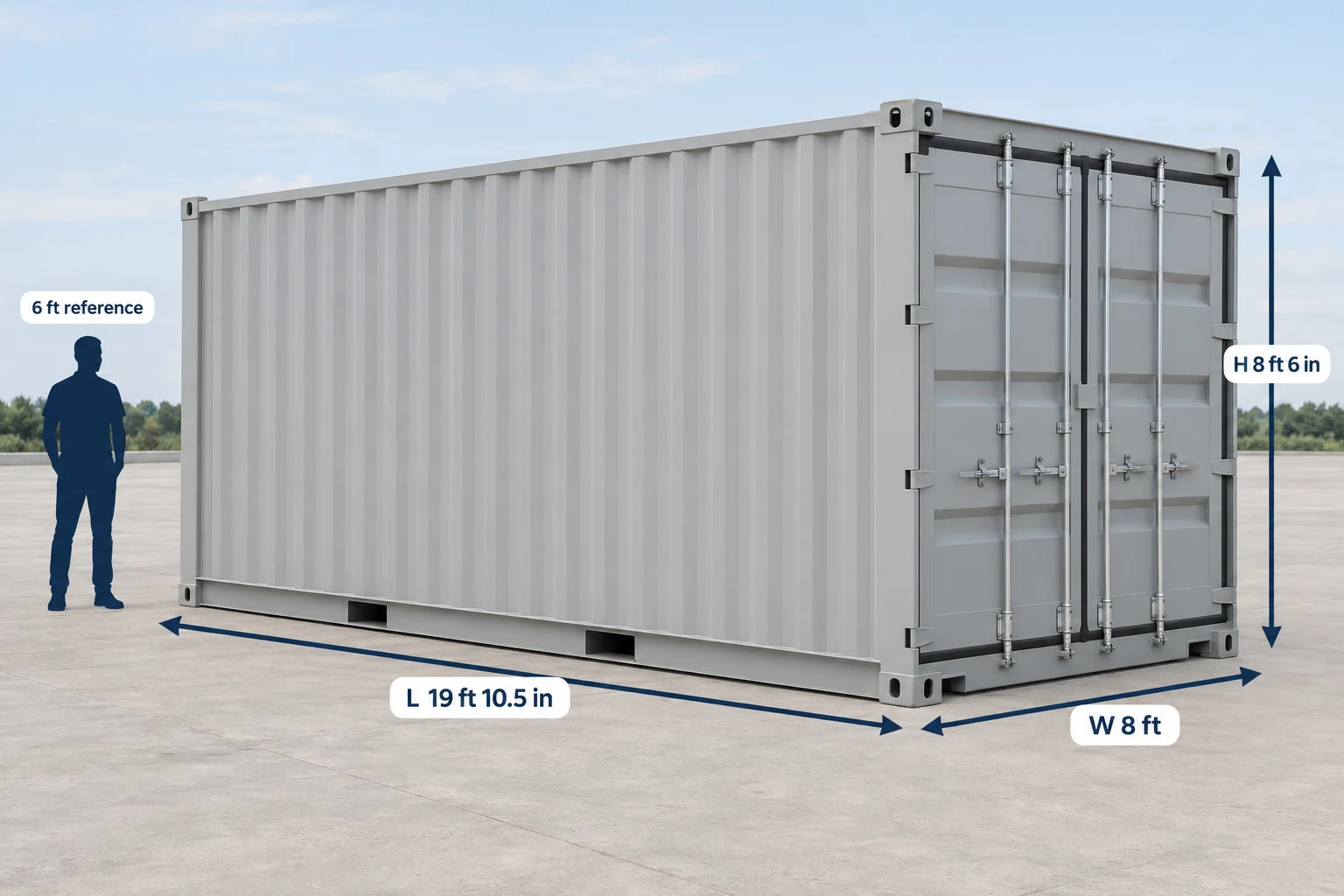
Compare the finish, buying budget and checks that matter to your project.
A cleaner finish, with less visible wear. Check the included features and any handling marks.
Explore 20ft new / one-trip →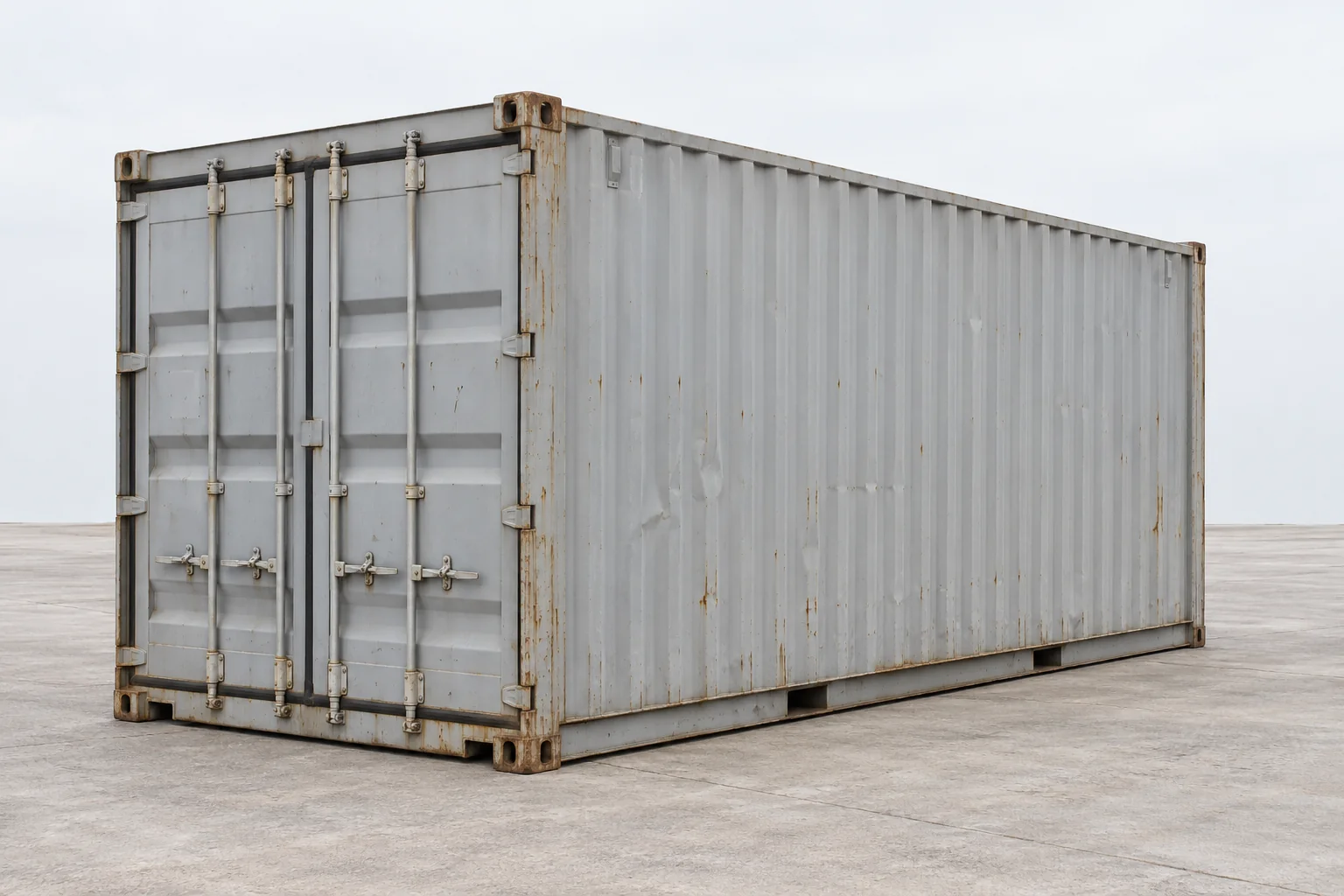
Compare storage and cargo-worthy options. Check the actual floor, doors, repairs and weather sealing.
Explore 20ft used →Used describes previous service. The grade and the evidence behind it determine what you can buy it for.
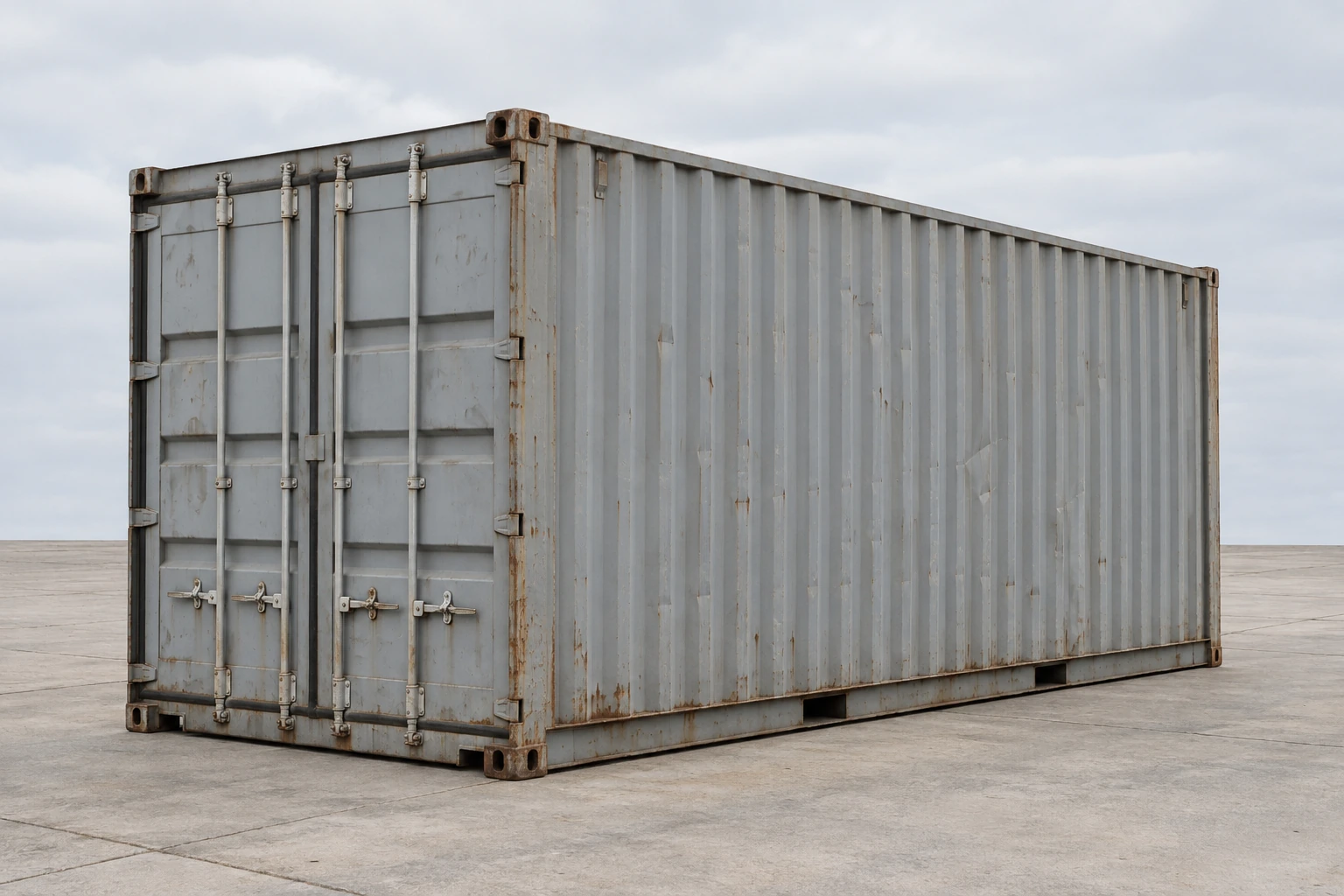
For storage: compare weather sealing, floor condition and working doors. A WWT label does not establish approval for ocean shipping.
Explore wind & watertight →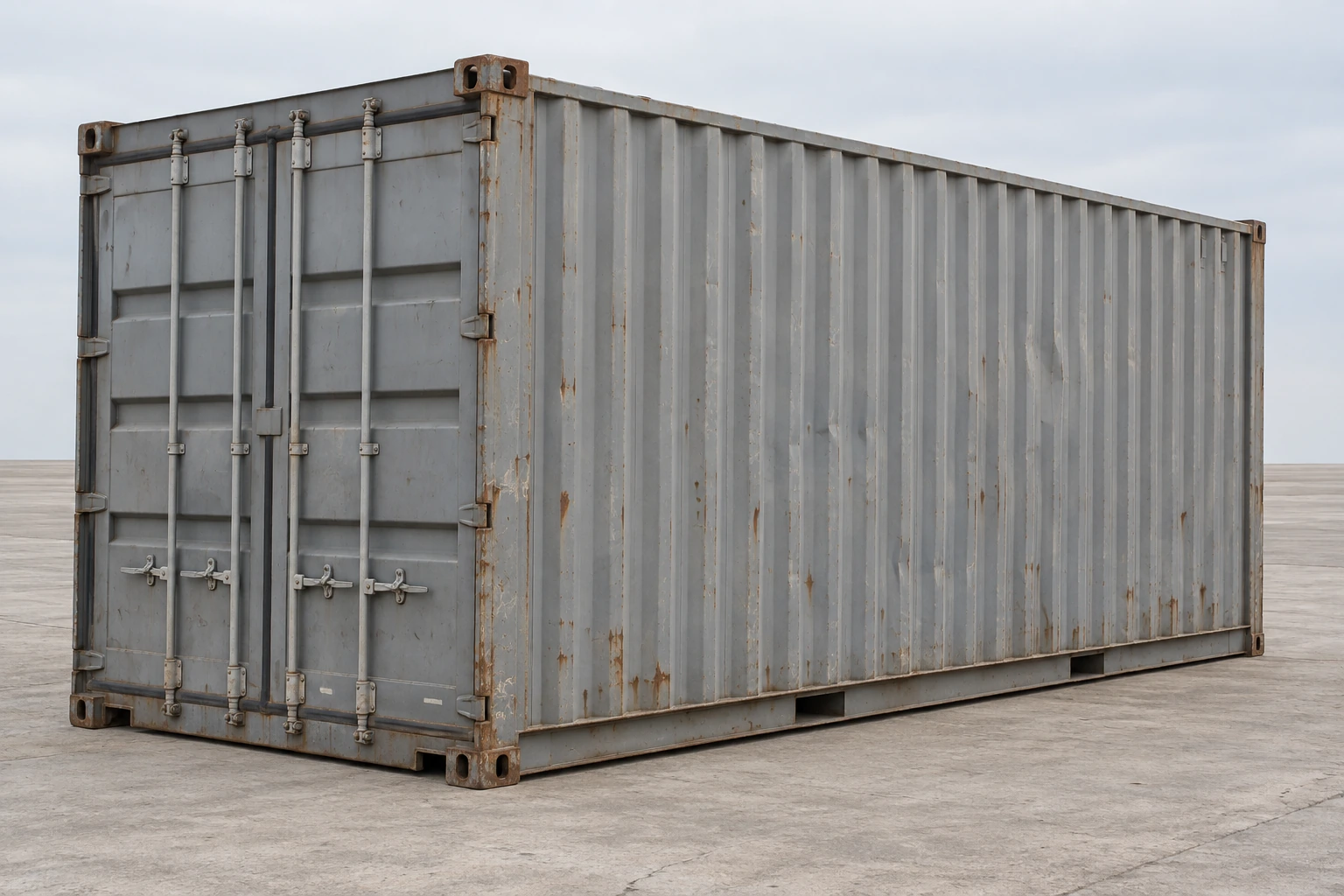
For a transport project: compare the actual inspection, CSC examination records and acceptance by your intended carrier.
Explore cargo-worthy →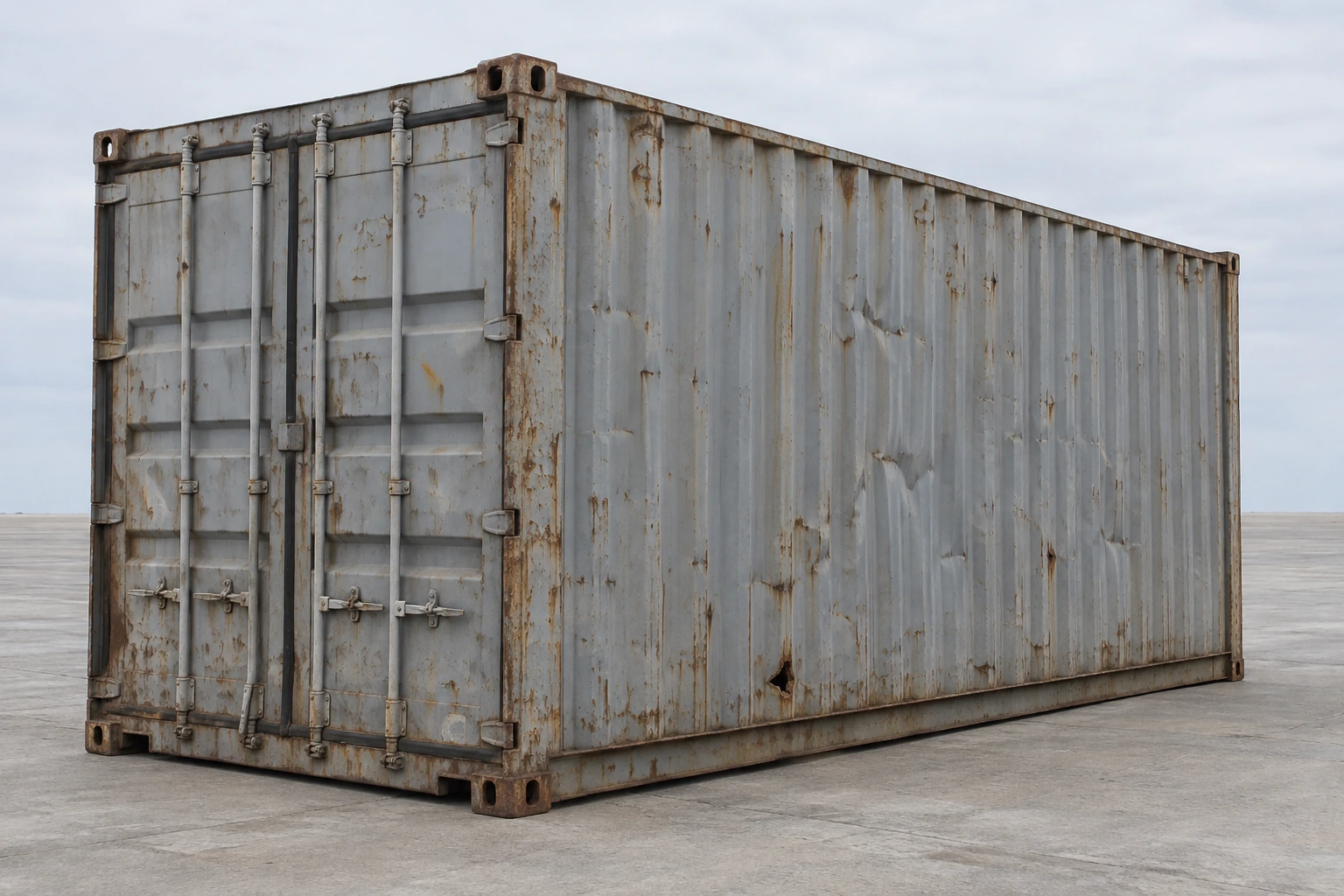
For a repair project: identify the defects and price the work before comparing the complete cost with a usable container.
Explore as-is →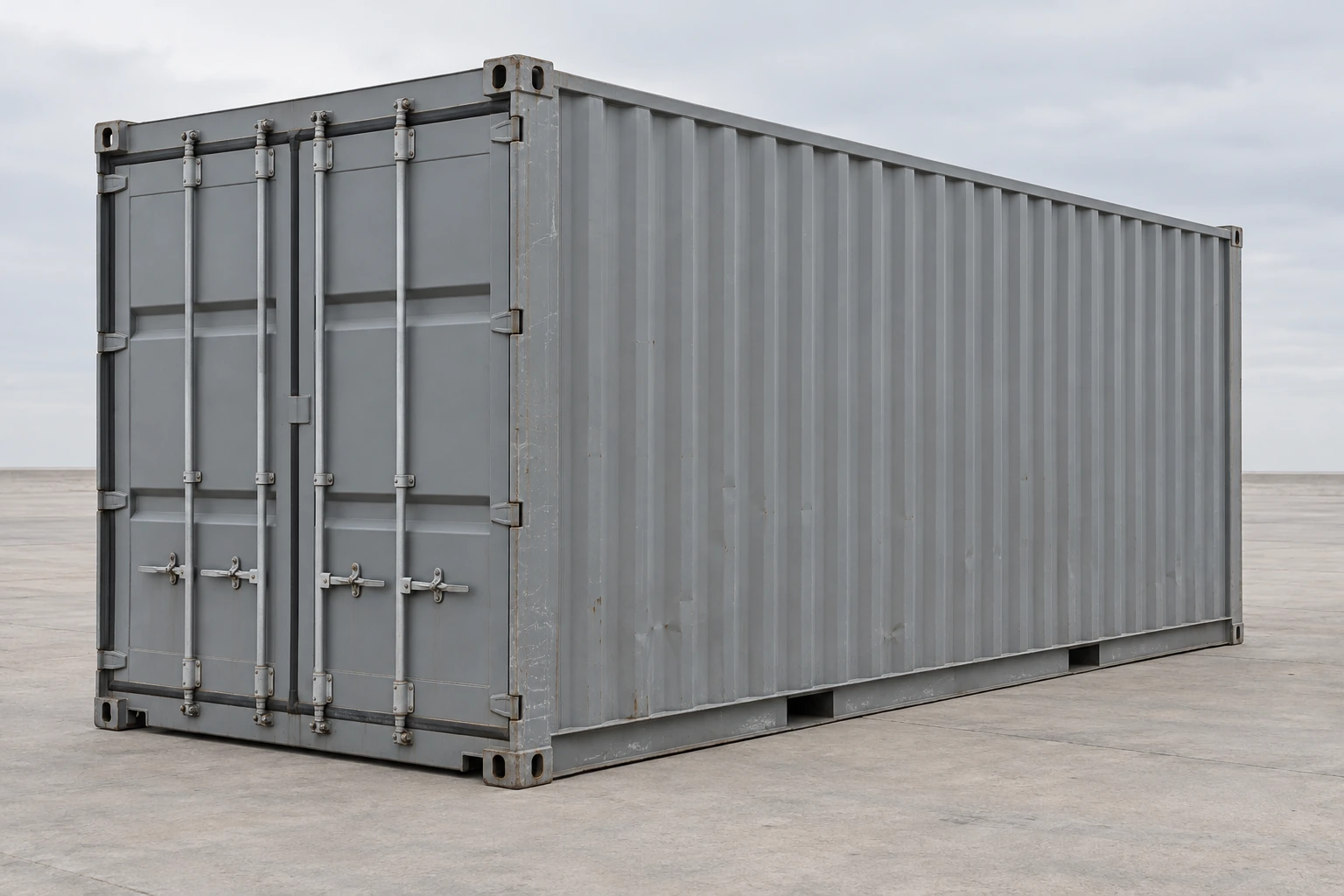
Compare an offer described as lightly used with one-trip. Confirm the actual history and finish; the label is defined by the seller.
Explore multi-trip / limited use →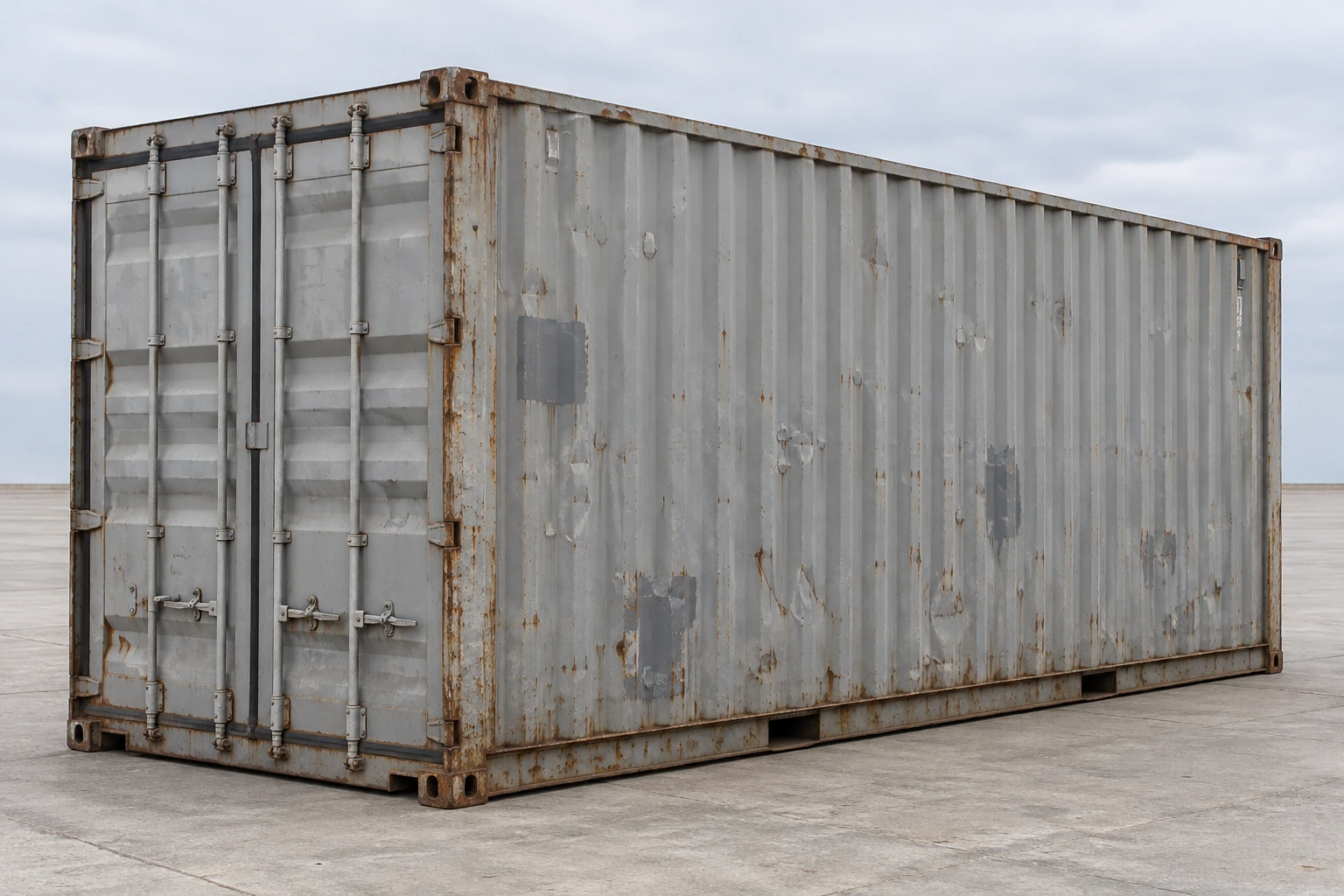
Compare budget storage offers by the defects accepted and the protection included. Economy does not automatically mean WWT or as-is.
Explore economy grade →Compare the floor surface, wall wear and visible repairs, then request close-up photos of the actual unit.
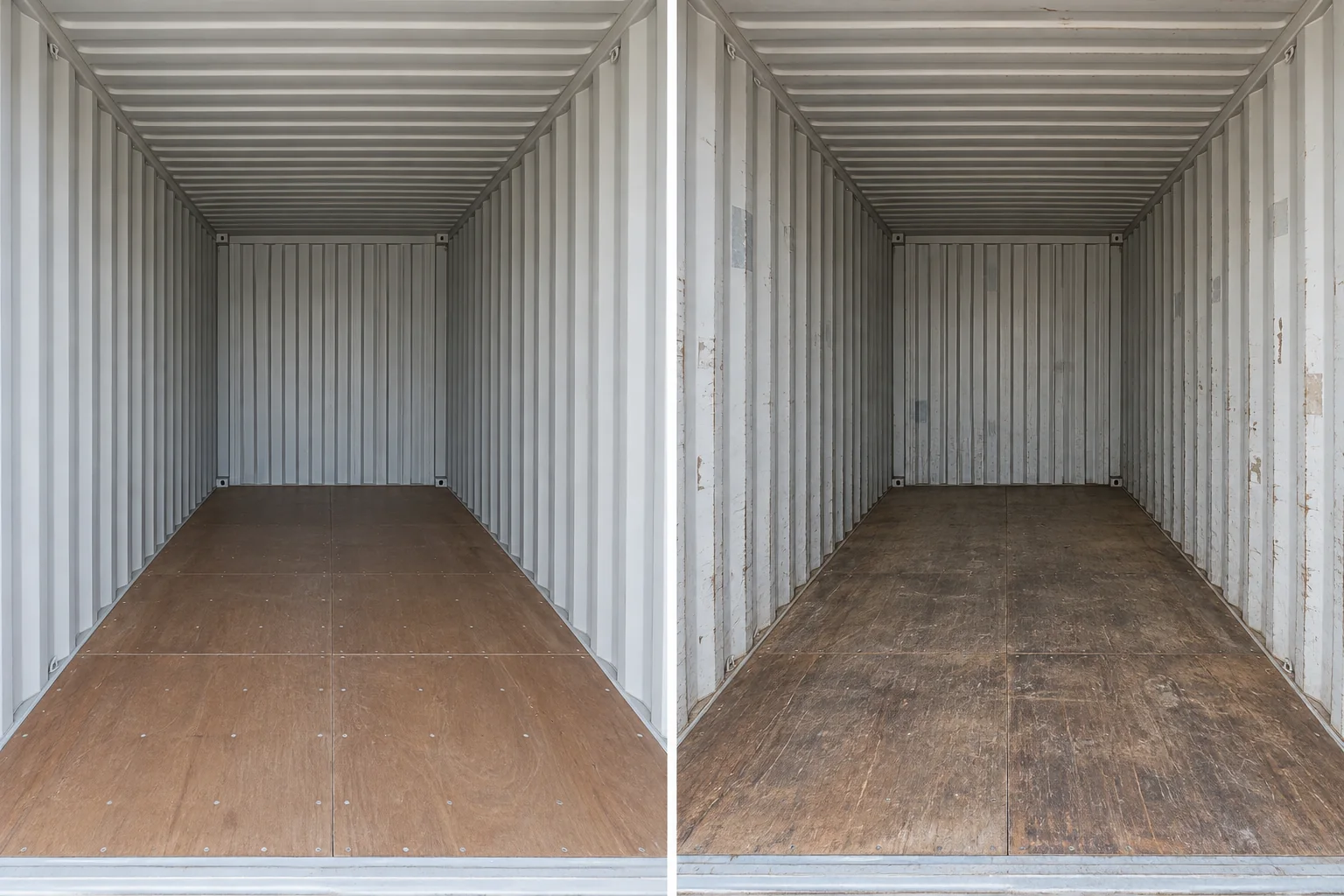
Illustrative appearances. Paint and rust alone do not establish weather-tightness or suitability for shipping.
Choose the space, access and finish your project needs.
Plan shelving and an aisle before filling the floor. Check the floor, seals and door operation on the actual unit.
Use the buying checklist ↗Measure packed goods and pallets, including how you will move them through the doors. Reserve access to items at the back.
See interior dimensions ↗Keep tools near the work area. Plan a firm placement spot, door clearance and truck access as the site changes.
Plan your site ↗A workspace needs insulation, ventilation, power and comfortable access. Allow for the interior space taken by the fit-out.
Explore container offices ↗A roll-up opening can change how you reach equipment. Its clear opening and structural work need to match your use.
Compare roll-up access ↗A container is the shell. Plan the layout, structure, utilities and local approval requirements before buying it.
Explore container homes ↗Start with a real, local price reference. These small Chicago samples compare advertised container-only prices for the same standard 20ft format.
Average of 2 advertised Chicago offers
Standard dry containers. Before delivery and applicable taxes.
Prepare a used-container request →Average of 2 advertised Chicago offers
Standard dry containers. Before delivery and applicable taxes.
Prepare a one-trip request →Observed October 8, 2026 · Chicago depot listings · USD · Reference prices, not ContainerPick offers or a US-wide average.
Each average is the arithmetic mean of two advertised prices from two sellers in the Chicago market, grouped by condition. Special formats and offers with unclear cost inclusions were excluded. Delivery, unloading and applicable taxes are outside these figures. Listings can change; request a current total for your ZIP.
A lower listing price can still mean a higher delivered total.Compare the same condition, address and unloading scope.
Prepare my price request →Condition affects appearance, repairs and the evidence you should request.
In US listings, “new” often means a container that has carried cargo once from the manufacturing country. Small dents or handling marks can still be present.
WWT describes a used container offered as keeping wind and water out. Dents, worn paint, surface rust and repairs can still be part of the condition.
Cargo worthy refers to suitability for cargo transport, rather than a cosmetic grade. The label alone does not prove a current examination or carrier acceptance.
Do not treat “last-trip” as a defined US condition grade. Ask whether the seller means the last cargo movement before resale, a final permitted voyage or a unit being retired from service. Confirm its actual condition and intended use separately.
Only if you understand the defects and repair scope. “As-is” may describe a damaged condition category or the terms of a used sale. Request a written defect list, photos and any promised repairs; do not assume it is watertight.
The floor area and the door opening answer different questions. Measure both.
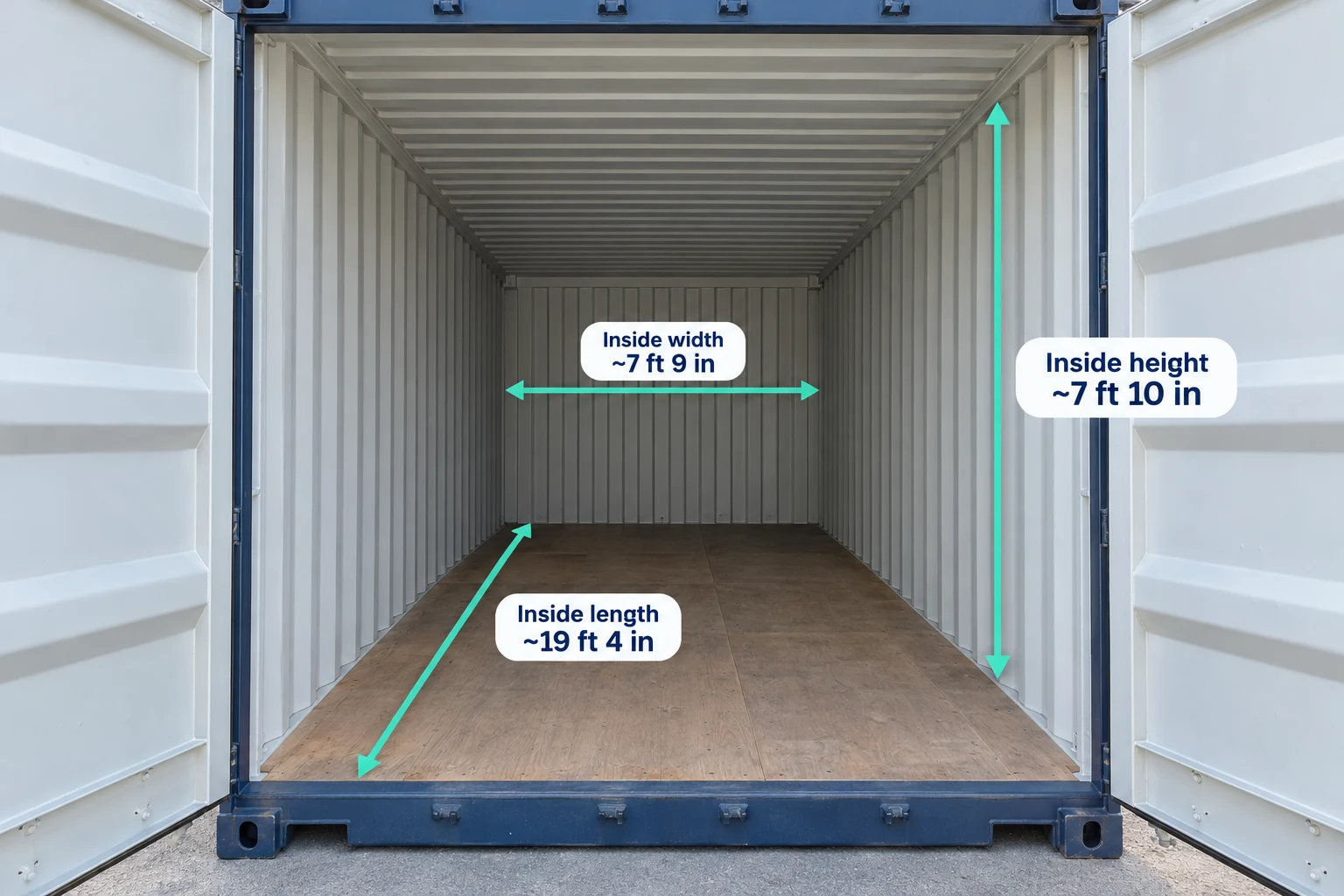
Representative standard-height dimensions. Interior and door measurements vary by manufacturer and unit; confirm the container offered to you.
The door is smaller than the room.Check your largest item with its pallet, packaging and handling equipment.
Floor area is not all usable storage once you add shelving and access.
A dry steel box does not control indoor temperature or humidity.
Ask for the actual unit’s payload and concentrated floor-load limits.
Both standard formats are nominally 8ft wide and 8ft 6in high. The main difference is length.

Useful when the placement area is limited and your storage list fits roughly 149 sq ft of bare floor.
Build my 20ft request →More room for longer items or a larger storage layout, with roughly 305 sq ft of bare floor. Check the longer delivery vehicle’s access.
Explore 40ft shipping containers →Send the delivery ZIP and access photos before agreeing to a delivered quote.
Share gate width, turns, slopes and overhead obstructions. The transporter needs space beyond the container’s footprint.
Tilt-bed delivery slides the unit off. Flatbed delivery needs separate lifting equipment. Agree who provides it.
Prepare a firm, level support plan suited to the ground and intended loads. Confirm it before the truck arrives.
Mark the exact spot and which end should face the access area. Leave room to swing the doors and load your items.
The images on this page are illustrations. Before buying, request current photos of the specific unit or confirm how the seller selects it. Put any color or appearance requirement in the order.
A standard dry container does not actively control temperature or humidity. Explain what you will store so you can assess ventilation, condensation management, insulation or refrigerated equipment.
Check with the local authority for your address and intended use before delivery. Storage, an occupied workspace and a dwelling can have different requirements; buying the container does not establish approval.
Have the supplier confirm the unit, delivery date, unloading method and site access together. A container listing alone does not confirm availability for your ZIP.
Put the size, condition and site details in one clear request.