
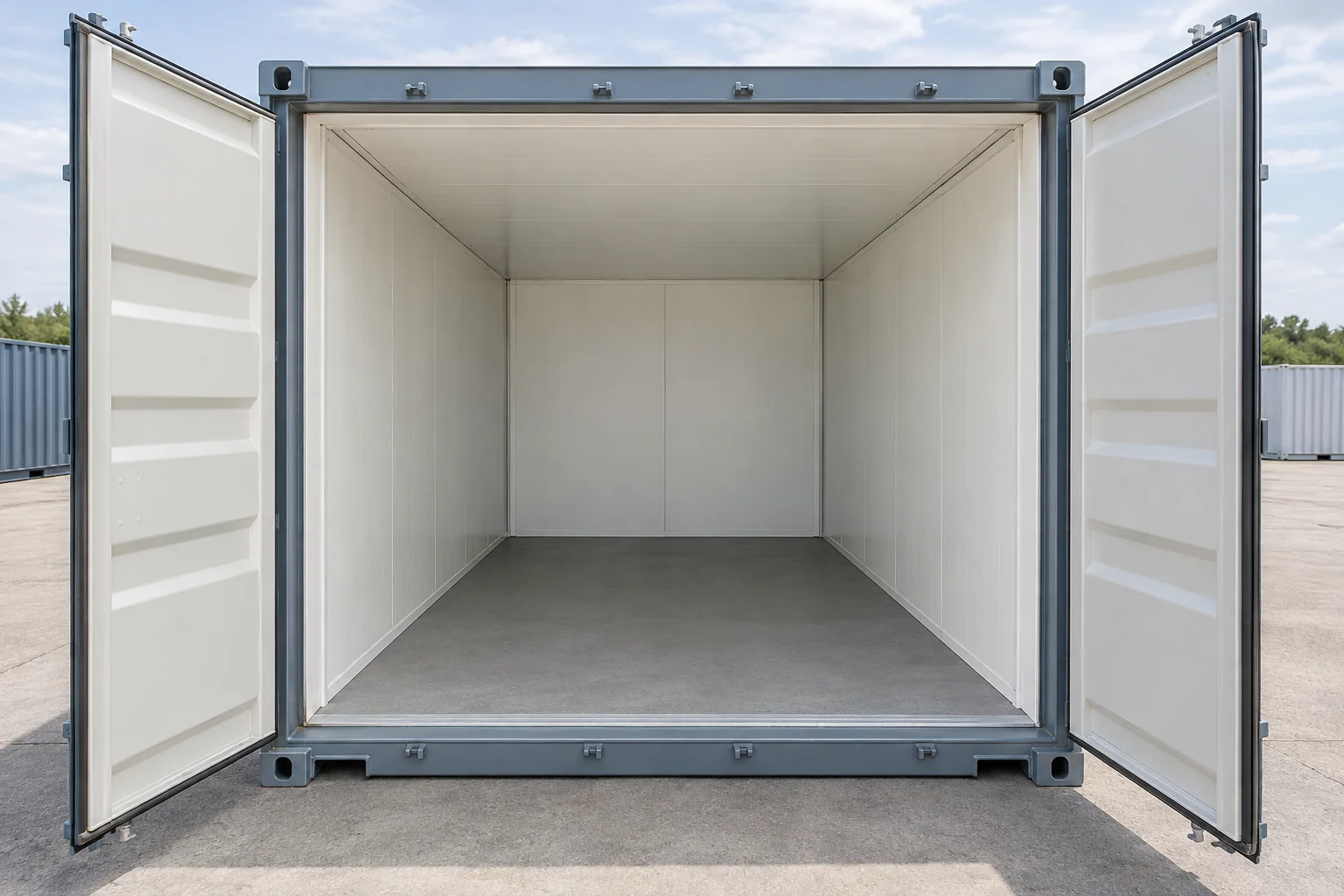
Which type of insulated container fits your use?
Choose a passive insulated unit when you need an insulated enclosure and your stored goods can tolerate temperature changes. If the contents require a maintained temperature range, compare an operating refrigerated container and its equipment specifications.
| Unit type | What you are buying | What makes the comparison useful |
|---|---|---|
| Passive insulated container | An insulated enclosure, without active cooling implied | Compare the insulated surfaces, interior finish and usable space. |
| Non-working former reefer | An insulated former refrigerated container sold without operating refrigeration | Establish whether equipment is retained or removed, then assess the enclosure and repairs. |
| Operating refrigerated container | An insulated enclosure with functioning refrigeration | Compare equipment, power requirements and documented operation for the intended conditions. |
Compare coverage and finished storage space
Use the clear interior length, width and height after insulation and lining, together with the finished floor and usable door opening. These dimensions show the space available for shelving and stored goods; nominal shell dimensions describe a different measurement.
Ask for a specification identifying coverage at the walls, ceiling, floor and doors, including areas left untreated. A “fully insulated shipping container” description is more useful when it comes with that coverage schedule and the lining materials. Compare the interior finish against how you will store, protect and clean around the contents.
Buying a used insulated shipping container
For used insulated shipping containers, assess the enclosure you will receive. Recent photos and a condition report should show the interior panels and joints, door seals, floor condition and repaired areas. Compare any refurbishment included in the price with the condition of the unit as offered.
Where refrigeration equipment has been removed or openings have been changed, include the completed closure and finishing work in that comparison. This helps you distinguish an intact insulated enclosure from a unit that still needs work.
Match the specification to your storage needs
A material’s R-value alone does not establish the thermal performance of the completed container. Review the completed insulation specification, including thickness, coverage, joints and door details. Ask what any performance figure measures and under which conditions, so you can compare like for like.
For temperature- or moisture-sensitive storage, describe the contents, site climate, storage duration and how often the doors will open, plus any required temperature or humidity range. Use those conditions to assess the proposed enclosure and the performance evidence supplied for it.
Compare the delivered cost
Compare insulated shipping container cost on the same scope. Separate the finished unit and any refurbishment from transport, unloading and placement. Identify any site preparation or connections required, with the responsible party named.
A useful purchase request includes the intended contents, passive unit or non-working former reefer preference, finished-space needs, destination ZIP and access restrictions. These details give the proposed unit and delivery plan a clear basis for comparison.