
Fixed ends
The end structure stays upright. Check the space between the end panels and posts against the proposed load, especially where packaging or equipment projects toward either end.
Compare offers from multiple suppliers. Find the right price for your project.
A flat rack gives a load an exposed deck with open long sides and no roof. Compare 20ft and 40ft equipment, then choose fixed or folding ends around the cargo, the intended handling and the unit you can actually buy. Deck dimensions, load-support requirements and delivery of the empty rack belong in the same purchase request.
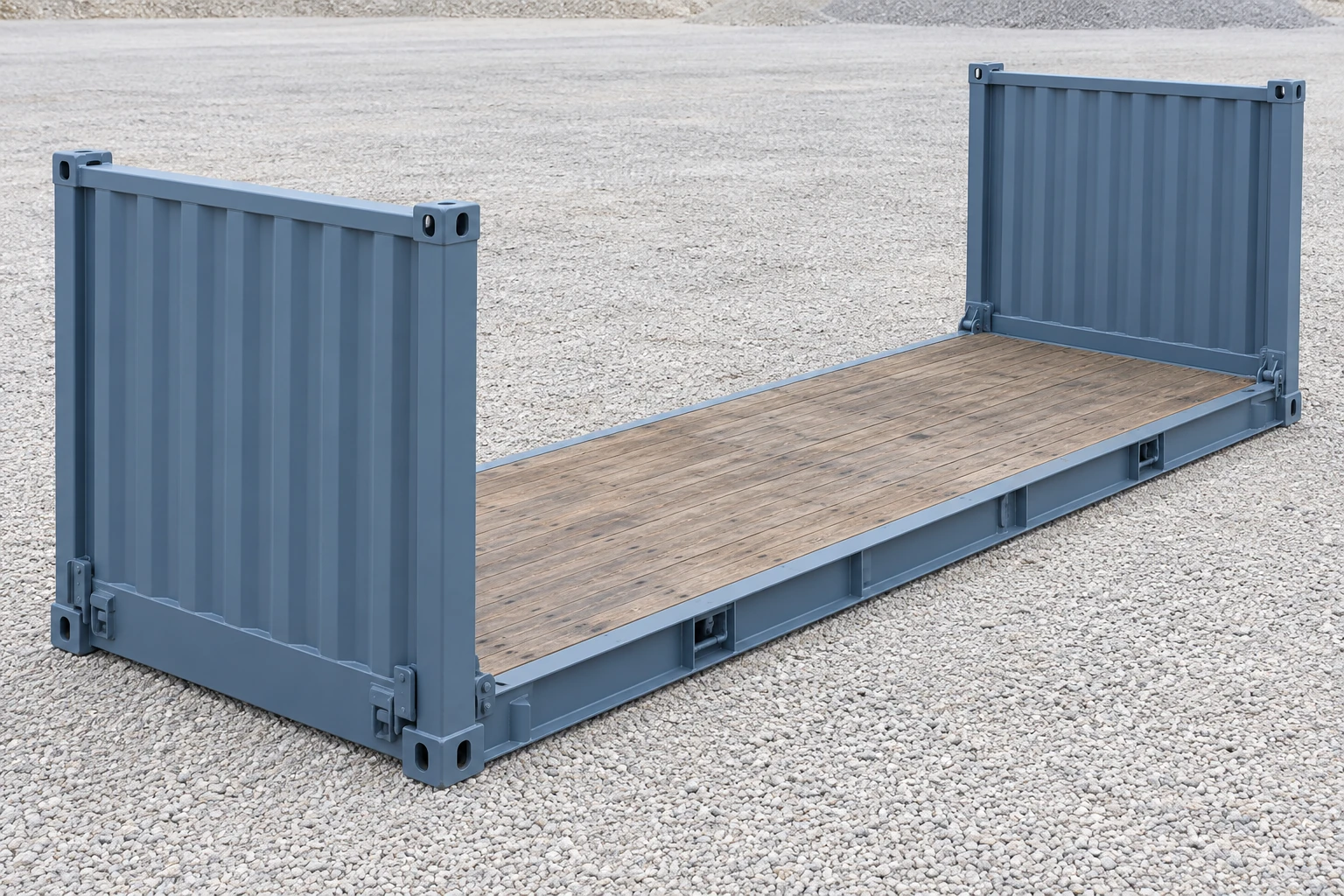
Fixed and collapsible describe the end construction. They do not establish a universal payload, deck width or handling method.
The end structure stays upright. Check the space between the end panels and posts against the proposed load, especially where packaging or equipment projects toward either end.
The ends are designed to fold, with hinges and locking arrangements specific to the model. Specify the required working configuration and ask for the condition of these components on the offered rack.
Some folding designs form a platform with the ends down. Confirm that this use is documented for the particular model, including its folded height, deck arrangement and applicable limits. A permanently end-free platform is a separate equipment choice.
Neither end design encloses the long sides or supplies a roof. If goods need enclosed storage, compare an ordinary dry container. If the load needs access from above while retaining side walls, an open-top container is a different configuration.
Start with the complete packed load and the places where it bears on the deck. Nominal length alone cannot settle the choice.
Compare a 20ft design when the packed footprint and support points suit the shorter deck. Include projections, packaging and end-frame obstructions in the dimensional review.
Compare a 40ft design when usable deck length is the deciding factor. Identify the load-support locations and any proposed overhang for review rather than treating the open sides as unlimited space.
If the rack will be moved empty between jobs, compare the documented raised and folded states. Confirm the transport and handling requirements of the unit instead of assuming that folding changes its ratings or makes every move easier.
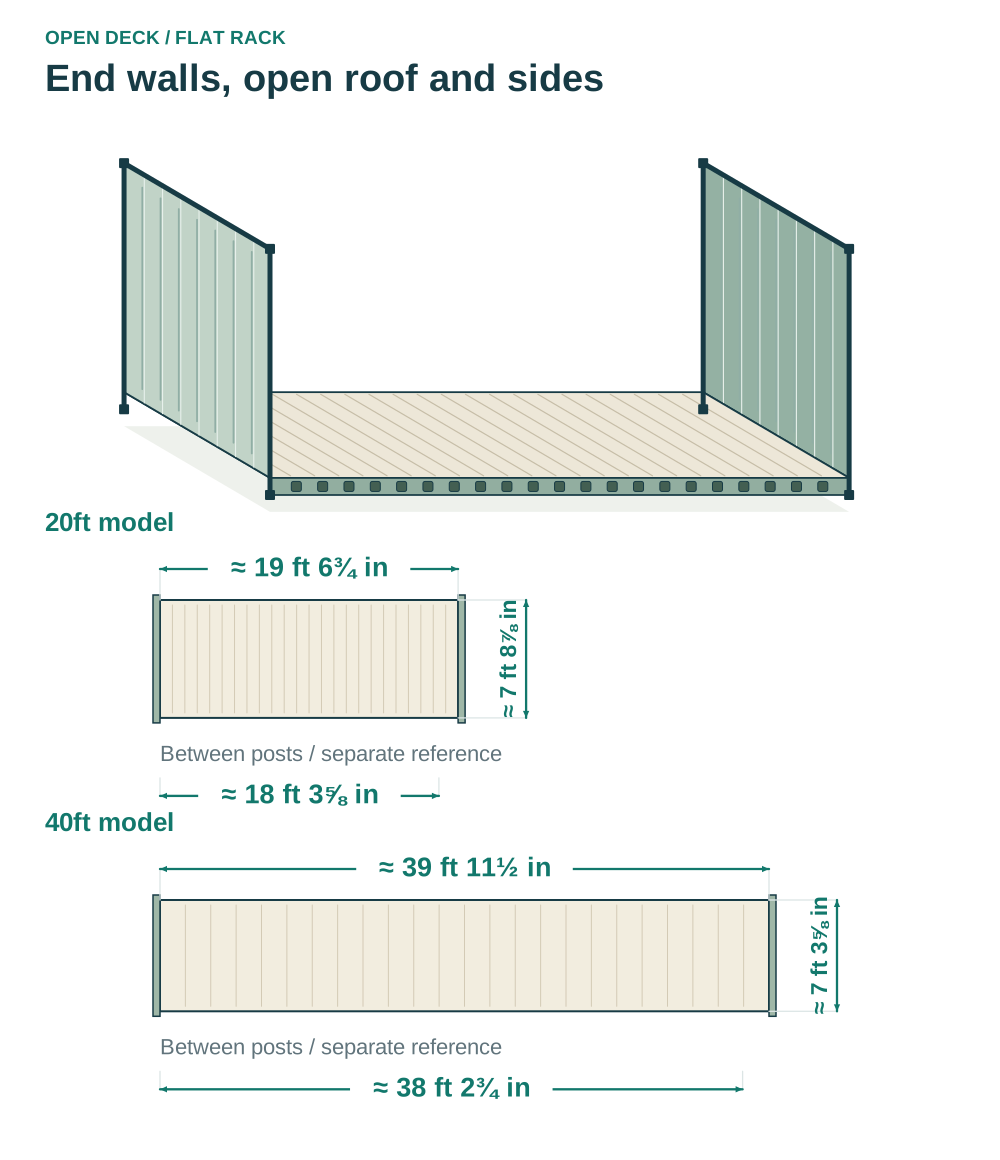
Each column below describes one documented model. These nominal examples are not minimum clearances or a specification for every flat rack. Ask for the offered unit’s drawing and measurements.
| Measurement | 20ft folding example | 40ft flush-folding example |
|---|---|---|
| Exterior, length × width × raised height | About 19ft 10½in × 8ft × 8ft 6in | 40ft × 8ft × 8ft 6in |
| Between end panels | About 19ft 6¾in | About 39ft 11½in |
| Between posts | About 18ft 3⅝in | About 38ft 2¾in between mid-posts |
| Platform width | About 7ft 8⅞in | About 7ft 3⅝in |
| Height at post | About 7ft 5½in | About 6ft 5in |
| Exterior height with ends folded | About 1ft 2½in | About 2ft 1½in |
Panel-to-panel length and post-to-post length describe different boundaries. Platform width is also smaller than the 8ft exterior width. The 40ft example shown here has a narrower platform than the 20ft example, so a longer rack does not automatically provide a wider working deck.
Height at a post describes the structure; it is not an approved cargo-height allowance. Folded height describes the empty equipment in that configuration. Cargo projections, attachments and restrictions still need review for the actual unit and intended movement.
Open sides can accommodate a load that an enclosed box cannot, but support, restraint and movement limits still govern the equipment choice.
| Information to provide | Decision it supports |
|---|---|
| Packed length, width and height | Identify end obstructions, deck boundaries and any proposed projections. |
| Gross mass and support locations | Compare the model’s documented limits with the load distribution and concentrated support points. |
| Center of gravity and intended handling | Allow the responsible handling operator to review the proposed equipment and movement. |
| Restraint requirements | Confirm the presence, condition and rated capacity of suitable attachment points on the actual rack. |
| Intended carrier, terminal and route | Check acceptance and movement restrictions if the rack will travel with cargo. |
A single payload number does not approve a particular load. Have the responsible carrier, handling operator or qualified specialist review the unit documentation and cargo requirements before committing to the equipment. The purchase request should identify that review; it does not replace a loading, lifting or securement plan.
A condition label gives part of the history. Photos, repairs and model identity make the comparison useful.
Ask what “new” means in the offer, whether the rack has been used or transported with cargo, and which features are included. Do not assume a one-trip history or a particular end design from the condition label.
Request current photos and a description of deck, main beams, end frames, hinges, locks, corner fittings and repairs. A repaint does not establish the structural condition or the working condition of folding components.
Match the unit identity with its drawing and ratings. Where transport requires safety approval and examination records, confirm the actual unit’s plate and current documentation with the intended carrier. New or used alone does not establish eligibility.
A flat rack remains open to rain even if its deck and frame are in good condition. For moisture-sensitive goods, resolve the exposure and protection requirements separately; enclosed-container condition labels do not turn an open rack into weatherproof storage.
Delivery of the equipment is a separate scope from transportation of the cargo you plan to put on it.
Specify the rack first, then compare the full purchase and delivery scope. A price for a different end design, condition or location is not the same offer.
| Quote line | What to settle |
|---|---|
| Equipment | Exact length, model or drawing, end design, condition, quantity and included fittings. |
| Delivery of the empty rack | Origin, destination ZIP, transport configuration and the service quoted. |
| Unloading and placement | Responsible operator, equipment needed, included work and any separate charge. |
| Additional costs | Taxes, fees, repairs or requested alterations, with inclusions stated in writing. |
Confirm quote validity and the unit available at the stated terms. Keep cargo freight charges separate from the price of buying and delivering the empty rack, and avoid counting delivery or unloading twice.
Use the request form to collect your configuration, cargo information and delivery requirements. It prepares editable text that you can review, copy or download. Sending requires your consent on the quote form.
Choose around the required working configuration and future empty movements. Fixed ends remain upright; collapsible ends provide documented raised and folded states. Compare the actual geometry, components and ratings rather than assuming one design is always stronger.
Some models are explicitly designed to form a platform with their ends folded. Confirm that use and its limits in the specific model documentation. A permanently end-free platform or a modified base is a separate product, so ask for that equipment explicitly if it is what the job requires.
Not necessarily. The two model examples on this page have the same 8ft exterior width, but the documented 40ft platform is narrower. Compare the actual platform width and posts, not only the nominal format.
It has no roof or long-side enclosure. Resolve weather exposure for the goods and planned use before choosing it. If enclosed dry storage is the main need, compare an ordinary dry container instead.
The equipment’s approval and examination records are separate from acceptance of a particular cargo or movement. The actual load, support points, restraints, handling and route still need the relevant operator’s review.
They cover different purchases. An equipment quote should identify the rack and the delivery of that empty unit; a freight rate concerns transportation of cargo. Ask which scope each amount covers, then itemize unloading, taxes and other charges.
Compare the configuration and condition with delivery and unloading specified.