
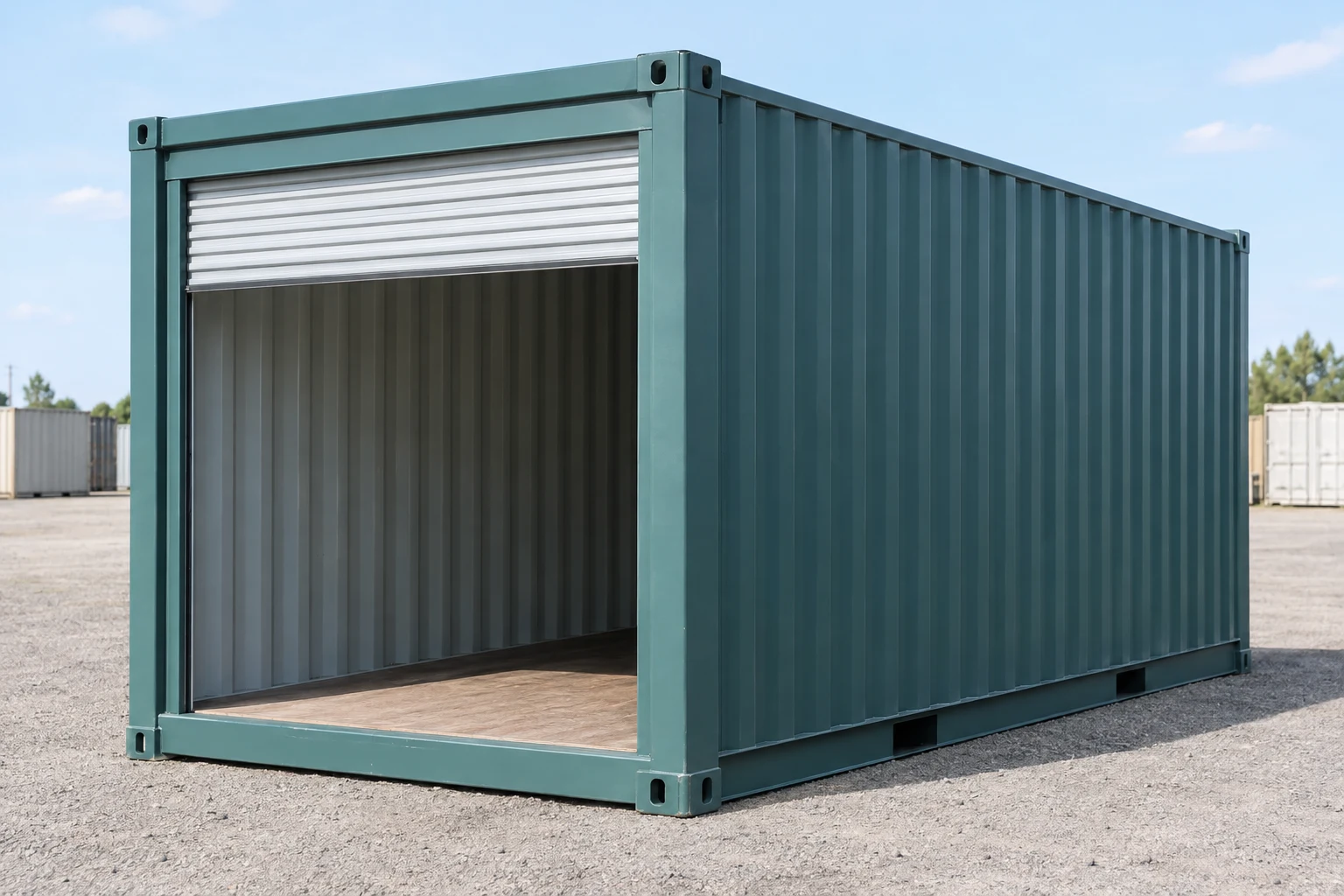
Choose a fitted container or a retrofit
A fitted unit is a useful starting point when you need the container and its access arrangement together. If you already own a container, compare an installed retrofit against a door package that still needs fabrication and installation. The lowest accessory price does not describe the cost of the finished unit.
| Purchase | What the quote should identify | What may be separate |
|---|---|---|
| Complete fitted container | Container condition, door model, finished opening and completed installation | Delivery, placement and other interior work |
| Door assembly | Door curtain, guides, operating hardware and locking components | Framing, threshold, work on the container and installation |
| Framing kit | The specific frame, header and threshold parts supplied | Door assembly, fabrication, coatings and installation |
| Installed retrofit | Work on your existing container, door package, installation and finishing | Transport, unloading and any additional modifications |
Compare the opening your load can actually use
Match the finished clear opening to the largest item and the way it will enter: by hand, on a cart or with handling equipment. Include the threshold and the approach outside the container. Door location matters too; an opening beside the storage area can serve a different workflow from access at the cargo-door end.
Use a drawing that shows the clear width and height with the door fully open. The advertised door size alone does not establish that space. Compare any loss of interior clearance with the room needed for shelving, stored goods and loading.
Match the mechanism to daily use
A roll-up door needs space for its guides, brackets and rolled curtain. That space depends on the selected model and mounting arrangement. Compare the required room above and beside the opening before choosing the door; a high-cube container label alone does not establish a fit.
Compare the operating arrangement with the opening frequency, door size and people using it. If powered operation is part of the brief, the quote should identify an operator matched to the door, its controls and power supply. Confirm how the door is opened, held, closed and locked in normal use.
Specify locking, weather details and personnel access
Compare the locking arrangement as part of the door package, including which locks and hardware are supplied. For an exposed site, have the quote describe seals, the threshold, drainage details and the finish around the opening. A weather-resistant door does not establish the performance of the complete modification.
Loading access and personnel exits need separate consideration where people work inside. Do not assume that a roll-up loading door satisfies the applicable workplace exit requirements.
Prepare a quote for the finished result
State whether you need a complete fitted container or work on a unit you own. Include the container size and condition, preferred door position, required clear opening, locking and operation, plus the delivery ZIP code. Photos and a simple layout help define an existing-container retrofit.
Compare prices with the door package, container fabrication, installation and finishing identified separately from delivery and placement. The scope should name who supplies the door, performs the work and covers the completed modification. Changes to the container need a suitable project design; a framing kit alone does not establish structural suitability.
Buying questions
How much does a shipping container with a roll-up door cost?
The price depends on the container, door model and number of openings, fabrication, installation and delivery. Compare quotes for the same finished opening and scope. A door or framing-kit price is only one part of a fitted-container budget.