
A row of project materials
List the longest stored pieces and how they will be retrieved. A longer interior is useful only if the loading route and access to the stock also work.
Compare offers from multiple suppliers. Find the right price for your project.
Consider a 30ft storage container when you want more length than a 20ft unit and the final position calls for a shorter footprint than a 40ft box. Choose the height and access arrangement, then establish how the unit was built. A 30ft label can cover different constructions and histories, so compare the finished unit and the complete delivered cost.
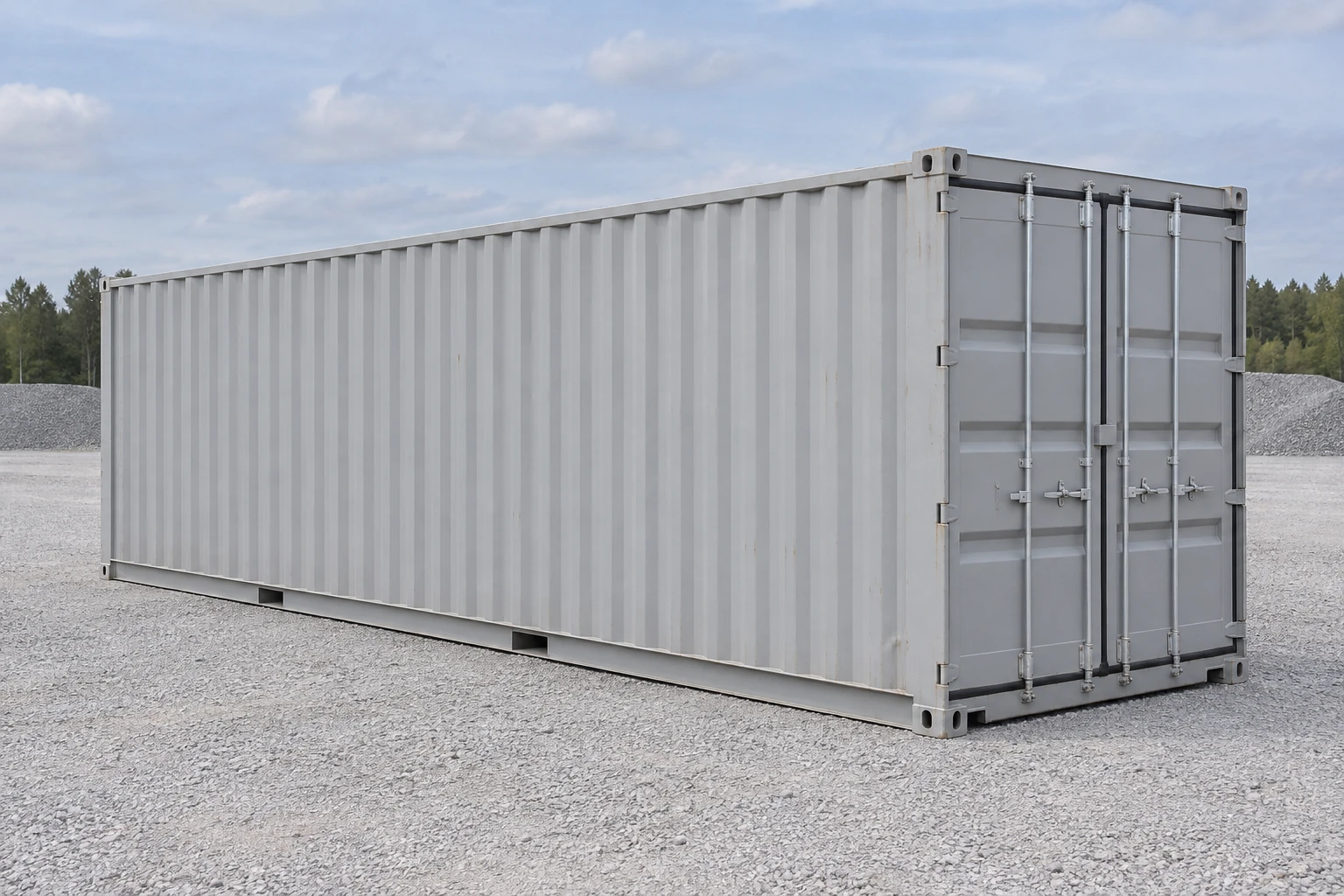
Measure the final position and the storage layout separately. The truck approach and door work area need room beyond the container’s exterior.
List the longest stored pieces and how they will be retrieved. A longer interior is useful only if the loading route and access to the stock also work.
Decide which items belong near the entrance and how shelving will affect the aisle. Include the shelving depth and any partitions in the finished layout.
Check the allowable position, access and use with the relevant local authority before placement or construction work. A shorter box does not establish permission or a feasible delivery.
New supply, original shell history and fabrication are separate questions. Get a description of the finished construction in the written offer.
Ask for the original model or drawing and whether any shortening or door work took place before sale. An offer described as new or one-trip still needs its build history clarified.
Custom 30ft storage builds can be made from 40ft containers. Ask for the original shell condition, completed fabrication, door assembly and finished dimensions; assess the altered unit on its own records.
Both 8ft 6in standard-height and 9ft 6in High Cube offers exist. Confirm the selected height together with its interior and doorway dimensions. The taller exterior does not supply a confirmed door opening by itself.
A shortened container made from a one-trip shell has two histories: the shell’s journey and the subsequent fabrication. Keep both in the description rather than treating it as an unchanged freight container.
The example below is a refurbished 30ft model with cargo doors at one end. These published dimensions belong together; use the drawing and measurements of the unit you will receive for the final layout.
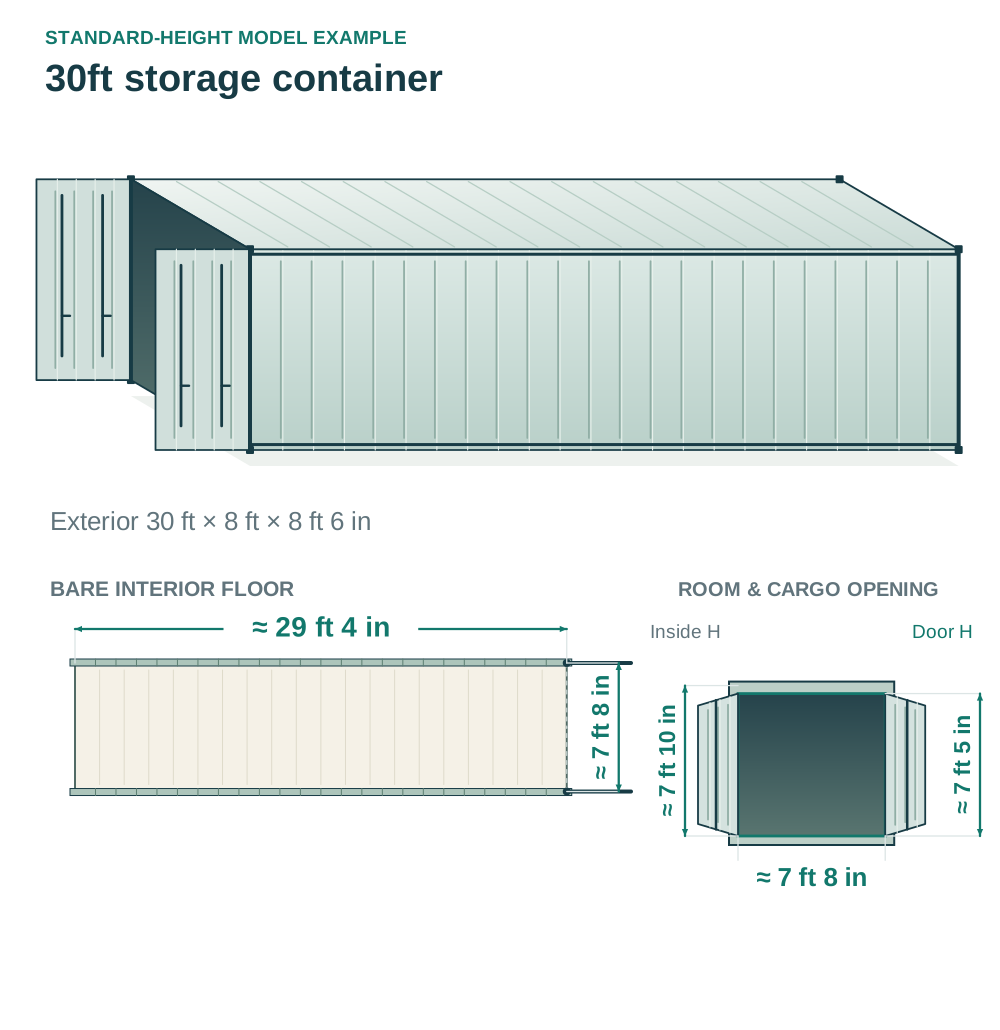
| Measurement | 30ft standard cargo-door example | What to confirm |
|---|---|---|
| Exterior, length × width × height | 30ft × 8ft × 8ft 6in | Finished footprint and roof height. |
| Interior, length × width × height | About 29ft 4in × 7ft 8in × 7ft 10in | Usable space after repairs or any requested lining. |
| Cargo-door opening, width × height | About 7ft 8in × 7ft 5in | The offered doorway, threshold, seals and hardware. |
This particular storage model is identified as non-ISO and is not supplied with a CSC safety plate. That is a statement about this example, not every 30ft offer. If freight use is required, identify that requirement at the start and obtain acceptable actual-unit documentation and carrier confirmation.
Keep a High Cube offer separate from this table. Ask for its own interior and opening dimensions; do not add a foot to every measurement or borrow a 40ft specification.
Choose access around the goods and the way they will be collected, then include the finished arrangement in the quote.
Preserve working space outside the entrance and a useful route inside. Place frequently retrieved items where they can be reached without unpacking the whole length.
Specify shelves, their support arrangement and any partition as additional work. Confirm the resulting aisle, storage areas and door access with the intended inventory.
A roll-up door changes the opening and construction; a staffed workspace needs a separate fit-out. Include electrical, insulation, ventilation and local approval needs rather than assuming they come with a storage shell.
A repaint and a condition label do not answer every question about an altered storage container.
Used, refurbished and new describe condition or history. ISO dimensional claims, a safety plate, examination records and acceptance for an intended journey are separate evidence. For site storage, make the storage requirements clear; for a loaded move, have the operator review the actual equipment and cargo.
A delivery method suited to another length is not an unloading plan for the unit you are buying.
Compare written offers for the same length, height, condition and access arrangement. Custom work can change the cost independently of nominal size.
| Cost component | What the offer should state |
|---|---|
| Container and condition | The finished unit, height, shell history, quantity and included features. |
| Fabrication or requested changes | Shortening, door work, repairs, paint and any additional fit-out, listed once. |
| Delivery and unloading | Origin, destination ZIP, transport, unloading and final placement responsibilities. |
| Taxes, fees and terms | Which charges are included, the balance payable and how long the quote is valid. |
A 30ft price does not follow automatically from the price of a 20ft or 40ft unit. Compare the actual finished construction and the same delivered scope before deciding which length offers value.
Custom builders do shorten 40ft shells to make 30ft storage containers, while other offers are sold as new 30ft equipment. Ask whether the actual unit was made at its present length or shortened, and obtain the finished build description. The length label alone does not establish the construction.
30ft High Cube offers with a 9ft 6in exterior height are available in US catalogs. Confirm the unit being quoted and its own interior and door opening. The standard-height example on this page does not provide those High Cube dimensions.
Ask whether one-trip describes the finished unit or the larger shell used to make it. Later shortening, end work and other fabrication need their own records and condition description.
The documented example is a non-ISO storage unit without a CSC safety plate. If freight transport is part of your plan, obtain an offer expressly suited to that use and confirm actual-unit documentation and acceptance with the intended carrier.
Length alone does not decide the total. Construction, shell condition, alterations, local supply and the unloading scope can change the comparison. Request itemized quotes for the configurations that meet the storage plan.
Include the occupied use in a separate conversion scope. A storage shell does not establish insulation, utilities, ventilation or local permission. Review the fit-out and required approvals before ordering work.
Compare the configuration and condition with delivery and unloading specified.