
ISO liquid tank container
Consider a framed tank when bulk liquid storage or an intermodal movement is part of the plan. Specify the intended cargo, required tank instruction or design, capacity and service equipment before comparing units.
Compare offers from multiple suppliers. Find the right price for your project.
Buying an ISO tank, often called an isotainer, starts with the liquid and the service you need. Compare the complete vessel, frame, fittings and records before choosing by capacity or price. The liquid tank examples below differ in volume, empty weight and equipment; the ISO frame alone does not establish suitability for your cargo.
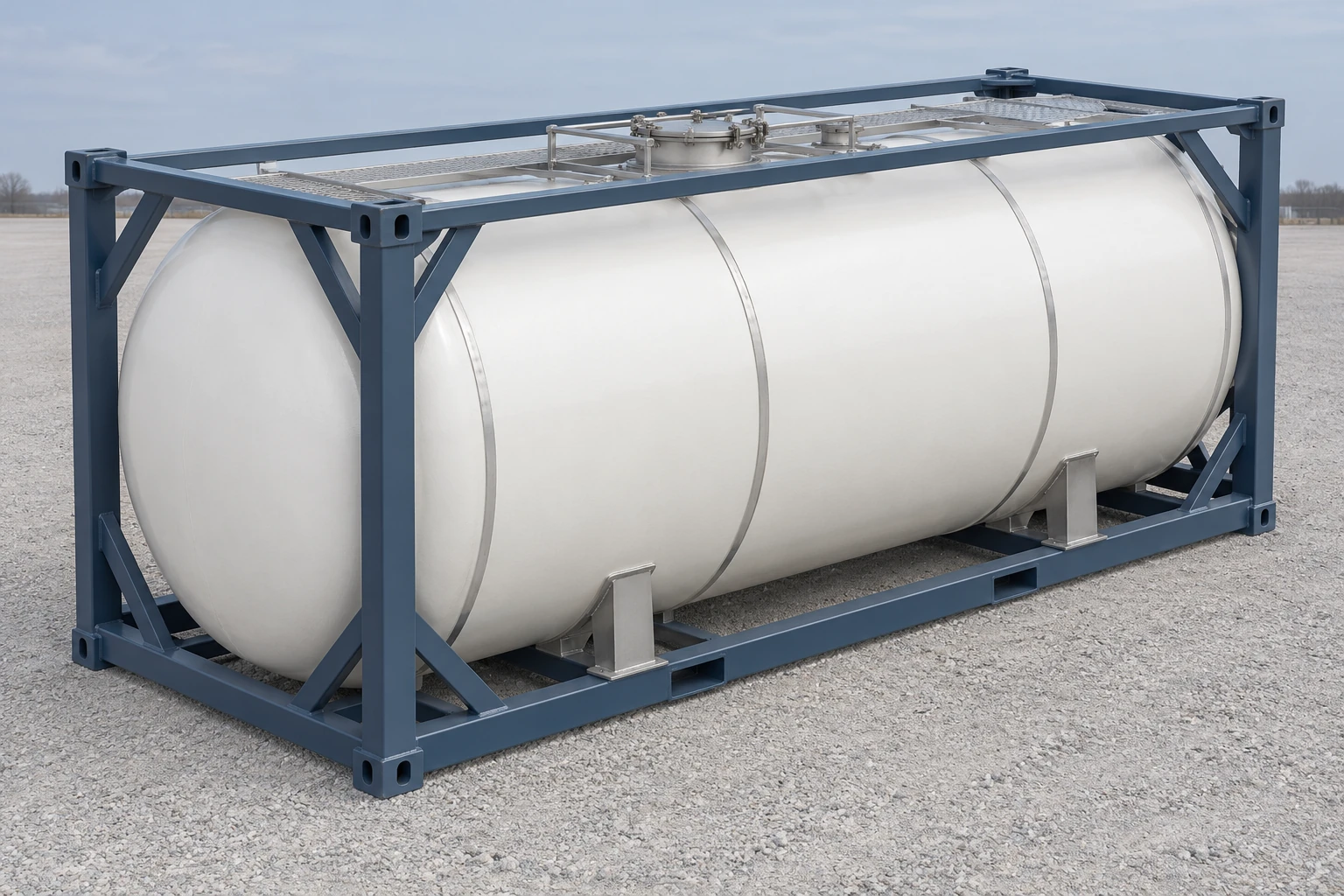
An ISO liquid tank is a vessel carried in a structural frame. It is a different purchase from a tanker vehicle or a freight service.
Consider a framed tank when bulk liquid storage or an intermodal movement is part of the plan. Specify the intended cargo, required tank instruction or design, capacity and service equipment before comparing units.
A tank trailer includes a road vehicle configuration; a fixed storage tank is installed for a site. If either is the real requirement, compare that equipment's complete specification instead of using a framed tank's price or approvals.
Smaller batches and individual packages involve a different handling system. Compare transfer needs and shipment size before committing to a large bulk vessel. A dry container can carry packaged goods under its own load and handling requirements.
Compare dry 20ft storage ↗Purchasing the tank does not by itself arrange the movement of its contents. Specify whether you need delivery of the empty unit, transport of a loaded tank or stationary use.
Give the supplier the product identity and safety data, proposed route and operating requirements. The selection should address the vessel, seals, lining and equipment as a complete system.
| Planned use | What the purchase must establish |
|---|---|
| Bulk industrial liquids | Exact cargo acceptance, vessel and seal compatibility, required tank specification and the connection layout |
| Food ingredients or edible liquids | Suitable service history, cleaning records and the shipper's sanitary requirements for that specific food |
| Temperature-sensitive liquids | Required temperature conditions, insulation, heating or active cooling equipment, site connections and performance for the actual application |
| Gas or cryogenic service | A separately specified gas or cryogenic design; an ordinary liquid T11 example is not a substitute |
| Lined or specialized liquid service | The actual lining or other design feature and its documented acceptance for the named cargo |
T11 liquid, T50 gas and T75 cryogenic identify different tank-design branches. No liquid, food or gas compatibility follows from the name ISO, stainless steel construction or a stated number of gallons.
If a baffled or multi-compartment layout matters, ask for its drawing. Baffles and separate compartments serve different purposes, and the appropriate loading plan still depends on the actual tank and movement.
These reference models illustrate why equal frame classes do not mean equal tanks. They are nominal specifications, not a description of a particular unit offered for sale.
| Reference configuration | Nominal liquid capacity | Nominal empty weight | Maximum gross mass |
|---|---|---|---|
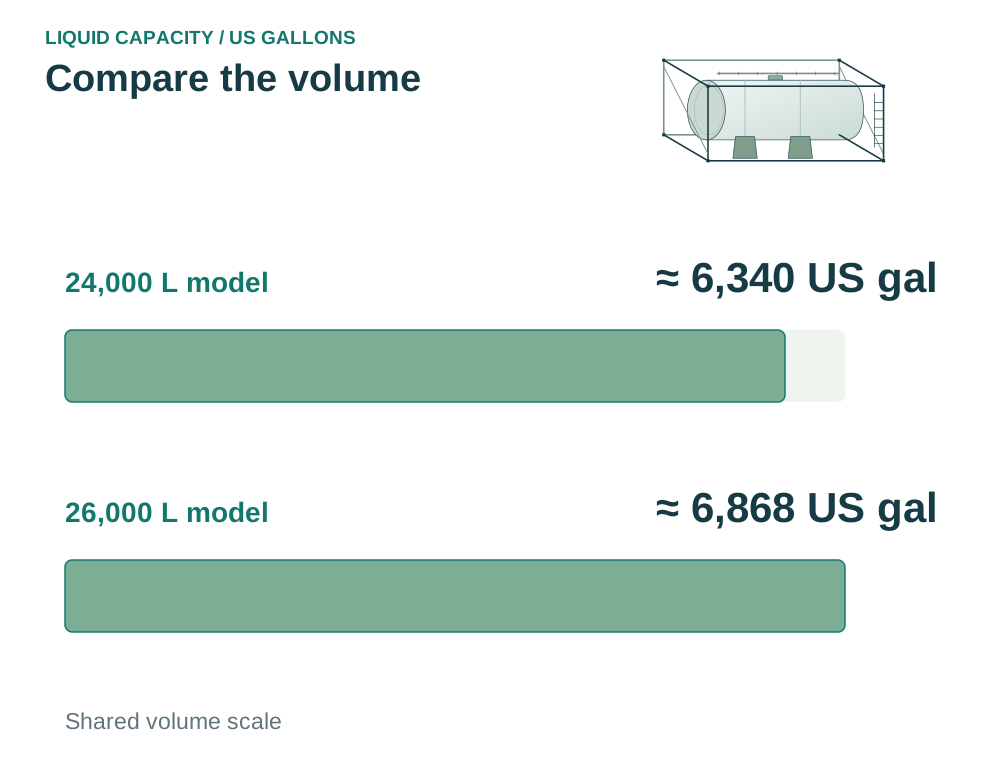
| 24,000 L insulated T11, 20ft-class frame | 24,000 L / 6,340 US gal | 8,201 lb | 79,366 lb |
| 26,000 L baffled T11, 20ft-class frame | 26,000 L / about 6,868 US gal | About 8,930 lb; estimate ±5% | About 79,366 lb |
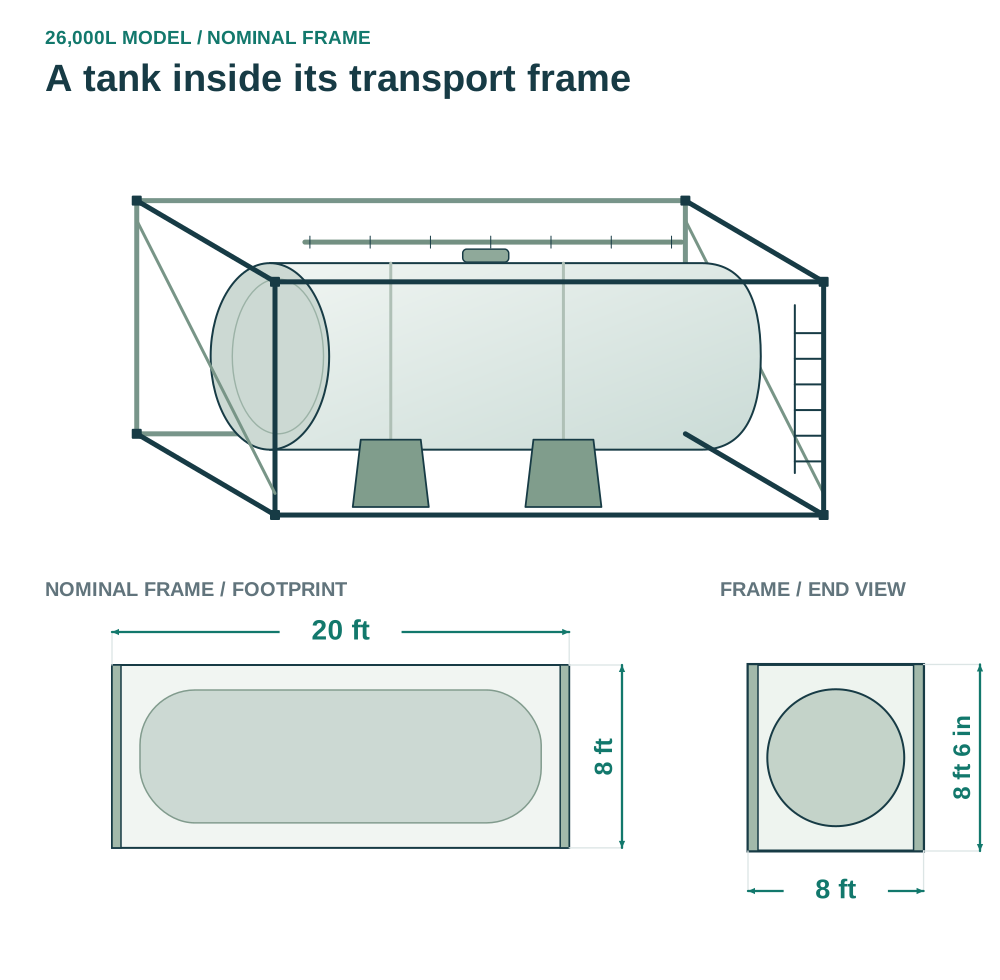
The 26,000 L baffled example has a stated nominal frame size of 20 ft long × 8 ft wide × 8 ft 6 in high. These are frame dimensions, not the vessel diameter or working liquid space. The 24,000 L example needs its own unit drawing; no frame measurements are transferred between models.
Both capacities are nominal. Confirm the actual capacity plate and empty weight before comparing the tank with your proposed load.
Nominal volume is not an instruction to fill the tank to that amount. Cargo density, required expansion space, tank instructions and weight limits determine the permissible load. A partial load also needs a movement-specific assessment; do not assume baffles make every fill level acceptable.
Compare the tank's actual fittings with the transfer equipment at both ends. A connection or mounting provision is not the same as a complete working assembly.
| Equipment to identify | What to compare |
|---|---|
| Bottom outlet assembly | Valve arrangement, remote closure where specified, connection type and size, caps and condition |
| Top outlet or provision | Complete outlet equipment versus a blanked flange or unused provision; the reference 24,000 L design includes a blanked top-outlet provision |
| Pump, hoses and adapters | Whether they are included, their specifications and who supplies the external transfer equipment |
| Insulation and temperature equipment | Insulation, coils or other equipment actually fitted, required utility connections and any separate supply |
| Access and monitoring | Ladder, walkway or other access system, level instruments and thermometer; list optional accessories separately |
Request an equipment list and current fitting photos before comparing totals. Have the responsible operator confirm the appropriate transfer arrangement for the product and site; tank purchase does not establish a discharge method or operating procedure.
A tank can look sound while its previous service, cleaning or inspection status makes it unsuitable for your intended use.
An expired test, a repair or a period out of service may affect what is needed before the tank returns to transport. Have the inspection and cargo requirements resolved before comparing a ready-for-service unit with a repair project.
Confirm the unit's condition for the movement and who is responsible for each part of transport and placement.
A published tank gross-mass rating is separate from vehicle, axle, route and lifting limits. Use the actual plate and an operator-confirmed handling plan rather than a generic container delivery clearance.
Price an identified tank in a stated condition with its records and equipment included. Keep purchase and rental terms separate.
| Cost item | Scope to have confirmed |
|---|---|
| Tank purchase | Model, serial unit, quantity, condition, fittings and included documents |
| Cleaning and inspection | Included work, current test status and charges needed for the proposed service |
| Repairs or accessories | Valve and seal work, coatings, lining, monitoring and external transfer equipment |
| Transport and placement | Origin, destination, empty or loaded movement, chassis, lifting and unloading responsibilities |
| Site and other charges | Supports, containment, utility work, tax treatment, waiting and storage charges |
An advertised capacity range or starting price does not define the delivered budget. Compare offers for the same tank design, service readiness and destination.
Isotainer is commonly used for the tank-in-frame format. Confirm the actual equipment in the offer: a complete liquid vessel and frame with fittings is different from a tank trailer, fixed storage tank or IBC.
Use capacity to compare batch size, then verify the actual tank design, empty weight, cargo acceptance, equipment and load limits. The gallon figures here are US gallons. Nominal volume does not establish a permissible filling quantity or chemical compatibility.
Neither label establishes food suitability by itself. The actual tank's materials, prior cargo, cleaning history, equipment and the shipper's sanitary requirements must support the intended food service. A generic cleaning certificate does not settle those questions.
Frame and tank documentation serve different checks. Ask for the actual tank specification and approval records, current inspections and tests, cleaning and cargo history, and the documents required by the intended carrier and route.
Confirm the supplied equipment list. A tank outlet, top flange or mounting provision does not establish that a pump, hose, adapter or suitable transfer system is included. Price those items and their responsibilities separately.
Compare the configuration and condition with delivery and unloading specified.