
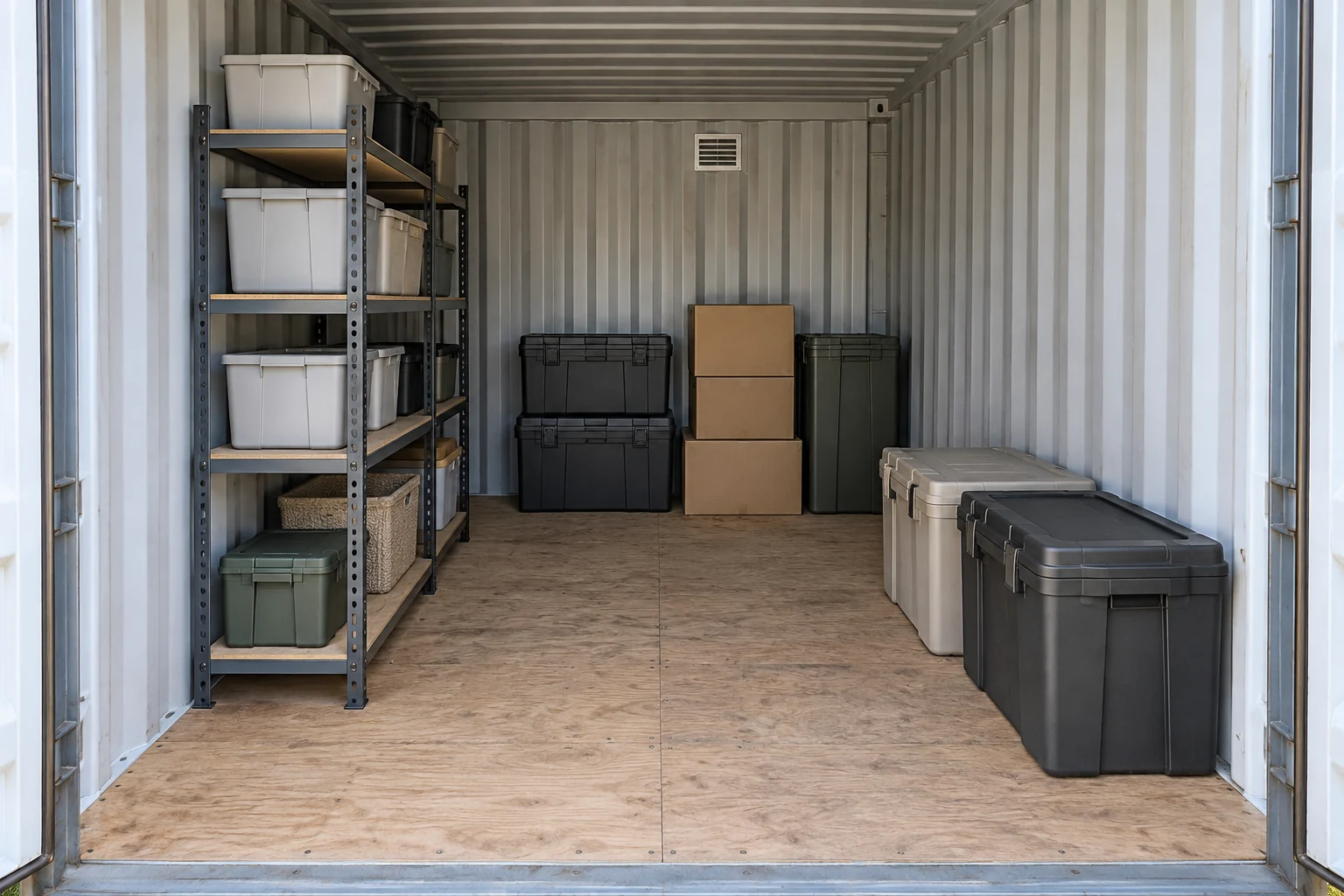
On-site container storage or an off-site unit?
Buying or renting a stationary container is different from booking a service that transports your goods. Do not assume a supplier will move a loaded container because it delivers empty units.
Compare the whole period of use: delivery, collection or removal, access journeys, upkeep and any work needed for the contents. Buying avoids recurring rent, but that alone does not establish the lower total cost for your situation.
| Option | When to compare it | Questions that affect the decision |
|---|---|---|
| Container on your site | You need goods close to home, the business or a project. | Can the site receive it? Do you have suitable space and authority to place it? Who manages access and upkeep? |
| Off-site self-storage unit | You have limited site space or prefer a facility for storage. | Where is it, when can you access it, and what conditions and terms does the provider offer? |
| Portable moving and storage service | You need goods collected, transported or stored between locations. | Does the service move the loaded unit, where are goods held, and what handling is included? |
Decide whether the goods suit container storage
A dry container can be useful for suitable equipment, tools or inventory when its condition and location meet the storage requirements. It does not automatically provide the temperature or humidity control of a purpose-built indoor space.
Check what the goods need before selecting the container. Furniture, fabrics, paper, electronics and other sensitive items may require conditions that a bare unit cannot maintain. Compare a controlled storage option where those requirements matter.
Inspect the offered unit’s doors, seals, roof and floor. Keep leakage, internal moisture and the condition of the goods separate in the assessment. The grades guide helps compare evidence rather than relying on the name of a condition category.
Choose size, condition and doors for the workflow
Use the size guide for dimensions, floor area, capacity and weight. Empty cubic volume is not an inventory plan: aisles, shelves and the shapes of the goods reduce the space available. Confirm the actual unit and fitted arrangement before ordering.
| Choice | Use it to decide |
|---|---|
| 20ft or 40ft | Compare the quantity of goods and the space needed to reach them. A longer container also needs a suitable site and delivery arrangement. |
| Standard height or High Cube | Compare the height of stored items and the completed shelving or lining. Door openings and interior measurements are separate. |
| Doors at one end | A practical option to compare for goods that can be reached from a single loading point. |
| Doors at both ends or side access | Compare when frequent access to several zones matters more than a simple one-way loading arrangement. |
| Used or one trip | Compare condition evidence, accepted wear and the work included in each offer. |
Three practical storage layouts to plan
These examples organize access; they do not predict how much your particular container will hold.
If the container will be moved with goods inside, a storage layout is not a cargo-securing plan. Confirm the movement and loading requirements separately with the responsible transport provider.
- Draw the main zones before loading; mark where access must remain open.
- Measure the completed shelving and the actual items instead of using box counts from another setup.
- Keep door operation and the loading area clear.
- Record where goods are stored so the layout remains usable after several people have accessed it.
| Use | Layout idea | Check before loading |
|---|---|---|
| Household overflow | Place regularly used seasonal items near the doors. Group longer-term items farther back and keep a clear route between the zones. | Can you retrieve one item without unloading the entire unit? Do the contents require a controlled environment? |
| Business inventory | Separate incoming goods, stocked items and items ready to leave. Give each zone an inventory reference; use suitable shelving for smaller items. | Does the aisle allow the intended handling equipment and routine access? Are product and shelf limits documented? |
| Tools and equipment | Keep heavy items low, place frequently used tools within easy reach and allocate a clear loading area at the doors. | Can equipment pass through the opening and approach? Is any ramp rated and installed for the intended equipment? |
Manage moisture, access and security
Condensation can form when moist air contacts a sufficiently cold surface. Goods, packaging and changing temperatures can contribute to the moisture inside. A container that keeps out rain may still need a moisture-management plan.
Load suitable goods dry, identify leaks or damp materials and check conditions over time according to the contents. Ventilation, insulation or other measures need to suit the climate and use. No number of basic vents guarantees the right conditions for every storage job.
Choose a lock system that fits the actual doors and plan who has access. The lock guide covers padlocks, lock boxes and removable devices. Prepare the site so the doors remain usable; follow the site-preparation guide for the broader delivery and ground requirements.
Using containers for mini-storage or a storage yard
A container used by an owner on one property is different from a business renting storage space to customers. For mini-storage, plan the number of units, customer access, circulation, security, drainage and how the facility will be managed.
Establish the requirements for the actual parcel and proposed activity with the relevant local authority before treating a container layout as an approved storage business. Unit purchase cost alone does not establish a project budget or return on investment.
If you need to store an empty shipping container itself, rather than goods inside one, describe that need separately. It is a space and handling question, not the interior storage layout discussed here.
Compare equipment and prepare the site
For an on-site purchase, compare the container formats and condition choices below. For a temporary need, compare the full rental cost and service terms; an advertised monthly charge does not include every possible movement or site requirement.
Record the goods, access frequency, size and door preference, expected duration and delivery location. Use those details to prepare a container request when you are ready to choose the equipment.
Buying questions
Are shipping containers good for storage?
They can be useful when the contents, unit condition and site suit the job. Check access, moisture and temperature requirements first. A bare container is not a substitute for a controlled indoor environment.
Does a shipping container need ventilation for storage?
The appropriate approach depends on the goods, climate and moisture sources. Distinguish leaks from condensation and evaluate the full setup. A vent alone does not guarantee suitable conditions.
Is container storage the same as self-storage?
A container may sit on your property, or form part of an off-site storage facility. The equipment can be similar, but access, transport and service terms differ. Establish where the goods will be stored and who manages the space.
How should I organize a container for frequent access?
Place frequently used items near the doors, group the rest by use and keep a clear route. Plan shelves and handling space before loading, then maintain an inventory showing each zone.
Can a storage container be moved while full?
Only if the responsible provider accepts and plans that movement with the required loading and securing arrangements. Do not assume an empty-container delivery service includes loaded transport.
Can I build a mini-storage business with containers?
Containers can be considered as equipment for a planned facility. You still need to assess the actual site, customer access, local requirements, security and operating costs before making the investment.