
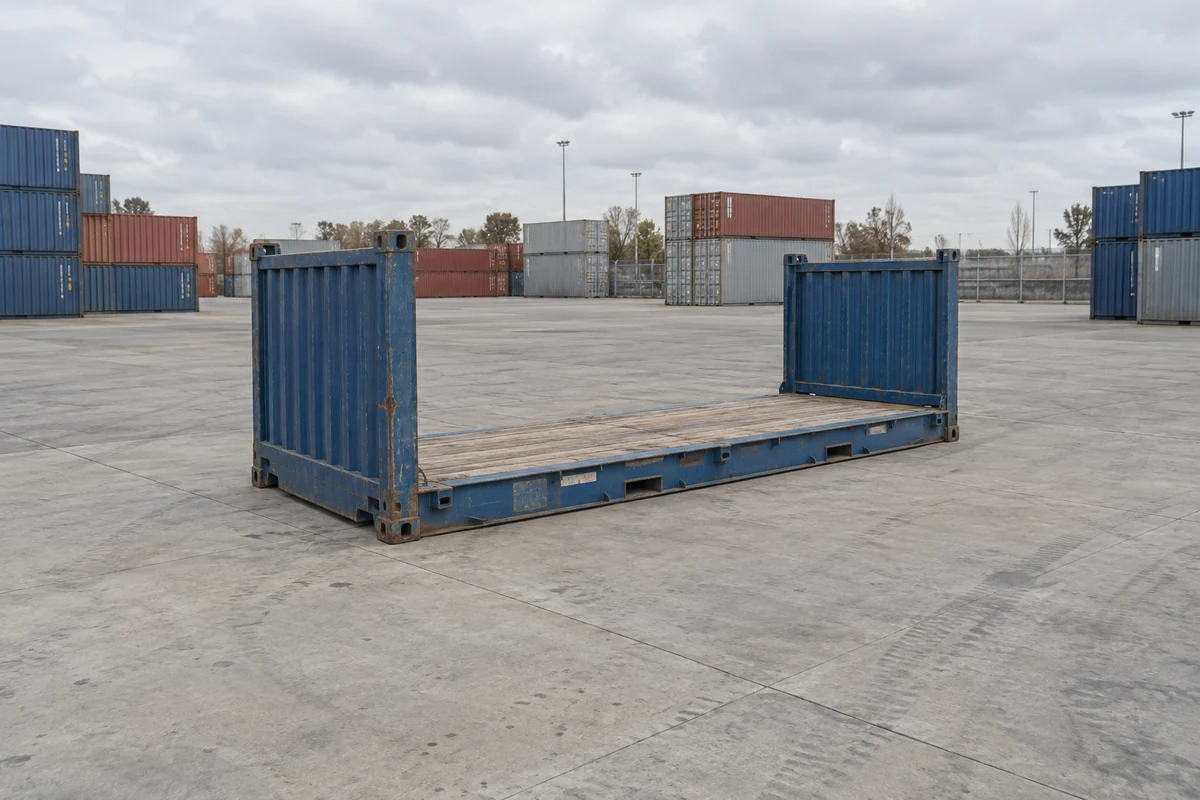
20ft flat rack container — used
Category: Flat Rack Containers
A used 20ft flat rack is an open platform with end structures, intended for a cargo plan that does not suit a fully enclosed box. It is not a weatherproof store. Choose it through the support and securing arrangement for the actual item, together with the condition and carrier acceptance of the offered platform.
20ft-flat-rack-used-blue · industrial blue
- Nominal length
- 20ft
- Height / build
- Confirm finished drawing
- Requested condition
- Used
- Access
- Open sides and top
Choose a requested finish
- industrial blueQuote this finish
- industrial greyQuote this finish
- olive greenQuote this finish
- sand beigeQuote this finish
- ivoryQuote this finish
Exterior color is a request; confirm the final finish with the supplier.
Start with the points where the cargo bears
Sketch the platform, its supports, the cargo and where the restraints will run. Give the supplier or carrier the cargo details, including where it rests and how it will be handled. An open platform may fit an awkward shape, but the load still needs suitable support. Agree the supports and packing for this load. The nominal container size alone does not confirm that the loading plan is suitable.
- Ask how the offered securing points and end structures fit the proposed load.
Inspect the load path through the used structure
Inspect the deck, main rails, corners, end structures and available securing points. Record corrosion, distortion, deck damage and any repair work. Ask for an explanation of the offered unit markings and configuration, without assuming documentation from another flat rack applies. If an end structure is movable, have the supplier demonstrate the intended arrangement and describe its locking condition. Photographs should show the platform empty so support areas can be evaluated.
- Separate deck repairs from the cargo-support and securing work needed for the job.
Plan the open load after it leaves the platform area
The item remains exposed unless a separate, suitable protection plan is provided. Discuss moisture, loose components and sensitive surfaces with the party responsible for the cargo. The carrier needs the loaded outline and handling plan, including any projection beyond the platform. Confirm the required lifting and unloading arrangement at both ends of the movement. Access from the side is useful, but it comes with a different enclosure and handling task from dry-container storage.
Questions about this model
Does a flat rack protect equipment from rain?
It has no enclosed roof-and-wall arrangement. Any protection must be separately specified for the cargo and movement, including how it is secured. Do not assume a cover turns the platform into a standard dry store.
Is the cargo footprint enough to choose the platform?
No. The outline, support locations, load distribution and securing arrangement all matter. Give those details to the supplier or carrier and have the specific offered unit assessed for the intended job.
What should be checked on a used deck?
Inspect the whole supporting surface and the structure beneath the places where the load will rest. Ask how damage or repairs could affect this load. A photograph with straight-looking edges does not show whether the platform is suitable.
Prepare the delivered quote
For delivery in the United States, provide your ZIP code, access constraints, planned use and preferred door orientation. Request a USD quote separating the offered container, transport, unloading, placement and applicable taxes.
Read the size and configuration guide →Compare the alternatives
20ft open top container — used
Compare top loading within full side walls when those walls suit the cargo and protection plan.
View this model →40ft flat rack container — used
Compare a longer platform only when the cargo outline and support plan require the extra length.
View this model →