
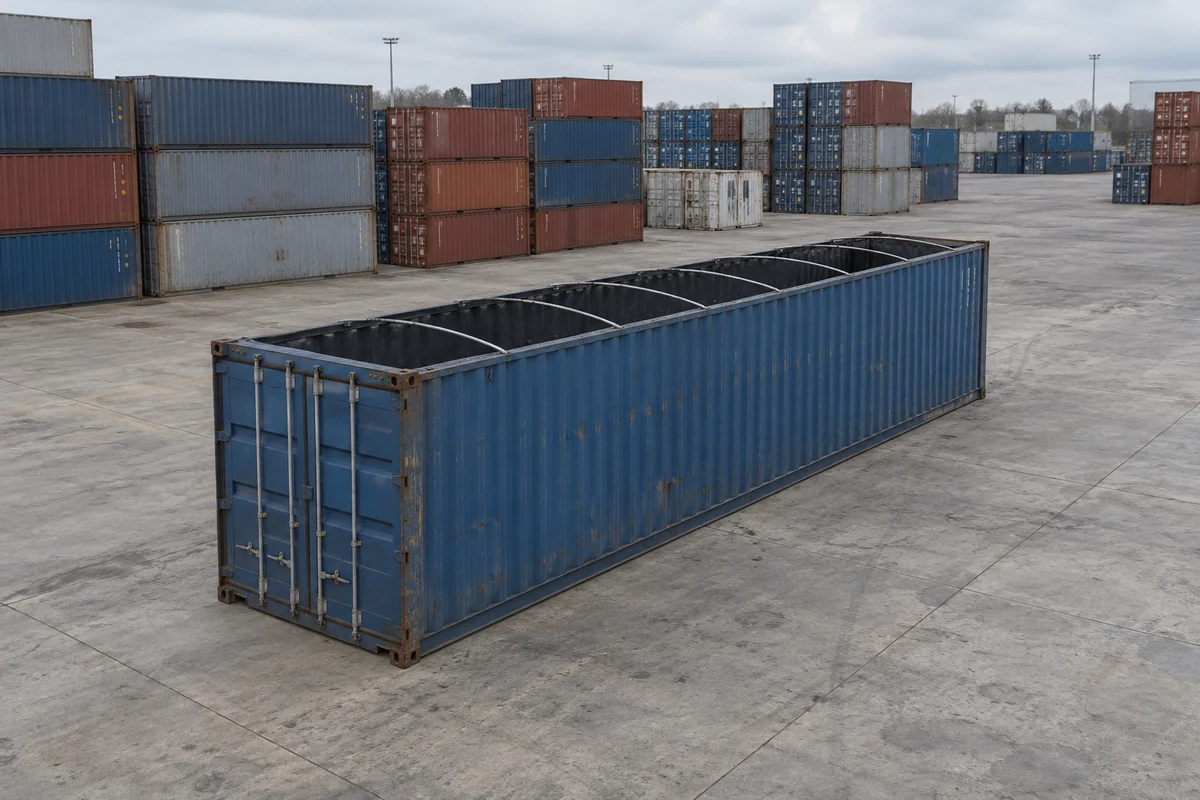
40ft open top container — used
Category: Open Top Shipping Containers
A used 40ft open-top container is a long, full-sided format for a cargo plan that needs overhead access. The main questions are how the long item is lifted, where it bears on the floor and how the top is restored or managed afterwards. Treat the load, lifting equipment and container as one coordinated arrangement.
40ft-open-top-used-blue · industrial blue
- Nominal length
- 40ft
- Height / build
- Standard · 8ft 6in
- Requested condition
- Used
- Access
- Open roof + end doors
Choose a requested finish
- industrial blueQuote this finish
- industrial greyQuote this finish
- olive greenQuote this finish
- sand beigeQuote this finish
- ivoryQuote this finish
Exterior color is a request; confirm the final finish with the supplier.
Map the whole length of the lift
Draw the item above the top opening, its supports inside and the lifting equipment's path. Give the lifting specialist the available centre-of-gravity and handling information. Check the actual opening and any obstructions against the whole load, including projecting parts. A nominal 40ft length does not prove a particular machine can be lowered, supported and taken out as planned.
- Agree load supports and distribution with the appropriate supplier or handling specialist.
Inspect the rails and floor along both sides
Inspect the complete upper rails, lower side structure, floor, end frames and cargo doors. Record corrosion, distortion, patches and the condition of any previous repairs. Ask which roof bows and closing components belong to this offer and whether they are complete. On a long used unit, do not let close-up photographs of one end substitute for a full account of the centre and far end where the load may bear or pass.
- Photograph the top components together so omissions can be identified before loading day.
Resolve the loaded outline before transport
Show whether the load remains within the proposed covered arrangement or projects above it. The carrier must assess the actual unit and loaded outline, including securing and any special handling requirements. Do not use the open-top label as an approval for an unusual movement. If the purpose is long-term storage rather than one loading operation, also define inspection access and the protection needed while the goods remain inside.
Questions about this model
What makes this different from choosing a longer dry box?
The loading sequence uses the top opening, so the lift and the closing components become part of the decision. Full side walls still constrain the load; the format is not an unrestricted open deck.
Can the roof equipment be dealt with after the cargo arrives?
Resolve it beforehand. The required pieces, their removal and storage, and the method of restoring the top should fit the lifting sequence. Missing components can change the handling and protection plan.
Why discuss cargo supports rather than only total weight?
How a machine or long object rests on the floor matters. Give the supplier its support positions and handling details. The container’s nominal size alone does not show whether a concentrated or uneven load is suitable.
Prepare the delivered quote
For delivery in the United States, provide your ZIP code, access constraints, planned use and preferred door orientation. Request a USD quote separating the offered container, transport, unloading, placement and applicable taxes.
Read the size and configuration guide →Compare the alternatives
40ft standard container — used
Compare a fixed-roof long store if end loading works for the actual goods.
View this model →40ft flat rack container — used
Compare a long open platform when full side walls conflict with cargo access or shape.
View this model →