
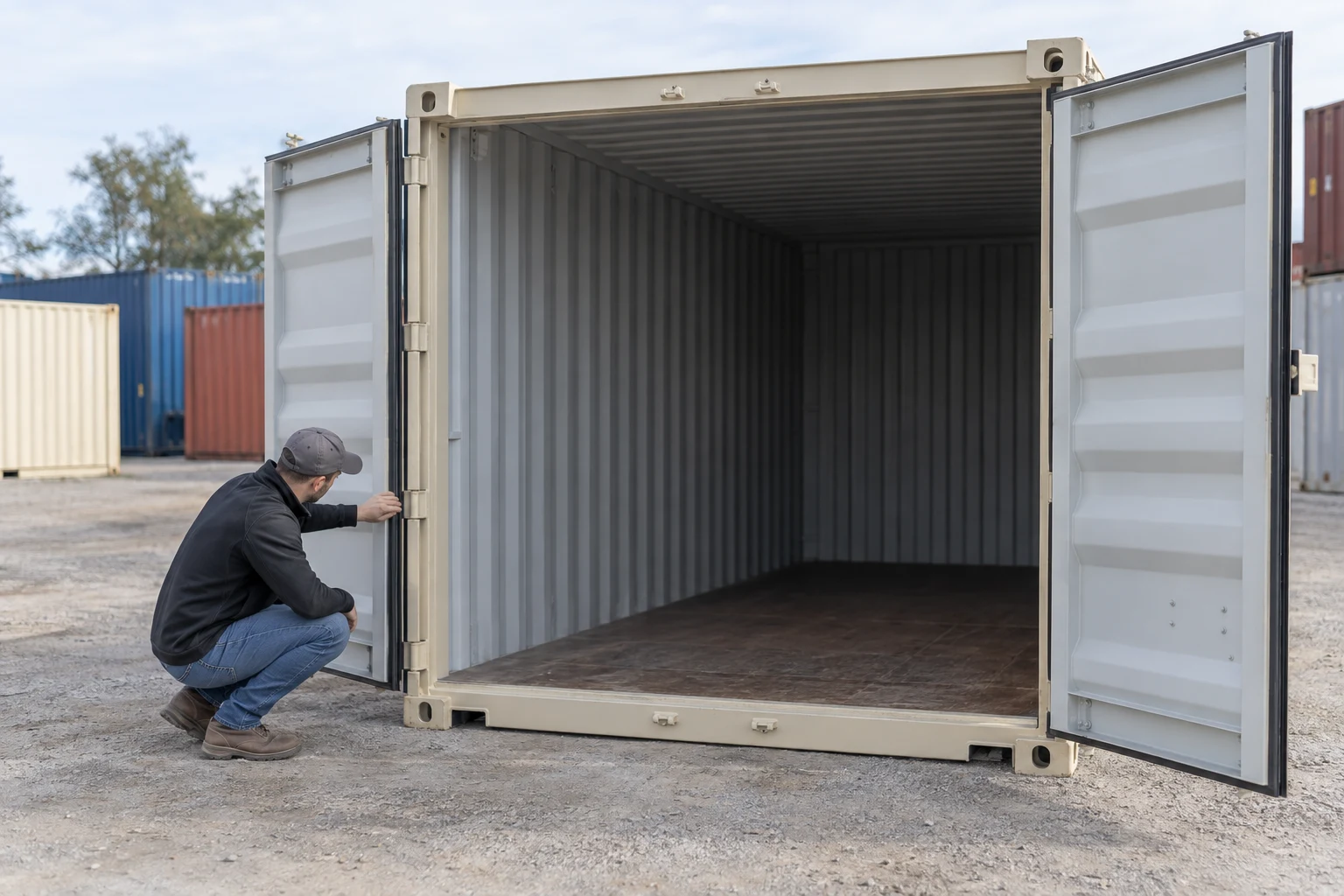
1. Set the use and fit requirements
For storage, list your largest items, their dimensions and how you will move them in and out. For cargo transport, tell the seller the planned use and ask your carrier or forwarder what documentation and acceptance checks are needed.
Compare interior space and door openings as well as exterior size. Carrier specifications are useful examples, but manufacturers and units vary. Ask for the dimensions of the unit offered when fit is tight.
For conversion or occupancy, establish the project's requirements before buying a raw container. A shipping specification alone does not approve a building design.
Write a short brief before requesting offers
| Decision | Put in your request |
|---|---|
| Fit | Largest item dimensions, minimum door opening and space needed to retrieve items. |
| Condition | Required weather tightness, door and floor condition, acceptable repairs and inspection evidence. |
| Delivery | Final ZIP, quantity, access restrictions, unloading scope and desired door direction. |
| Unit selection | The pictured unit's container number, or the rules for selecting a unit later and replacing it. |
| Offer | Itemized delivered total, quote validity, payment schedule and inspection or acceptance terms. |
2. Agree on the unit and its condition
A grade-based offer may allocate the unit later. Ask who selects it, when its identity and photos become available, and what happens if it falls outside the written requirements. Agree on inspection, substitution and rejection terms before payment; a sample photo does not document the unit you will receive.
- Ask for the seller's written condition requirements, permitted defects and repair exclusions.
- Ask whether the photos show the offered unit. Have the seller connect its container number, current photos and written offer.
- Request exterior, roof, interior, floor and door views, plus confirmation that the doors operate. Agree on what can be checked at inspection and delivery.
- Ask about odors, residues, known prior use and cleaning where relevant to your stored goods.
- For cargo use, ask for safety approval and current examination information for the unit, then confirm the carrier's acceptance requirements.
3. Confirm that the unit can reach your site
Give the delivery ZIP code, entrance and approach details, ground conditions and desired placement. Ask who reviews access and which vehicle and unloading method will be used.
Resolve site preparation and door orientation before the delivery is scheduled. Ask what happens if the operator cannot safely reach or unload at the agreed spot.
Before purchase, ask the authority responsible for the address whether the intended placement and use are allowed. Resolve any required permits or site work while you can still change the size or location.
4. Compare the complete offer and seller terms
Use the same size, condition, quantity, ZIP code and delivery scope for each quote. Separate the container, transport, unloading, taxes and optional work. Confirm quote validity and every excluded charge.
Identify the seller, invoice issuer, payment recipient and party responsible for delivery. Read the payment schedule, cancellation, return, inspection and issue-reporting terms. Ask who handles each problem and keep the written offer, unit evidence and order confirmation together.
The ContainerPick request builder prepares an editable summary that you can copy or download for your own use. You can also send a reviewed request through the quote form with your consent. A supplier must confirm availability, price and delivery; sending a request does not reserve a unit.
5. Agree on inspection and arrival checks
Before payment, ask when you may inspect the unit, how quickly you must report a problem and what evidence the seller requires. Confirm the process for a substituted unit, damage in transit or a container that does not meet the written condition.
On arrival, follow the operator safety instructions. When safe, photograph the unit number and condition, check the agreed door direction and compare the delivered unit with the order. Use the agreed reporting process promptly if you find a discrepancy.
Buying questions
What should I decide before asking for a container quote?
Specify the use, minimum usable space and door opening, required condition, quantity, delivery ZIP and unloading scope. Ask for the unit identification or selection process and complete written terms. Those decisions make competing offers easier to compare.
Can a storage container be used to ship cargo?
Do not rely on a storage listing alone. Confirm the unit's structural inspection, CSC status and suitability for your intended cargo movement with the seller and carrier.
What should a quote include?
The size and condition, quantity, unit selection or identification, delivered ZIP code, transport and unloading scope, taxes, extra charges, validity and seller terms.
What if the seller cannot identify the unit before payment?
Ask for the written selection and substitution rules, permitted defects and your inspection or rejection process. A sample photo is not evidence of the condition of a unit selected later.