
Mark the final private position
Show the container footprint, door approach, existing structures and the proposed support location. Include lot and easement boundaries rather than describing the space only as an open yard.
Compare offers from multiple suppliers. Find the right price for your project.
Compare shipping containers for sale in San Jose by the load you need to store, the opening you will use and the condition of the offered unit. Choose a standard format or fitted configuration, then put the proposed use, final position and unloading area on the same project plan.
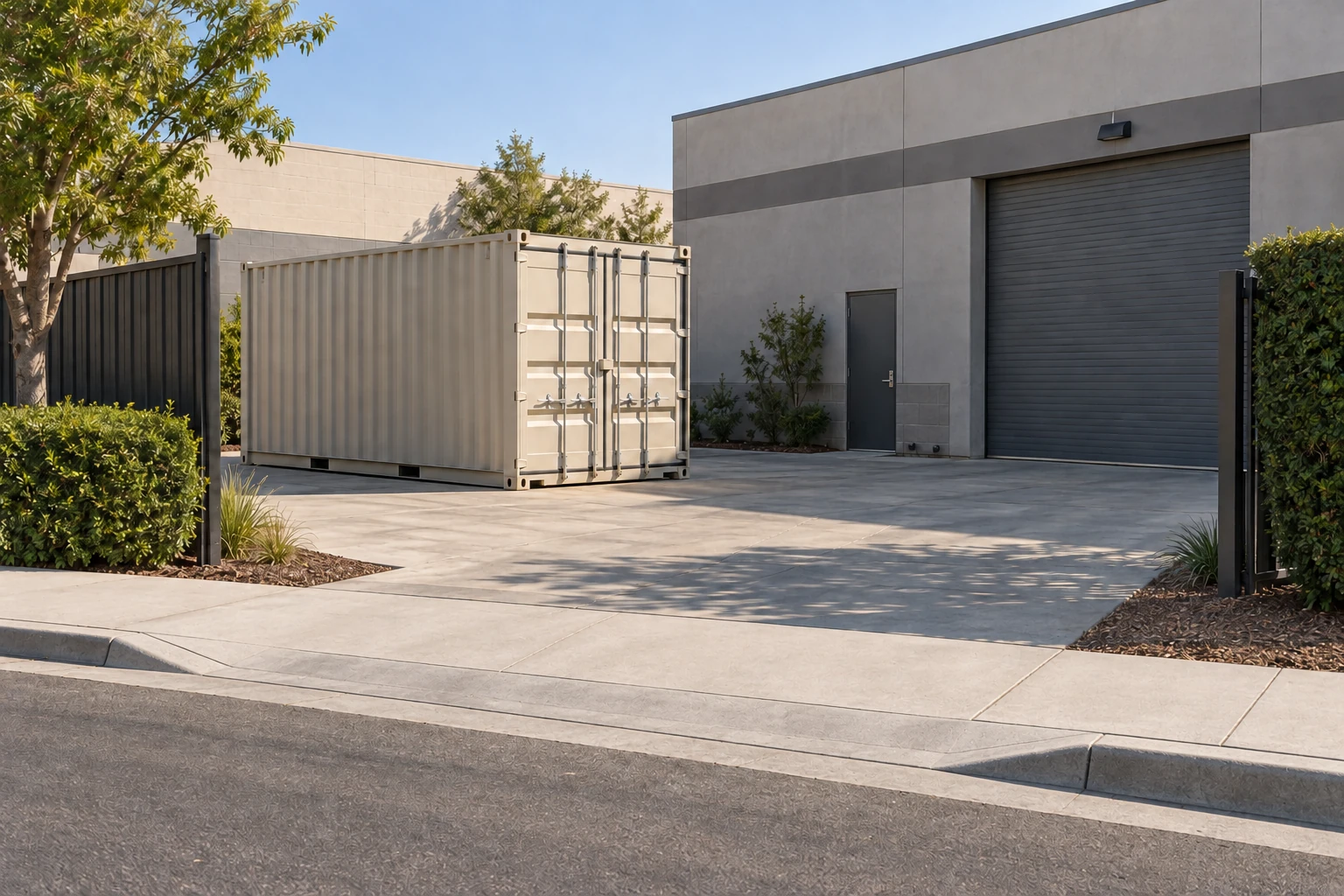
Use the same offered unit, destination and final position when comparing prices. Keep the purchase and each part of the delivery operation identifiable.
| Part of the purchase | Details to include |
|---|---|
| Container and fit-out | Actual unit, condition, openings, finished layout and included equipment. |
| Transport and unloading | Actual release point, destination, truck/lifting method and agreed final position. |
| Separate site work | Ground/support work, utility connections, street arrangements and any repeat placement. |
The place where the container will stay and the space needed to unload it can require different arrangements.
Show the container footprint, door approach, existing structures and the proposed support location. Include lot and easement boundaries rather than describing the space only as an open yard.
Show separately whether a container will be staged at the curb or only the truck and lifting equipment will use public space. Include the working area in the delivery discussion and the inquiry to City Public Works.
Use the same drawing when discussing the property proposal and carrier access; record who will arrange each part of the work.
City of San Jose; actual parcel and proposed use
Confirm whether the final site is within the City of San Jose. The City provides separate starting paths for single-family/duplex and commercial/industrial projects. Its residential accessory-building guidance concerns non-livable structures; it does not establish approval for a steel container or an occupied office.
San Jose project review; property and use must be classified
For a residential accessory-building inquiry, prepare lot dimensions and easements, existing and proposed structures, openings and the support/foundation plan. Describe planned utilities and anyone working inside. A commercial or occupied proposal needs its own project classification; San Jose offers Standard Plan Review for commercial and residential plan submissions.
City of San Jose public right of way; operation-specific inquiry
The City Public Works application table lists Portable Storage Unit under Revocable Encroachment. Describe any proposed curbside container staging through that inquiry. If the container stays on private land but the truck or lifting equipment uses the street, show that operation and ask which process applies; the portable-storage listing does not settle every unloading-only operation.
Use the authority responsible for the actual parcel. City of San Jose guidance does not establish the requirements for a neighboring city or unincorporated Santa Clara County property.
Nominal length does not establish how the City will classify the installation. The residential accessory-building guidance concerns a particular property and use. Describe the actual container, supports, openings and planned utilities when the proposal is reviewed.
Describe both stages, including intended occupants, the finished layout and utilities. For a San Jose commercial property, use the commercial/industrial project route to discuss the full proposal. Ask the seller to distinguish the shell, conversion and site work in the price.
Include the address or parcel, property type, storage or occupied use, duration, format/condition, final position and public-space work area. Keep the unit, fit-out, transport and site-work prices separate.
Prepare and review your request. Sending requires your consent on the quote form.