
40FT / STANDARD HEIGHT
New / one-trip
A less weathered finish
Compare handling marks, included fittings and the work a used shell would need.
Explore New / one-trip →Compare offers from multiple suppliers. Find the right price for your project.
40FT STANDARD HEIGHT / WIND & WATER TIGHT
Choose a standard-height 40ft wind and water tight (WWT) container when your main need is enclosed storage protected from rain entering through the shell or closed cargo doors. Compare the actual roof, walls, floor, seals and door operation. WWT is a storage condition; it does not establish readiness for an overseas shipment or control indoor humidity.
Standard height: 40ft × 8ft × 8ft 6in exterior. Compare 40ft High Cube →
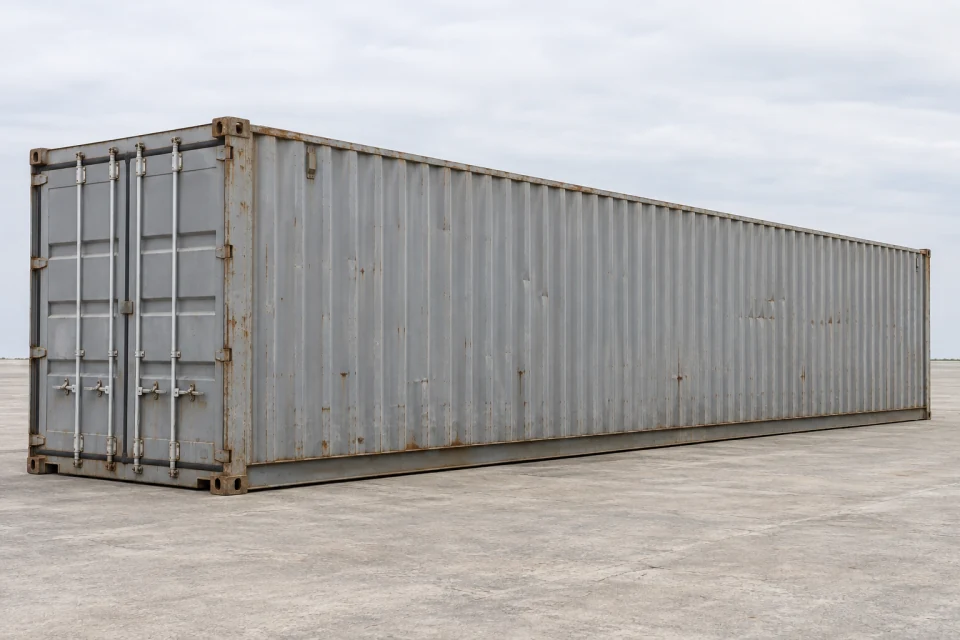
The seller should define the condition in writing and identify the unit or explain how the final unit will be assigned. A general picture of a painted container cannot show that its roof, door seals or floor meet that description.
| Check | Evidence to compare |
|---|---|
| Roof and walls | Current photos of the full long body, seams, roof repairs and any holes or damaged panels; the seller’s leak-check method and result. |
| Cargo doors | Both leaves opening, closing and locking, with seals and locking hardware in serviceable condition. |
| Floor | Photos along the full length, including soft, broken or stained areas and previous panel replacements. |
| Assurance | The written condition criteria, exclusions and remedy if the delivered unit differs from the agreed description. |
Rain exclusion and condensation are different problems. Moist air inside a steel shell can condense on cooler surfaces even when the roof and doors do not leak. A WWT label does not provide a temperature or relative-humidity guarantee.
For paper goods, fabrics, electronics or other moisture-sensitive stock, define the storage conditions the goods need. Include the climate-control or moisture-management work in the project budget rather than assuming standard vents will provide it.
With cargo doors at one end, stock at the far end needs a clear route back to the entrance. Put regular supplies near the doors, allow a usable aisle and check any shelving dimensions before treating the full floor as storage capacity.
For land storage, compare weather sealing, floor condition, access and any repairs. If the unit will carry cargo in transport, compare the cargo-worthy option and establish the required inspection and current documents separately. Paint quality or a WWT label does not resolve that transport question.
Ask for the same grade, standard height, delivery ZIP and unloading method in every offer. Separate the unit price from transport, placement, taxes, repairs and the equipment needed for daily use.
| Cost item | Put in the same quote scope |
|---|---|
| Container | Standard-height 40ft WWT condition, door configuration, quantity and included fittings. |
| Work | Cleaning, identified floor or door repairs, locks, shelving and lighting where required. |
| Delivery | Origin, destination ZIP, unloading equipment, placement and site restrictions. |
| Terms | Condition assurance, exclusions, taxes, fees and a remedy for a unit that fails the agreed criteria. |
No. WWT describes storage weather sealing under the seller’s criteria. Cargo-worthy language concerns fitness for cargo transportation. Confirm the unit’s condition and any required examination or transport documents separately.
WWT addresses external water ingress. It does not actively control temperature, humidity or condensation, and it does not establish a clean cargo history. Match the storage environment to the goods.
Use current condition evidence. Surface finish alone does not establish whether seams leak, doors operate or the floor is serviceable.
Keep the format, condition, intended use and delivery requirements together when comparing supplier offers.
Prepare my Wind & water tight request →Choose the condition your project needs. The supplier confirms the actual unit, condition criteria and availability.
A less weathered finish
Compare handling marks, included fittings and the work a used shell would need.
Explore New / one-trip →For enclosed on-site storage
Establish sealing, floor and door condition. Plan moisture-sensitive storage separately.
You are viewing this conditionFor a cargo-transport project
Establish the unit inspection, current examination and documents required for the shipment.
Explore Cargo worthy →For an assessed repair project
Compare disclosed defects, handling and repair costs with a WWT alternative.
Explore As-is →Used appearances can overlap across grades. An illustration cannot establish watertightness, cargo suitability or the defects of an offered unit.