
Visible business storage
A 40ft body presents a large painted surface beside a yard, store or workshop. If a consistent finish matters, compare the one-trip offer with a used unit plus the quoted preparation and repainting work.
Compare offers from multiple suppliers. Find the right price for your project.
New / one-trip · standard height
A cleaner finish for visible storage and conversion projects, with the long interior a 40ft container provides. Compare standard-height one-trip options, advertised prices and delivery requirements before choosing your unit.
Long Beach & Chicago · 2 listings checked October 9, 2026. Confirm delivery, unloading and taxes separately.
See price details ↓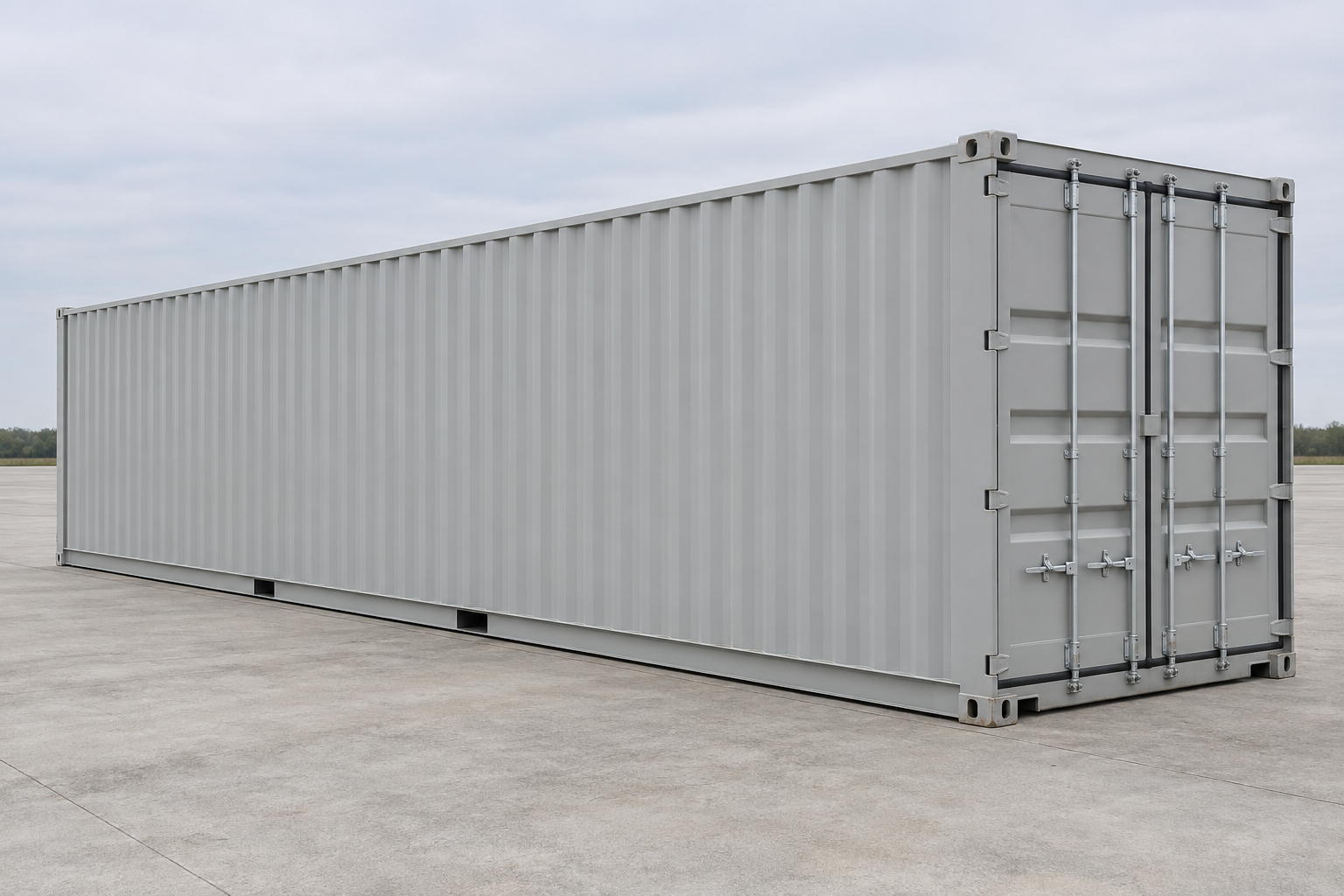
In container listings, “new” commonly means one-trip: a container built overseas that carried one cargo load to its first destination. It is not necessarily factory-unused. Loading, lifting, transport and depot handling can leave scratches, small dents or other blemishes.
Ask for the manufacture date, stated travel history, current unit photos and any repairs. Specify the color or finish you need in writing. An example photograph does not establish the appearance of the container you will receive.
Two standard-height 40ft one-trip listings checked October 9, 2026 showed unit prices of $4,200–$4,395 in Long Beach, California and Chicago, Illinois.
| Advertised market | Container price, USD |
|---|---|
| Long Beach, CA | $4,200 |
| Chicago, IL / ZIP 60607 | $4,395 |
These local advertised prices are reference points for one standard-height container. Request a current quote for your ZIP; High Cube and extra-door configurations have separate prices.
Confirm delivery, unloading, taxes and site work in the itemized total. Compare the same condition, door layout and placement service across offers.
Use two quotes for the same 40ft format and delivery address. Include the work needed to make each unit suit your project.
This compares up-front costs. Condition, repair quality and suitability still matter; future maintenance and resale are outside this calculation.
An end-door 40ft container works best when the route to the far end stays usable. Organize around how stock moves, rather than filling every available floor position.
Scroll sideways to see the full layout.
| Zone | A practical inventory layout |
|---|---|
| Door end | Keep a receiving space for checking deliveries and collecting orders. Place daily supplies nearby without blocking the entrance or door hardware. |
| Middle | Use labeled shelves or bins for repeat stock. Keep the same item in one location and leave room to lift it out, turn and carry it along the aisle. |
| Far end | Put slower-moving reserves here. Load bulky items before the aisle becomes crowded, and keep a route back to them when the front shelves are full. |
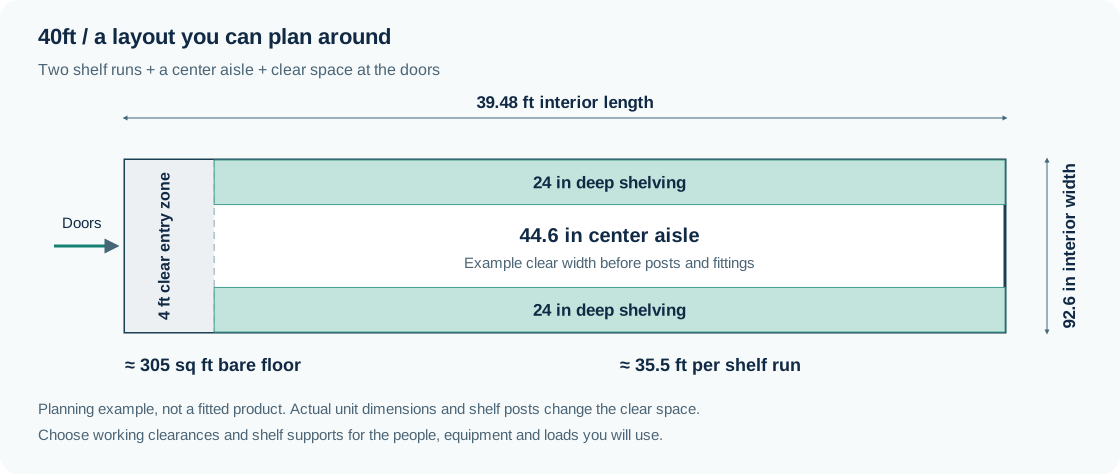
The example below uses 24-inch-deep shelving zones on both sides and a chosen 4ft clear entry zone. A representative bare standard 40ft interior leaves about 44.6 inches between those zones, before shelf uprights, protruding stock or lining. This is a planning example; measure the allocated unit and check the space your handling equipment needs.
With a one-trip unit, agree the storage plan before paying for finish work: shelf attachments, a new access opening or electrical installation can affect the painted surfaces. The condition premium buys the selected shell; shelving and installation remain separate items.
One long room suits stock that belongs together. Two shorter units can suit separate teams or product groups, each with its own entrance and lock.
| Decision | One standard 40ft | Two standard 20ft units |
|---|---|---|
| Daily use | A continuous interior for long items and a single inventory route; the far end needs a clear aisle. | Separate access lets one group collect tools without walking through the other group’s stock. |
| Appearance and options | Specify one finish and one set of included fittings; price the complete long-body fit-out. | Specify both units individually. Matching color, two locks and any duplicated shelving, lighting or ramps belong in the scope. |
| Delivery and layout | One placement, with a route that accommodates the long unit and unloading vehicle. | Two placements and two door approaches. Delivery may involve separate trips; the transporter must price the actual vehicle and unloading plan. |
Two 20ft units do not make one continuous 40ft interior. Side-by-side placement changes the site shape, while end-to-end placement still leaves separate walls and doors. Include access around each entrance and each support location in the site plan.
Entry space affects shelving too. With the illustrated 4ft entry zone in each container, the planned shelving runs total about 71ft along the two walls of one 40ft, versus about 61ft across four walls in two 20ft units. Those are horizontal layout lengths before frames, not shelf capacities.
Compare two current 20ft offers with one current 40ft offer using the same condition and finish requirements. Add each container, the quoted trips and placements, site work and options. Neither arrangement is automatically cheaper.
This page concerns standard-height dry containers: nominally 40 ft long, 8 ft wide and 8 ft 6 in high. A 40ft High Cube is nominally 9 ft 6 in high with the same footprint. It adds vertical room, rather than extra floor length or width.
Measure tall packed items against the actual doorway. For a fit-out, allow for the floor, lining and ceiling. Choose height before comparing condition and price; extra height and an extra door arrangement are separate specifications.
A one-trip container is a starting shell. Include the equipment your daily work needs in the purchase budget, even when the exterior already has the finish you want.
| Item | What belongs in the specification |
|---|---|
| Shelving | Depth, clear aisle, shelf heights, intended stored loads and a suitable fixing method. Include assembly and installation, not just the shelf kit. |
| Lighting and power | Lighting down to the far end, switching and the planned power source. Separate fixtures and electrical installation from the container price. |
| Locks and included fittings | An inventory of the lockbox, compatible lock, vents and any door-opening features actually supplied. Choose key control for the people using the room. |
| Wheeled access | A ramp matched to the installed threshold height, ground slope, equipment and total moving load. A trolley ramp is not automatically suitable for a forklift. |
| Temperature and moisture | The requirements of the goods, local conditions and a suitable ventilation or climate-control plan. Standard vents do not make the room climate controlled. |
For regular order picking, lay out the shelves, lighting and entry space together. For a conversion, coordinate openings, lining and services before fabrication so the finished clear space matches the project.
For visible storage, decide whether the offered finish needs no work, local touch-up or a full color change. Describe acceptable marks across both long walls and the roof. A one-trip label does not make every scratch or dent irrelevant to your order.
If comparing with a repainted used unit, keep steel repairs, surface preparation and the finish as separate line items. A dented roof can hold water, while exposed steel at damaged paint needs attention. A fresh color cannot tell you what was repaired underneath.
For planned openings or services, list cutting, reinforcement where required, weather sealing, paint around altered areas and the finished interior. Include the fabricator’s assessment of the actual shell and floor. Paying for limited prior wear does not settle the design of an occupied workspace.
The 40 ft × 8 ft footprint is only the final placement area. The truck needs an assessed approach, turning space and room for unloading. Share gates, slopes, overhead obstructions and ground conditions, and agree the door orientation and suitable support.
A tilt-bed normally slides the container to ground level; a flatbed normally requires separate lifting equipment. Confirm who supplies and operates that equipment, placement limits and the charge. Depot pickup also requires suitable transport and unloading arrangements.
Compare the finish, buying budget and checks that matter to your project.
A cleaner finish, with less visible wear. Check the included features and any handling marks.
You are viewing this option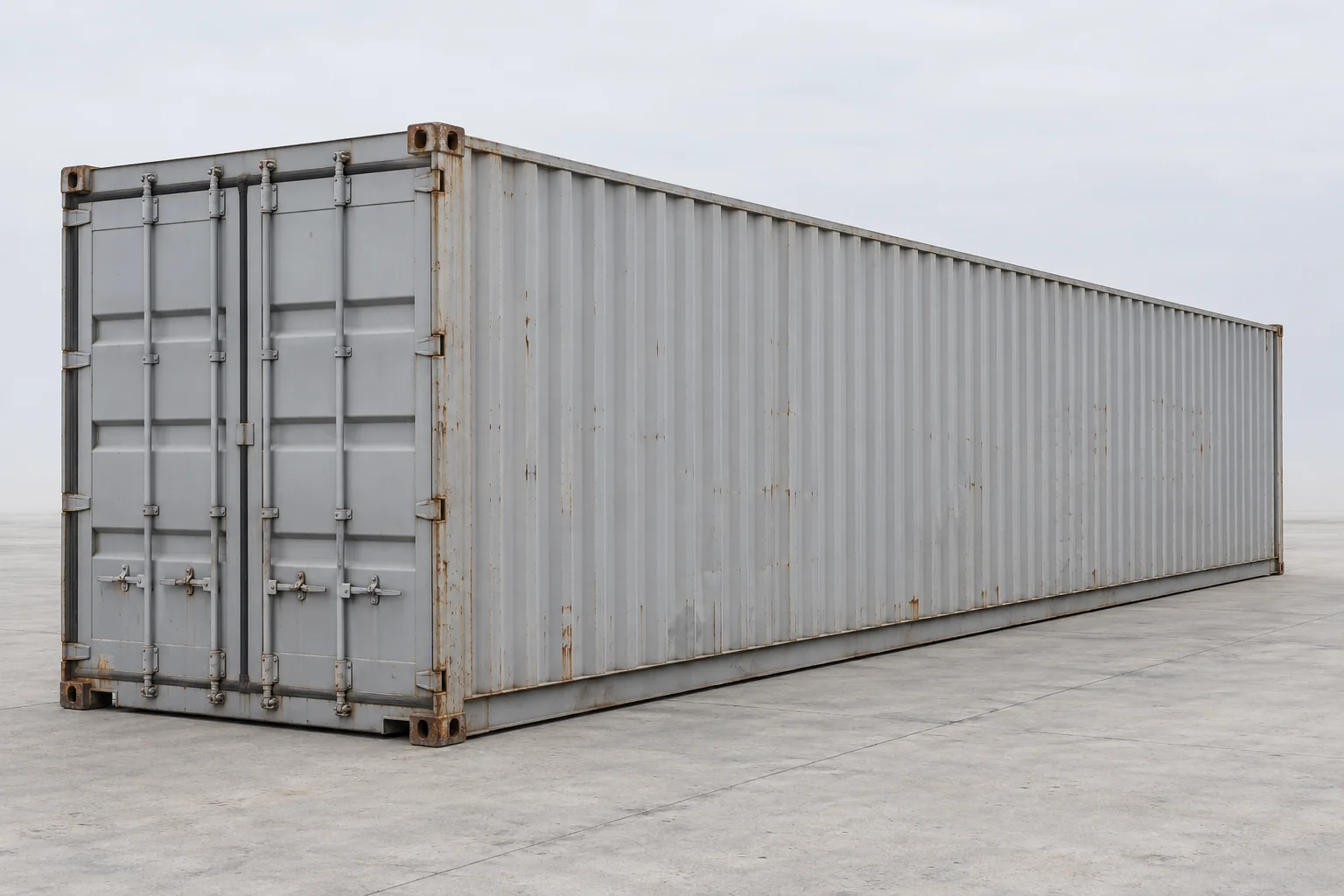
Compare storage and cargo-worthy options. Check the actual floor, doors, repairs and weather sealing.
Explore 40ft used →Compare the floor surface, wall wear and visible repairs, then request close-up photos of the actual unit.
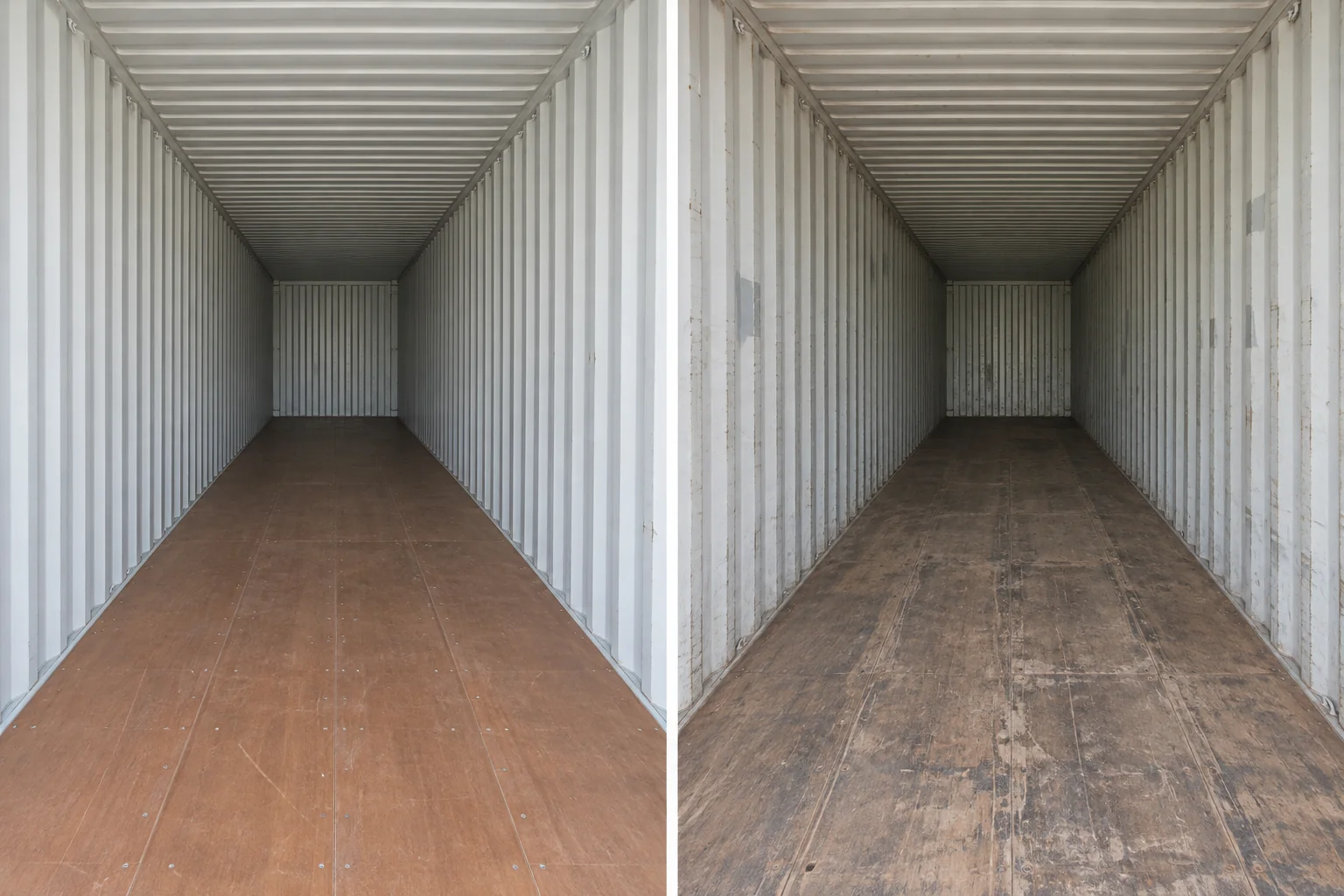
Illustrative appearances. Paint and rust alone do not establish weather-tightness or suitability for shipping.
Often, “new” means one-trip rather than factory-unused. Confirm the history of the offered unit. One cargo journey and subsequent handling can leave marks, and the label does not guarantee a flawless finish.
Confirm the actual unit’s condition, CSC plate, current examination status and the survey or documents required by your carrier. A purchase condition label alone does not establish acceptance for a particular shipment.
Compare the delivered one-trip price with the used price plus a specific inspection, repair and finish quote. On the long 40ft body, include preparation of both sides and the roof, and decide what appearance the job needs.
Include the condition, unloading and any work your container needs.
Choose the condition your project needs. The supplier confirms the actual unit, condition criteria and availability.
A less weathered finish
Compare handling marks, included fittings and the work a used shell would need.
You are viewing this conditionFor enclosed on-site storage
Establish sealing, floor and door condition. Plan moisture-sensitive storage separately.
Explore Wind & water tight →For a cargo-transport project
Establish the unit inspection, current examination and documents required for the shipment.
Explore Cargo worthy →For an assessed repair project
Compare disclosed defects, handling and repair costs with a WWT alternative.
Explore As-is →Used appearances can overlap across grades. An illustration cannot establish watertightness, cargo suitability or the defects of an offered unit.