
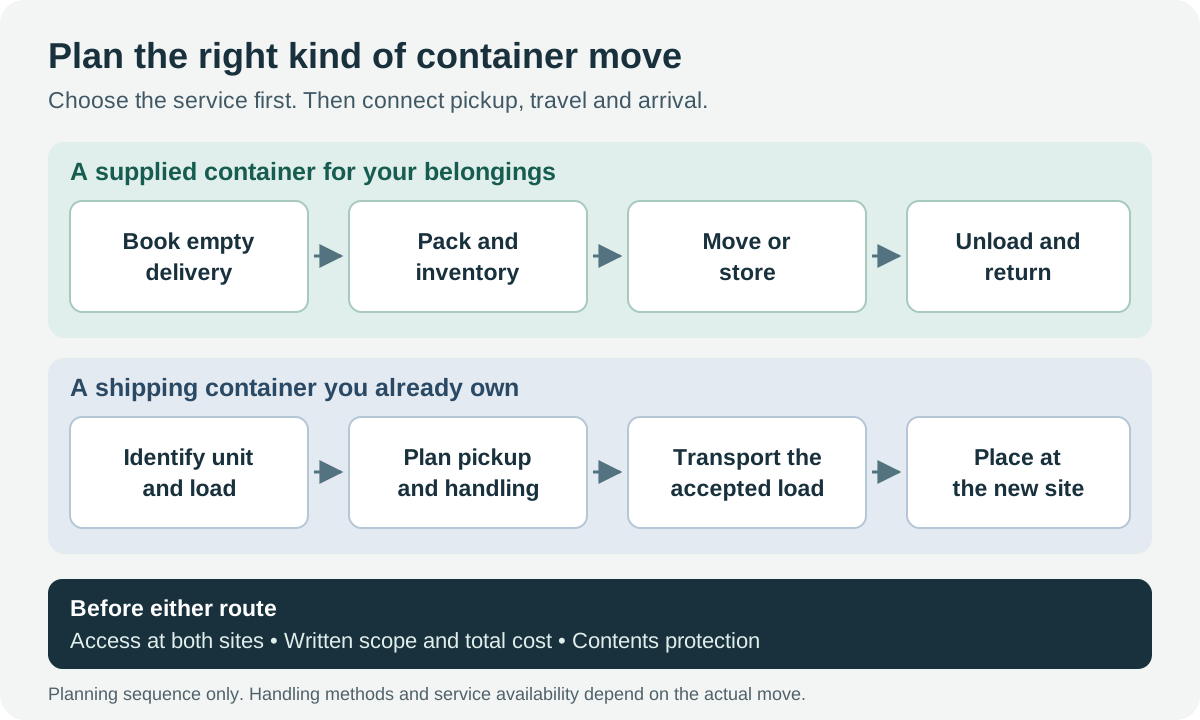
1. Choose the service before choosing a container size
A portable moving container is supplied as part of a service. You arrange time to load it, movement of your belongings and its return. Moving a container you own is a transport job for an identified unit, with its actual condition and load. Buying a storage container does not automatically arrange either service.
Choose a supplied-container service around its actual interior, door opening and permitted load. Do not use the dimensions of a 20ft or 40ft ocean container to size a different moving module. List large furniture, awkward items and anything that must stay upright before selecting the size or number of containers.
| Your situation | The useful starting point | Resolve before committing |
|---|---|---|
| Moving household belongings in a supplied container | An inventory, both addresses and the dates you can load and unload. | Who supplies the container, who packs and loads, which transport and storage stages are included, and when the container is collected. |
| Moving an empty container you own | Unit identification, size, photos, condition and pickup position. | How the operator will get it off its current supports, transport it and place it at the destination. |
| Moving your own loaded or modified container | The unit record plus contents, added fittings and weight information. | Whether the provider accepts that exact combination and who handles the contents and the unit during transport. |
2. Plan a supplied container from delivery through return
Use this sequence to turn a moving date into a complete booking. Add the storage stage only when your move needs it.
Keep the overnight essentials, documents, medication and items needed before delivery outside the shipment. For everything going inside, get the provider’s loading and excluded-items instructions before packing. A booking for a container and transport is not evidence that packing labor or loading help is included.
| Stage | Make the decision now |
|---|---|
| Empty delivery and loading | Reserve the placement area and loading period. Decide whether you will load or hire help, and keep the inventory with the booking. |
| Pickup and travel | Agree the collection window, destination and contact for changes. Record who performs the transport. |
| Storage, if needed | Choose where the container waits, whether you can access the contents and how redelivery is requested. |
| Delivery and unloading | Match arrival to when you can actually occupy and access the destination. Arrange any unloading help separately if it is not included. |
| Empty-container collection | Set the return or collection arrangement and identify the event that stops the rental charge. |
3. Check access at both addresses
For an apartment or a site without a suitable placement area, settle the loading method before paying: an accepted alternative location, timed access or a different service. Do not plan to solve that problem after the container arrives.
| Record at each address | Why it changes the plan |
|---|---|
| Placement and loading access | Mark the position and door direction, the walking route to the building and any space shared with other users. |
| Ground, slope and obstructions | Let the operator assess the setup area and tell you what must change before arrival. A photograph is not a ground-capacity assessment. |
| Property and street permissions | Identify who controls the driveway, parking area or street space. Resolve the permission and local placement requirements for the proposed dates. |
| Contact and time window | Name the person responsible for access and directions. Confirm whether they must be present for the particular service. |
| Fallback if access fails | Agree who arranges an alternative position, extra handling or a new visit, and how those changes are charged. |
4. If you own the container, specify the handling at both ends
Photograph the unit number, doors, visible damage, modifications and the current supports. Identify whether it is empty or loaded. Separate the original unit information from the weight of contents and added fittings; a plate or old specification does not establish its present loaded weight.
Ask the transport provider to describe one workable method from the current position to the new position. With a vehicle that loads or unloads the unit, both sites must suit that operation. If a separate lift is needed, identify who supplies and coordinates it at each end. A road-transport price alone does not establish that either lift is included.
- List fixed additions and loose contents separately, with photos and the source of any weight estimate. Flag unknown weights as unknown.
- Obtain acceptance for moving the unit loaded before packing it for transport. The provider may require a different load or a different arrangement.
- Agree who prepares and secures the contents, who secures the unit to the vehicle and who releases the unit for access at the destination.
- Keep the destination supports and door position in the transport instructions. Have the operator control the handling operation; this guide does not specify lifting points, rigging or tie-down designs.
5. Make the storage gap part of the schedule
Write down four dates: last access to the old home, container pickup, first usable access to the new home and empty-container collection. The gap between them determines what you need to store and for how long. A possession date and a practical unloading date may be different.
For example, if the old driveway must be clear before the new home is ready, keeping the container at the origin is not a complete plan. Compare a booked storage interval with an agreed later arrival, and find out what happens if the destination date slips. This is a scheduling example, not a promise that a provider can hold or redeliver on demand.
| Storage choice | Useful when | Check before choosing |
|---|---|---|
| Container remains at an approved property | You have permitted space and need access while loading or waiting. | The allowed placement period, security, rental period and eventual pickup. |
| Container waits at a provider’s facility | The origin must be cleared before the destination is ready. | Contents-access arrangements, storage billing, lead time for redelivery and any handling charges. |
| Goods move into separate storage | The selected moving service cannot provide the required storage interval. | The additional unload and reload, labor, vehicle trips and protection during each handover. |
6. Compare the cost of the whole move
Build a planned total from the committed, nonrefundable amounts for your schedule. Add only items not already included in a package. Keep conditional charges alongside that total, with their triggers, and mark unpriced items as unknown rather than zero.
If two offers cover different storage periods, compare both at your expected duration and again at a plausible later delivery date. That exposes an extension cost without inventing a national average or assuming the lowest initial quote stays lowest.
| Cost component | Record in the comparison |
|---|---|
| Container use or hire | Size and quantity, billing period, minimum term, extensions and the event that ends charging. |
| Local deliveries and collections | Every included visit at the origin and destination; identify any separately priced pickup or redelivery. |
| Main transport | The two endpoints, accepted load, number of trips and what the transport amount excludes. |
| Packing and handling | Materials, loading labor, unloading labor and any separate lift or transfer of goods. |
| Storage | Where, for how long, how partial periods are charged and whether access or handling costs extra. |
| Protection and taxes | The selected protection, any deductible, applicable taxes and other stated charges. |
| Changes and access problems | The trigger and amount or calculation basis for waiting, failed visits, cancellation, rescheduling or an extended term. |
| Upfront cash | Deposits and payment dates. Keep a genuinely refundable deposit separate from the nonrefundable cost. |
7. Match the paperwork and protection to the service
For a U.S. interstate household-goods move, check the mover and any broker through FMCSA’s registration resources. Read the written estimate, inventory and transport agreement before signing. Keep the names of the contracting business and actual transporter, their contact details and the agreed collection and delivery arrangements together.
FMCSA distinguishes Full Value Protection and Released Value for interstate household-goods movers. Compare the protection selected in your own contract, including exclusions and any deductible. Do not assume those terms automatically describe a self-loaded portable-storage agreement or a haul of a container you own.
Check how self-packing affects a claim and what evidence is needed for damage. Keep a condition record before loading and compare the goods with the inventory at delivery. For an owned container, record the unit as well as its contents; protection for one does not demonstrate protection for the other.
8. For an international move, define the service endpoints
An international household move needs more than an ocean freight amount. Map the agreed scope from collection through origin handling, the international leg, destination handling and delivery to the property. Use that map to identify which stages you are buying and who remains responsible at each handover.
For household goods moving to or from the United States by sea, use the Federal Maritime Commission’s resources to check the company’s licensing or registration. The FMC recommends an estimate based on inspection of the goods and warns that charges such as terminal handling may be excluded from an international moving estimate.
A door-to-door description does not answer every customs or cost question. Identify who handles clearance, which documents you must supply, who pays destination charges and whether final delivery includes unloading. Customs requirements depend on the countries, goods and the move. Confirm those requirements before dispatch; this guide does not provide a universal customs procedure.
If an offer uses shared container space, ask whether the goods remain in their original packing, where any transfer occurs and how storage and delivery are coordinated. If you plan to send a container you own, obtain separate acceptance of that unit. Neither arrangement is established by an ordinary domestic container-delivery quote.
Prepare your moving brief
Copy these fields into your notes and complete one version for every provider. Attach the same inventory and site photographs to each enquiry.
Use the completed brief to request the appropriate service directly from a provider. ContainerPick does not book household-goods moving, haulage or storage. Its separate container-purchase request builder is for preparing a buying enquiry, not reserving this move.
| Field | Your entry |
|---|---|
| Move type | Supplied moving container / empty unit I own / loaded or modified unit I own. |
| Inventory or unit | Largest items and packed dimensions; container identification and modifications where applicable; weight source and unknowns. |
| Origin and destination | Addresses, ZIP codes or countries, contacts, site photos, proposed position and door direction. |
| Dates | Last origin access; pickup window; earliest destination access; unloading period; final collection. |
| Storage | Location, expected duration, contents access and the alternative if the destination is delayed. |
| Responsibilities | Packing, loading, unit handling, transport, storage, unloading and empty-container collection. |
| Comparable offer | Itemized total, included periods and trips, payment dates, refundable deposits, exclusions and change charges. |
| Protection and handover | Selected cover, exclusions, inventory/condition record, required presence and reporting process. |
Sources and further reading
- FMCSA moving checklist — Planning, paperwork and handover guidance for U.S. interstate household-goods moves.
- FMCSA liability and protection — Understand the valuation options described for interstate household-goods movers.
- FMC international moving guidance — Check ocean-move providers, written scope, excluded charges and documentation.
- FMC documentation, insurance and customs — Identify records, protection and customs responsibilities for an international move.
Buying questions
Do I need to buy a shipping container to move my household belongings?
A supplied moving-container service is an alternative to buying the unit. Compare the complete service, loading time, storage and return arrangements with any plan to purchase and later move your own container. Ownership adds a separate decision about where the unit goes after the move.
Can my own shipping container move with everything still inside?
Only plan on that after the transport provider accepts the actual unit, contents and weight information. Agree who secures the contents, how the unit will be handled at both sites and what protection applies. A previous empty delivery does not establish acceptance of a loaded move.
Does a monthly container-rental price include the move?
Read the included service and dates. Identify local visits, main transport, handling, storage and return separately, then total the agreed scope. A monthly amount alone cannot establish the cost of a move between two addresses.