
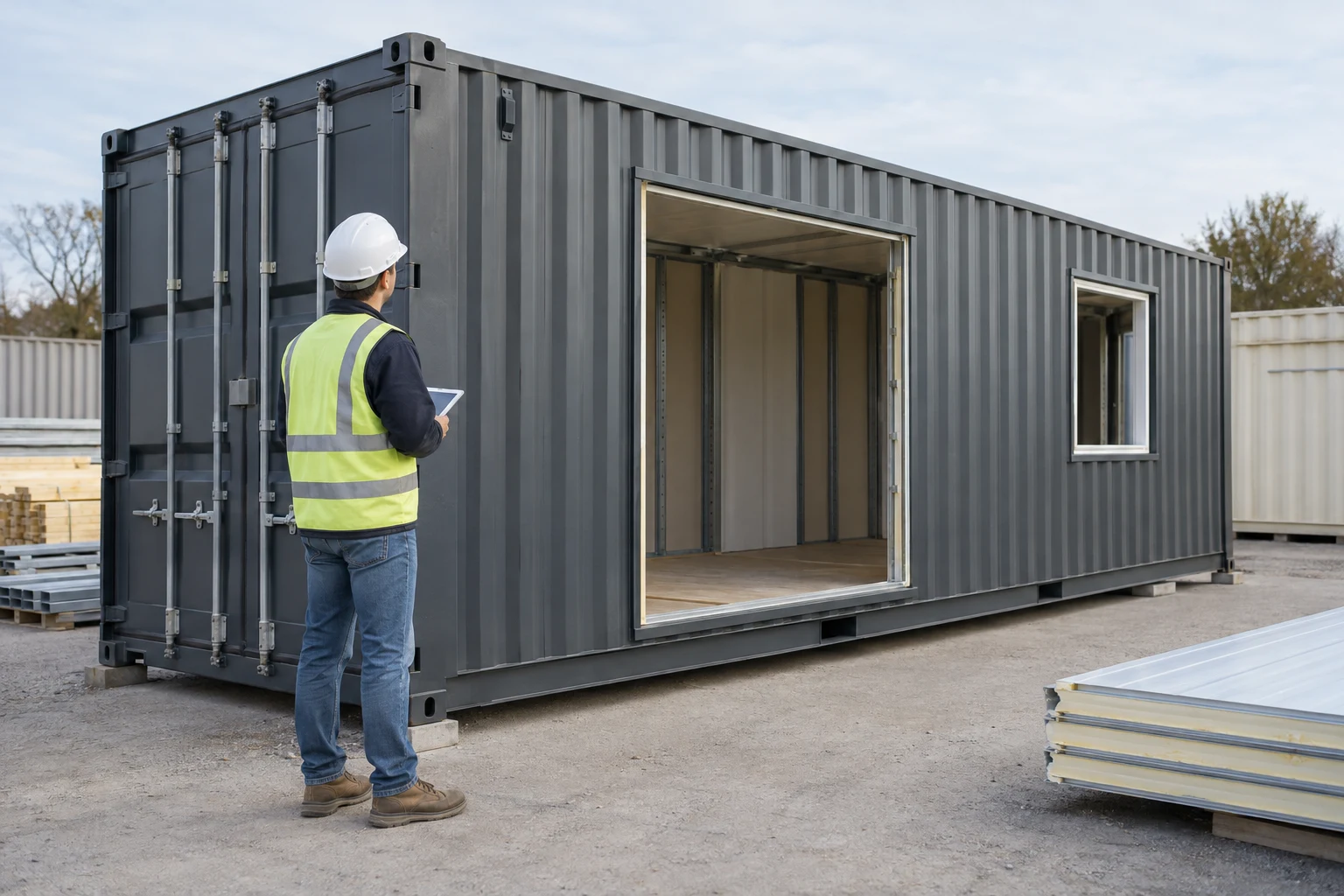
Compare the kind of builder you need
Start with what you want to purchase and how much local coordination you can manage.
Have the proposal identify the actual contracting entity and the work it accepts. A broad service description needs a project-specific scope to become useful.
| Provider scope | Potential fit | Clarify before choosing |
|---|---|---|
| Factory home manufacturer | You want a defined dwelling specification substantially completed off site. | Which design documents and factory reviews accompany the model, and who handles the property work? |
| Container fabricator | You need a shell or a defined set of modifications for a separately designed project. | Which residential design, finishing, systems and inspections remain outside the fabrication contract? |
| Local general contractor | You need site work, local trades and installation coordinated at the property. | Who supplies the unit and its design, and how will the contractor coordinate that interface? |
| Provider offering a complete project | You want one lead contact for building and site delivery. | Which services are performed directly, which are subcontracted, and which remain your responsibility? |
Ask for evidence relevant to your address
Check the contractor's applicable licensing and insurance, compare written estimates and use a written contract. Confirm the licensing requirements with the state or local authority for the work being offered.
Request evidence of comparable residential work: the provider's role, project jurisdiction, construction type and completion scope. A photo is a starting point for questions about what the provider actually designed, supplied or installed.
- Confirm the legal business name matches the proposal, contract and payment instructions.
- Verify applicable credentials with the issuing authority and ask for insurance information covering the proposed work.
- Ask how the provider handled residential design review, factory inspection and site inspections on a comparable project.
- Request model specifications and representative documents the provider is permitted to share.
- Ask for references who can describe communication, changes, installation and completion.
Put every project responsibility in writing
A proposal can involve several qualified parties. Make their handoffs explicit.
Texas industrialized-housing guidance reviewed October 8, 2026 explains that the purchase contract may include on-site construction or leave it with the buyer. That example concerns the Texas program; establish the route for your own product and jurisdiction.
Ask what happens if factory drawings and site requirements need to change. The contract should make clear who arranges the revision, who approves it and how it affects the agreed work.
| Project responsibility | What to ask for | Who must be named |
|---|---|---|
| Design | The site-specific drawing scope, structural review and coordination of building systems. | The design professionals and the party managing revisions. |
| Factory work | The finished specification, inspection route and documents supplied with the unit. | The manufacturer or fabricator responsible for the agreed work. |
| Property approvals | The application scope, submission tasks and response to review comments. | The applicant and the party coordinating with the site authority. |
| Site construction | Foundations, drainage, utilities and work left incomplete at delivery. | The local contractor and relevant trades. |
| Transport and installation | Load information, access assessment, unloading, placement and connections. | The transport and installation providers and their coordinator. |
| Handover | Outstanding work, inspections, system checks, manuals and warranty contacts. | The party accountable for completion and follow-up. |
Compare proposals on the same specification
Give each provider the same location, intended occupancy, layout needs and desired completion level. Request separate amounts for the unit, documents, site work, transport, installation and connections, with exclusions and allowances identified.
When a total differs, locate the difference in the specification or scope. One proposal may include systems and finishes that another leaves for a local contractor. Site work that has not been assessed needs a stated basis rather than an unexplained total.
- Record the model and drawing revision, finished dimensions, equipment and material specifications.
- Identify who supplies each permit or review document and who responds to comments.
- Ask which site assumptions affect the amount and when those assumptions will be checked.
- Review the written payment milestones, change process, completion criteria and warranty scope.
- Establish who handles damage or incomplete work identified at delivery and installation.
Use the first conversation to test coordination
Concrete answers help you see whether the proposed team fits the project.
Ask the provider to turn important answers into the written proposal. Keep unresolved tasks visible so you can arrange a qualified party to complete them.
- Who will be my lead contact, and which responsibilities does that person control?
- What property information do you need before confirming the design and price?
- Which authority reviews the factory work, and which reviews the site installation?
- Who checks the container's condition and the proposed structural modifications?
- Who arranges unloading and placement, and what site assessment is needed first?
- What documents and completed work will I receive at handover?
Prepare one brief for a consistent comparison
Include the city, state and ZIP, intended residential use, desired rooms, completion level and known property constraints. State whether you need design, factory fabrication, local construction or a party to coordinate the entire project.
Choose Container home / living space for Intended use in the request form, describe the home project in Project notes and review the summary. Sending requires your consent on the quote form. Preparing, copying or downloading the draft does not send it.
Buying questions
How do I find the right container home builder?
Start with the location and the work you need covered. Compare applicable credentials, comparable residential work, design and approval documents, factory scope and local installation responsibilities. Ask each candidate to price the same project brief.
Does a container fabricator also build completed homes?
Ask for the exact residential deliverables. A fabrication contract may cover only the shell or specified modifications. Identify who will complete design, interior work, systems, local approvals and installation before treating it as a dwelling proposal.
Who should obtain permits?
Establish the submission roles with the authority serving the property, then put them in the contract. Ask who prepares and signs the required documents, submits them, responds to comments and arranges inspections. Product review and site approval may involve different parties.
What does a turnkey proposal need to spell out?
Ask it to list design, factory work, property approvals, foundations, transport, unloading, installation, utilities and completion. Confirm exclusions, site assumptions and the responsible party for each task. Use that written scope to assess the offer.