
Define the freight use
Identify the route, carrier and goods you intend to transport. Ask the carrier which shipper-owned-container documents, condition evidence and approvals it requires for that movement.
Compare offers from multiple suppliers. Find the right price for your project.
20FT / CARGO-WORTHY
Choose a 20ft cargo-worthy container when your project includes carrying goods in your own container and you need more than a storage-condition label. Match the actual unit to current examination evidence and your intended carrier's requirements before committing to a shipment. Compare the container price with survey, repair, transport and handling costs separately.
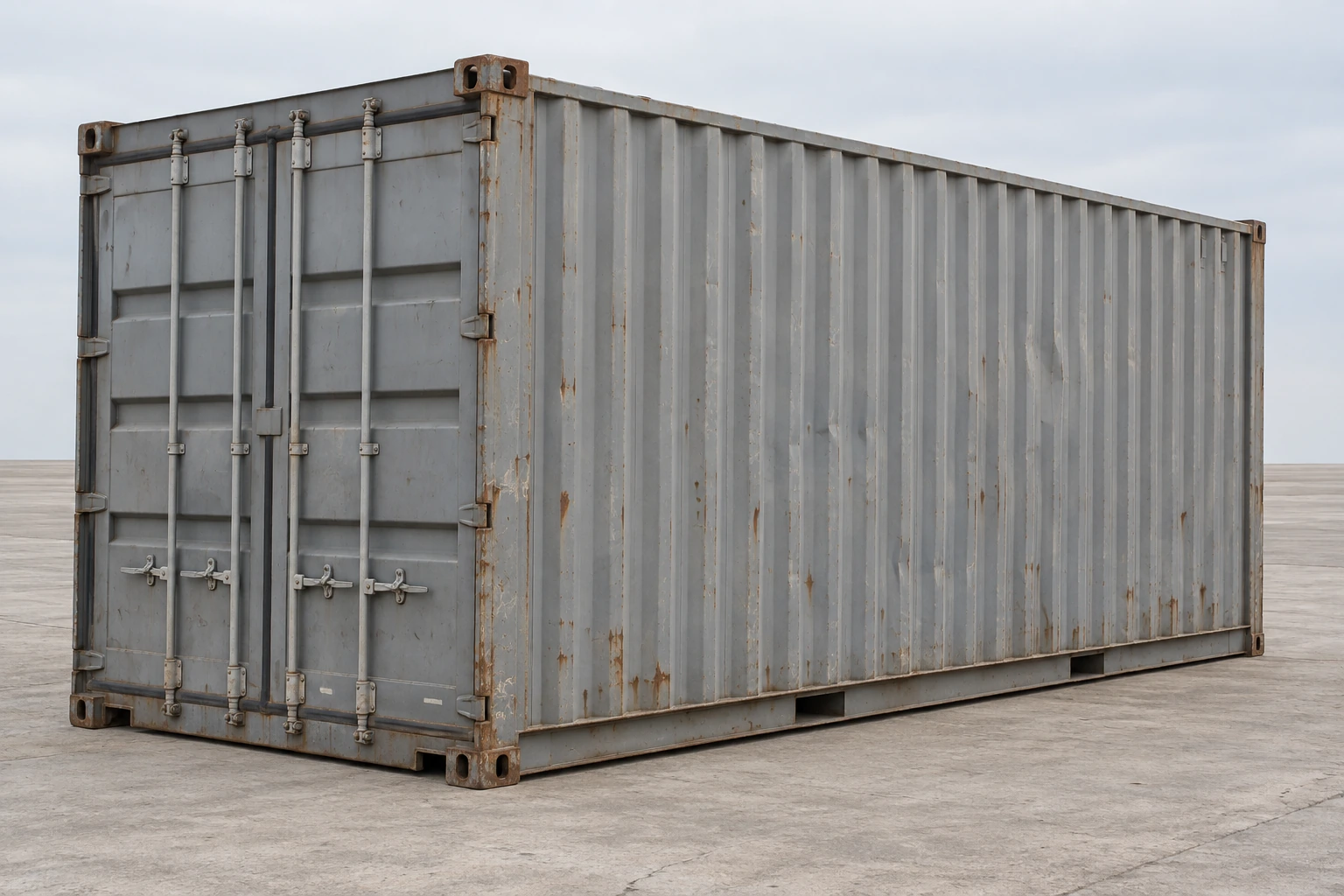
A container can look suitable in a sales listing and still lack the documents needed for your booking. Establish the approval path while selecting the unit, before loading it or adding modifications.
Identify the route, carrier and goods you intend to transport. Ask the carrier which shipper-owned-container documents, condition evidence and approvals it requires for that movement.
Keep its identification number with the photos, plate image, examination record and any survey. A report for a different container or a general grade description cannot establish the condition of the one allocated to you.
Submit the required information through the carrier's process and confirm acceptance. Build your loading and pickup plan around the accepted unit and any conditions the carrier specifies.
A seller's promise that a CW unit will pass a survey is a purchase term to examine. It is not the survey report itself or a carrier's approval, and it does not establish that survey costs are included.
The safety approval plate records approval and technical data. The container also needs current examination status for the intended transport; an old plate left on a used box is insufficient evidence on its own.
| Evidence | Question it should answer |
|---|---|
| Legible CSC plate photo | Does the approval and technical information belong to the actual container? Is the plate readable and consistent with the unit records? |
| Periodic-examination record | If this is the examination method used, is the next examination date current and later than the expected destination arrival? |
| ACEP status, where applicable | If an Approved Continuous Examination Program is used instead, what program applies, and does the unit remain covered under its ownership and operating arrangements? |
| Required condition survey | If the carrier requires a survey, who issues it, which unit does it cover, what date and scope apply, and who pays for it? |
| Carrier validation | Has the required unit information been accepted for the intended booking, rather than only reviewed by the seller? |
Ask for clarification of an unreadable plate, an elapsed examination date or uncertain ACEP coverage before paying for freight use. If no ACEP applies and the examination date has elapsed or falls before expected arrival, current examination requirements need to be resolved before international or intermodal traffic.
Agree any inspections or repairs that must happen before release, and retain the resulting unit-specific records. Do not assume that the words cargo-worthy include a new survey or certification.
A freight-ready purchase needs both appropriate records and a suitable physical unit. Obtain a competent assessment where structural condition or repaired areas are uncertain; photos alone may not settle that question.
For tools or stock staying at one site, compare the actual CW and WWT units against the same floor, door and water-ingress requirements. Paying for transport documentation has limited value if your project does not need freight acceptance, although the better physical unit may still be the better purchase.
For future shipping, price the examinations and acceptance process when that future use becomes concrete. Buying CW today does not guarantee acceptance years later after use, corrosion, ownership changes or modifications.
Cargo-worthy also does not mean a uniform finish or climate control. If appearance matters, compare one-trip. If humidity-sensitive stock is the priority, include the environmental setup independently of the grade.
First compare the cost of the CW unit ready for the agreed handover. Then add the freight services for your route. A delivered container quote does not automatically book a cargo shipment.
| Cost group | Items to price explicitly |
|---|---|
| Container purchase | The selected 20ft unit, included repairs and applicable purchase taxes. |
| Examination and documents | Any required inspection or survey, related repairs and the unit-specific documents being supplied; state which are included. |
| Empty-container movement | Pickup or delivery to the loading location, unloading or chassis arrangements, and any separately required lifting or placement. |
| Cargo preparation | Packing, securing, loading equipment and any technical assessment needed for your goods. |
| Shipment services | The carrier and inland transport charges, terminal handling and other quoted route-specific services, obtained separately for the planned movement. |
Keep unresolved charges visible. If a survey leads to required work, include the work and any repeat assessment in the comparison rather than assuming the first fee finishes the process. Count a service once when another line already includes it.
Compare a CW purchase with another condition only when both can reach the same required handover and carrier acceptance. A cheap storage shell plus unknown certification work is not yet a priced alternative.
Decide whether the empty unit will be placed on the ground or handled on a chassis at the loading location. Confirm the transporter's equipment, access route, ground conditions and unloading responsibilities. A ground-storage delivery and a plan to collect a loaded container require different arrangements.
Before loading, match the container number to the approved records and inspect for condition changes during transport. Keep any discrepancy photos with the dispatch and delivery evidence.
Coordinate the loading method and the subsequent loaded pickup with the responsible operators, using the actual load information. Have modifications reviewed before commissioning them because new openings or other changes can affect the condition evidence and approvals on which the purchase relied.
Compare the finish, buying budget and checks that matter to your project.
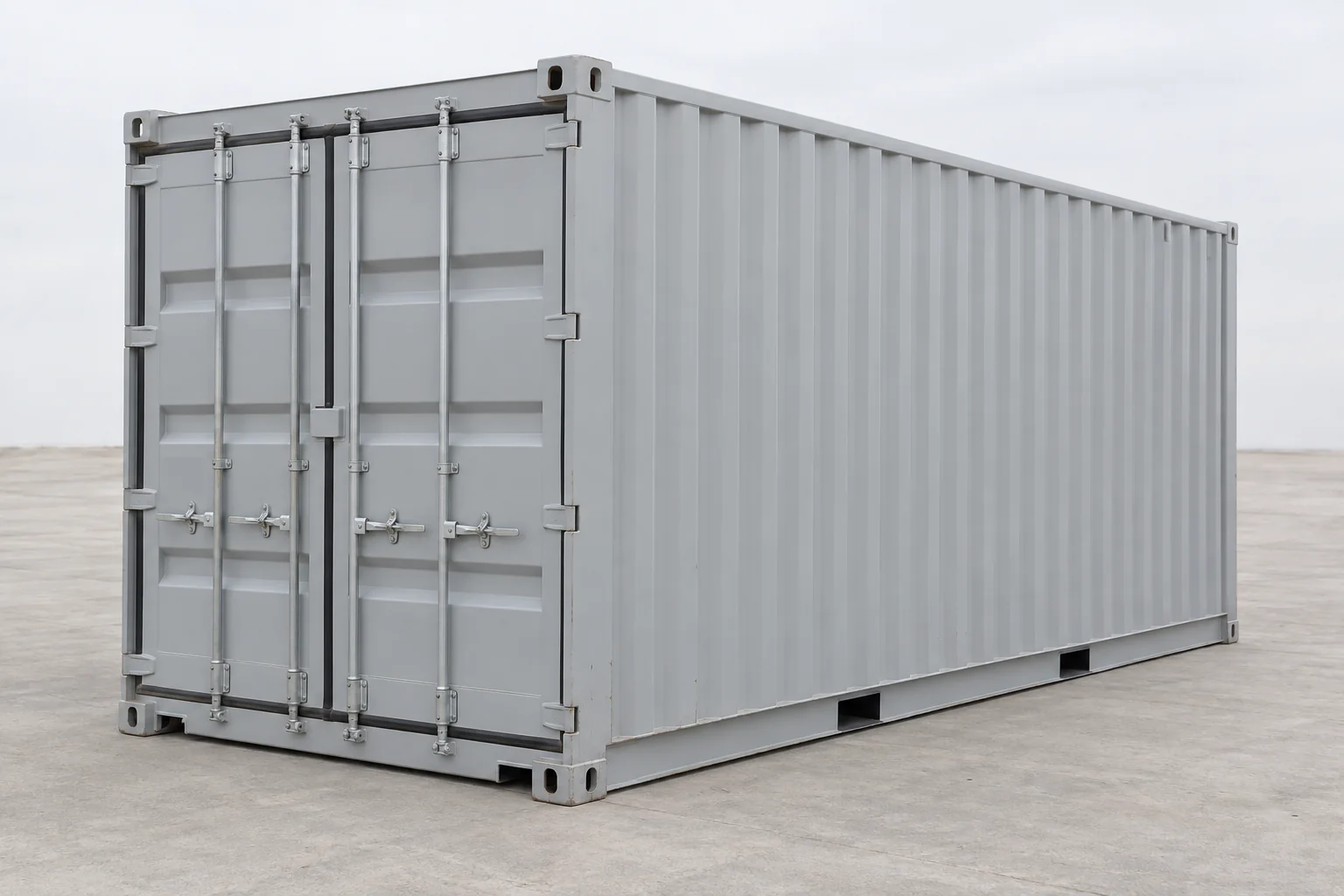
A cleaner finish, with less visible wear. Check the included features and any handling marks.
Explore 20ft new / one-trip →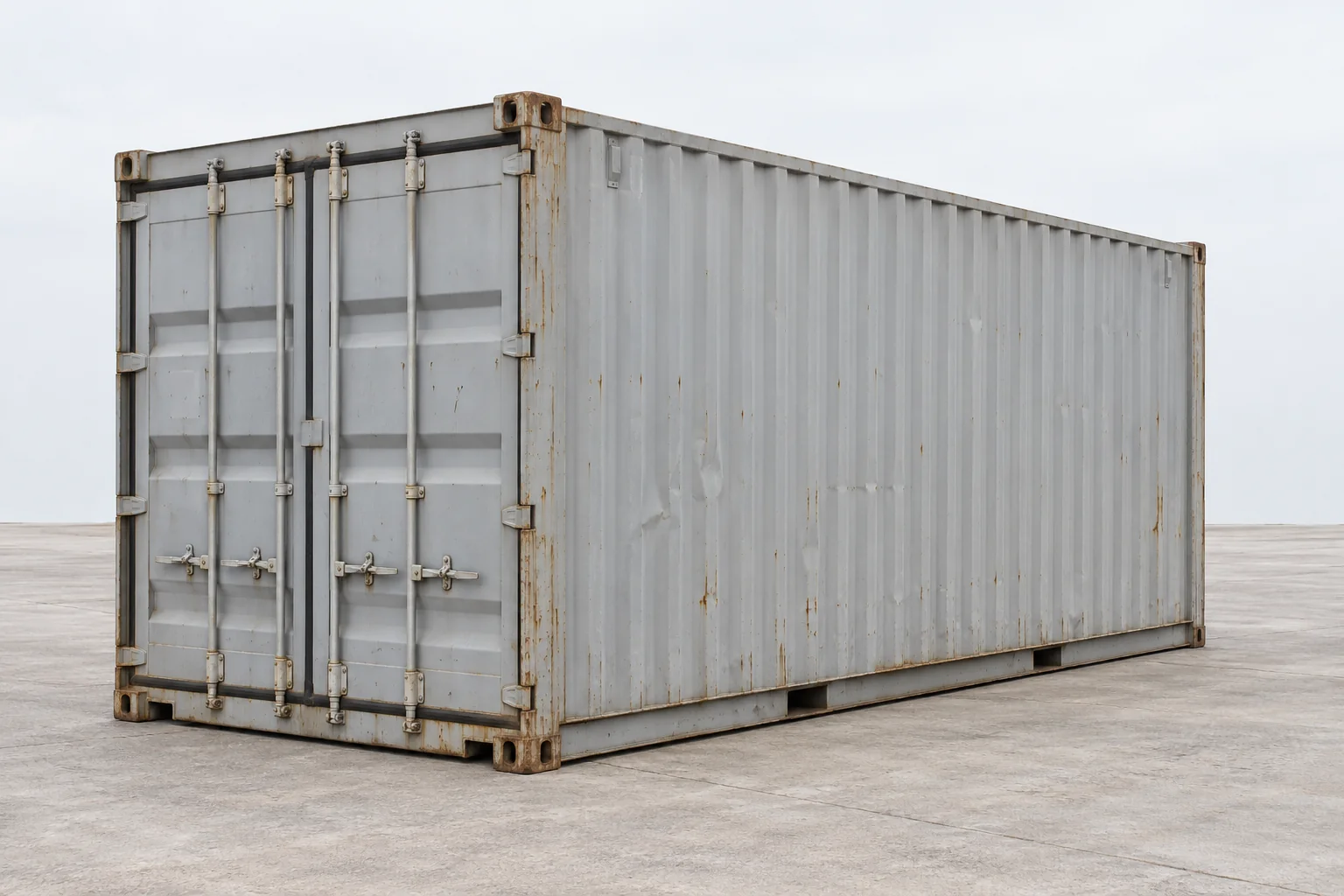
Compare storage and cargo-worthy options. Check the actual floor, doors, repairs and weather sealing.
Explore 20ft used →Used describes previous service. The grade and the evidence behind it determine what you can buy it for.
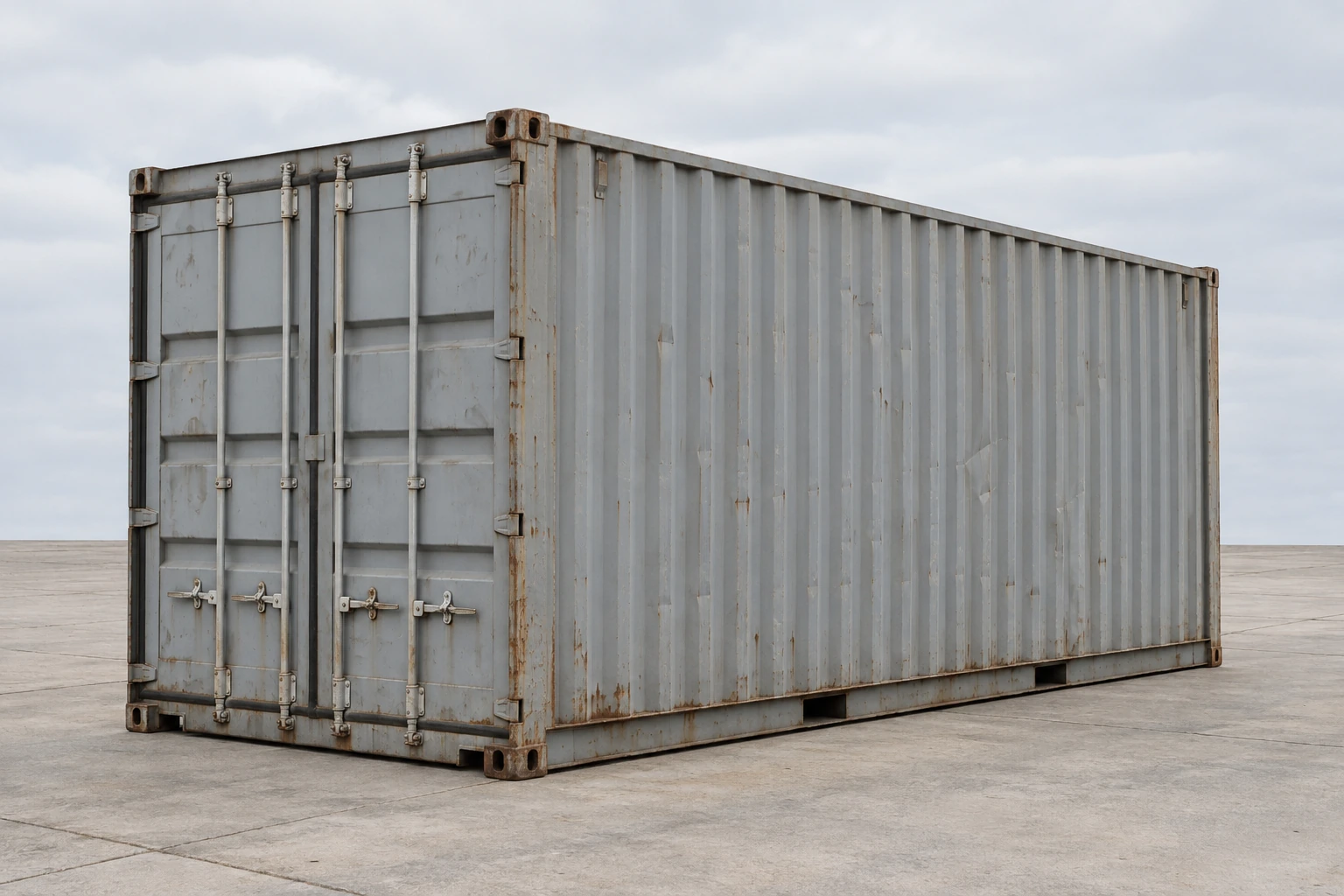
For storage: compare weather sealing, floor condition and working doors. A WWT label does not establish approval for ocean shipping.
Explore wind & watertight →For a transport project: compare the actual inspection, CSC examination records and acceptance by your intended carrier.
You are viewing this grade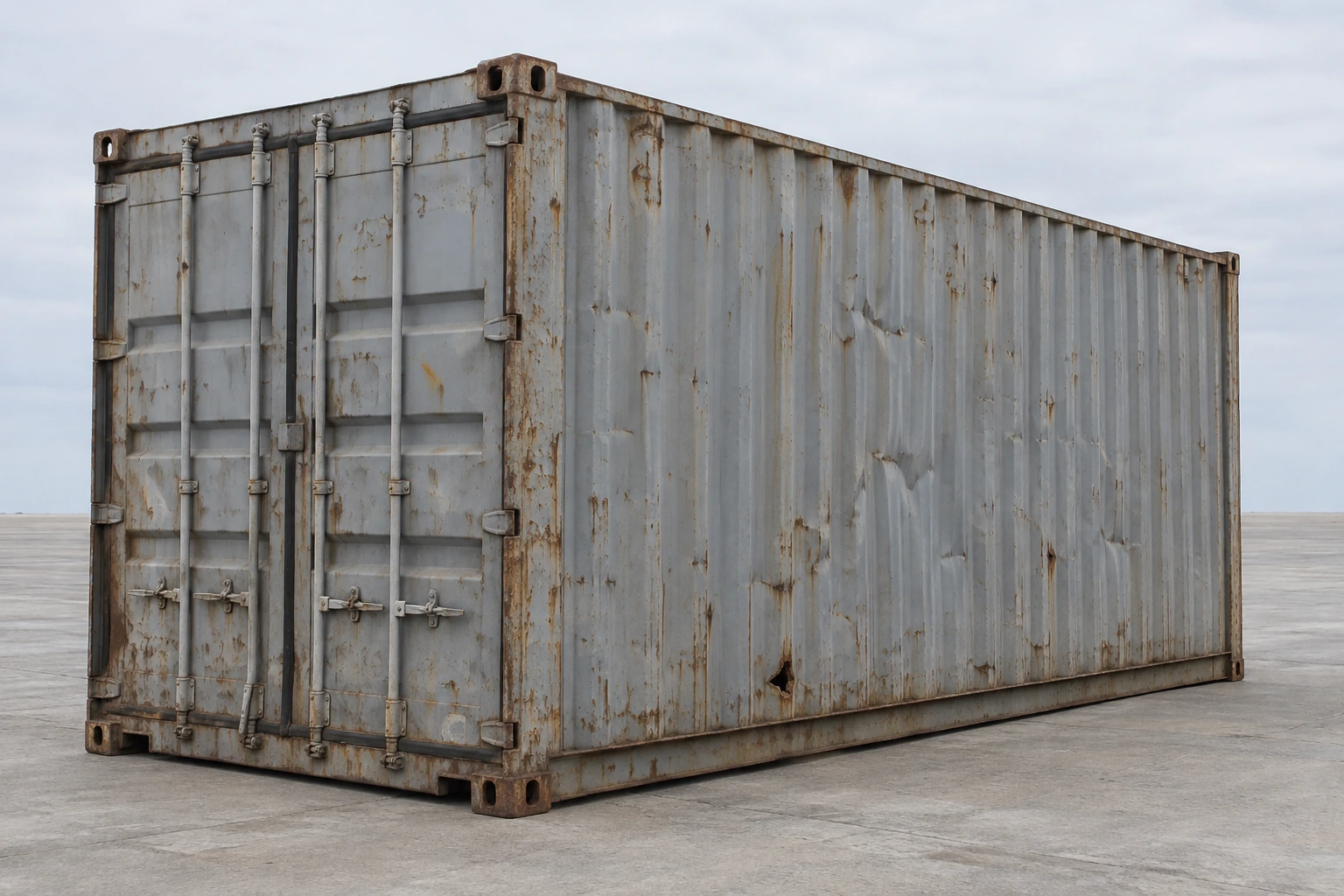
For a repair project: identify the defects and price the work before comparing the complete cost with a usable container.
Explore as-is →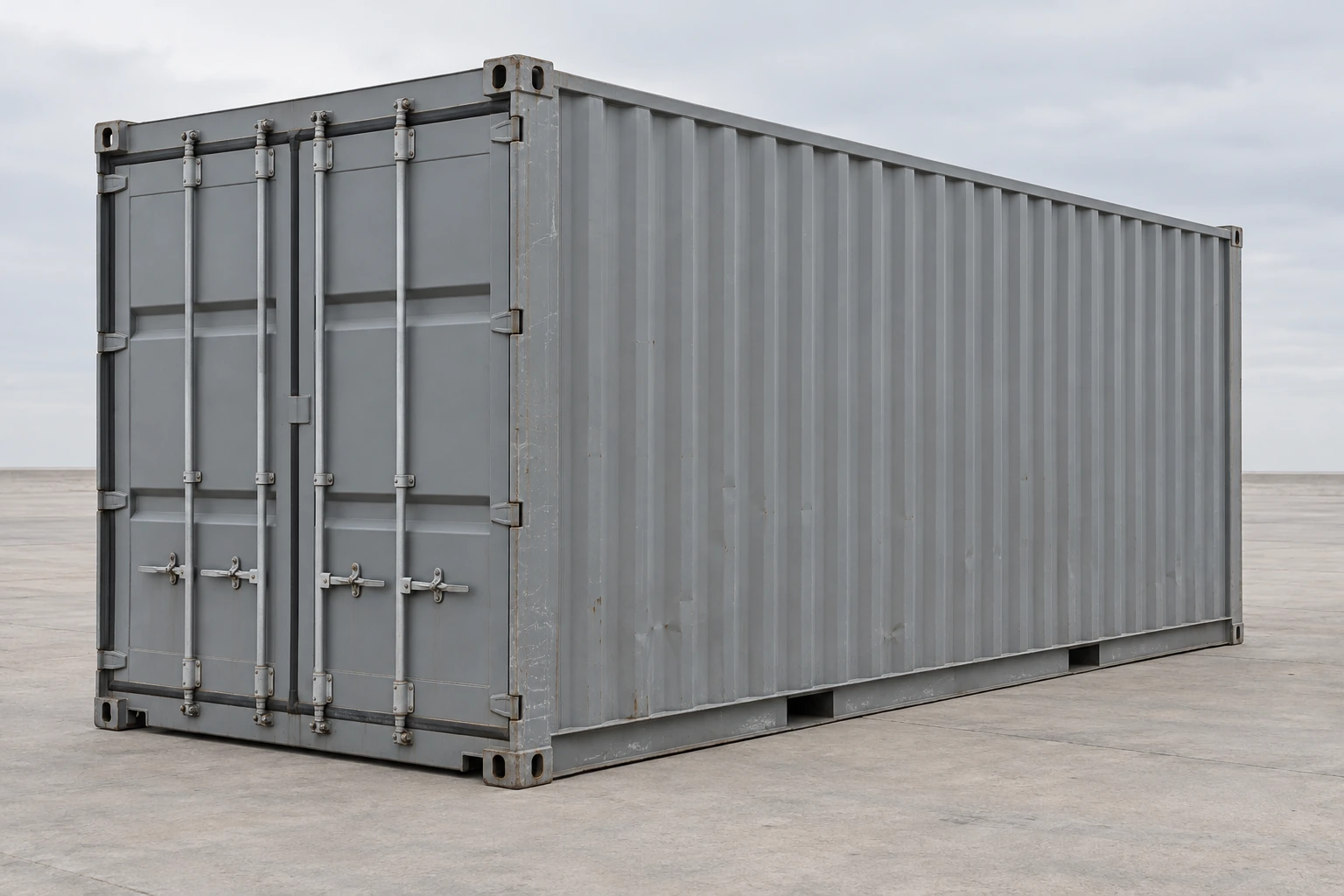
Compare an offer described as lightly used with one-trip. Confirm the actual history and finish; the label is defined by the seller.
Explore multi-trip / limited use →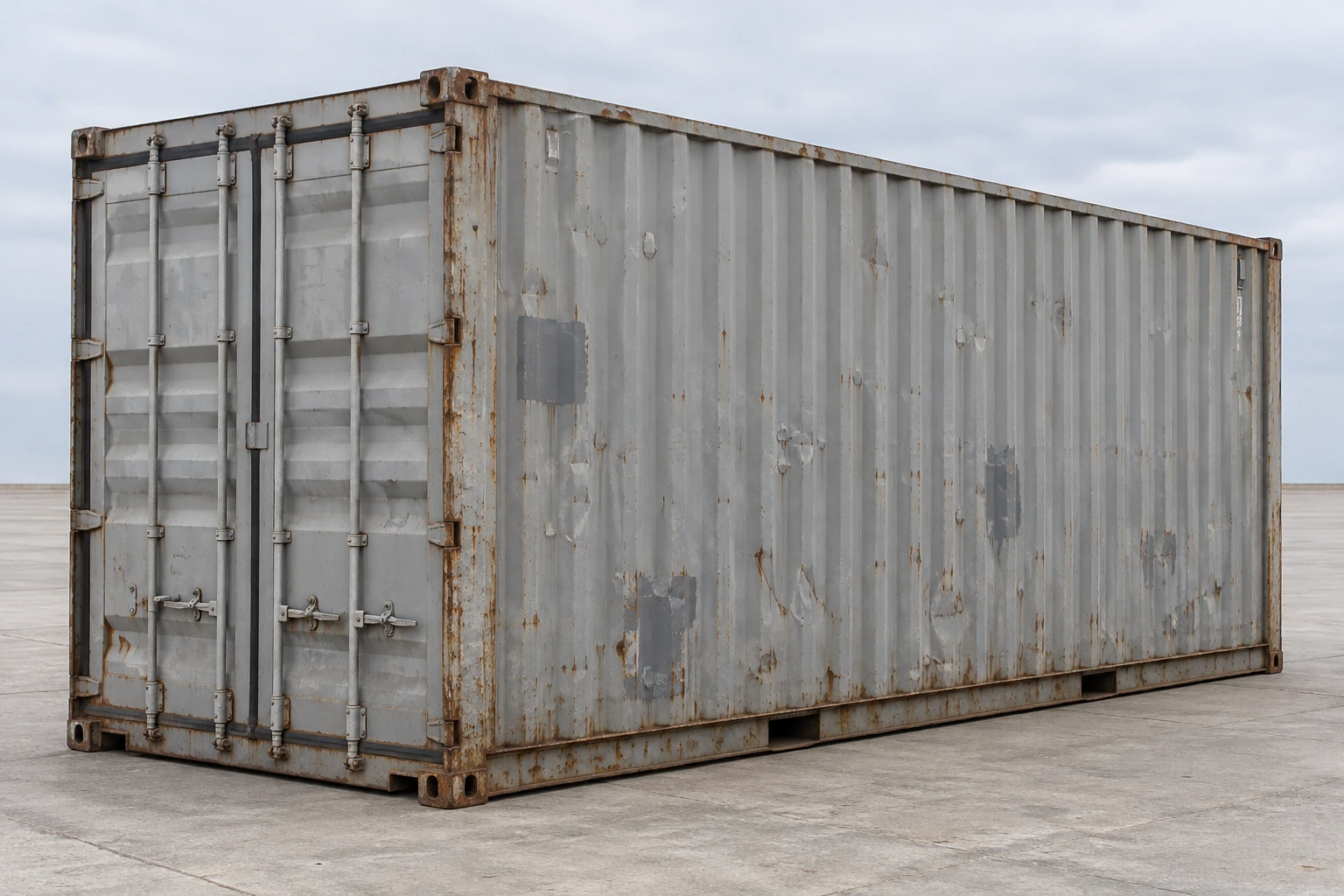
Compare budget storage offers by the defects accepted and the protection included. Economy does not automatically mean WWT or as-is.
Explore economy grade →Compare the floor surface, wall wear and visible repairs, then request close-up photos of the actual unit.
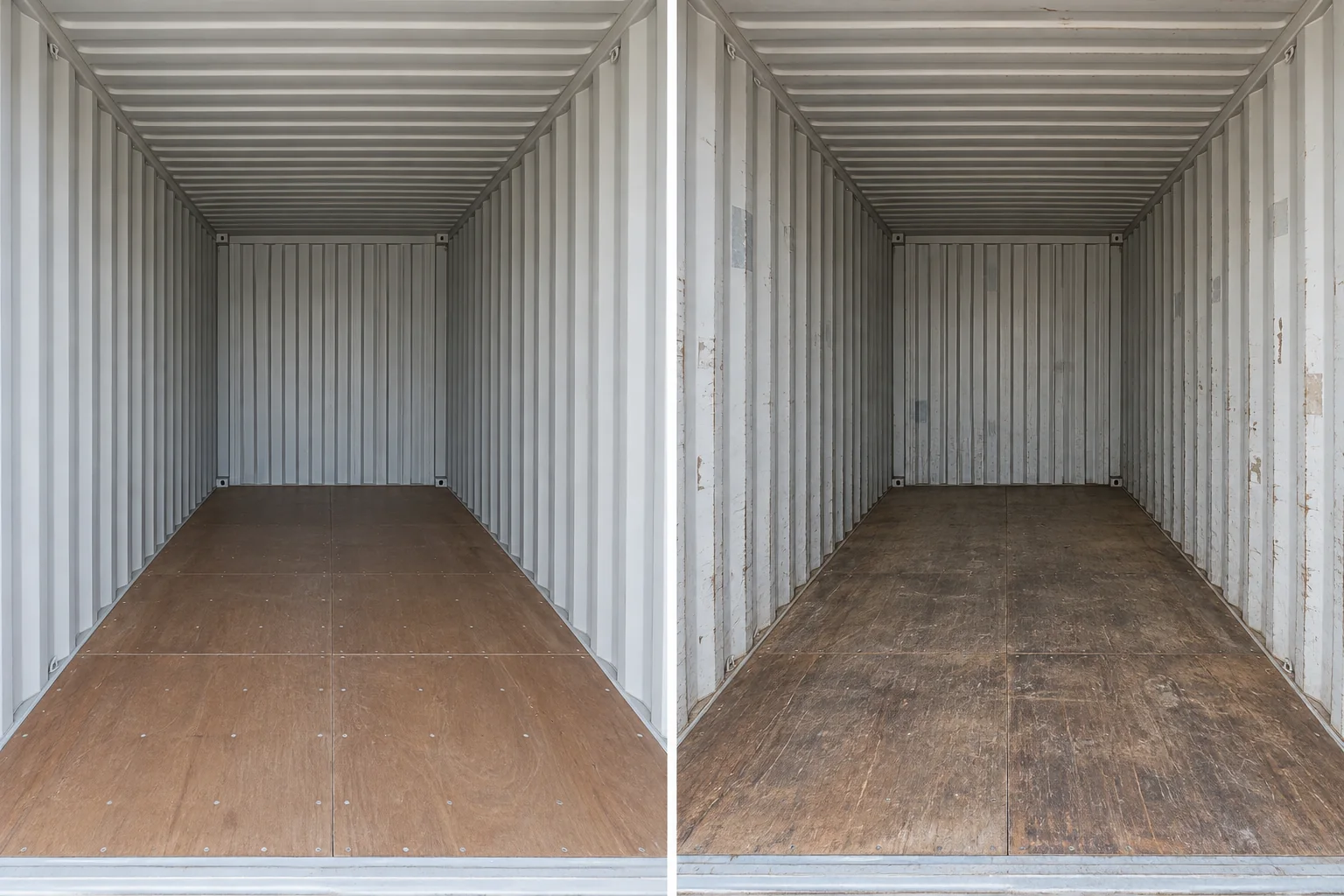
Illustrative appearances. Paint and rust alone do not establish weather-tightness or suitability for shipping.
Do not assume it. Confirm the documents already available for the actual unit, whether a new survey is required, who provides it and its cost. A seller's grade label or survey guarantee is different from an issued report and carrier acceptance.
The plate is one part of the evidence. Check current periodic-examination status or applicable ACEP coverage, actual condition and the carrier's requirements for your booking. A plate on an old container does not by itself establish current acceptance.
Yes, appearance and functional condition are different issues. Have the actual damage and repairs assessed where needed, retain any survey findings and agree acceptable cosmetic wear. CW does not promise a new-looking finish.
Have the intended work reviewed before it starts. Changes can affect structural condition, examination evidence and the carrier's acceptance. Agree any reassessment and documents needed after modification rather than relying on the original CW description.
Include the condition, unloading and any work your container needs.