← Compare all 20ft containers

20FT / WIND & WATERTIGHT

20ft Wind & Watertight Shipping Containers for Sale

A 20ft wind and watertight container can suit tools, equipment and general stock storage when you can accept a used finish. Make keeping rain out part of the written purchase requirements, check the actual roof, floor and doors, and compare a complete delivered quote. Plan separately for condensation and any freight use.

Request your delivered price

Prepare and review your request. Sending requires your consent on the quote form.

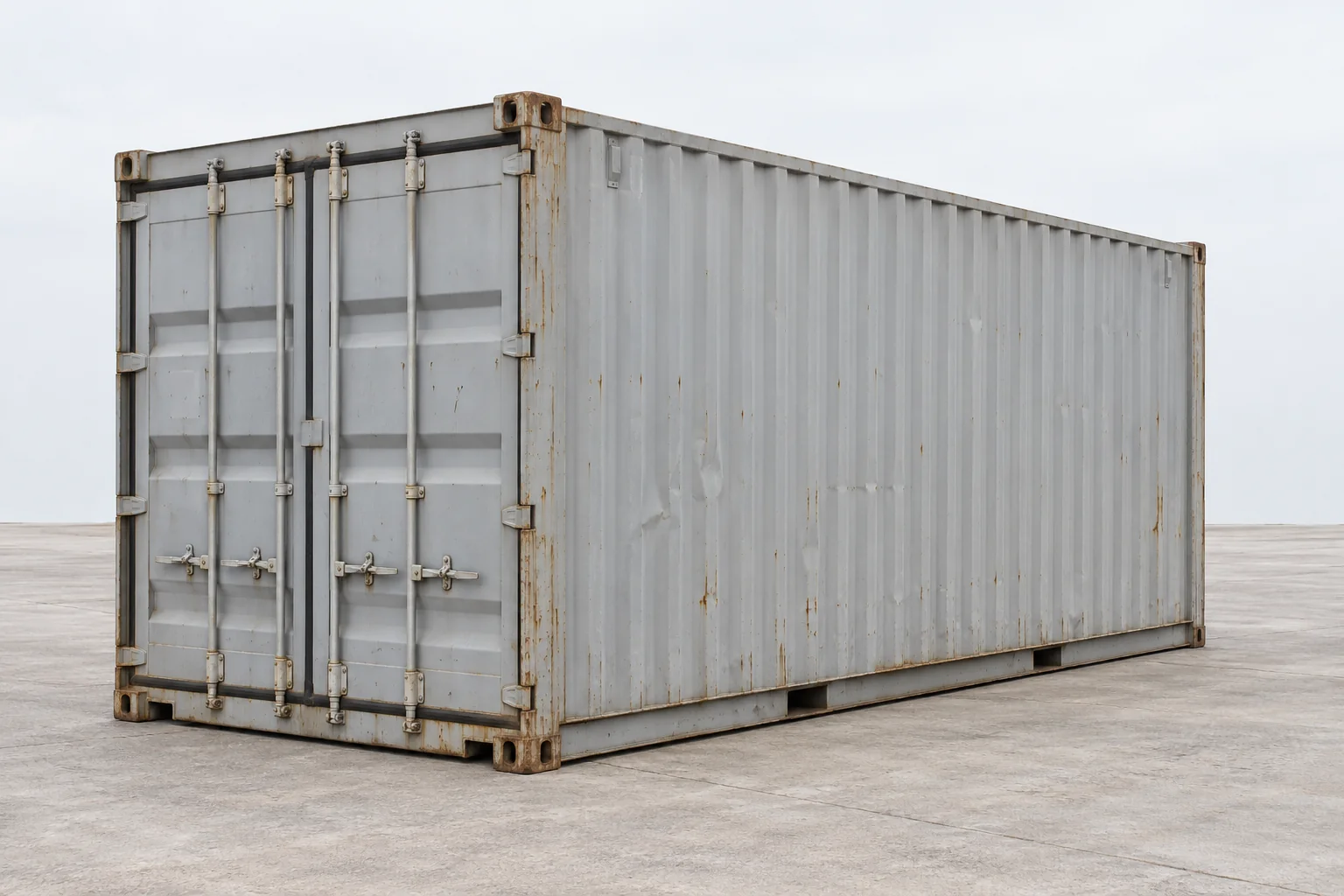
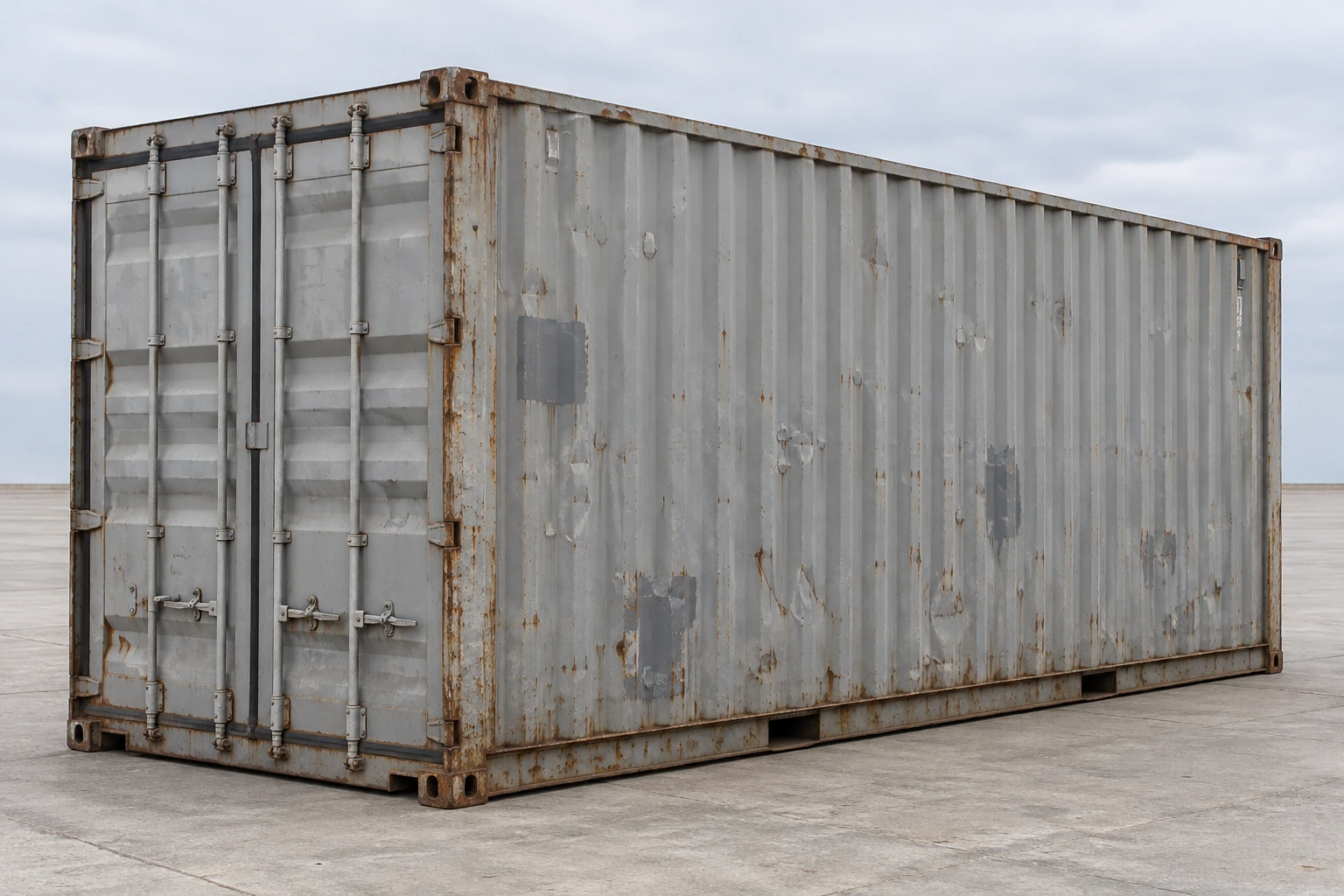
Photorealistic illustration of a gray used 20ft container with closed cargo doors, intact side panels, worn paint and localized surface rust.
Condition illustration. Appearance does not prove weather sealing; check the actual unit.
20ft standardWind & watertight (WWT)
Best fit
General storage with acceptable cosmetic wear
WWT describes
Wind and water resistance of the shell
Separate requirement
Humidity and temperature control
Budget to compare
Ready-to-use container placed at your site
YOUR BUYING DECISION

Choose WWT for the storage job you actually have

The useful saving is buying an adequate storage shell while accepting ordinary signs of use. Decide what must work and what appearance you can live with before comparing offers.

Tools and maintenance equipment

Prioritize a serviceable floor, doors you can operate during routine visits and a suitable lock fitting. Painted scrapes may matter less than being able to roll equipment in and retrieve it without unloading the front.

Seasonal goods and business supplies

Make a list of the contents and how often you need them. A sound shell can protect against outside rain, while paper, textiles and moisture-sensitive equipment may need additional environmental control.

A visible location or a cargo shipment

For a more consistent finish, compare one-trip. For overseas freight, review cargo-worthy condition and the transport documents first. These are different reasons to spend more than the storage-only requirement.

Review the requirements for freight use →
YOUR BUYING DECISION

What evidence should support the WWT label?

A grade name or a clean paint finish is too little to select a unit. Ask what was checked, which repairs were made and how the order deals with a leak or a non-working door.

What to establishUseful evidence
The unit being soldCurrent photos associated with its identification number, or a written explanation of grade-based allocation and substitutions.
Roof and wallsViews showing seams, patched areas and damaged panels, with any identified water-ingress repairs recorded.
Doors and sealsA demonstration that both leaves close and latch, plus close views of the gaskets and door edges.
Floor and interiorViews of the complete floor, corners and repaired sections; a response to damp areas, residues or persistent odors.
The purchase requirementWritten WWT criteria, the checks performed and the agreed process for reporting and resolving a condition mismatch.

Light visible through a closed shell can help identify possible leakage points. The absence of visible light alone does not prove that every seam is watertight. Have uncertain areas assessed using an appropriate inspection or leak-check method.

WWT is a storage-condition description, with terms that vary between sellers. It does not by itself establish structural suitability for international transport, a current freight survey or acceptance by a carrier.

YOUR BUYING DECISION

Keeping rain out and preventing condensation are separate jobs

Storage problemDecision before purchase
Damp cartons or wet tools entering the unitProvide a drying or sorting step before packing them away; the shell cannot remove the water you bring inside.
Condensation during temperature changesAssess ventilation, insulation or powered humidity control for the local conditions and the contents; include equipment, installation and operation in the budget.
Goods with a specified storage rangeChoose a designed controlled environment rather than relying on the WWT label or the standard small vents.

Moist air can deposit water on cold steel even when outside rain cannot enter. Wet equipment, damp packaging and changing temperatures can therefore create a storage problem inside a WWT container.

Decide what your contents need before buying accessories. Keep incoming goods and packaging dry, avoid mixing wet equipment with paper or textiles, and plan the air space around stored items. If the goods need controlled conditions, specify the required humidity or temperature range and design the system around it.

YOUR BUYING DECISION

Compare the price of usable storage at your site

A container-only price leaves several parts of the purchase unresolved. Ask each offer to cover the same WWT requirement, placement location and storage setup.

Budget lineWhat belongs in it
Container and agreed conditionThe standard 20ft unit, the defined WWT requirement and any necessary work included before dispatch.
Transport and placementHaulage to your ZIP, unloading equipment, the agreed placement and any quoted access or waiting charges.
Site preparationGround and supports needed for the selected position, plus any access work required by the transporter.
Storage equipmentThe lock fitting, shelves, ramp or moisture-control system your contents need, including installation where requested.
Applicable taxes and separate checksTaxes, an independent inspection if commissioned and any specifically requested service outside the base scope.

Count an included service once. If a fee, repair or installation is unspecified, keep it unresolved until quoted. A lower shell price can be offset by extra transport, repair or equipment work.

Use the same comparison with a one-trip unit. If cosmetic wear is acceptable and the WWT unit meets the job without substantial preparation, spending more may bring little storage benefit. If the proposed repair and finish bill closes the gap, reconsider the better starting shell.

YOUR BUYING DECISION

WWT, cargo-worthy or as-is: choose the right requirement

Your priorityChoice to investigate
General storage ready after placementWWT with documented shell condition and agreed remedies for a mismatch.
Using your own container for freightCargo-worthy with current examination evidence and the intended carrier's approval process.
A consistent finish and limited wearNew or one-trip, with acceptable handling marks and finish requirements recorded.
A repair project you can price and manageAn identified as-is unit with a defect list, assessed handling and a complete repair budget.

Age and cosmetic wear alone do not settle this choice. Compare the condition you can verify, the work the purchase includes and the outcome your project needs. An as-is container that still needs leak repairs is a different purchase from a unit sold to an agreed WWT requirement.

YOUR BUYING DECISION

Prepare placement, then check the delivered condition

Send the transporter photos of the route and intended position, with gates, slopes, overhead obstacles, ground conditions and the desired door direction. Confirm the actual vehicle and unloading method; the container's footprint does not describe the truck's working space.

Agree who prepares the supports and who provides lifting equipment if the delivery method needs it. Keep room outside the doors for opening them and handling your goods.

On arrival, match any assigned container number and record visible differences from the order. After placement, test the doors and check the interior before filling the unit. If doors that worked before dispatch now bind, have the support and alignment assessed. Keep photos and use the agreed reporting process for any condition discrepancy.

CHOOSE YOUR CONDITION

New / one-trip or used?

Compare the finish, buying budget and checks that matter to your project.

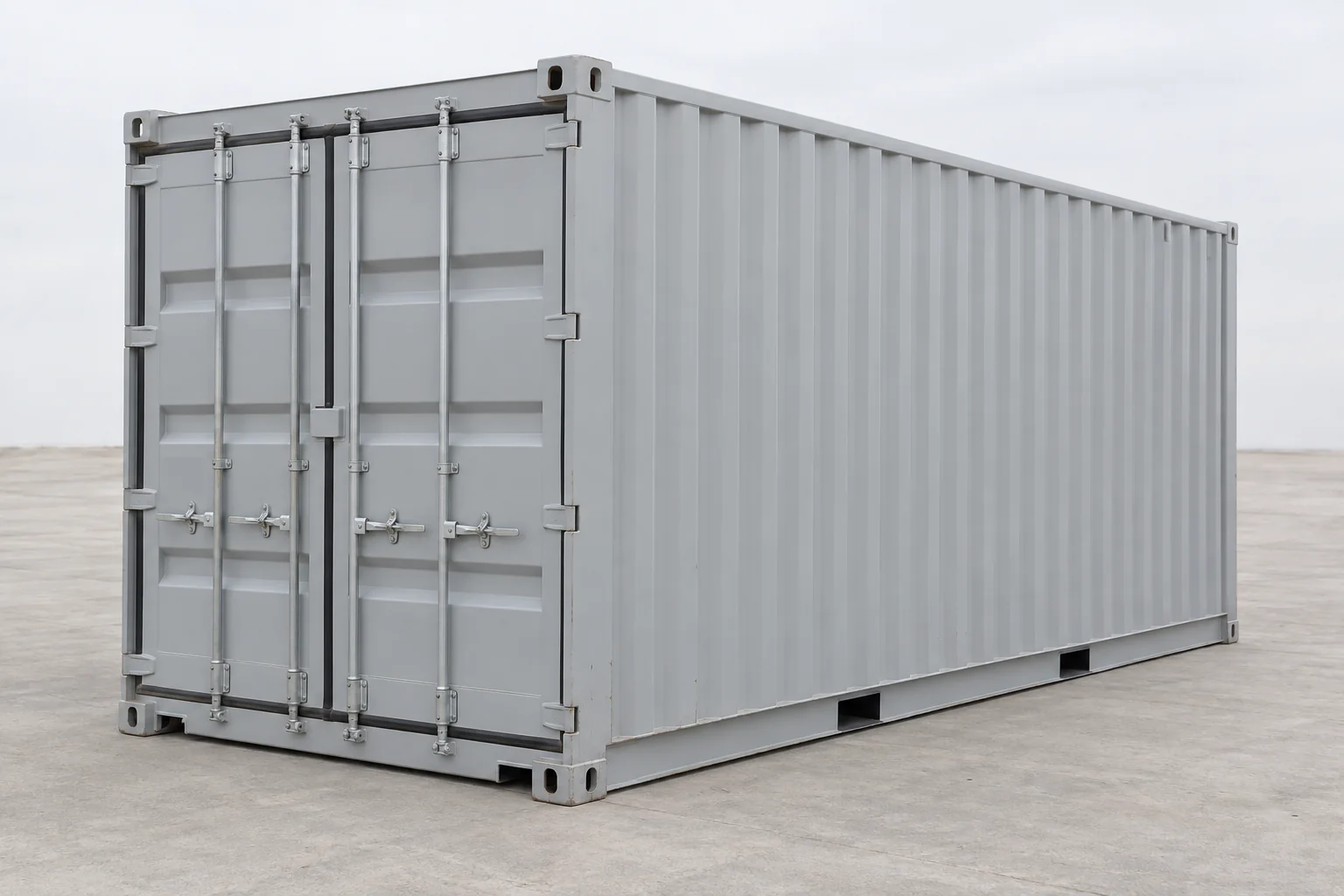
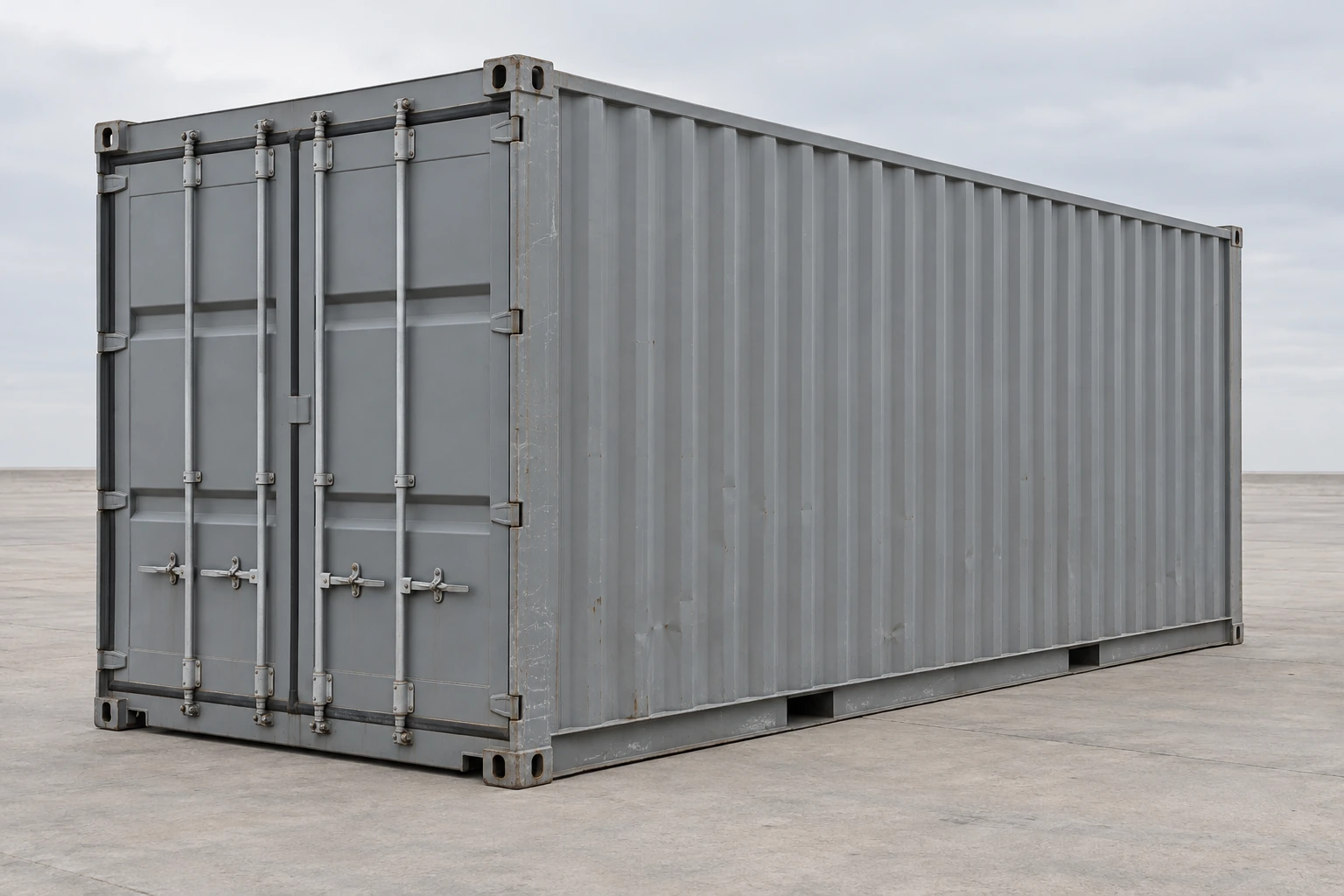
Illustration of a standard 20ft one-trip shipping container with closed end cargo doors and lightly marked painted steel sides.
Illustrative container. Confirm the actual unit before buying.
20ft / STANDARD HEIGHT

New / one-trip

A cleaner finish, with less visible wear. Check the included features and any handling marks.

Explore 20ft new / one-trip →
Illustration of a used standard 20ft shipping container with closed end cargo doors, worn paint and small exterior dents.
Illustrative container. Confirm the actual unit before buying.
20ft / STANDARD HEIGHT

Used

Compare storage and cargo-worthy options. Check the actual floor, doors, repairs and weather sealing.

Explore 20ft used →

Choose the used grade for your job

Used describes previous service. The grade and the evidence behind it determine what you can buy it for.

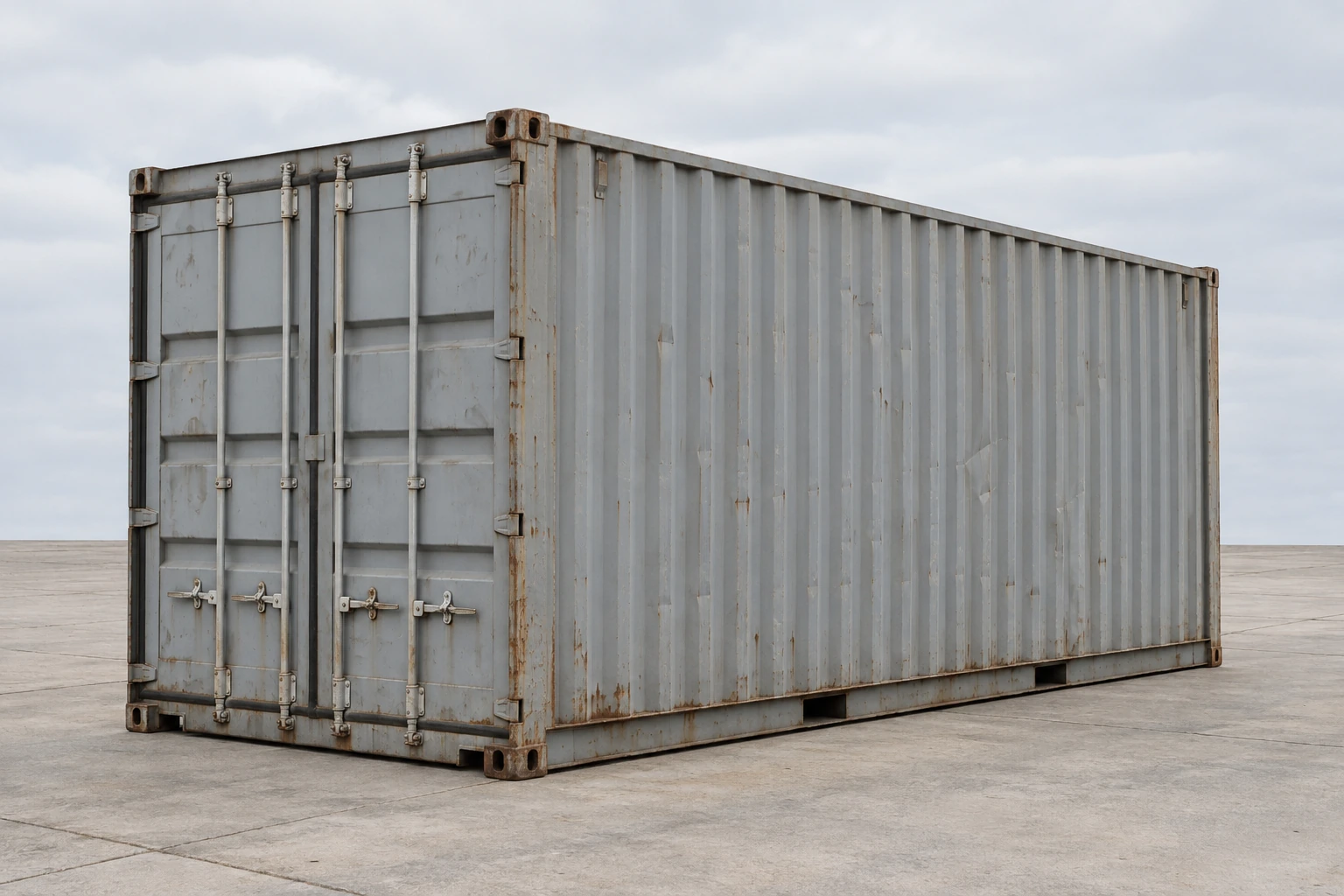
Photorealistic illustration of a gray used 20ft container with closed cargo doors, intact side panels, worn paint and localized surface rust.
Condition illustration. Appearance does not prove weather sealing; check the actual unit.
20ft / USED GRADE

Wind & watertight

For storage: compare weather sealing, floor condition and working doors. A WWT label does not establish approval for ocean shipping.

You are viewing this grade
Photorealistic illustration of a gray used 20ft container with straight side panels, aligned cargo doors, complete locking hardware and surface wear.
Condition illustration. Appearance does not establish cargo-worthiness or certification.
20ft / USED GRADE

Cargo-worthy

For a transport project: compare the actual inspection, CSC examination records and acceptance by your intended carrier.

Explore cargo-worthy →
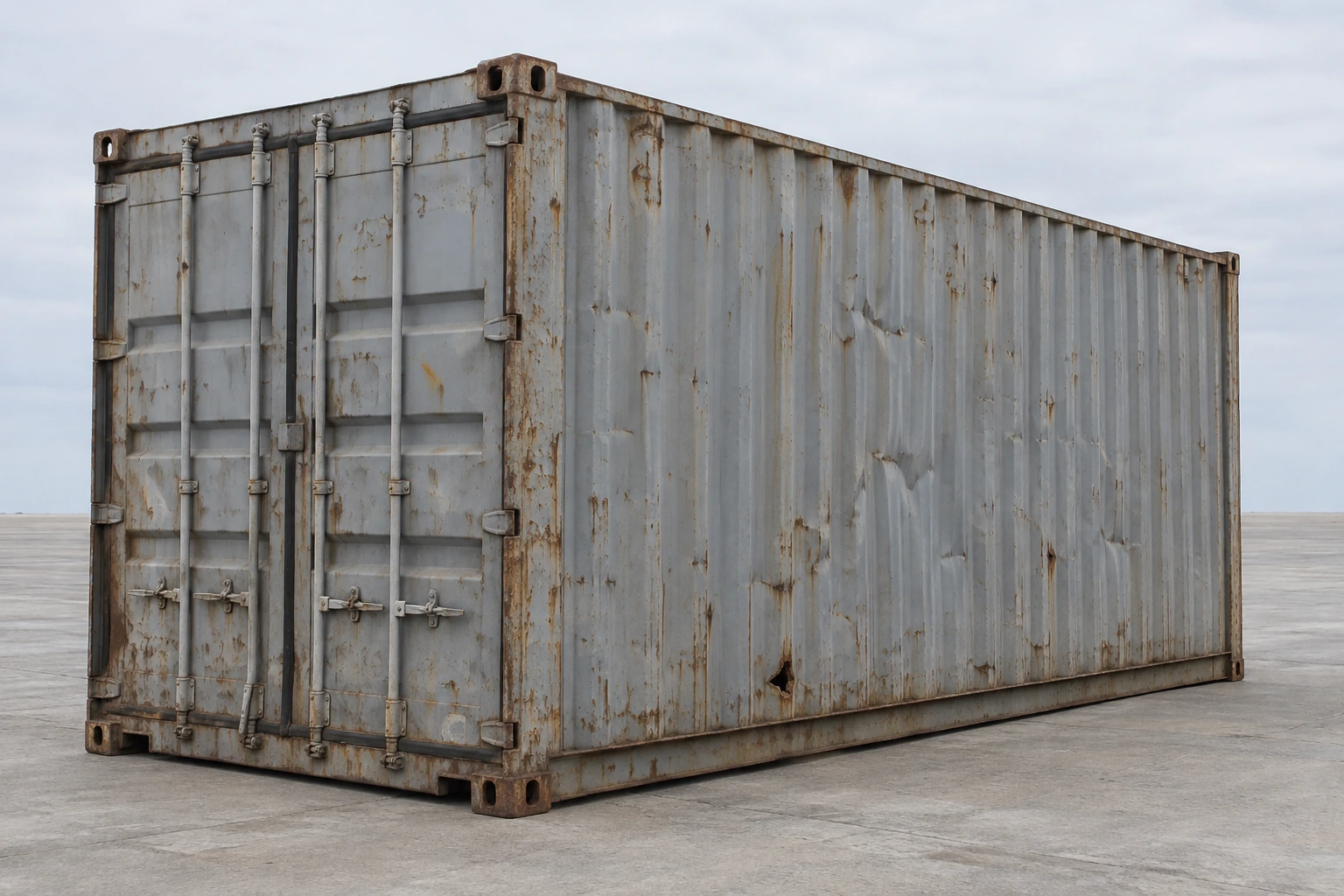
Photorealistic illustration of a gray damaged 20ft container with worn paint, rust perforations, side-panel dents and weathered cargo doors.
Illustration of possible repair needs. Actual as-is defects vary; inspect the offered unit.
20ft / USED GRADE

As-is

For a repair project: identify the defects and price the work before comparing the complete cost with a usable container.

Explore as-is →
Photorealistic illustration of a gray 20ft container with mostly intact paint, light handling scratches and small shallow dents.
Condition illustration. Light wear does not verify journey history or the seller’s grade.
20ft / USED GRADE

Multi-trip / limited use

Compare an offer described as lightly used with one-trip. Confirm the actual history and finish; the label is defined by the seller.

Explore multi-trip / limited use →
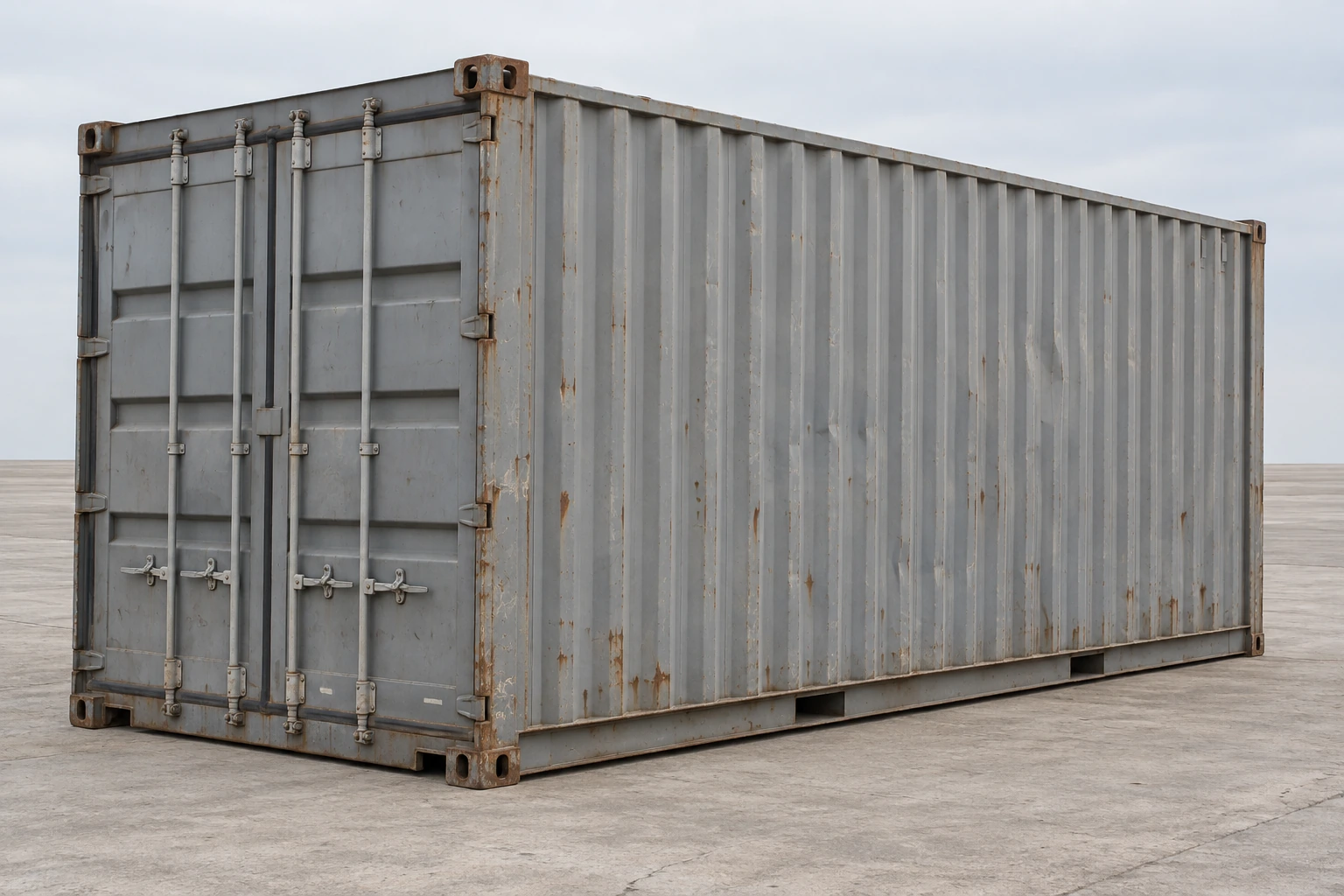
Photorealistic illustration of a gray used 20ft container with faded paint, shallow dents, repair patches and surface corrosion.
Condition illustration. Worn paint and repairs do not establish sealing or structural condition.
20ft / USED GRADE

Economy grade

Compare budget storage offers by the defects accepted and the protection included. Economy does not automatically mean WWT or as-is.

Explore economy grade →

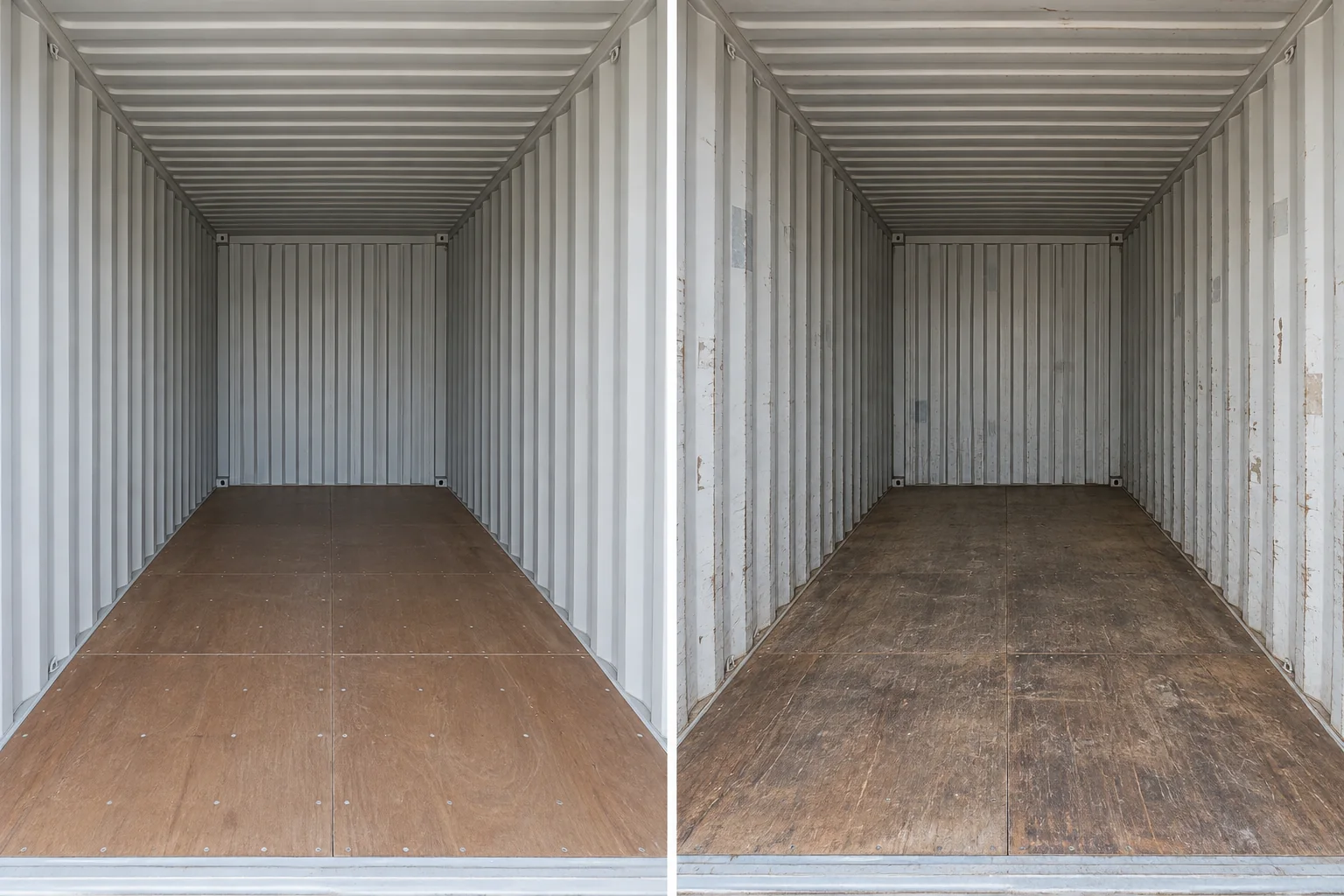
Look inside, too.

Compare the floor surface, wall wear and visible repairs, then request close-up photos of the actual unit.

New / one-tripUsed
Illustrative 20ft interiors compared side by side: new or one-trip on the left and used on the right.
Illustrative interiors. Appearance does not establish cleanliness, cargo history or floor strength.

Illustrative appearances. Paint and rust alone do not establish weather-tightness or suitability for shipping.

BEFORE YOU ORDER

Your buying questions

Does WWT mean the container is rust-free?

No. A used WWT unit may have dents, worn paint, rust or previous repairs. Assess their location and severity and confirm that the actual shell meets the written storage requirements. Appearance alone does not establish condition.

Will a WWT container keep paper records or furniture dry?

The shell's resistance to outside water is only part of that decision. Check the goods' humidity and temperature needs, how dry they are when loaded and whether condensation control is required. WWT does not provide a controlled storage environment.

Is a WWT 20ft container approved for overseas shipping?

The WWT label alone does not establish freight acceptance. Review the actual structural condition, CSC approval plate, current examination status and any survey or documentation your intended carrier requires before buying for cargo transport.

Can I buy WWT without repainting it?

Yes, if the actual condition and existing finish meet your requirements. Distinguish necessary repairs and corrosion preparation from a full repaint chosen for appearance. Have any work included in the purchase described in writing.

YOUR CONTAINER. YOUR DELIVERY ZIP.

Compare the complete delivered cost.

Include the condition, unloading and any work your container needs.

Get My Best Price →